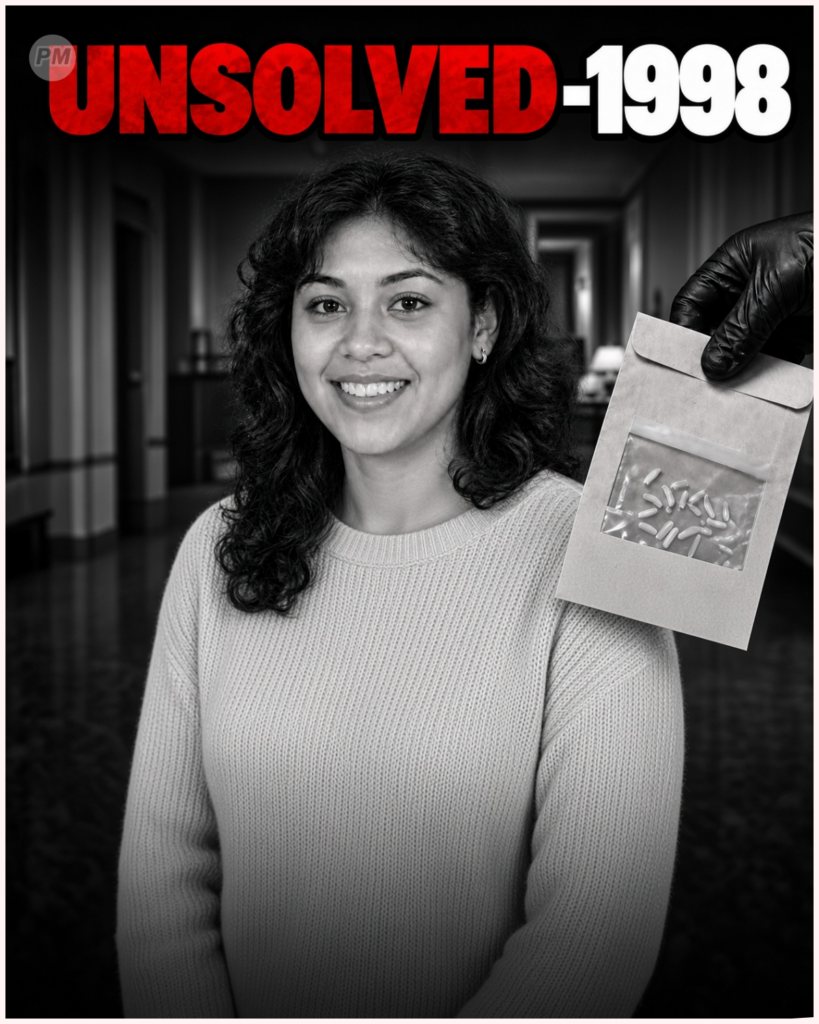
If any single link in that chain had broken
If any single link in that chain had broken. If the fingernails hadn’t been clipped.
If the evidence had been mishandled or mislabeled or lost in a storage facility transition.
If Sanders’s prior conviction hadn’t placed him in COTUS. If the task force hadn’t chosen to prioritize this particular file, the case would still be cold today.
That is both the fragility and the power of cold case justice. Fragile because so many things must go right across so many years.
Powerful because when they do, the result is a form of accountability that the passage of time was supposed to make impossible.
Not every cold case will be solved. Many of the victims from Gary’s most violent era will never receive the resolution that Jackie Sodto’s case now has.
Evidence was lost. Files were damaged. The biology degraded beyond recovery. Some killers died before the science caught up.
Some were never in COTUS to begin with. The hard truth is that for every case that breaks open, there are dozens that remain permanently sealed.
But every case that does get solved sends the same message. The one prosecutor Carter articulated on July 15th, 2026.
The passage of time does not erase the commitment. The file is never truly closed.
And the people who preserve, maintain, and revisit the evidence year after year, decade after decade, are performing work that matters even when nobody is watching and nobody is keeping score.
Buchanan Street, Gary, Indiana. December 1998. A woman was found dead in her own home.
Christmas lights wrapped around her neck, blood covering the walls. The scene arranged to look like something it wasn’t.
A name in the case file that nobody could prove, and a city with too many murders and not enough detectives to work them.
For 27 years. That was the story of Jacquellyn Sodto. A cold case in a cold city.
One more name on a growing list of victims whose files had been shelved. Not because nobody cared, but because the system ran out of bandwidth and the science hadn’t caught up to the crime.
But Jackie was not forgotten. Not by the friend who sat with investigators and told them what she knew, who described the fear in Jackie’s eyes, the closed doors, the disputes over money, the pattern of a man who used his size and his reputation to keep a woman trapped in an arrangement she couldn’t escape.
Not by the forensic examiner who clipped Jackie’s fingernails and sealed them into evidence on a winter night in a morg in Gary following a procedure that seemed routine at the time, but would prove to be the single most important act performed in this entire 27-year investigation.
Not by the evidence clerks who cataloged and maintained that material through decades of storage, through changes in leadership and facility and filing systems, ensuring that the biological evidence remained intact and recoverable when someone finally came looking for it.
Not by the Indiana State Police Forensic Analysts who applied modern DNA extraction techniques to 27year-old fingernail clippings and recovered a genetic profile that nobody in 1998 could have obtained.
Not by the Kotus database that matched that profile to a convicted offender and returned a name that investigators already knew.
Not by Hobart Assistant Chief Nicholas Wardrip and the Lake County Prosecutor’s Task Force, who reopened the file, ordered the retesting, conducted the interviews, obtained the court authorized swab, and built a probable cause case that resulted in a murder charge 27 years after the crime and not by prosecutor Bernard A.
Carter, who stood in front of cameras on July 15th, 2026, and said the words that Jackie Sodto’s case had been waiting 27 years to hear, that she was not forgotten, that her case was not forgotten, [music] and that the passage of time does not erase the commitment to justice.
Alfred Kevin Sanders has been charged with Jackie Sodto’s murder. The case is now in the hands of the Lake County Justice System.
What happens next, the trial, [music] the verdict, the outcome will be determined by a court of law and Sanders is presumed innocent unless proven guilty.
But the investigation that brought this case back from the cold is already complete. And the chain of decisions that made it possible.
Stretching across 27 years and involving dozens of people who never met each other and never knew the role they were playing in a case they didn’t know would be solved is one of the most quietly remarkable things in American criminal justice.
Jackie Sodto lived in one of the hardest cities in America during one of its hardest decades.
She was caught in a world that was dangerous and unforgiving. And when she was killed, the system that should have protected her could not move fast enough to hold anyone accountable.
But the evidence held, the protocols held, the people held. And 27 years later, the case that everyone assumed would stay buried came back to life.
This is what redemption looks like. Not a dramatic courtroom scene, not a Hollywood ending.
Just quiet, steady, relentless work carried out across decades [music] by people who refuse to accept that the passage of time meant the passage of justice.
Somewhere in Gary, the house on Buchanan Street still stands, or the lot where it used to be still sits, holding the memory of what happened there in December of 1998.
The neighborhood has changed. The city has changed. The science has changed. But the fundamental obligation [music] has not.
Every victim deserves to be more than a case number. Every cold case deserves someone willing to open it one [music] more time.
And every name in every filing cabinet in every overwhelmed jurisdiction in America represents a person who was loved, who was known, who mattered.
Her name was Jacqueline Sodto. And after 27 years of silence, her story has finally been told.
If this case stayed with you, share it with someone who needs to hear it.
Subscribe to Cold Case Redemption for the full story behind every case that came back from the cold.
We’ll see you in the next one.


