Carter also spoke to what distinguishes cold case…
Carter also spoke to what distinguishes cold case investigations from active homicide work. He acknowledged that cold cases demand extraordinary patience, persistence, and collaboration among agencies that don’t always share jurisdiction, resources, or databases.
Solving a case from 1998 in 2026 requires cooperation between the original investigating department, modern forensic labs, prosecutors who are willing to allocate resources to cases with no political urgency and task force investigators who are comfortable spending months or years on a single file without any guarantee of a result.
The prosecutor credited a broad coalition of law enforcement [music] and forensic personnel. The Gary Police Department, which had initiated the original 1998 investigation and maintained the case file, the Indiana State Police Forensic Services Division, whose laboratory work on the fingernail clippings produced the DNA profiles that broke the case.
The Lake County Crime Scene Unit. The Lake County Coroner’s Office, whose forensic examiner had made the critical decision in 1998 to collect and preserve the fingernail evidence.
And the task force investigators, led in significant part by Hobart assistant chief Nicholas Wardrip, who had reopened the file, identified the testable evidence, coordinated the lab submissions, conducted the interviews with Sanders, and built the probable cause case that resulted in the arrest.
This is how cold cases actually get solved [music] in the real world. Not the way it happens in movies or television where a single brilliant detective has a Eureka moment in the middle of the night and cracks the case [music] over a cup of coffee.
It happens through institutions, through protocols followed correctly by dozens of people whose names will never [music] make the news and whose contributions will never be dramatized.
Through the unglamorous, grinding bureaucratic machinery of evidence preservation, database maintenance, and inter agency cooperation performed by professionals who understand that justice doesn’t have an expiration date.
An important note, as of the public reporting available at the time this documentary was produced, [music] Alfred Kevin Sanders has been charged with murder.
He has not been convicted. The case has not gone to trial. No plea has been entered.
Under the law, he is presumed innocent unless proven guilty in a court of law.
The charge is an accusation supported by the evidence outlined in the probable cause affidavit.
And it is now the sole responsibility of the justice system to determine the outcome.
But what is not in dispute is this. A case that sat cold for 27 years in one of in one of the most overburdened police jurisdictions in the United States is now actively moving through the criminal justice system.
And that by any measure is significant. Jackie Sodto’s case is not an anomaly. It is a symptom of something much larger.
Across the United States, there are tens of thousands of unsolved homicides from the 1980s and 1990s sitting in evidence rooms and filing cabinets in cities and counties that experience the same conditions Gary did.
Surging violence during the crack epidemic, overwhelmed and underfunded police departments, limited forensic technology, communities where cooperating with law enforcement carried its own set of potentially fatal risks.
For decades, these cases were considered permanently unsolvable. The witnesses had died or moved away or simply refused to speak.
The detectives who originally worked the cases had retired, transferred, or passed away. The physical evidence, if it still existed at all, was assumed to be too old or too degraded to be useful.
[music] The general consensus, both within law enforcement and among the public, was that if a homicide wasn’t solved within the first 48 hours, it probably never would be.
And if it went cold for a decade or more, it was essentially closed forever.
What changed was the science, and it changed faster than most people realize. DNA extraction techniques that [music] can recover genetic material from samples containing just a handful of cells.
Amplification methods that can build a complete courtroom admissible profile from trace [music] evidence that would have been discarded as unusable 20 years ago.
Touch DNA analysis that can identify someone who briefly handled an object. Genetic genealogy techniques [music] that can identify suspects through their family members recreational DNA submissions.
And KOTUS, a national database [music] that now contains millions of convicted offender profiles and grows larger every single year as more states expand their collection mandates.
The result is a wave of cold case resolutions that would have been unimaginable a generation ago.
Cases from the 1970s, 1980s, and 1990s are being reopened and solved at a rate that has no precedent in the history of American criminal justice.
The Golden State Killer, the Grim Sleeper, dozens of Jane and John Doe’s identified through isotope analysis and familial DNA.
And thousands of cases like Jackie Sodto’s, less famous, less dramatic, but no less important, quietly resolved through the intersection of preserved evidence and modern testing.
The common thread in nearly all of them is the same. Biological evidence that was collected and preserved during the original investigation, submitted for retesting [music] with modern tools, and matched through a database that didn’t exist when the crime was committed.
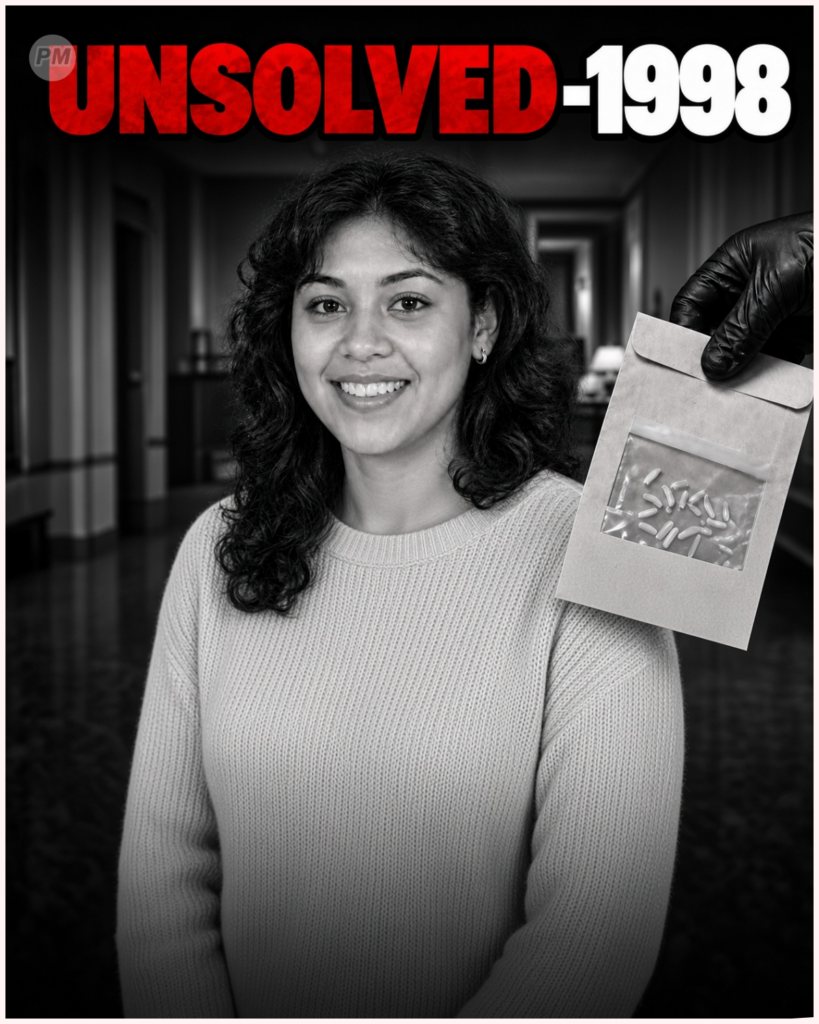
[music] Jackie’s case is a textbook example. The forensic examiner who clipped her fingernails in December 1998 was following standard autopsy protocol.
That person almost certainly did not imagine that those clippings would become the key to solving a murder 27 years later.
The evidence was preserved because that’s what the procedure manual said to do, not because anyone foresaw its future value.
The mundane act of following protocol became retroactively the most consequential decision made by [music] anyone involved in this case.
And that is the real lesson of Jackie Sodto’s story. Not that the system failed, although it did, but that the system also in its own slow, imperfect, institutional way preserved the means of its own correction.
The evidence survived, the database grew, the science advanced, and eventually somebody opened the file again and asked the right question.
This is what cold case work looks like when it actually works. It isn’t glamorous.
It doesn’t make for gripping television. It’s a forensic examiner doing their job properly in 1998.
It’s an evidence clerk storing samples correctly for 27 years. It’s a task force investigator pulling a file off the shelf and refusing to accept the answer unsolvable.
It’s a lab technician running extraction protocols on material that everyone else assumed was useless.
It’s a database returning a match that nobody expected to get. Each of those steps taken by different people at different times across nearly three decades had to happen in sequence for Jackie Sodto’s murder to be solved.