Detectives canvased the Buchanan Street neighborho…
Detectives canvased the Buchanan Street neighborhood. They knocked on doors. They talked to people who lived near Jackie, people who knew her, people who frequented the home.
They pieced together a picture of her social circle, her relationships, her movements in the days and weeks before December 29th.
Alfred Kevin Sanders came up quickly. He was already known to law enforcement and Gary.
He was connected to Jackie through the drug trade. He had been inside her Buchanan Street home on multiple occasions.
He was a large man with a presence in the neighborhood and a nickname that everyone recognized.
Sunday School, the friend’s testimony, whenever it was initially provided to investigators, painted a troubling portrait.
Sanders and Jackie had a volatile, fear-driven dynamic. He believed she owed him money. He had isolated her during visits.
She was afraid of him. Sanders was considered a suspect. His name went into the case file.
He was by any reasonable investigative assessment on the radar from the very beginning. But being on the radar is a very different thing from being charged with murder.
And in 1998, the distance between those two positions was enormous, particularly in a jurisdiction like Gary.
Think about what detectives actually had to work with. They had a victim who was entangled in the local drug trade, which meant the pool of people with potential motive to harm her was not limited to a single individual.
They had a crime scene that pointed to someone who knew the house, but no eyewitness who had seen the killing happen.
They had a suspect who was connected to the victim and who had motive, but no confession and no direct physical evidence tying him to the act of murder itself.
The friend’s testimony established fear and a pattern of intimidation, but it didn’t place Sanders at the scene on December 29th, and the fingernail clippings were sitting in evidence storage, unprocessed.
The DNA locked inside them was invisible to the forensic technology available in 1998. In that era, DNA analysis required substantial wellpreserved samples to produce anything useful.
A full blood sample, a saliva swab, a significant tissue deposit. The trace amounts of biological material that might be recovered from beneath a victim’s fingernails were considered too small and too degraded to be reliably tested.
Labs could attempt extraction, but the likelihood of obtaining a clean, identifiable profile from such minute quantities was low enough that many jurisdictions did not even bother trying.
It was like holding the answer key to a test but not being able to read the language it was written in.
Surrounding all of this was the relentless reality of Gary’s criminal justice system at the time.
The homicide detectives assigned to Jackie’s case were not working a single investigation. They were juggling a case load that would be considered unmanageable by the standards of any major city.
New homicides were coming in constantly. Every week brought fresh victims, fresh crime scenes, fresh witnesses who needed to be interviewed immediately before they disappeared or changed their stories.
Lab turnaround times were measured in months, not days. And in a community where cooperating with a murder investigation could make you the next victim, witnesses were scarce, reluctant, and unreliable, the case stalled.
Not with a dramatic dead end or a public announcement. It stalled the way cold cases always stall, quietly, incrementally.
The leads that existed couldn’t be converted into charges. New cases demanded immediate attention. The detective originally assigned may have been transferred, promoted, or retired.
And over the months and then the years, Jackie Sodto’s murder settled into the backlog of unsolved homicides in Lake County, Indiana.
You’d think someone would have said something. You’d think that in a neighborhood where Sanders was known, where people called him Sunday school, where his connection to Jackie was not a secret, that somebody would have come forward with the one piece of information that could have broken the case open.
Nobody did, and the file gathered dust. Sanders remained a free man. He continued to live in Gary.
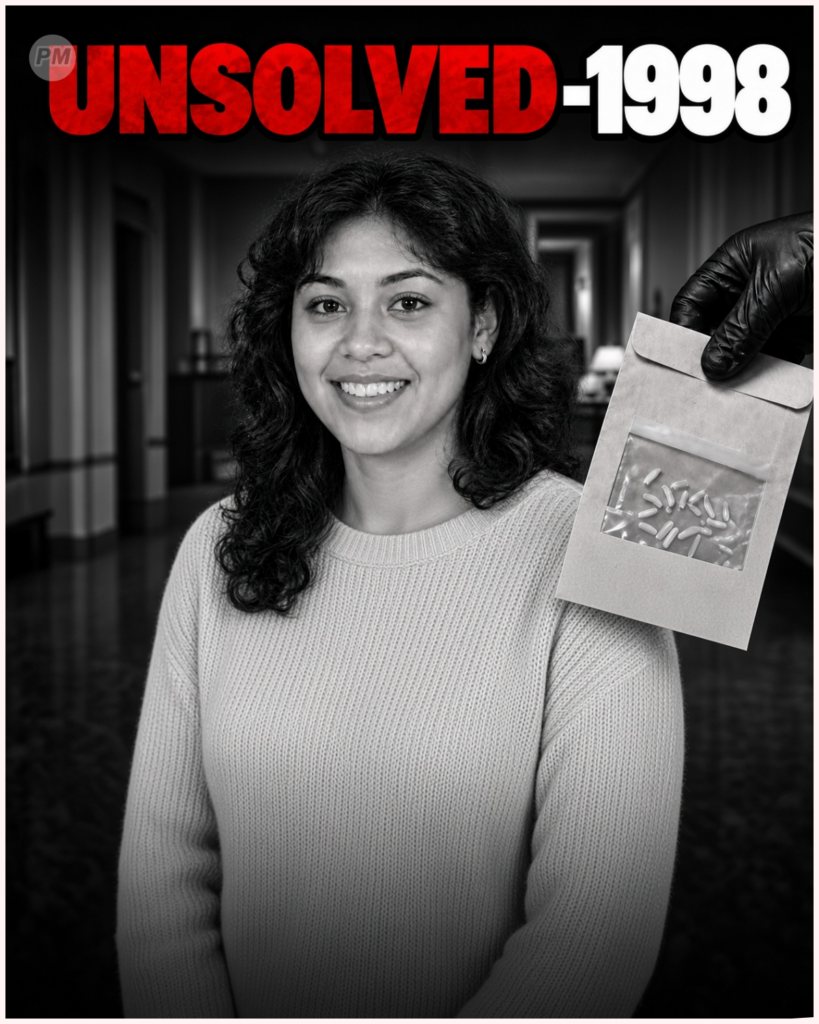
The fingernail clippings sat in evidence storage, sealed in their original packaging, preserving a genetic signature that would remain unreadable for more than two decades.
The case was open in name, but in practice it was cold. Stone cold. This is where the story goes quiet for a very long time.
And 27 years is not an abstraction. It is not a number you glance at and move past.
It is the span of an entire generation. A child born the year Jackie Sodto was killed would have graduated from high school, gone to college, entered the workforce, possibly started a family of their own.
All while her case sat dormant in a filing cabinet in Lake County. But the world around that filing cabinet was not standing still.
Both the city and the science were changing. Gary continued to struggle through the 2000s and 2010s.
The population kept declining. By the 2020 census, Gary was home to fewer than 70,000 people.
Less than half of its 1960s peak. Entire neighborhoods had been reclaimed by nature. Vacant lots outnumbered occupied homes on some blocks.
The steel mills that had built the city were largely silent, their rusted frames visible from the interstate like the skeleton of something that used to be alive.
And yet something shifted. Slowly, unevenly, imperfectly, the violence that had defined Gary for decades began to recede.
Community intervention programs took hold. Policing strategies evolved. And by 2025, something remarkable happened. Gary recorded 28 homicides for the entire year.
That was the city’s lowest total in 55 years, the lowest since 1970. For a city that had been averaging a 100red or more killings per year during the 1990s, this was a transformation that few outside observers would have predicted and that many residents had stopped believing was possible.
Meanwhile, far from the streets of northwestern Indiana, forensic science was undergoing its own revolution.
DNA analysis in the late 1990s was limited in ways that are hard to appreciate from a 2026 perspective.