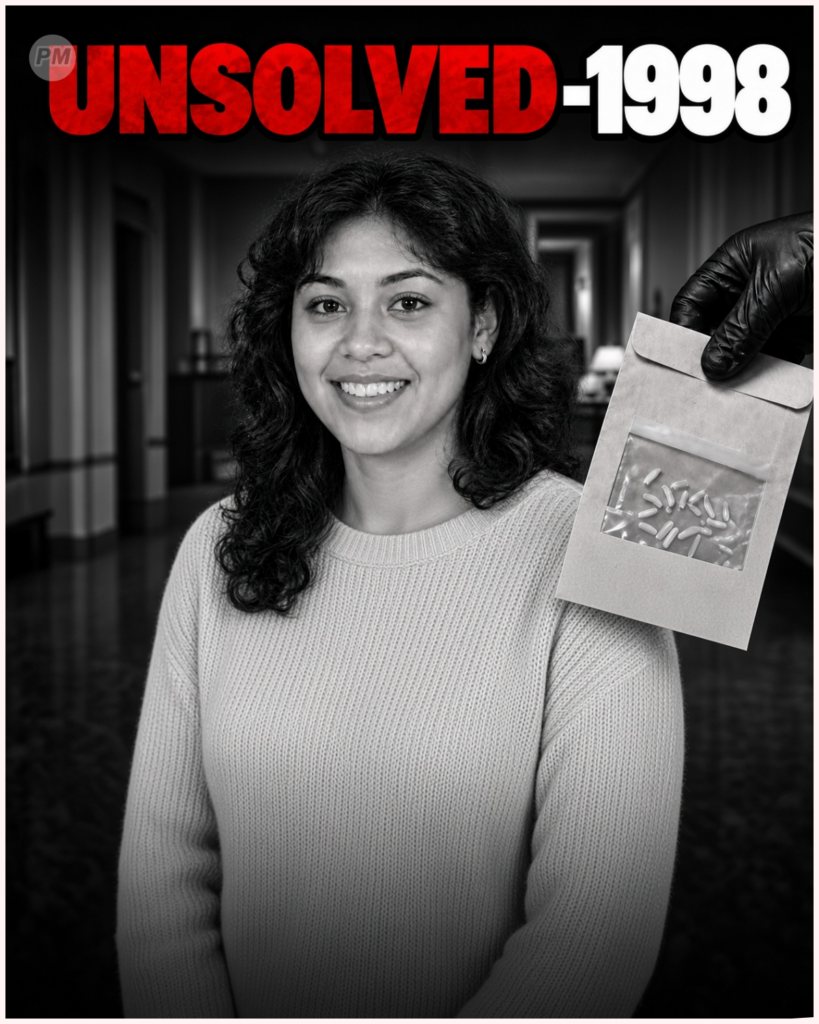
The police department was overwhelmed
The police department was overwhelmed. Budget cuts had reduced staffing to levels that were barely adequate for routine policing, let alone the kind of sustained investigative work that complex homicide cases require.
Detectives weren’t handling one or two cases at a time. They were juggling double digits.
Crime labs were backlogged. Forensic resources were limited. And in neighborhoods where the drug trade had taken root, witness cooperation was rare.
Talking to the police could get you hurt. Talking to the police about a murder could get you killed.
This is where you have to zoom in to understand what happened to Jackie Sodto.
Because her murder didn’t happen in isolation. It happened inside a system that was already buckling under the weight of cases [music] it couldn’t close.
Detectives weren’t lazy. They weren’t indifferent. They were buried. When you’re processing a 100 homicides a year in a department designed to handle a fraction of that number, cases without immediate physical evidence or cooperative witnesses [music] get pushed to the side.
Not because they don’t matter, but because another body just came in and that one is still fresh and that one has a witness who is willing to talk right now.
And if you don’t get to the scene in the next hour, that witness might change their mind.
Jackie’s case landed in the middle of that storm. A woman found strangled in her home.
Evidence of staging. A suspect who was connected to her, but who hadn’t confessed and whom nobody had witnessed committing the crime.
In a city that wasn’t drowning in violence, this case might have gotten the sustained focused attention it needed.
In 1998, Gary, it got what the system could give and the system couldn’t give enough.
That is the context, not an excuse, an explanation, and one that matters. Because without it, you’d look at 27 years of silence and assume nobody cared.
People cared. The infrastructure around them just couldn’t keep up. If you’re the kind of person who watches cases all the way through, hit subscribe.
We go deep on every one of these. Jacqueline Sodto lived in Gary during what may have been the most difficult period in the city’s modern history.
What we know about her comes primarily from investigative records. And the testimony of people who were part of her life because the national press never covered her murder.
And the local coverage from December 1998 has largely disappeared behind paywalled archives and deteriorating microfilm.
Here’s what we can confirm. Jackie lived in Gary and was connected to at least two addresses that investigators would later reference in the case file.
One was a residence on Faget Street where she spent time and received visitors. The other was the home on Buchanan Street in the 500 block where she was killed.
Based on available records, Jackie was likely in her early 30s at the time of her death, though her exact age has not been independently confirmed by news reporting.
Jackie’s world intersected with the drug trade in Gary. This is not a judgment. It’s a fact that the case file makes explicit.
She knew people who bought and sold drugs. She was involved in transactions herself. And through that world, she became entangled with a man named Alfred Kevin Sanders.
Sanders was known around Gary by a nickname. People called him Sunday School, not because he was religious or because the name carried any kind of ironic meaning that anyone has explained publicly.
It was just a nickname that stuck the way nicknames do in tight-knit neighborhoods where everybody knows everybody and where reputation is a currency of its own.
Sanders was a large man, physically imposing, and he was known to sell drugs in the area.
At some point before her death, Jackie began selling drugs on Sanders’s behalf. This wasn’t a partnership between equals.
It was an arrangement that created financial dependency, a tether between Jackie and a man who, by multiple accounts, was not someone you wanted to owe anything to.
A longtime friend of Jackie’s would later provide investigators with a detailed and consistent account of what that relationship looked like from the outside.
This friend had known Jackie for years. She told detectives that Jackie was afraid of Sanders, not in a vague, general, abstract [music] sense, specifically and consistently afraid.
In the way that someone is afraid of a person who has demonstrated through their behavior and their physical presence exactly what the consequences of defiance might look like.
According to this friend, Sanders believed that Jackie had money belonging to him. Whether Jackie actually owed him money, whether this was a legitimate debt from a drug transaction, or whether this was a pretext for control and intimidation, the case file does not fully clarify.
What the friend described was a pattern of behavior. When Sanders came to visit Jackie at her Fyet Street residence, he would take her into a room alone and close the door.
Other people in the house were excluded from these conversations. And the friend said that Jackie appeared visibly frightened during and [music] after these encounters.
Not annoyed, not uncomfortable. Frightened. I mean, think about that [music] for a second. This was a woman who was inshed in a dangerous relationship with someone who had both the physical size and the street reputation to enforce whatever he wanted.
And in a neighborhood where involving the police was not just socially unacceptable, but potentially lethal, Jackie’s options for getting out of this arrangement were severely limited.
There was no easy exit, no hotline to call, no protective order that would have meant anything in a part of Gary where the drug trade wrote its own rules.
This dynamic, the fear, the isolation, the closed door confrontations, the disputes over drugs and money would become central to the case decades later.
Because when investigators finally had the forensic evidence to reopen the file, this testimony gave that evidence a framework.
DNA under Jackie’s fingernails placed Sanders in physical contact with her around the time of her death.
The friend’s account explained why that contact might have turned violent. It provided motive, opportunity, and a pattern of escalating intimidation that made the forensic evidence more than just a data point.