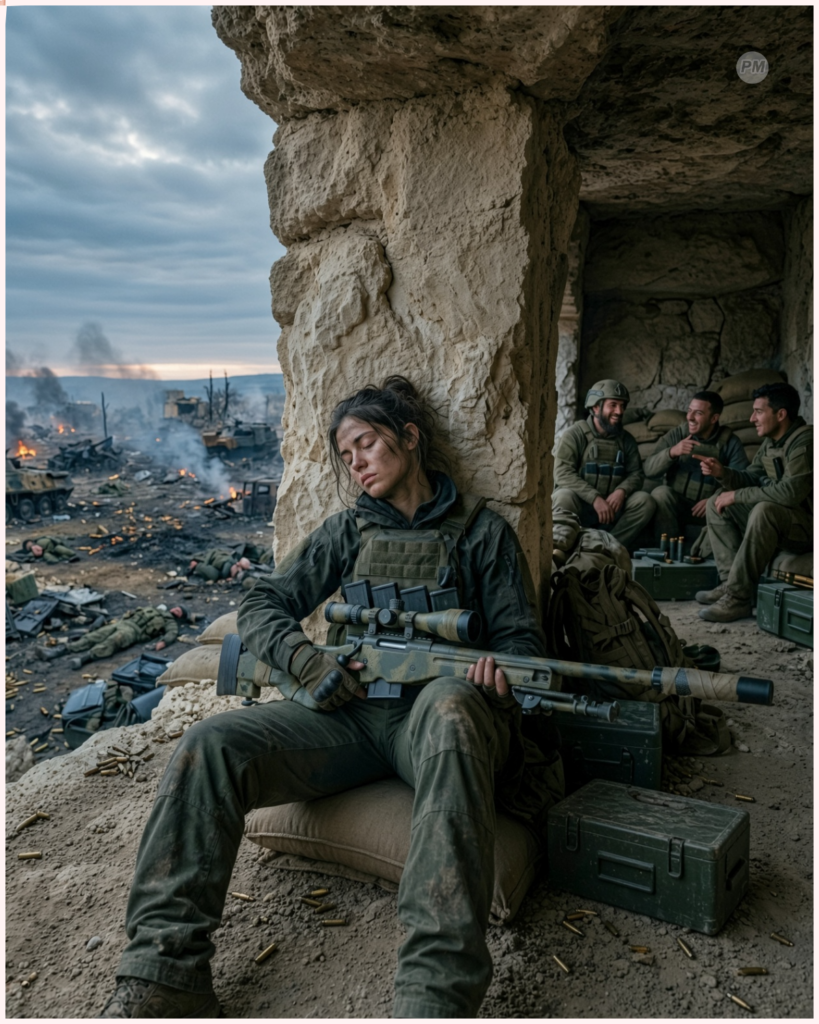
My personnel file
My personnel file. Started reading aloud. Three failed psychological evaluations over a 2-year period. Each evaluation noting tendency toward hypervigilance.
Persistent belief in imminent threats not supported by intelligence assessments. Difficulty distinguishing between actual threats and perceived threats based on incomplete pattern recognition.
I felt my jaw clench. But I kept my voice level. All three evaluations were overturned, sir.
Because in every case, the threats I identified turned out to be real. I was right.
The evaluators were wrong. The evaluations were overturned on appeal due to your exceptional combat performance.
Drummond corrected. Not because the psychological concerns were deemed invalid. The notes suggest you have a condition that makes you see patterns that may not actually exist.
That makes you interpret benign changes as threatening indicators. Sir, the patterns exist. Children don’t disappear from villages for no reason.
Shepherds don’t abandon grazing areas they’ve used for generations without cause. Radio traffic doesn’t increase 40% randomly.
These are threat indicators that that may have completely innocent explanations. Drummond interrupted. Children get sick.
Families travel. Grazing areas shift with seasons. Radio traffic fluctuates. He closed the file. I appreciate your diligence, sergeant.
I do. But I cannot and will not put this entire FOB on high alert based on analysis from a soldier with a documented history of seeing threats that intelligence professionals have not identified.
The words hit like physical blows. But I’d heard versions of this speech before. Sir, with respect, this isn’t theoretical conjecture.
I’ve seen this exact pattern before. I know what it looks like when That’s enough, sergeant.
Drummond’s voice went hard. You’re dismissed. We’ve already implemented enhanced patrols and additional guard rotations based on your initial report.
That’s the appropriate level of response. Anything more would be an overreaction that damages morale and operational readiness.
I stood there for 3 seconds. Silent. Every instinct screaming at me to make them understand.
To find the words that would break through their certainty that I was broken. But I’d learned this lesson, too.
Some people couldn’t be convinced with words. Only with blood. Understood, sir. I turned and walked out.
Hands shaking with controlled fury. Thorne caught up with me outside. Mercer, wait. I stopped.
Didn’t turn around. I know you believe what you’re saying. I know your analysis has merit.
But from his perspective from his perspective, I’m a traumatized soldier with PTSD seeing threats that don’t exist.
I finally turned to face him. I get it, Lieutenant. I understand how it looks.
The hyper-vigilance, the weapon obsession, the inability to sleep. These are all symptoms of psychological trauma.
My voice dropped. The problem is sometimes trauma makes you see clearly. Sometimes paranoia is just preparation that hasn’t been validated yet.
Sometimes the crazy person is the only one sane enough to see what’s coming. Thorne’s expression shifted.
Not quite belief but something close to it. What happened at FOB Cartier? Eleanor really happened.
The full story. And something in his use of my first name, the humanizing of me as a problem rather than a problem soldier broke through the wall I’d built.
I told him the real story. FOB Cartier was smaller than Sentinel. 40 personnel. I was the only dedicated sniper.
We’d been there 3 months when I started noticing the same patterns I’m seeing here.
Surveillance from the ridgelines. Changes in local behavior. Increased radio chatter. I stared past him at something only I could see.
I reported it. Reported. My CO acknowledged it. But intelligence said there was no credible threat.
No specific intel indicating an attack. So we maintained normal operations. My voice went quiet.
I was off duty the night they came. My rifle was locked in the armory because that’s what the regulation said.
I was trying to be normal. Trying to fit in with the team instead of being the paranoid sniper everyone whispered about.
I could still see it. Still smell it. I was sleeping when the mortars hit.
Actually sleeping for the first time in weeks. By the time I got to the armory, they’d already breached the perimeter.
My spotter Staff Sergeant James Rivera was trying to reach his weapon when they cut him down.
Thorne’s face had gone pale. I watched six others die in those first minutes. Watched them fall because they weren’t ready.
Because I hadn’t been ready. Because I’d let people convince me I was seeing threats that weren’t there.
My hands were shaking now. I survived by hiding under their bodies. Covered in their blood while Taliban fighters walked through the FOB executing wounded.
I lived because I was too scared and too ashamed to move. I looked at him directly.
Seven dead total. Could have been prevented if I’d trusted my instincts. If I’d kept my rifle close.
If I’d been ready. So I made a promise over James’s body. Never again would I be separated from my weapon.
Never again would I let someone convince me I was being paranoid when I knew danger was coming.
Thorne was quiet for a long time. That’s not your fault, Helena. You reported what you saw.
Command made the decision. I could have done more. Should have done more. I let them convince me I was wrong.
Let their certainty override my instincts. And seven people died because I wasn’t strong enough to trust what I knew.
I met his eyes. So, yeah, Lieutenant, I know how I look. I know I seem unstable, paranoid, damaged, but I’d rather be all those things and right than well-adjusted and standing over more bodies.
Thorne was struggling with something. I could see it in his face. What do you need from me?
Permission to stay ready, to prepare, and when it happens, not if, when, let me do what I was trained to do.
He nodded slowly. You have it. Unofficially. But, Mesa, if you’re wrong about this, I’m not wrong, sir.
I wish to God I was, but I’m not. That night in the barracks, the atmosphere had shifted.


