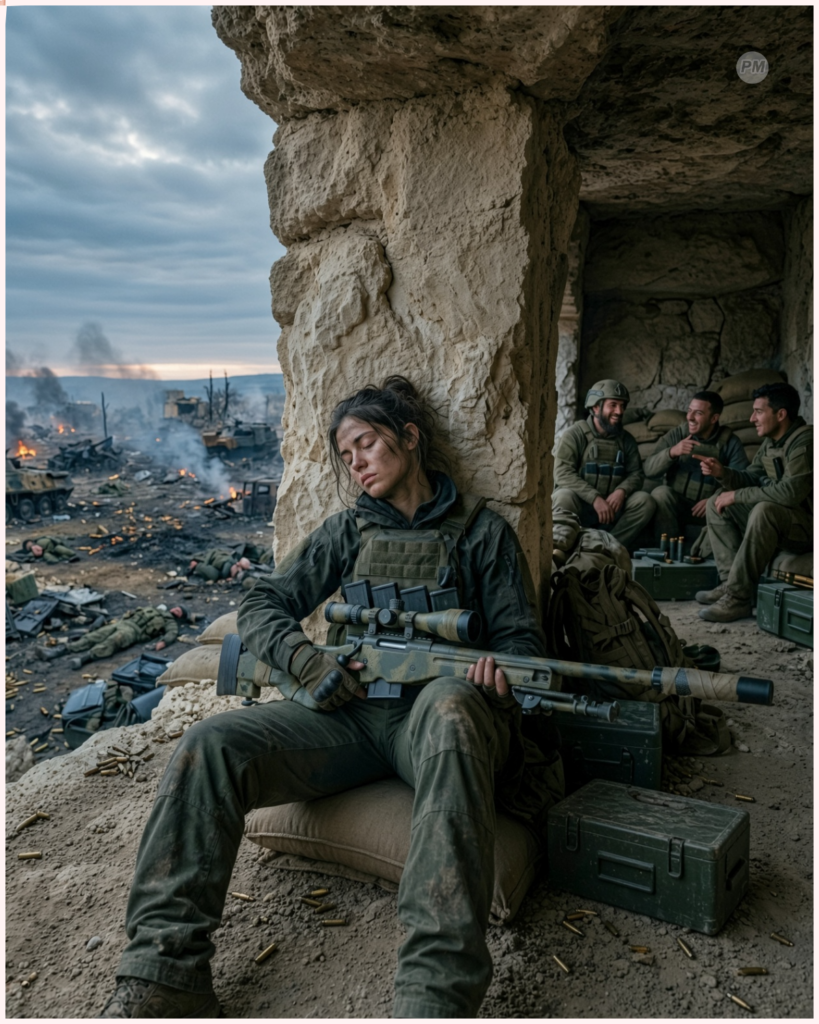
Teach me more
Teach me more. So I did. I showed her how I documented the scope glints.
How I’d cross-referenced them with activity patterns, how I’d built the timeline that predicted the attack.
The enemy isn’t stupid, Iris. They know we have intelligence capabilities. They know we intercept communications and monitor behavior patterns.
So, they’re subtle. They don’t change everything at once. They make small adjustments that individually look innocent.
I pulled up my photographs. But taken together, those adjustments paint a picture. Reconnaissance from the same position over multiple days.
Gradual withdrawal of fighting age males from villages near the target. Increase in radio traffic without increase in specific content.
These are all indicators of preparation. Callahan studied my documentation with growing intensity. How did you learn this?
Trial and error. And paying attention to what happened right before the times I failed to see attacks coming.
I showed her my notebook. After Cartier, I went back through every patrol report, every intelligence summary, every observation from the weeks leading up to that attack.
Built a pattern profile, identified what I’d missed, what I’d dismissed as irrelevant. I swore I’d never miss those signs again.
Callahan flipped through pages of analysis. Patterns? Timelines? Threat indicators? This is incredible work, Elena.
This should be taught to every intelligence analyst in theater. I smiled grimly. Should be, won’t be.
Because it came from a traumatized sniper with failed psych evals, not from someone with the right credentials and the right mental health clearances.
My voice went hard. The army wants results from people like me. But they don’t want to acknowledge that those results come from damage.
From trauma. From becoming something that doesn’t fit neatly into the boxes on evaluation forms.
Callahan looked at me something like awe. “You’re not broken, Elena. You’re adapted. You’ve turned your trauma into a tactical advantage.
That’s not weakness. That’s strength.” For the first time in 2 years, someone saw me as something other than a problem to be managed.
And it nearly broke me. “Thank you.” I whispered. 2200 hours. Night fell completely over FOB Sentinel.
The guard rotations changed. Enhanced protocols in effect. One extra soldier on the northern towers scanning the ridgeline.
But it wasn’t enough. I knew it wasn’t enough. Drummond had implemented the minimum acceptable response to my threat assessment.
Enough to say he’d done something. Not enough to actually stop what was coming. I lay on my bunk fully clothed, boots loosely laced, rifle cradled against my body, go bag within arms reach.
Around me the platoon slept. Hollis snoring softly. Wade’s deep breathing. Callahan restless but trying to rest.
I closed my eyes. Not to sleep. Just to rest. To let my body recover while my mind stayed alert.
Monitoring. Listening. Waiting. At midnight my eyes opened. Something had changed. Not something I could identify specifically.
Just a shift in the ambient sounds. A feeling in my gut that made every nerve ending scream.
I sat up slowly. Hand already on my rifle. The normal background noise of the FOB was there.
Generator hum. Distant radio chatter from the guard towers. Occasional footsteps of patrol making rounds.
But something underneath was different. I checked my watch. 0015 hours. 36 hours until new moon.
No. Not 36 hours. They were coming sooner. I could feel it. I stood, started lacing my boots properly, strapping on my gear, loading magazines into my vest.
Callahan stirred in her bunk. Elena, what’s wrong? I don’t know yet. But something changed.
Something’s different. She sat up, instantly alert. The training I’d given her kicking in. What do you need?
Get dressed. Full gear. Wake Wade quietly. Tell him I think the timeline just accelerated.
How do you know? I couldn’t explain it. The certainty that comes from pattern recognition, so deep it becomes instinct.
The same way animals know storms are coming before the sky darkens. I just know.
At 0030, I was at the northern wall, full combat load, rifle in hands, scanning the darkness through my scope’s night vision.
Nothing yet. But they were out there, moving into position, preparing. Wade joined me 10 minutes later, fully geared.
Callahan behind him with her medical kit. Talk to me, Mercer. What are we looking at?
I don’t know, Sergeant. But something’s wrong. The timing feels off. I think they’re moving their timeline up.
Based on what? Based on nothing I can prove. Based on the same instinct that got me labeled paranoid and unstable.
Based on two years of never being wrong about this. Wade looked at me for a long moment.
Then he keyed his radio. Tower four, this is Wade. Increase observation. Northern sector. Report any movement, any lights, anything unusual.
The response came back calm and professional. Copy, Sergeant. Nothing on thermals, sector quiet. But I kept watching, kept scanning, kept waiting, because they were coming.
Maybe not tonight. Maybe not tomorrow night. But soon. And when they came, I would be ready.
At 0100, Thorne arrived at the northern position. Wade called me, said you think the attack timeline accelerated.
What’s your assessment? I lowered my rifle, looked at him directly. Honest assessment, sir. I don’t have concrete evidence of timeline acceleration.
What I have is a feeling. An instinct based on pattern recognition that saved my life more times than I can count.
I paused. The same instinct that could have saved seven lives at FOB Khost here, if I’d trusted it.
If I’d been strong enough to insist on preparation, even when everyone thought I was wrong.
Thorne studied me in the darkness. How long until you think they come? New moon is 36 hours away.
But my gut says sooner. 24 hours. Maybe less. That’s tomorrow night. Yes, sir. Thorne made a decision.
I’m going to recommend to Captain Drummond that we go to elevated alert status starting at dusk tomorrow.
Increased patrols. More guards on the northern approach. Pre-positioned quick reaction force. He’ll ask for justification beyond my intuition, sir.


