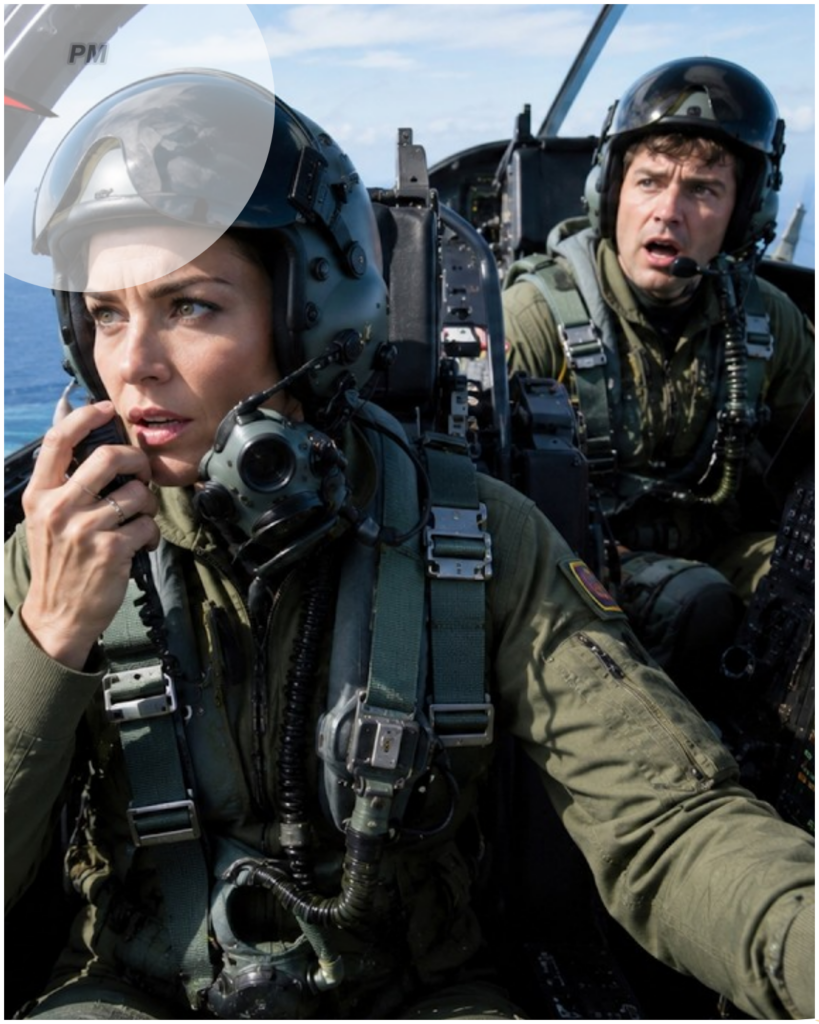
Static crackled in her headset, sharper than the s…
Static crackled in her headset, sharper than the sting of cheap coffee at 3:00 in the morning.
800 miles of bruised purple ocean stretched infinitely below. No land, no backup, just a quiet flashing amber light on the right console and the sudden distinct smell of melting copper wire.
Nata Cassidy shifted her weight in the ejection seat, but there was no relief to be found.
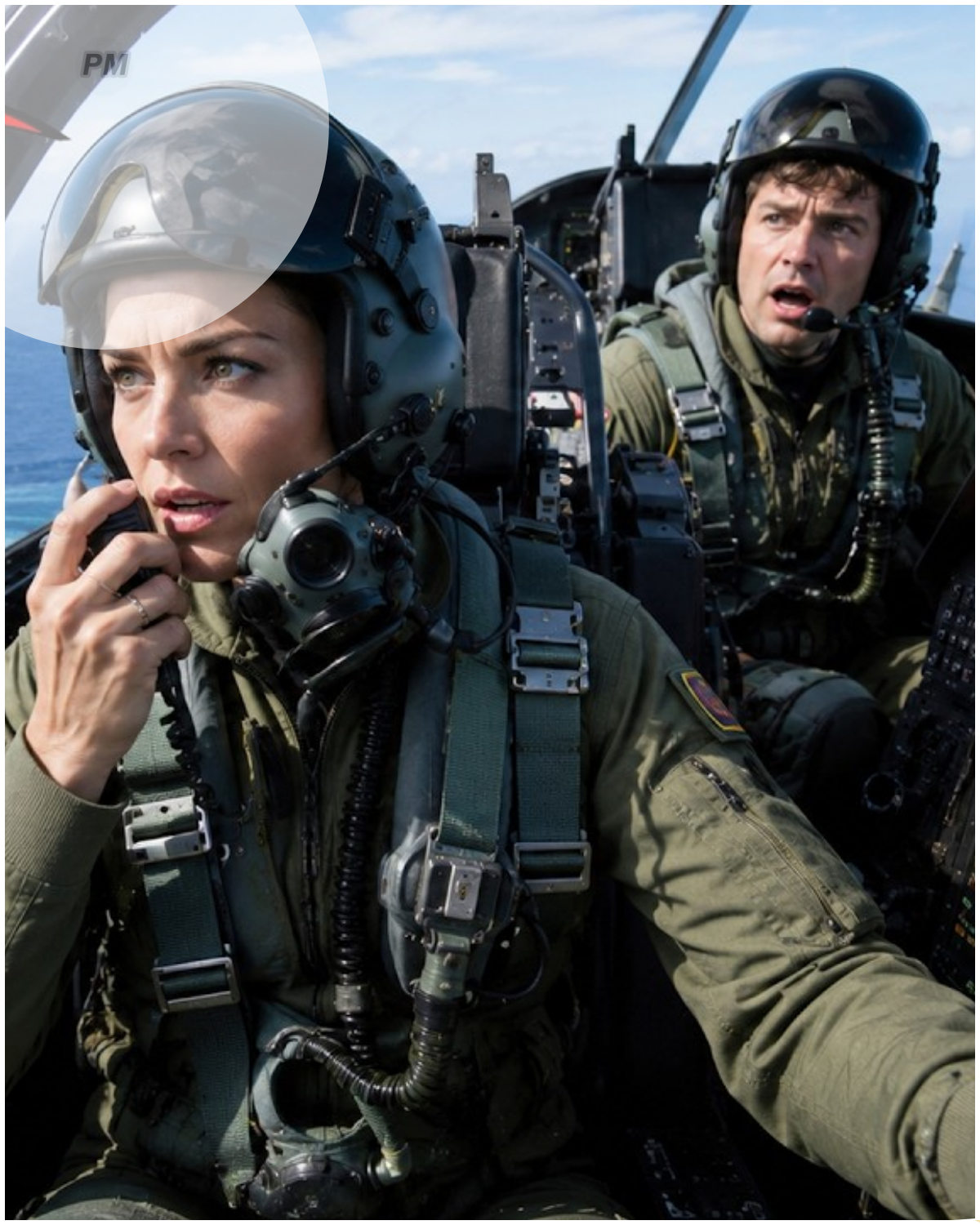
The survival harness dug a familiar dull ache into her left collarbone, a persistent irritation she had ignored for the past 4 hours.
They had been airborne for four hours, and the flight had been the kind of boring that makes pilots careless in small ways.
A routine transit across the North Atlantic, a repositioning leg nobody would remember, the sort of mission where the biggest threat was falling asleep at the controls and the biggest decision was whether to drink the coffee before it went cold.
Nata had drunk hers at 3:00 in the morning, cheap and bitter from a paper cup on the tarmac, and she could still taste it, sour at the back of her throat.
The cockpit had settled into its familiar rhythm hours ago. The low subsonic vibration of two healthy engines coming up through the soles of her boots.
The hiss of the oxygen regulators. The occasional click of a switch as Dwayne ran a systems check behind her, his voice flat on the intercom, reading numbers she already knew.
She had stopped really listening an hour ago, the way you stop listening to a refrigerator hum.
Her mind had drifted to the paperwork waiting at the base, a stack of post-flight forms and maintenance sign-offs that would eat her afternoon, and to the fern on her windowsill that she kept forgetting to water, and to the simple fact that her bladder was full and there was nothing to be done about it at thirty-two thousand feet.
That was the whole of her world. Boredom, discomfort, and routine. Then the smell arrived, and the world changed shape in a single breath.
It started as nothing, a faint tang on the dry air from her oxygen mask, like a penny left on the back of the tongue.
She told herself it was the mask, or the gum she had been chewing since takeoff, spearmint gone stale and chemical.
But the tang thickened while she breathed, turning acrid, turning into ozone and burning plastic, and her body understood what it meant before her mind did.
Her hand tightened on the stick without her telling it to. Her eyes went to the right console without her deciding to look.
And there it was, an amber caution light, flickering at first like it could not decide whether to be afraid, and then holding steady, burning into her vision.
L ENG FEED. Left engine feed pressure. She read it twice, because the first time her brain refused it.
The left engine was fine. The left engine had been fine for four hours. The left engine was the one she trusted.
But the numbers on the display said otherwise. Turbine temperature spiking. Fuel flow dropping like a stone.
And underneath the numbers, the smell, growing stronger with every breath, copper wire melting somewhere behind the panels, an electrical fire eating its way through the left bay while she sat strapped to it.
Dwayne smelled it a second after she did. His voice came over the intercom, nasal and tight, the voice of a man trying very hard to sound like the calm professional he had trained to be, and failing in the way that only made it worse.
He asked if she smelled it, and she did not answer, because answering would have meant admitting it out loud, and admitting it out loud would have made it real.
She inhaled again through the mask, and the air was tainted now, unmistakably, the stench of an electrical fire blooming in her lungs.
She said yes, flat, one word, and felt no adrenaline at all. What she felt was a profound, exhausting annoyance, the kind you feel when the world interrupts you with something stupid at the worst possible moment.
She was tired. Her bladder was full. There was paperwork waiting. And now this. The jet was dying, and her first honest reaction was irritation.
That was the thing nobody ever told civilians about emergencies. You do not feel brave.
You do not feel heroic. You feel annoyed, and then you feel the weight of the work, and then you do the work.
The cockpit of the F-15E Strike Eagle wasn’t a sleek marvel of modern aerodynamics when you were strapped inside it.
It was a vibrating claustrophobic tin can that smelled of old sweat, aviation fuel, and the stale spearmint gum she had been chewing since they left the tarmac.
Below them, the North Atlantic was a flat slab of black iron. It was a sunless, indifferent expanse.
There were no waves visible from 32,000 ft, just a textured void that swallowed any light the overcast sky managed to filter down.
You smell that? The voice in her ear belonged to Dwayne Sullivan, her weapons systems officer, sitting a few feet behind her.
His voice didn’t have the manufactured cool guy draw most aviators practiced in the mirror.
It was nasal, tight, and slightly pitched up. Nata didn’t answer immediately. She inhaled through her oxygen mask.
The sterile dry air from the regulators was suddenly tainted. It started as a subtle tang, like a penny left on the back of your tongue before blooming into the unmistakable acrid stench of an electrical fire.
Ozone and burning plastic. Yeah, Nata said. Her voice was flat. She didn’t feel a surge of adrenaline.
She felt a profound, exhausting annoyance. She was tired. Her bladder was uncomfortably full. And she had a stack of post-flight paperwork waiting for her at the base that she had been dreading.