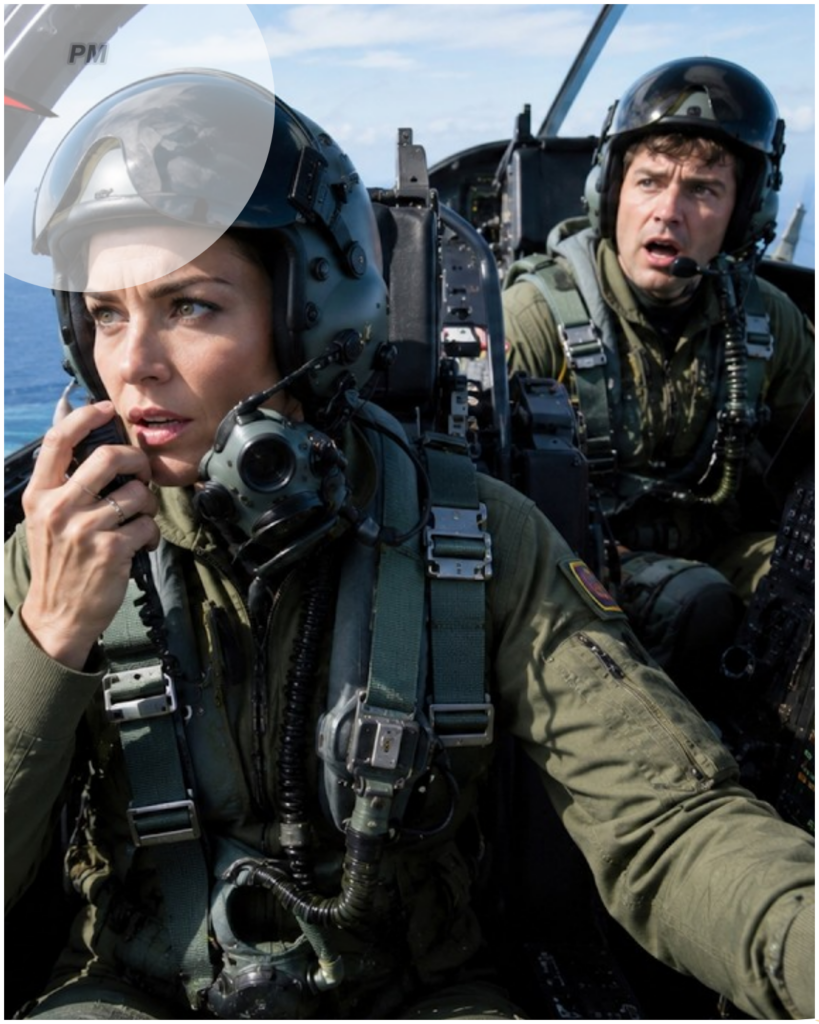
Now, this on the right side instrument panel, an a…
Now, this on the right side instrument panel, an amber caution light flickered, then held steady.
L ENG FEED. We’ve got a feed pressure warning on the left, Dwayne said, his hands audibly rustling the thick laminated pages of the emergency checklist.
The sound of that plastic flipping was loud over the intercom, loud and useless. I see it, Dave, Nata muttered, her gloved fingers resting lightly on the center stick.
She checked her engine displays. The numbers were entirely wrong. The left engine turbine temperature was spiking, but the fuel flow was dropping precipitously.
It wasn’t a catastrophic explosion. Hollywood always got that wrong. Planes rarely blew up in a spectacular ball of fire.
They died quietly of systemic cascading illnesses. A frayed wire arcs against a titanium bulkhead.
A composite seal fails. A micro valve sticks. And suddenly millions of dollars of engineering turns into a very heavy glider over an ocean that kills human beings in 3 minutes.
Checklist says we need to isolate the left manifold. Dwayne read, his breathing heavy, the microphone picking up the wet smack of his lips as he swallowed.
Don’t bother, Nata said. What do you mean don’t bother? It’s step two. Look at your total fuel, Dave.
A heavy silence fell over the intercom, saved for the rhythmic hiss of their oxygen regulators.
Nata stared at her own display. The digital readout for their internal wing tanks was scrolling downward with terrifying speed, like a stopwatch ticking backward.
They weren’t just losing feed pressure. The electrical short had likely triggered a cascade failure in the transfer pumps or worse sparked an uncontained bleed air leak that was currently melting through the main fuel lines.
They were bleeding JP-8 jet fuel into the slipstream at a rate of 50 gallons a minute.
Nata felt a strange cold detachment settling over her. Her hands didn’t shake. Instead, she noticed absurd details.
The fuel gauges told the story in numbers that fell too fast to be real.
Nata stared at the digital readout for the internal wing tanks and watched it scroll downward like a stopwatch running backward, each digit a small theft.
Fifty gallons a minute. She did the arithmetic the way she had been trained, cold and fast, because the arithmetic was the only honest thing left in the cockpit.
They had taken off with full internal tanks and two external drop tanks, and they had burned through four hours of it already, and what was left was leaving through a hole she could not see, pouring out into the slipstream behind them in a thin invisible river of JP-8.
At that rate the right engine would starve in twelve minutes. Maybe fourteen if she throttled back to a crawl, but pulling the throttle back meant dropping altitude, and dropping altitude meant thicker air, and thicker air meant burning more fuel to stay in the sky.
It was a zero-sum game, and every move she made cost her something she did not have.
The checklist said to isolate the left manifold, and Dwayne was already reading it, his hands rustling the thick laminated pages, the sound loud and useless over the intercom.
But Nata could see what the checklist could not. The electrical short had probably triggered a cascade failure in the transfer pumps, or worse, sparked an uncontained bleed air leak that was melting through the main fuel lines even as they spoke.
The feed pressure warning was only the first symptom. The fire was the disease. She told Dwayne not to bother, and she heard the disbelief in his voice when he asked what she meant, because it was step two, and step two was supposed to save them.
She told him to look at his total fuel, and then she waited through the heavy silence that followed, the rhythmic hiss of their oxygen regulators the only sound on the intercom, while he did the same math she had done and arrived at the same answer.
There was no fixing this. There was no procedure for a jet that was bleeding to death over an ocean with no land in any direction.
The airplane had become a glider with a countdown, and the countdown was running. She toggled the radio and declared the emergency, and the seconds stretched while the signal crossed eight hundred miles of empty sky.
When Trevon Mitchell answered from the AWACS, his voice was infuriatingly calm, the practiced calm of a controller who has done this a hundred times in training and never once for real.
He asked for the nature of the emergency and her intentions, and she gave him both, her tone conversational, masking the knot twisting in her gut.
A massive fuel hemorrhage and an uncontained electrical fire in the left bay. Intentions pending.
Approaching bingo fuel. She could hear him typing, could picture the crew around him drawing a circle on their screens, and she knew what the circle would show.
Eight hundred and forty miles to Keflavik. Six hundred miles to Narsarsuaq. Ten minutes of flight.
The numbers did not fit together in any order that ended with them alive, and for a moment the cockpit was very quiet, and the only sound was the hiss of the regulators and the low vibration of the one good engine, working too hard, carrying them both toward a decision she had not made yet.
The way the stitching on her Nomex flight glove was slightly frayed at the thumb, the low subsonic vibration of the remaining good engine vibrating through the soles of her boots.
She reached up and toggled the radio. Control, Eagle 21, declaring an emergency. The response took a few seconds.
The distance was a physical thing eating the radio waves. When the voice of Trevon Mitchell, the AWACS controller, came back, it was infuriatingly calm.
Eagle 21 control copy emergency state nature and intentions. Nature is a massive fuel hemorrhage and an uncontained electrical fire in the left bay, Nata said, her tone conversational, masking the heavy knot twisting in her gut.
Intentions are currently pending. We are rapidly approaching bingo fuel. Copy 21. Radar shows you 840 mi from Keflavik.
I have an alternate strip at Narsarsuaq, but you’re 600 miles out from that. We aren’t making 600 miles, Control, Nata said.
She did the math in her head. At their current bleed rate, the right engine would starve in 12 minutes.


