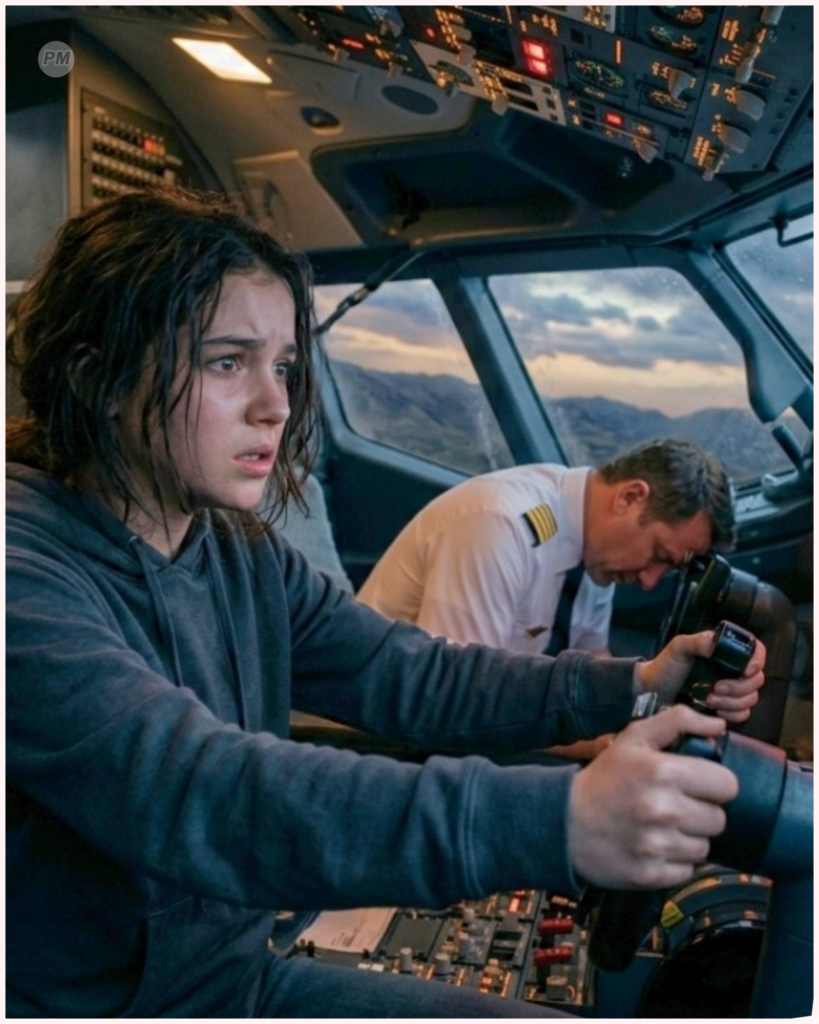
The passengers from flight 801 were being processe…
The passengers from flight 801 were being processed in a hanger at the far end of the apron.
A large facility converted into a temporary reception area with folding chairs and water and blankets and a team of counselors from the base.
Sarah had been advised by the base liaison that it might be better to delay her appearance that the passengers were still in an elevated emotional state.
She had listened to this advice and then walked to the hanger anyway because she had her own views about obligation and this was one of them.
The room was large and the light was the flat functional light of a working facility and 300 people in folding chairs with blankets around their shoulders looked simultaneously like a crowd and like something much smaller and more vulnerable than a crowd.
Some were talking, some were on phones. A woman near the entrance was crying in the thorough unself-conscious way of someone who had held it together for as long as holding it together was required and had now released the hold.
People noticed Sarah when she walked in. It moved through the room in the way things move through rooms when something significant has happened and the person most connected to it has arrived.
Not a ripple, more like a change in pressure. Heads turning in sequence, a recognition traveling from person to person.
She did not stop walking. She moved through the room without performance, without announcement, just present and deliberate.
She stopped at a chair beside an elderly woman who was sitting alone with a paper cup of water she had not touched.
The woman looked at her. She was in her late 70s, white-haired with the kind of face that had been beautiful for a long time and had become something more interesting than beautiful as the years accumulated.
My grandson was born 2 days ago, she said. I was going home to meet him.
Sarah sat in the chair beside her. What’s his name? Thomas, after my husband. That’s a good name.
The woman reached out and put her hand over Sarah’s hand where it rested on her knee.
Her grip was firm. The grip of someone who wanted to convey something specific and was choosing touch because words were insufficient.
Thank you, she said, not with drama, with the directness of someone stating a fact.
Sarah did not deflect it. She had spent years deflecting things that were meant for her, and she was beginning to understand that deflection was its own kind of dishonesty.
“Go meet Thomas,” she said. She stayed in the hanger for an hour. She did not make a speech.
She did not position herself at the front of the room. She moved through it doing what was needed in the place it was needed.
And what was needed here was simply for the person who had flown them to be visible and ordinary to prove by her presence that the extraordinary thing was over and that what came next was the unremarkable business of living.
Ryan Beckett found her near the exit. He looked like a man who had been awake for 48 hours and had just discovered a 31st hour he didn’t know existed.
He had shed his uniform jacket and his sleeves were rolled to the elbow. And there was a quality about him of something stripped down to its essentials.
All professional surface burned away by the morning. He stood in front of her and said nothing for a moment.
Then he reached into his chest pocket and drew out the photograph. He held it with both hands and looked at it and then looked at her.
And Sarah understood from the specific quality of his expression, something between apology and grief that what was coming was not small.
I found this in your bag, he said. When I came to the cockpit, I shouldn’t have looked.
I’m sorry. She looked at the photograph. She looked at his face. Tell me, she said.
He told her about the name tag. He told her about the last name. He told her about this handwriting on the back and the initial D and the way things had assembled themselves in his mind into a conclusion he had spent the rest of the flight hoping was wrong.
When he finished, Sarah stood very still. The hanger noise continued around them. Somewhere across the room, a child was laughing.
The world was doing what the world does proceeding indifferent to the fact that something had just shifted irrevocably inside a person standing near the exit.
The first officer, she said, James Holt. Yes. She looked at the photograph in Ryan’s hands.
She looked at D and the period after it and the way the ink had faded at the corners from 5 years of handling.
Thank you for telling me, she said. She took the photograph. She put it in her pocket and she went to find James Hull.
The base medical facility was a low building behind the main administration complex, clean and efficiently staffed.
The first officer had been moved there from the aircraft within the first half hour.
And by the time Sarah arrived, he had been there long enough for the oxygen to have done its full work.
He was awake. She knew this before she reached his room because she could hear him in the hallway, a young man’s voice in conversation with a medical staff member, the voice of someone piecing themselves back together, asking questions, orienting to place and time and the facts of what had happened.
She stopped outside the door. She had been in more difficult situations than this. She had walked into briefing rooms where she was the only person who knew the mission had gone wrong.
She had stood at the edge of a runway in Syria in the late afternoon light and done the accounting.
She had sat across from a casualty officer and listened to the official language for the things she had already known in the unspoken language of the radio going silent.
She had done harder things than walking through a door. She walked through the door.
James Holt was sitting up in the hospital bed with the posture of someone who had just demonstrated to a medical professional that they could sit up without assistance.
He was young in the way that first officers are young, not naive, but not yet carrying the accumulated weight of the years that make a face look like it belongs to someone who has survived a few things.
His dark hair was disordered from the oxygen mask, and he had the pour of someone recently unconscious, but his eyes were clear.
He looked at her, and he knew who she was. She could see it in the way his expression reorganized itself, not with shock, but with the particular quality of recognition, meeting a motion of a moment arriving that has been anticipated without being expected.
Captain Caldwell, he said, Mr. Holt. She crossed the room and stood at the foot of the bed.
How are you feeling? Like someone turned me off and back on again. He said it without self-pity, a fact delivered as such.
They told me what happened, what you did. He looked at her steadily. The whole aircraft.
The whole aircraft. She agreed. I mean, a silence settled between them. Not uncomfortable. The silence of two people who both know something that hasn’t been said yet and are finding the shape of the moment that contains it.
My brother used to talk about you, James said. Sarah held that sentence carefully the way you hold something fragile from underneath with both hands.
He said you were the best pilot he ever flew with. James continued. His voice was even.
She understood that he had been carrying this for a long time and had learned to carry it without it being audible in every word.
He said you had a quality in the air that he’d never seen in anyone else.
He said it wasn’t skill exactly or not only skill. He said it was that you cared about getting everyone home, that you counted them every single time before you took off and after you landed, and if the numbers didn’t match, you didn’t leave.
Sarah did not trust herself to speak. He died in Syria, James said, in 2019.
You know that? Yes, I know you do. He looked at her without accusation, with something that was harder to receive than accusation because it was entirely free of it.
He wrote letters before every deployment. He gave them to a friend on base with instructions, you know, if something happened.
Most of them went to family. There was one that wasn’t for family. He reached toward the small table beside the bed where a nurse had placed the few items from his flight bag.
Underneath them was an envelope, cream colored, letter sized. Its seal long since broken its edges worn soft from being handled and replaced and handled again.
He held it out to her. He told his friend to find a way to get it to you, James said.
His friend tried. He didn’t know where you’d gone. After you retired, you were just gone.
He paused. I’ve been carrying it for 4 years. I became a pilot and I thought maybe someday I’d be in the same room as you.