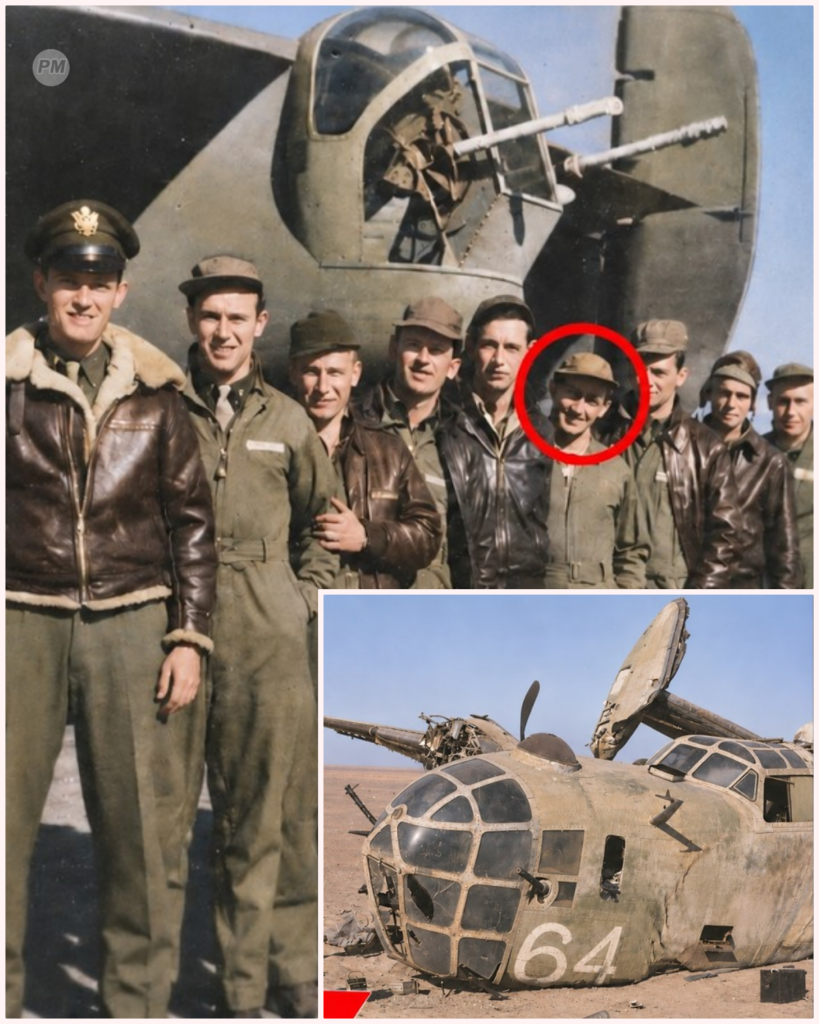
The bomber lies broken on the desert floor
The bomber lies broken on the desert floor. Its wings are still recognizable. The fuselage has split, but enough of the aircraft remains to make its identity recoverable.
There is no crew beside it. This is Lady Be Good, an American B-24 that disappeared in 1943.
When it was found years later in the Libyan Desert, it answered one question immediately.
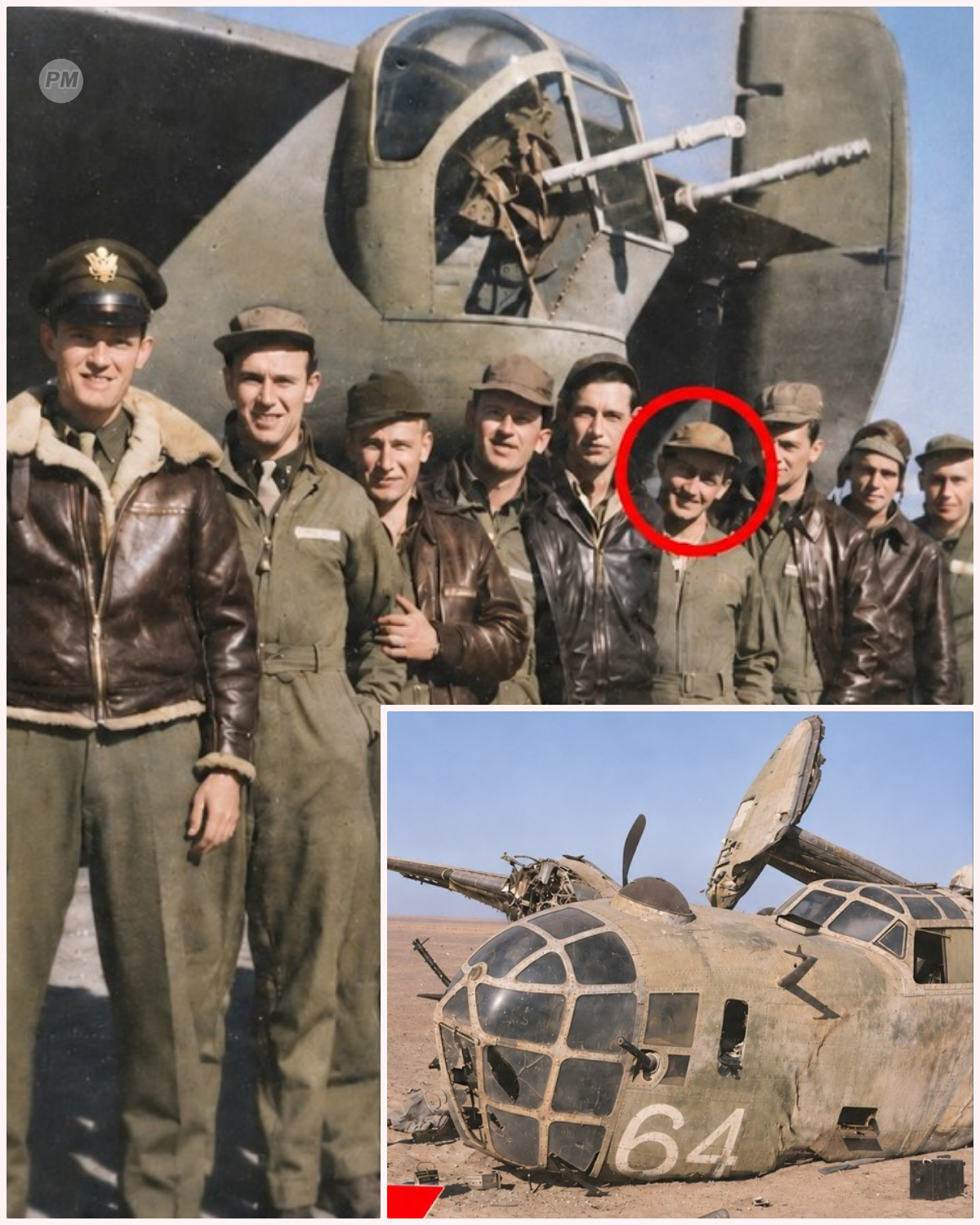
The aircraft had been lost at sea, where the original search had concentrated. It opened another question that would take much longer to answer.
If the airplane was here, whether the nine men had flown it. The wreck eventually led investigators to equipment, improvised markers, and a small diary.
Those discoveries made it possible to follow parts of the crew’s journey after they left the aircraft.
They also revealed a cruel difference between the two searches. The searches in 1959 knew where the airplane was, while the man walking through the desert in 1943 did not.
We know that none of the crew survived. The purpose of returning to this case is to understand the sequence that was recovered.
And why finding a remarkable, recognizable airplane didn’t mean finding an immediately recognizable story. There are two maps to keep in view.
One shows a bombing mission crossing the Mediterranean and returning toward Libya. The other shows a group of men moving on foot through the desert.
For years, the outside world didn’t know that the second map existed. The link appeared during oil exploration.
Survey crews working over Libya spotted an aircraft far from the area in which the wartime search had expected to find it.
By 1959, people had reached the site on the ground and begun identifying what remained.
The desert had preserved enough of the names and maintenance information to matter. These were not anonymous pieces of metal that might belong to any flight.
They connected the wreck to a particular aircraft and a particular crew. 16 years after Lady Be Good failed to return, its disappearance had become in place could stand, but the place held only half the answer.
On April 4th, 1943, Lady BeGood left Soluch near Benghazi for a mission directed at Naples across the Mediterranean.
The aircraft belonged to the 514th Squadron of the 376th Bomb Group. The nine-man crew included pilot William Hatton, co-pilot Robert Toner, navigator DP Hayes, and bombardier John Wulavka.
Harold Ripslinger was the flight engineer, Robert Lamotte, the radar operator, Guy Shelley, Vernon Moore, and Samuel Adams completed the crew.
The mission didn’t unfold as a simple formation flight out and back. Conditions disrupted the operation.
The National Archives account describes aircraft turning back. Lady BeGood was among the aircraft that eventually headed toward Libya without completing the planned attack as intended.
The crucial part of the story is the return. Somewhere between the crew’s estimate of its position and its actual position, a gap opened.
The bomber passed beyond its destination and continued into the desert. Later reconstructions discuss navigation and radio direction difficulties.
The surviving evidence supports a serious loss of position. It doesn’t let us stand inside the cockpit and reproduce every instrument reading, discussion, and decision.
That distinction matters because the outcome makes the mistakes seem obvious. Put the wreck on a modern map and the flight has gone the wrong way for a very long time.
The people in the airplane didn’t have that map with the marker showing their true position.
A heading is a direction of travel. It becomes a useful route only when it’s connected to a reliable position.
If the starting assumption is wrong, continuing on what seems the correct heading can carry an aircraft farther from safety while still appearing consistent with the plan.