The spring after I retired, I walked down to our d…
The spring after I retired, I walked down to our dock with my morning coffee.
I came back up the hill without it. I had set it down on the dock boards and I did not even know it.
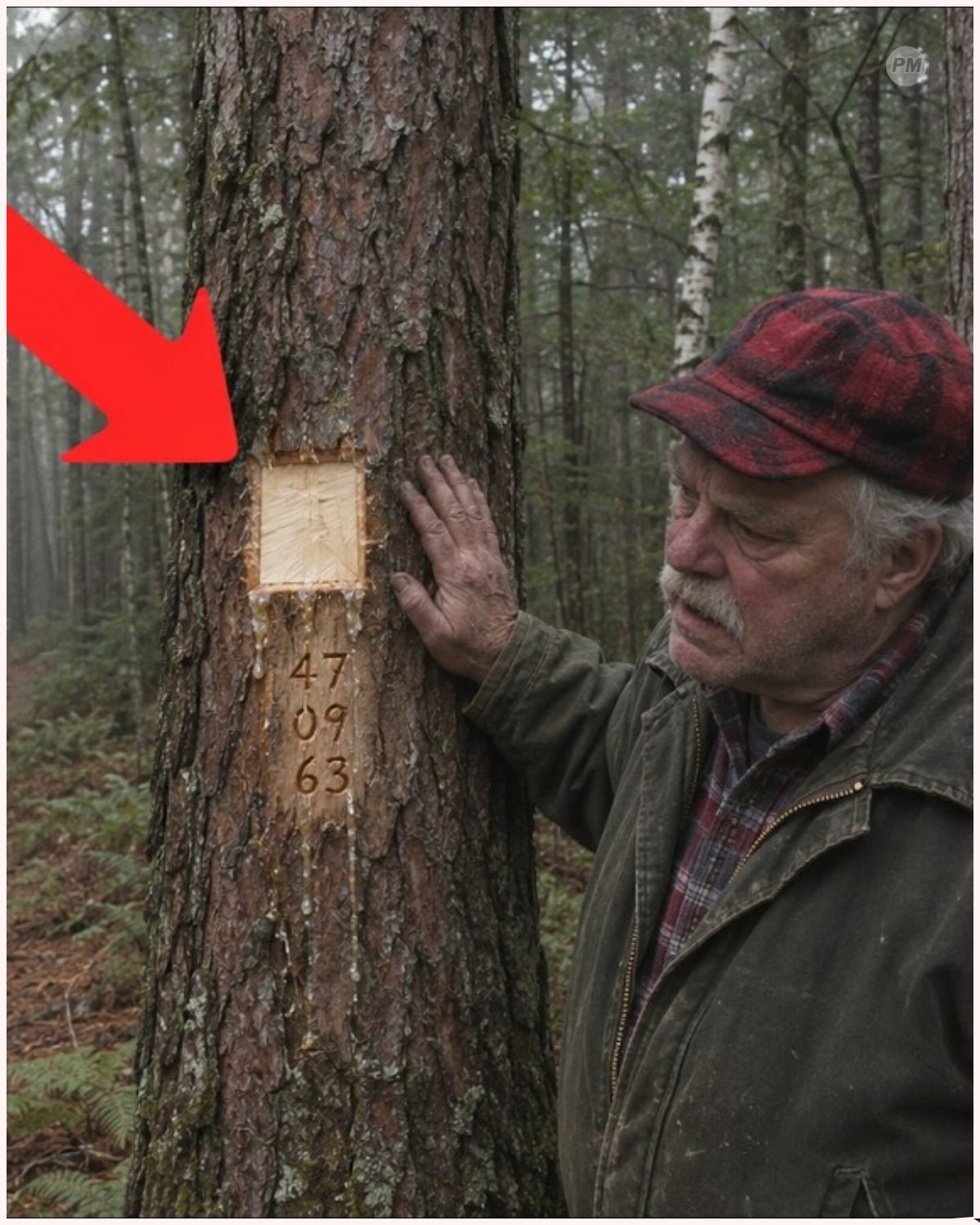
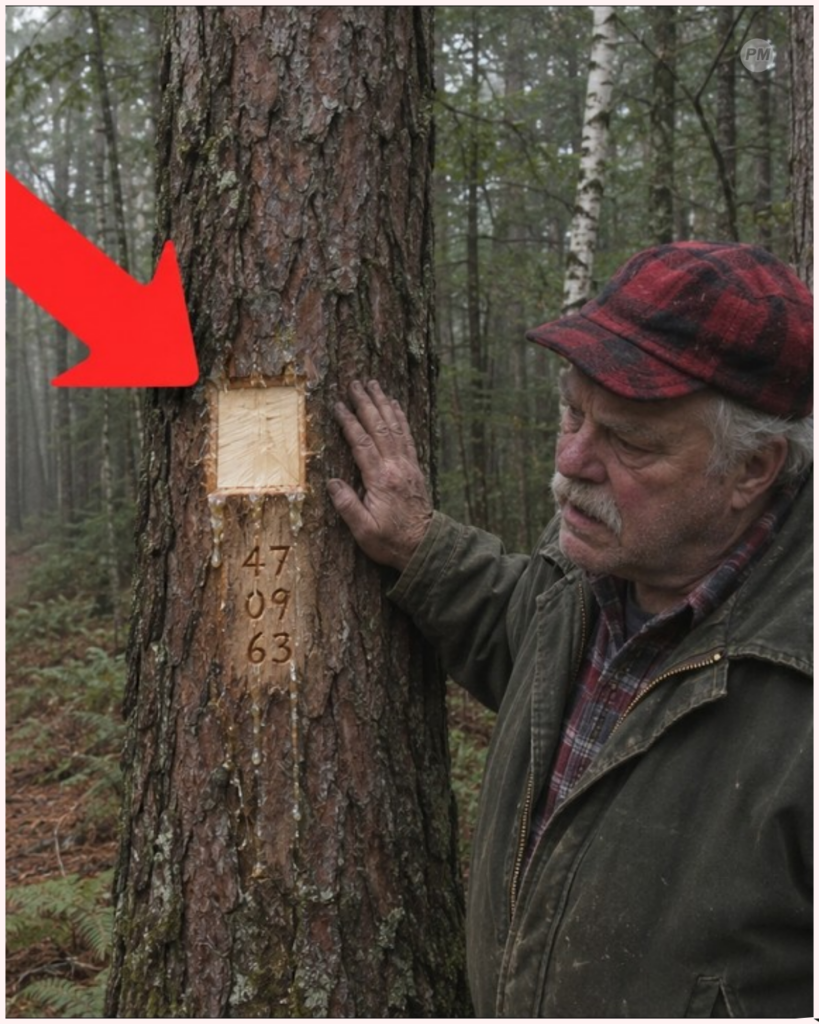
There is a big white pine at the end of our dock and on the side that faces our kitchen window, somebody had cut a blaze, a flat white face chopped into the bark with an axe, the sap still running down it.
Above it, a little notch, like a roof. And under it, carved into the bare wood with a knife, a string of small figures.
I knew that mark. I had come across it 11 times in 32 years in two states.
And every time, the figures under it said the same thing. It took me until that morning to understand them.
Before I tell you what they meant, hit subscribe. 11 of these take a while to tell and I want you here for the 12th.
I worked the Wisconsin side of the Michigan line as a game warden, 1988 until 2020, 32 years in the same green truck or near enough.
A warden spends most of his life alone in the woods at hours when nobody else is out there.
So, he sees things. Most of them have an answer. A bear, a drunk, a trick of the moon on the water.
These 11 never got one. Half of these I saw myself and they’re [snorts] in my patrol log in my own hand.
The rest I got from wardens and Michigan conservation officers I worked beside for years, men and women I would have trusted with my life and some days did.
Every one of these has a place and a date. And somewhere in every one of them, there is that mark on a tree.
First, the mark. A hundred and some years ago, before the big pine was cut, the lumber companies hired timber cruisers.
A cruiser went into uncut country alone, sometimes for weeks. He carried a compass, an axe, a blanket, and a pack of salt and flour.
He walked the land square mile by square mile. He sized up every stand of pine and figured how many board feet it would cut.
And he marked his lines by blazing trees. He chopped a flat face into the bark so the next man could find his way.
Some cruisers cut figures into the blaze with a little hooked knife called a scribe.
A blaze is an injury to a tree and like any injury, it heals. In a few years, the bark starts rolling in from the edges.
In 20 years, you can barely find it. Remember that. It matters at the end.
Where the cruiser marked, the crews came the next winter. And where the crews came, the woods came down.
What comes next is not in the history books. The old-timers along the Flambeau River talked about one cruiser in particular.
They called him Pell. Ezra Pell. Nobody could tell me which company he worked for.
The story went that he walked into the big timber one fall in the 1890s.
He was cruising a section nobody else wanted. He never walked out. No body was ever found, no pack, no axe.
But the blazes kept turning up, fresh ones with a little notch above them in country where no cruiser had any business being anymore.
The old-timers had a saying about those blazes. Pell marks it and the crew comes for it.
I heard that saying for the first time in the fall of 1988. I had been wearing the uniform since that spring.
Number one, the Flambeau River State Forest, November of ’88. They gave me a piece of the Flambeau for my first district.
Big hardwoods, cedar swamps, the river running dark through the middle of it. That November, a call came in about timber theft.
Somebody had been marking big timber on state land, deep in. The way a thief marks what he plans to take later.
People think timber theft is a joke until they see the money in it. One good old sugar maple with nice grain can bring hundreds of dollars at the right mill.
Thieves walk in during the fall and mark what they want. They come back in the winter with a skidder when the ground is frozen.
So, I drove to the end of the logging road and walked in. It was gray and cold with a little snow in the air.
The kind of day when the woods go so quiet you can hear your own coat.
It took me most of an hour to find the first one, a hemlock maybe 3 ft through.
A blaze chopped into it at chest height. Clean ax work. Two strokes on top, two on the bottom, and the face peeled off flat and white.
Above the blaze, a small notch cut like a roof over a door. And under it, scribed into the bare wood, a line of tiny figures.
I could not make them out because the sap had run down over them and glazed them.
The cut was so fresh the wood was still wet. I put my finger on it and it came away sticky with pitch.
There was another blaze 40 ft on and another past that. A straight line through hemlock and yellow birch as straight as a fence.
I followed it. 32, green as grass, and I thought I was about to catch my first timber thief.
The line went down a slope and across a little creek and into a cedar swamp.
It never bent. When a big windfall lay across the way, the blazes did not go around it.
The next one was on the far side, right in line. Like whoever cut them had stepped over a log as tall as my shoulder.
I looked for tracks. In that soft ground and that little skiff of snow, there should have been tracks.
There were none, only mine. Then the line came out of the cedars at the edge of a beaver flowage, maybe 200 yd of open black water with a skin of new ice along the edges.
And across the water, on the far shore, I could see the next blaze. White on a big pine, dead in line with all the others.