Stopping at the trees that were still standing lik…
Stopping at the trees that were still standing like he was counting them. She never knew who he was.
Chuck looked around at the flowage and said, “Well, I guess we are on the water.”
It kept up a little longer, then it quit the way a snow squall quits.
We ran the boat in along the nearest island to look for any sign of fire.
On the shore, there was an old pine stump as wide as a kitchen table.
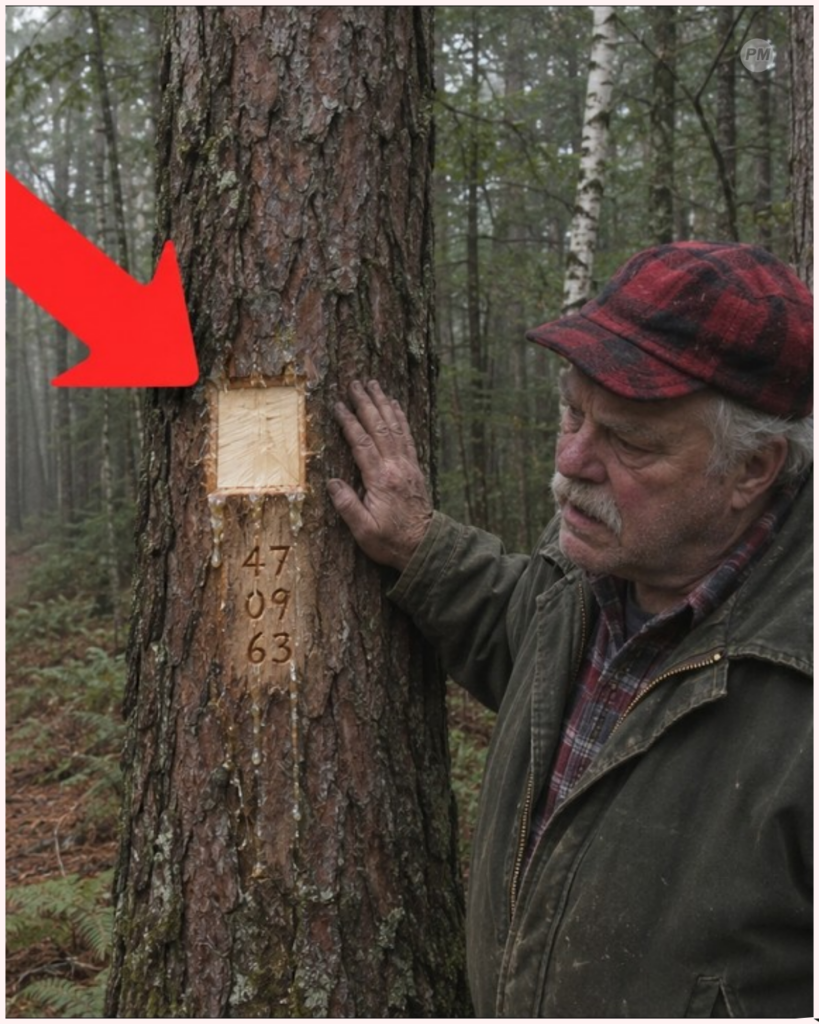
It was charred black from some fire a hundred years ago and chopped into the black of that stump, white and fresh, was a blaze, the notch above it, and the figures.
Township 42 North, Range 6 East, Section 20. Chuck said them out loud. Then he asked me what they meant.
I told him I had been asking that question for going on 11 years. Chuck went back to his campsites the next week like nothing had happened, but he told me later what he did that night.
He went home and checked the batteries in every smoke alarm in his house, twice.
Six down, five to go. The last five are the ones I still lose sleep over.
So, subscribe now and keep your place because in number seven, somebody calls the cruiser’s name out loud in the dark, and somebody answers.
Number seven, the old CCC camp at Clam Lake in the Chequamegon National Forest, September of 2002.
“Fall in.” That is what Roy Bjork heard, sitting in his truck at 11:00 at night with the window down.
First one short whistle out in the planted pines, like a work whistle or a coach calling a team in.
Then a man’s voice, loud and clear, “Fall in.” Roy was a warden I worked with.
He was parked on the old campgrounds that night waiting on a party of bear hunters.
He expected them to run their hounds where they should not. In the 1930s, the government put young men to work in these woods, the CCC boys, most of them city kids who had never slept a night outdoors.
Camp Clam Lake stood just east of town on Highway 77. Today, it is a few concrete footings in the brush and red pine those boys planted still standing in perfect order nearly 90 years later.
Out of those lines of pine came a roll call, a man’s voice saying names one after another.
Anderson, Barrett, Cole, Dumas. After every name, a young voice answered, “Here, here, here.” Dozens of them coming out of those dark straight lines of pine right where the barracks used to stand.
Roy grew up near Hayward and his uncle had been a CCC boy in one of those camps.
That uncle used to tell him one thing, “If you ever hear the roll called and it is not your outfit, you keep your mouth shut until they finish.”
Roy said he kept his mouth shut. He said he held his breath so long his chest hurt.
His uncle had told him one more thing years before that Roy had always taken for a tall tale.
In the summer of 1937, a young man of 20 from Milwaukee in that camp could not sleep.
One night after lights out, he heard a roll call out in the pines. He thought it was a prank by the other boys.
When [snorts] his own name came up, he answered, “Here.” He walked out of the barracks to see who was calling.
The other boys found his cot empty in the morning, his boots still under it.
He was never found. The men who searched for him came across a fresh blaze out past the last planting line.
It had a little notch cut over it. It went all the way through the alphabet.
Young voices one after another, some of them cracking the way a boy’s voice cracks, and at the very end, after the last name, the voice calling the roll said one more, “Pell.”
And from back in the pines, an old voice answered, slow and flat and dry like a board being pulled off a wall, “Here.”
Then nothing. Just the crickets and the hum of Roy’s engine. Roy did not get out of the truck until daylight.
When he did, he walked into the planted pines. In the middle of the plantation stood one big old white pine.
The CCC boys had left it, maybe for the shade. On it was a fresh blaze with the notch above it.
Roy had heard me mention the figures once at a meeting, the way you mention something odd and then laugh it off.
He called me from the gas station in Clam Lake that morning. “Lars,” he said, “Township 42 North, Range 6 East, Section 20.”
“You want to tell me what is going on?” I said I had no idea.
That was still the truth. Three years later, something walked up out of Lake Superior to show us one more.
Number eight, Au Sable Point on the Lake Superior shore in Pictured Rocks National Lakeshore.
September of 2005. The stretch of Superior from Munising east to Whitefish Point is called the Shipwreck Coast.
Walk from the Hurricane River toward the Au Sable Lighthouse and you pass the bones of old wrecks, ribs of wooden ships, iron spikes, big timbers half buried in the sand.
A Michigan conservation officer named Pete La Casse walked that beach near dark after a hard September blow.
He was looking for a fisherman who had not come back to his car. He found tracks instead, bare footprints, a big man’s feet coming up out of the surf, deep at the ball of the foot, like a man walking uphill under a heavy load, and every one of them full of water, right to the brim.
Sand drains fast. Water never sits in a footprint on a beach. These stayed full the whole way up through the dune grass, like the lake had walked up out of itself.
Nothing went back down to the water. The old commercial fisherman on that coast put it this way, “If something walks up out of the big lake, you stay off its line.”
So, Pete walked beside the tracks, never in them. The prints went up to a birch at the top of the dune, and there were no more.
On that birch, the white bark had been chopped back to the wet wood, as high as a tall man’s chest, ablaze.
The notch above it, the figures under it. The fisherman turned up warm and dry at a bar in Grand Marais.