Silas Hensley had spent most of his life guiding people through the mountains, but there was one instruction he gave only to the ones who planned to stay out after dark.
If they saw a lantern ahead of them on the trail, they were supposed to stop walking and watch it.
A person carrying a light would usually continue around the next bend or turn to see who was behind them.
If the light stopped when they stopped and remained there without anyone speaking, Silas wanted them to turn back.
He understood how that sounded to visitors, especially when they heard it beside a parked car on a clear afternoon.
He also knew what happened to a search volunteer who decided that any light in the woods had to belong to someone who needed help.
By the time a recording reached him in the autumn of 2024, Silas was 68 and no longer took clients on overnight trips.
He still drove people [music] to trailheads and helped families identify routes their relatives might have used, but pain in his knees had made the steeper ground difficult.
He lived in the same Appalachian valley where he grew up in a house above the creek with a gravel drive that delivery drivers sometimes missed.
Local people knew he disliked discussing the search for Alan Webb and Curtis Hale. Both men had disappeared while fishing in the summer of 1978, and Silas had been among the volunteers who spent the following week trying to reach a light on the opposite side of a ravine.
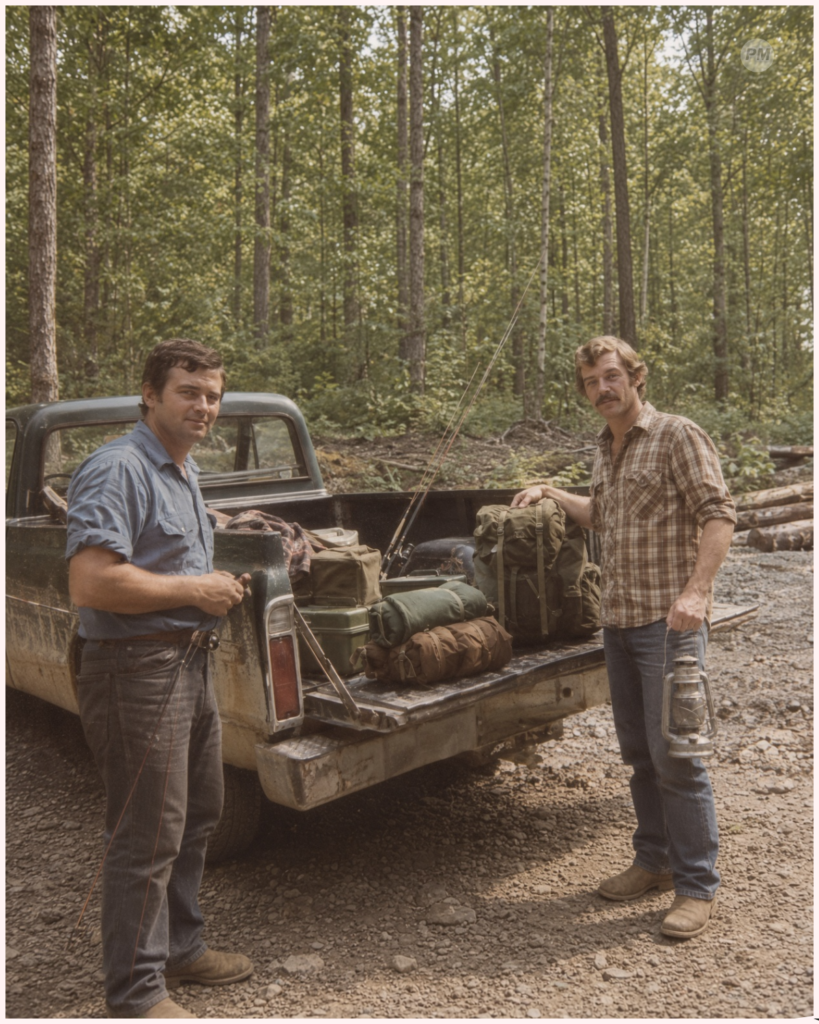
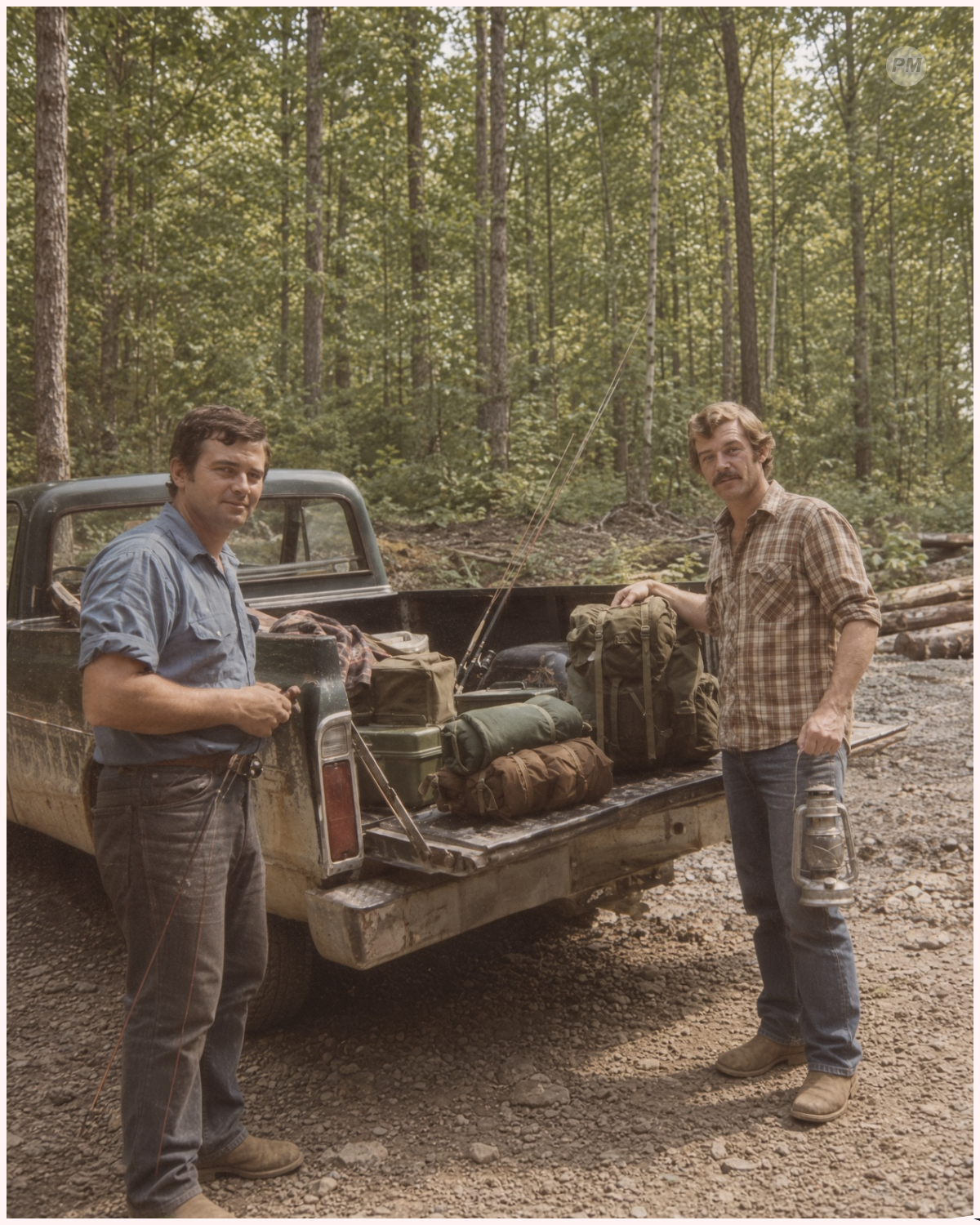
Alan and Curtis had arrived on a Friday afternoon in a pickup carrying fishing equipment and enough camping supplies for two nights.
They had visited the area before, although neither lived in the the Alan worked with a cousin of Silas’s, which was how the search eventually drew him in.
The men intended to follow the creek upstream, camp near a broad pool below an old road crossing, and return on Sunday.
They left the truck beside a disused loading area where people sometimes parked to fish.
A local resident saw them heading toward the water with their packs, [music] and remembered Curtis carrying a metal lantern by its handle.
When Allen failed to arrive at work on Monday, his wife began calling people who might know whether the trip had run late.
By that afternoon, someone had checked the parking area and found the pickup still there.
There was no note on the windshield, and no indication that the men had returned to it.
The first volunteers followed the creek until they located a small campsite above the pool.
Two sleeping bags were inside a tent, and fishing equipment lay beneath a sheet of plastic.
A cooking pot stood near the remains of a fire. Nothing suggested a struggle, but the campsite gave no clear answer about when the men had left or what they had taken with them.
Silas joined the search on Tuesday morning. He was 22, knew the creek from childhood, and had the stamina to cover ground that older volunteers could not.
His father had worked in timber operations on the surrounding slopes, and had taught him which abandoned roads could still be followed and which ended at washouts.
That knowledge mattered because the maps available to the search team showed tracks that no longer existed as continuous routes.
Some had become narrow animal paths, while others disappeared beneath landslides or ended where a stream had taken out the supporting ground.
A line on the map could lead a stranger into a place [music] from which returning required hours of climbing.
Searchers initially worked on the assumption that one fisherman had been injured and the other had stayed with him or gone for help.
They checked the creek banks, looked beneath overhangs, and followed the routes connecting the water to the higher roads.
The campsite sat close enough to rough ground that a fall was possible. But nobody found disturbed or abandoned equipment that pointed toward one location.
Rain had passed through over the weekend [music] and tracks near the camp overlapped with prints left by the first people to find it.
By Tuesday evening the search [music] was spreading farther up the tributaries. The first light appeared shortly before full darkness while several volunteers were gathered on an open patch above the creek.
Across the ravine, a yellow glow moved between [music] tree trunks at a height that seemed consistent with someone carrying a lantern.
It traveled a short distance, disappeared, and returned farther along the slope. One of the volunteers called out the missing men’s names.
The light stopped and everyone around him became quiet enough [music] to listen for an answer.
They heard water below and insects in the brush but no voice. When the light began moving again, the searchers interpreted the pause as the response.
A team started down toward the creek while someone stayed above to watch the glow and direct them by radio.
The descent took longer than expected because the banks steepened beneath the trees. By the time the volunteers reached the water and found a place to cross the light appeared higher on the opposite slope.
The observer believed the person carrying it was climbing perhaps trying to reach open ground where [music] rescuers could see him.
The team followed as far as they safely could, calling and stopping to listen. They found no footprints or camping equipment, and the light disappeared before they reached the area where they thought it had been.
Nobody treated that first attempt as extraordinary. Distance was difficult to judge across a wooded ravine at night, and a moving light could appear to change elevation [music] when seen through gaps and branches.
The volunteers were tired, their equipment was limited, and someone injured or confused might not respond as expected.
As what mattered was that several people had seen a light in the search area.
The possibility that one of the fishermen was still alive gave the teams a reason to continue after dark, despite the risks of moving through the steep ground.
The following evening, the glow returned. This time Silas watched it from a position farther along the ridge while another group prepared to descend.
It swayed as it moved, rising and falling with a rhythm he associated with a hand-carried lantern.
He could not see the person holding it, but the trees concealed most of the slope.
When the team below stopped to work around a fallen trunk, the light also became still.
[music] It remained visible until they started moving again, then continued through the dark at roughly the same pace.
Silas noticed the timing without knowing what to make of it. The group reached [music] the opposite bank and began climbing toward the last reported position.
Again, the light appeared above them. A volunteer called that they were there to help and asked the person to stay where [music] he was.
For several seconds, the lantern seemed motionless, then shifted sideways through the trees. The searchers followed until loose stones began rolling beneath their boots.
They eventually withdrew because they could no longer find a safe route uphill. Back at the temporary camp, people disagreed about how far the light had traveled and whether its movement meant the fishermen were trying to lead them somewhere.
Silas might have accepted those explanations if the light had appeared on a slope he did not know.
On the third evening, however, he moved to a rocky opening where two ridges gave him a clear reference.
From there, he recognized the line it followed. An old hauling road had once crossed that part of the mountain, running above the creek before turning around a rock face.
His father had used it as a young man. Heavy rain caused a section to collapse in the early 1950s, and the company abandoned the route rather than rebuild it.
What remained of the road approached the [music] rock face from either side, but the connecting stretch had fallen into the ravine.
Silas had seen the break in daylight. There was exposed stone where the roadbed [music] should have been, and loose debris far below.
Someone could approach the edge from the western side, but crossing required descending and making a long detour.
As Silas watched, the lantern moved along the height of the former road and continued across the missing section without dropping.
It vanished behind a projecting piece of rock and emerged beyond it at the same level.
He tried to account for a path above or behind what he he see. Darkness flattened the slope, and he knew that memory alone was a poor way to judge the position of a distant object.
The next morning, he took another volunteer to the surviving western approach. They worked through brush until they reached the broken end and examined the opposite side.
There was no continuous ledge where the light had appeared. A narrow shelf existed lower down, but it stopped beneath the projecting rock.
Neither man could identify a route that matched what Silas had watched the previous evening.
Silas reported this when they returned. The search coordinator agreed that nobody should attempt the old [music] crossing, but he remained reluctant to dismiss a possible signal from the missing men.
There could be an angle they had misunderstood, or a higher path hidden from view.
Several volunteers also pointed out that the fisherman had carried a lantern. Their wives had confirmed it when asked about equipment missing from the campsite.
To men who had spent days searching without another promising lead, the light seemed too important to ignore simply because reaching it had proved difficult.
You’re listening to UNK files. The part of this account that matters here is what the searchers could actually establish.
They had found the fisherman’s campsite, and they had seen a light on several evenings.
They had not heard either missing man speak, or reached anyone carrying a lantern. Silas’s concern grew because the teams began treating those separate facts >> [music] >> as though they already belonged to the same explanation.
Among the volunteers were two friends named Ben Carter and Owen [music] Ellis. Ben knew Silas from seasonal work, while Owen had joined because he owned useful camping equipment and could take several days away from his job.
They usually searched [music] together. On Thursday afternoon, Ben slipped while crossing wet stones and injured his ankle badly enough that he needed help returning to camp.
By evening, the swelling had made it difficult for him to put weight on the foot.
He stayed beneath the canvas shelter with his boot off while another volunteer wrapped the ankle and arranged for someone to drive him out in the morning.
Owen continued helping around the search area. He was frustrated by how little they had found and believed they were giving up too early whenever the light appeared.
Silas remembered him paying close attention to the opposite slope while the others ate. There was no formal night search planned because people were exhausted and the previous [music] attempts had produced nothing.
Volunteers were supposed to remain near camp unless they left with a partner and inform someone where they were going.
At some point after dark, Owen put on his jacket and walked beyond the edge of the shelters.
Nobody immediately understood that he intended to leave. His absence became apparent when someone needed equipment from his pack and could not find him.
At first, the others checked the nearby trees and the short path to the creek.
Ben believed Owen had gone to speak with the observer stationed farther up the rise, but that volunteer had not seen him.
Silas took two men along the path leading toward the ravine and called for him.
They heard no answer. Across the water, the yellow light appeared briefly between the trees, and Silas felt certain that Owen had followed it.
The team could not safely cover the opposite slope without knowing his route, so they [music] searched the accessible ground and waited for daylight.
They found Owen the following morning on a narrow shelf below the broken road. A volunteer looking down from the western approach noticed a pale patch against the rock and recognized part of his shirt.
Owen was seated with his back against the slope, one leg extended along the ledge and the other bent beneath him.
Getting him out required ropes and help from above. He was dehydrated, scratched, and too unsteady to climb without support.
Although he had suffered no injury that explained why he remained there after sunrise. He seemed surprised when the rescuers told him how long he had been missing.
Owen’s account began with seeing Ben near the edge of camp. He said his friend was carrying a lantern and walking toward the creek, and he assumed Ben had learned something about the missing fisherman.
Owen followed expecting to catch him within a few minutes. He remembered the back of Ben’s jacket and the movement of his shoulders as he walked.
When the distance between them increased, Owen called for him to slow down. He received no spoken reply, but the figure seemed to wait, so Owen continued after him.
According to Owen, they crossed the creek and climbed along a path he had not used before.
He could see enough ground around the lantern to follow, although his own flashlight became unreliable and eventually stopped working.
At several points, he thought they should turn back, but the sight of Ben ahead reassured him that they were still on a route someone recognized.
He remembered branches touching his face and damp rock beneath his hand. His recollection of reaching the ledge was less clear.
He believed Ben had rounded a corner and that he was waiting for him to return when daylight revealed where he was sitting.
Ben had remained at camp throughout the night. More than one volunteer had uh helped him with the ankle, and he was present when the others realized Owen was missing.
He could barely walk to the nearest tree with assistance, much less cross the ravine and climb the slope.
He also did not own the lantern Owen described. When Owen learned this, he initially insisted there had been a misunderstanding about the times.
He knew Ben’s jacket and believed he had been close enough to recognize the way his friend moved.
Once the people who had stayed with Ben explained the sequence, >> [music] >> Owen stopped trying to argue, but could not provide another identity for the person he followed.
Silas later spoke with Owen about details the search report could not resolve. He asked whether he had ever seen Ben’s face and whether the figure [music] turned when addressed.
Owen could not remember either happening. His recognition depended on the view from behind [music] and on expecting the person near camp to be someone he knew.
He had seen a jacket resembling Ben’s and supplied the rest before he began walking.
That possibility gave Silas a way to understand how the mistake might start, but it did not explain who could have led Owen to the shelf or left it without passing him.
The official account described Owen as a volunteer who became disoriented during an unauthorized night search.
Given the darkness, fatigue, and steep ground, that description covered much of what could be established.
There was no evidence allowing anyone to identify another person on the slope. Owen’s failure to remember sections of the route made his experience difficult to reconstruct.
Searchers found places where someone could have climbed down to the shelf from above. Though doing so in the dark would have been dangerous.
They could not determine which way he had arrived or why he believed he was following an injured man.
After Owen’s recovery, the search coordinator prohibited volunteers from pursuing lights across the ravine at night.
Observers could report what they saw, but teams would inspect the location in daylight. The fisherman still had to be found and the operation could not afford another missing searcher.
Silas understood the decision and helped check sections of the old road from safer approaches.
They found no sign of Allen or Curtis. The lantern appeared once more before the organized search ended moving along the distant slope while several people watched from camp.
Nobody followed it and it disappeared before the observers [music] could agree on a final position.
The brothers of one missing fisherman later returned with friends [music] and spent weekends searching the higher ground.
Other volunteers checked downstream when the water level fell. Over time, the effort became less frequent though people continued reporting possible discoveries.
Allen and Curtis remained missing and the campsite provided the last confirmed location for both men.
No one could prove that they had seen the same light or left camp because of it.
Silas always acknowledged that limit even when people pressed him to connect their disappearance with Owen’s experience.
[music] He knew what Owen said and what the search team saw. He did not know what happened to the fisherman after they left their tent.
Several months after the search, Silas told his father about the lantern crossing the collapsed road.
His father listened until he described how it stopped while the volunteer stopped, then asked why nobody had told him sooner.
He knew a local instruction about lights on that side of the creek. Something older men mentioned when explaining [music] routes that should be avoided after dark.
If a lantern appeared ahead, a person was supposed to remain still and let it move away.
If it seemed to wait, they should return by the path they already knew. His father had never treated it as information a young man needed in daylight, and Silas had spent most of his childhood coming home before evening.
Silas could not establish where the rule began. Older residents gave versions [music] that differed in wording, and some dismissed it as a story intended to keep children off unstable roads.
Others remembered being warned about a light without recalling who first told them. Nobody produced a clear [music] account that explained the missing road or matched every detail of the search.
For Silas, the instruction was useful because it interrupted the impulse to follow. Stopping gave someone time to notice whether they had heard footsteps, seen a face, or simply assumed that a glow among the trees belonged to a person.
As he became a guide, he kept that advice practical. He told clients to uh identify anyone they intended to follow and never leave a known route merely because a light seemed to be waiting.
If someone believed they had seen another hiker in trouble, they could report the location from safe ground.
He did not tell every visitor the story of Owen on the ledge. Some people would have treated it as an invitation to investigate, and he had spent enough time helping lost hikers to know that a warning could attract exactly the behavior it was meant to prevent.
[music] Over the years, he received occasional descriptions of lights near the old road. Most were too vague to connect with anything.
A distant cabin window, another hiker, or a vehicle seen through trees could account for some of them.
Silas did not keep a collection or encourage people to send him photographs. If a person described a yellow light that appeared to wait when they stopped, he asked where they were and whether they had left the trail.
Usually, the conversation ended there. None of those reports changed what he knew about the fisherman and he resisted attempts to turn the disappearance into a story with a definite explanation.
The recording arrived decades later through a woman who had hired Silas for a day hike.
Her daughter, Leah, had been camping in the area with a friend named Aaron. They had returned from an evening walk with footage they found difficult to understand and wanted someone familiar with the terrain to examine it.
Leah’s mother sent Silas a short message explaining that the pair had stayed on a public trail and had not gone looking for anything unusual.
He agreed to watch the file expecting a distant light whose position would be impossible to judge from a moving camera.
Leah and Aaron had stopped at an overlook late in the afternoon to photograph the opposite ridge.
They remained longer than planned and began walking back as the light faded. Aaron carried a compact camera on a small tripod because he wanted stable footage in the low light.
Near a bend above the creek, they noticed a warm yellow glow beyond the trees ahead of them.
Their own headlamps produced [music] a much wider light and they assumed another camper was using a lantern.
When they paused to let the person move farther ahead, the glow stopped as [music] well.
Leah called toward it, asking whether anyone needed help. The recording captured her voice and several seconds of running water below, but no answer.
[music] Aaron set the tripod on a flat stone [music] beside the trail and adjusted the camera toward the glow.
He expected the person to come into view [music] between the trunks between In the footage, the light swayed from side to side while remaining in approximately the same place.
It was low enough to suggest someone carrying it in one hand, though neither Leah nor Aaron could distinguish a body around it.
Their conversation was ordinary at first. >> [music] >> They discussed whether the person could hear them over the creek and whether they should continue toward the bend.
Leah became uncomfortable because whoever held the lantern had not responded. She wanted to go back to the last junction and check their route.
Aaron turned away from the camera to look at the map on her phone, >> [music] >> and the two stepped a short distance uphill where their headlamps would not shine into the lens.
They left the camera recording because Aaron still hoped it would capture the other hiker coming into view.
Silas watched the clip once without pausing. He then asked Leah’s mother to send the original file rather than the shortened version, and requested that nobody tell the hikers what he thought until he had spoken with them separately.
He wanted to hear their recollections before they adjusted them around his reaction. Both described the same sequence.
They noticed the light, failed to get a response, and moved aside to check their position.
Neither remembered seeing it approach. Aaron eventually returned for the camera, found the path ahead dark and packed the equipment before they walked back together.
On the recording, the change began after their voices moved behind the camera. The lantern’s sideways motion stopped.
For a moment, it remained fixed between two trunks, then grew larger as it moved toward the lens.
It crossed the space without the rise and fall visible earlier. There was no accompanying sound of someone running, although the microphone continued to pick up the creek and the hikers speaking nearby.
The camera stayed in place, and the surrounding branches did not shift as they would have if someone had moved the tripod or zoomed the lens.
The approach lasted only a few seconds. As the light neared the camera, the image brightened around [music] it, obscuring whatever might have been behind the glow.
A small branch between the camera and the original position became visible against the light and then fell into darkness as the glow passed it.
Silas replayed that detail several times because it suggested movement through the space rather than a distant object merely becoming brighter.
The light reached [music] the edge of the near foreground before withdrawing from view. A moment later, Aaron’s headlamp illuminated the stone as he came back to collect the camera.
Silas had no way to establish from the footage alone what produced the light. He asked about other campers, reflective surfaces, and whether the camera had been left unattended at any earlier point.
Leah and Aaron supplied the full sequence from their walk, including footage before and after the overlook.
The files did not show an obvious interruption at the moment of the [music] approach, but Silas was a retired guide, and he did not pretend that watching a video made him capable of authenticating it.
What disturbed him was the difference between the motion while the hikers faced the lantern and what happened once they turned away.
He arranged to meet them during daylight and asked them to show him where they had set the tripod.
They walked from the public trailhead with Silas stopping several times to rest his knees.
Near the creek, Leah pointed out the flat stone and the bend beyond it. Silas recognized the location before Aaron brought up the image on the camera.
The public path had been altered over the years, but the turn [music] led toward the lower approach to the abandoned hauling road.
From the right angle, a gap through the trees >> [music] >> faced the same broken section he had watched during the search.
They examined the ground between the camera position and the place where the light first appeared.
Parts were walkable, while others dropped sharply into brush. A person familiar with the area might have crossed it, although doing so quickly in darkness would have required care.
They found no equipment or recent [music] campsite that explained the recording. Silas showed them where the old path had once continued, but he would not take them around the bend.
It was the route the missing fisherman could have used from their campsite and beyond it lay the approaches searchers [music] had checked without finding them.
Leah asked whether he believed they had filmed the same light people saw in 1978.
Silas could not answer that with certainty. He could say that the color and swaying movement resembled what he remembered and that the location matched an area he had avoided after dark for most of his adult life.
The recording also showed something no observer during the search could have described. In the earlier sightings, somebody was always watching the lantern.
Here the camera continued looking after both people turned away before they returned to the parking area.
Silas asked Leah and Aaron not to publish the coordinates or include a map with the footage.
He explained that two men had disappeared nearby and that a volunteer had nearly died trying to follow a light.
Posting the location would bring people who wanted to repeat the experience, perhaps alone or at night.
He had already seen how easily someone could decide that continuing for another few minutes was reasonable [music] when they believed a familiar person was just ahead.
They agreed to share a copy without location data and kept the original files. Silas asked them to preserve the sections containing their voices because those established when their attention moved away from the trail.
He did not want only the close approach circulated without the events leading up to it.
Anyone examining the footage needed to know that the hikers thought they were watching another camper and that neither saw [music] what the camera recorded while their backs were turned.
Silas also contacted Owen with whom he had exchanged occasional messages over [music] the years.
He described the new sighting but did not immediately send the clip. Owen wanted to know whether the hikers had followed the light and whether either believed they recognized the person carrying it.
When Silas explained that they stayed beside the trail Owen asked him to leave the recording there.
He had spent years trying to reduce that night to exhaustion and a mistaken identification.
Seeing another unexplained image would not tell him whose back he remembered watching as he climbed toward the ledge.
Alan Webb and Curtis Hale remained missing. Their families received no new evidence establishing what happened to them, and Silas did not offer the footage as an answer.
He passed on that someone had recorded a light near the search area and made clear [music] that neither fisherman appeared in it.
What he could contribute was the location, his account of the original search, and the warning he had given visitors for years.
He asked that the coordinates stay out of public circulation, even if the recording itself became widely available.
When Leah and Aaron last spoke with him, they were still trying to [music] understand how close the light had come while they stood a few steps away discussing the map.
Aaron remembered returning to the camera and checking that he had not left anything on the stone.
He had looked toward the bend before picking up the tripod and seeing no one.
Until they watched the recording at home, neither realized there had been a reason to look behind them.
If you saw a light ahead of you on a dark trail, what would you need to hear or see before deciding it was safe to follow?
Let us know in the comments and subscribe to UNK files to learn about more disappearances and the accounts of people involved in the searches.