Lake Superior, Chequamegon Bay. The coldest week of a cold winter. The ice is 2 ft thick and black as a cast iron pan.
You can see straight down through it. A diver is lying flat on that ice in the dark.
A dive light pressed to the surface. 60 ft under him, something pale is moving along the bottom.
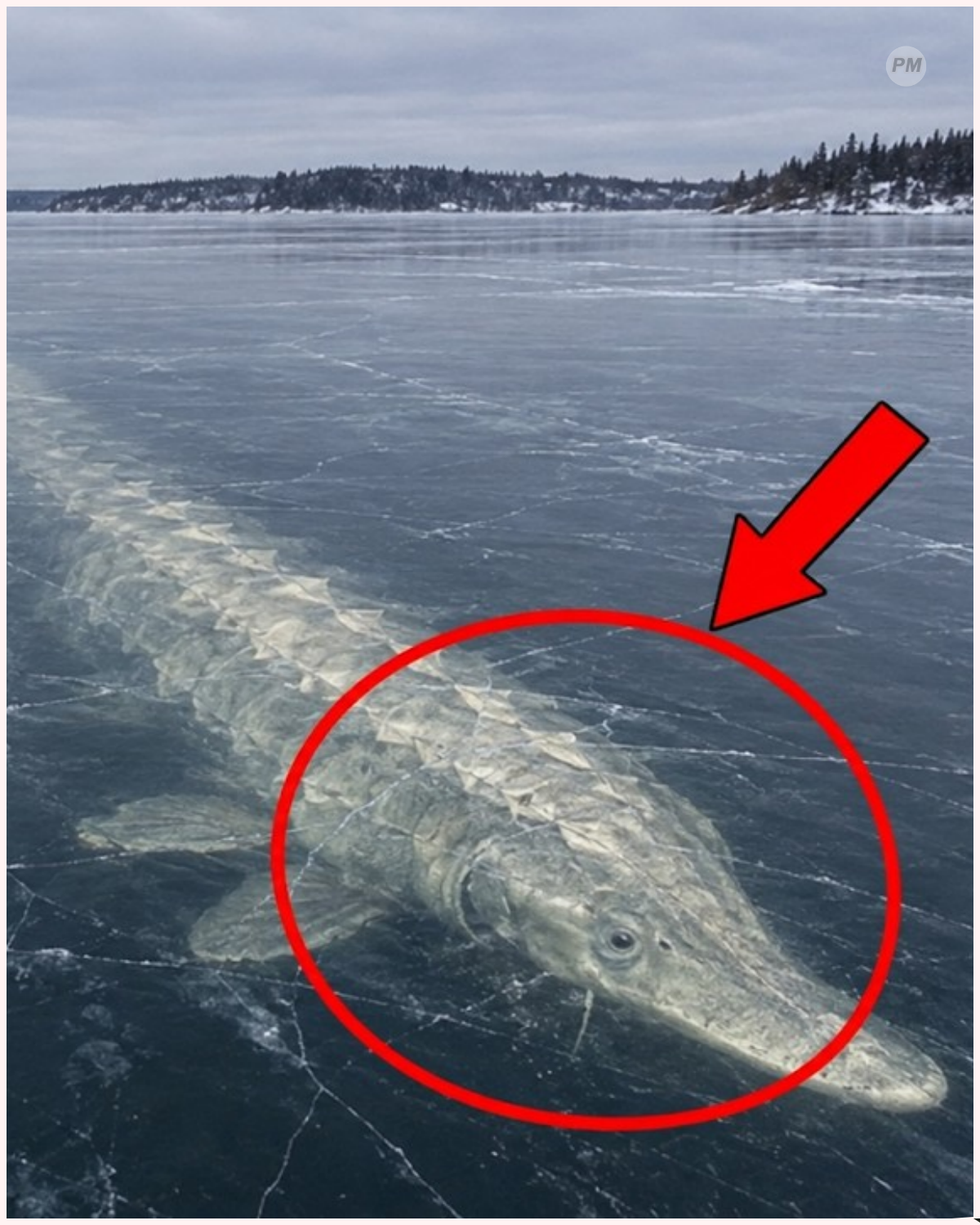
When he slides his light to the left, it turns and follows the light. That man pulled trucks out from under the ice for 22 years.
That winter, three trucks went through on that bay. Every one went through on ice that should have held a loaded pickup.
And not one of those trucks stayed where it sank. Something had dragged them along the bottom toward the deep water.
He quit that spring. The last time he went under, he went without a rope.
I know because I was the one standing at the hole. My name is Lars Hagen.
For 32 years, I was a game warden on these lakes. If you want this one and the others from up here that never made the paper, subscribe now.
And it gets worse before it gets better. Before any truck went through that winter, the eagles knew.
Every winter on Chequamegon Bay, the bald eagles work the ice. The perch guys clean their catch right there and toss the scraps on the snow.
The eagles know it. You will see 10 or 12 of them standing around the shanties like old men outside a feed store waiting on a handout.
I used to count them. I kept a patrol log on the seat of my truck and everything went in it.
The time, the place, [clears throat] the plate of every truck on the ice, and how many eagles were working the ice.
The old perch guys on that bay have a saying, “When the eagles will not sit on the ice, you do not drive on it.”
I heard that my first winter up there from a man who had to be 90.
I laughed. For 30 years I laughed at it. In the first week of February, I wrote down zero eagles off the Ashland landings.
The next day, zero again. They had gone anywhere. They were up in the big white pines along the shore, maybe 30 birds.
They would not come down. Fish scraps all over the snow and not one eagle would land on that ice.
I asked Bev about it. Bev ran the bait shop on the edge of town.
She knew more about that bay than anybody in an office ever did. The state is not in the business of checking ice for you.
If you want to know what the ice is doing, you ask the bait shop.
Bev said the eagles quit the ice about when the fishing went bad. The guys watching their flashers were seeing nothing.
No perch, no trout, no anything. Just empty water ice to bottom. Then, once in a while, late in the day, a solid red band would show up, top to bottom, for a few seconds.
Like the whole column of water had filled up with one thing. Then it was gone.
And so were the fish. Then it was the tip-ups. A fellow from the Washburn side flagged me down one morning and walked me over to his spot.
He had set out three tip-ups the night before. I checked his license and he was square.
Two were standing right where he left them. The third was gone. Flag, frame, spool, line, all of it, pulled down through a 6-in hole.
That is hard to do. A big fish will strip your line, but it will not drag a wooden frame through the ice.
I asked him what was different about that one. He scratched his jaw. “It was the only one with a light on it,” he said.
“One of those little battery lights that clip on the flag so you can see it pop up in the dark.”
Then he looked at me kind of sideways. His grandmother was from Herbster, he said, and she would not let a lantern go out on the ice with her husband, not on that bay.
She called it feeding the lake. I wrote that down, too. I did not know yet that it had anything to do with Gordie.
Gordie Pelto grew up in Ashland, four blocks from the lake. His father worked the old Soo Line ore dock, the big one that ran out into the bay.
It went up in 1916. It was about 1,800 ft long and seven stories tall.
One of the biggest ore docks in the world. Trains rolled out on top and dumped iron ore down shoots into the boats.
It went quiet in 1965 and Gordie’s father went quiet with it. Gordie said his dad spent the rest of his life looking out the kitchen window at that dock.
Like a man looking at an old dog that quit coming when he called. Gordie learned to dive in a gravel pit south of town.
He used a mask from the hardware store. By the time I met him, he had a dive outfit, a truck full of air tanks, and a name.
Anything that went through the ice between Duluth and the Michigan line, sooner or later, somebody called Gordie.
That is how we met. A snowmobile went through on a little trout lake back in the woods.
Nobody hurt. But there was gas and oil going into that trout water, and that made it my business.
Gordie cut a square hole with a chainsaw. He pulled on his suit. Then he went down into that black water like a man going down his own basement stairs.
A little while later, he came up and handed me the key. He said, “You want to write him the ticket, or should I?”
In Wisconsin, when your truck goes through, getting it back out is your problem. So, the owner calls a wrecker.
The wrecker calls a diver because somebody has to go down and hook it. That was Gordie.
He went down through the hole and found the truck in the dark. He strapped airbags to the frame and filled them.
When the truck lifted off the bottom, the wrecker winched it to the hole. 22 years he did that.
Trucks, snowmobiles, four-wheelers, whole fish shanties with the stove still in them. He told me once what it is like under there.
The hole is the only door out. Once you are down, the whole world turns a dark bottle green.
The ice over your head is a ceiling, and your air bubbles roll along under it like spilled mercury.
Looking for a way out. The cold gets into your teeth first, then your hands.
And every few seconds, you look back up for that one bright square to make sure it is still there.
He had two rules he never broke. He never went down without a rope tied to his harness and a tender up top holding the other end.
And he never went down at night. He had a wife named Marlene who did his books and worried about him full-time.
He had a tender named Denny, big quiet kid. Denny held that rope like his own life was tied to the far end.
And Gordie had about two more seasons in him. Then he wanted to sell the outfit and spend his winters fishing on the ice instead of diving under it.
On the second Thursday of February, around 10:00 at night, Earl Honpa put his pickup through the ice off Washburn.
I was on the bay. I heard it on the radio and he got there fast.
Earl was sitting on the tailgate of his buddy’s truck in a blanket, soaked to the waist.
He had gotten out through the window, the way you are supposed to. He had gone through on a bare stretch of black ice with no snow on it, and he had been lucky.
Out past him was a black square of open water where his truck used to be.
And down in that water, his headlights were still on. You could see them through the ice.
By the time I got there, they were already on the bottom, maybe 40 ft down.
Two yellow lights, dim and steady. Like a car parked at the far end of a long road at night with nobody in it.
They sat there, glowing up through the ice. Then they started moving. Not up, sideways.
Off toward the channel, slow and steady, the way they would look if that truck were still driving along the bottom.
I watched them for maybe 10 seconds, then they went out, both at once, like somebody had put a hand over them.
Earl did not see it. He was looking at his boots. His buddy was on the phone with his wife.
I was the only one watching. I told myself the lights had shorted out in that cold water.
I told myself the moving was my eyes in the dark. I wrote down the time, 10:19.
Gordie went down the next morning. Earl’s truck was not under the hole. He came up and said so, and Denny thought he was kidding.
Gordie went back down on a longer rope. He swam his search pattern back and forth, the way he always did.
Nothing. He could see the dent in the soft bottom where the truck had landed.
And going off from that dent toward deep water, there was a trench. It was wider than the truck.
It ran off into the dark farther than his light could reach. It took him 2 days to find Earl’s pickup.
It was 300 yd from the hole. It lay on its side in 60 ft of water, right on the lip of the main channel.
The roof was pressed down, low and even, like something heavy had rested on it.
Both headlights were broken out. The lenses were gone, the bulbs were gone. The metal around them was scraped bright.
Gordie’s first thought was current. There is some current in that bay, from the rivers coming in and the big lake breathing in and out.
But Gordie had 22 years on that bay. He had never seen current move a truck more than a few feet.
And current never took the headlights off a pickup and left the mirrors on. That night, he found me at the landing.
He set a headlight housing on the hood of my truck, empty and scraped white.
He asked if I saw anything when Earl went through. I told him about the lights moving.
He turned that empty housing over in his hands. Then he asked me, “What is down there that wants a headlight?”
To understand why that question kept me up, you have to know a little about that water.
Lake Superior is the biggest freshwater lake in the world by surface area. In the deep parts, the water stays about 39° summer and winter.
The old-timers say she is too cold to give anything back, and things down there do not change much.
Not in a man’s lifetime, anyway. Chequamegon Bay is the soft corner of all that, a long, shallow bay tucked in behind a sand spit.
Ashland sits at the bottom of it. Washburn sits on the west shore. The Apostle Islands are scattered just outside, out in the big lake.
In summer, it is sailboats and tourists. In winter, when the ice comes, the bay turns into a town.
Shanties go up in streets. Guys plow roads across the ice to them. You fish perch off the Ashland landings.
Early in the season, you chase splake and brown trout. Or, you go out over the main channel and jig deep for lake trout.
That was the winter of 2014, the big ice winter. Over at Bayfield, the ice road to Madeline Island opened on January 14th, the earliest anybody had seen in 27 years.
The ice out there got to 29 in. Most years, it is about 18. Over west, people came from all over the Midwest to walk out to the ice caves, about 138,000 of them.
So, there was no reason in the world for a truck to go through on Chequamegon Bay.
None. And there is one more thing you need to know about that water. It has always had sturgeon in it.
Lake sturgeon are about the oldest kind of fish we have. They spawn up the Bad River.
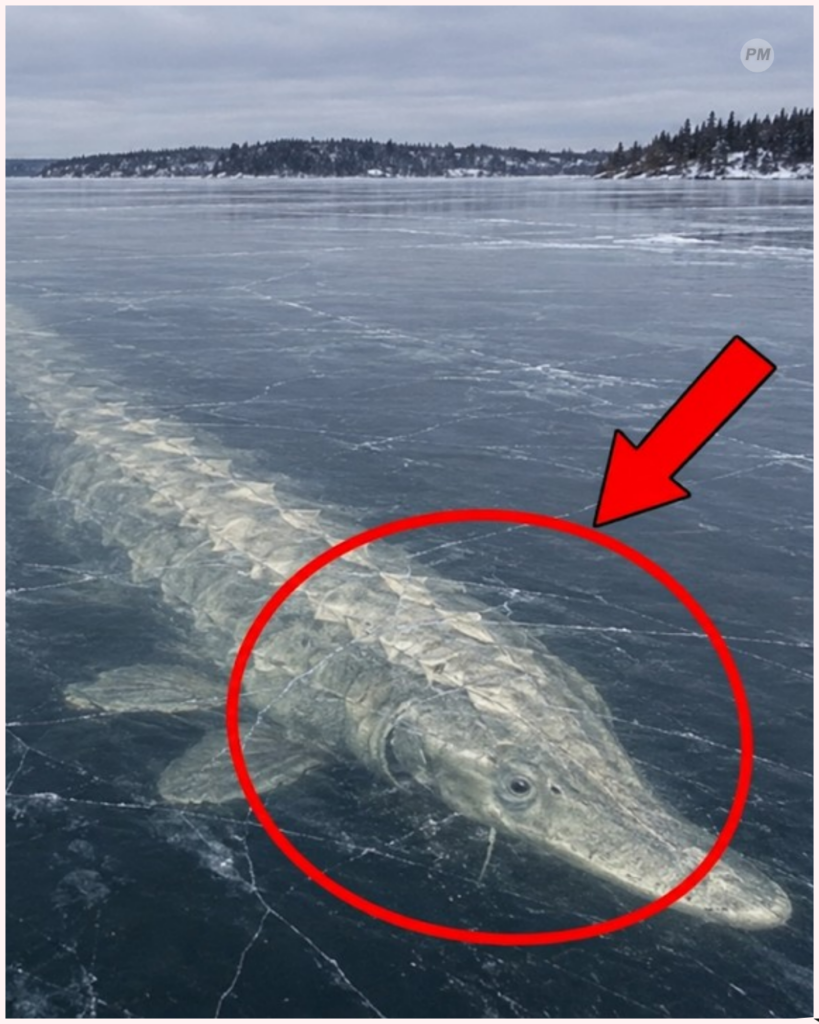
They cruise the shallows around the Apostle Islands. They have five lines of bony plates down their bodies, like armor.
They have a long, flat, shovel nose. And under that snout, they have whiskers they drag along the mud feeling for food.
They grow slow and they get old. The oldest one anybody ever aged was 152.
My father fished commercial out of the Michigan side when I was a boy. He told me once about a sturgeon the old fin fisherman talked about, out by the islands.
They said it was as long as a fish tug. They said it took nets, whole gangs of them.
You would pull the anchor line in the morning and find it chewed through, like a rope in a dog’s mouth.
One spring, my father said, a tug came into Bayfield after a night out by the islands with her running lights on.
Her nets came up cut into strips, neat as bacon. And below the waterline, her hull was rubbed bare.
Every bit of paint gone, down to the wood, in one long streak from the front of her to the back, like something had leaned against her and rode along all night in the dark, the way a big dog leans on your leg.
My father did not believe in it, but he said there was one stretch of water every man on those boats crossed with his running lights off.
And nobody on those boats would ever say why. I had not thought about that story in 50 years.
I thought about it all the way home after Gordie drove off. Eight days later, the second truck went through.
This one was off the Ashland side, on the plowed road out to the perch shanties.
A young guy from Mellon coming in after dark. He got out, too. Lucky again.
His truck sank with the lights on, same as Earl’s. This time, Denny was the first one to the hole.
He had been a quarter mile off pulling a stuck truck for Dutch. He swore up and down he saw those lights slide off along the bottom before they went out.
I wrote the plate in my log, ending in 47. Then I wrote the time the lights went out, as near as Denny could say, 11:40.
When Gordie found that truck, it was 400 yd off, roof pressed down, headlights gone.
And this time, along both sides of the trench, there were two long furrows in the mud, like sled runners.
Something had been pushing itself along the bottom as it went. That was when I went out and checked the ice myself.
I have an ice auger in my truck, like every warden up here, and a spud bar.
That is a long iron chisel you use to test ice as you walk. I started at the hole and worked a big circle around it, chopping and drilling.
The ice was 20-some inches, good, hard, blue ice. You could park a road grader on it.
Then I came to a stripe in the snow. It was about 15 ft wide.
It ran across the bay in a long, easy curve, out of the deep water by the channel and in toward the shanties.
The snow along that stripe was a different color, gray instead of white, the way snow looks with water right under it.
I took the spud bar to it. The bar went through on the second hit, 4 in.
22 in of ice on both sides of that stripe and 4 in down the center of it.
The Army Corps of Engineers has a chart for what ice will hold. A passenger car wants 7 and 1/2 in of good ice.
A pickup wants more. 4 in you might walk on if you were brave and alone.
And here was a 4-in road running through 2-ft ice in a bitter cold winter.
Far out in the bay, nowhere near a river mouth. Something was wearing that ice thin from underneath and I knew what the old guys would call it.
My father had a name for a strip of bad ice that showed up where it had no business being.
He called it a sturgeon road. I always figured it was a joke. I walked the edge of that stripe for most of a mile.
Every few yards on both sides, there was a lump in the ice. A round bulge about the size of a bushel basket.
Pushed up from below and frozen in place. One rang hollow under the spud bar.
They had frost on them like the knuckles on a cold hand. Two neat lines of them, one down each edge the whole way.
I went back to my truck and drew it in my patrol log. I still have that page.
Two lines of little circles with a stripe between them and the time. 2:40 in the afternoon.
The next morning I went back. The stripe had moved. The old one was still there, freezing back up, but there was a new one, a couple hundred yards nearer to town.
Same width, same [snorts] lumps along the edges. It curved in toward the plowed road to the shanties.
Every truck on that bay drove that road twice a day. Most of them drove it after dark.
I sat in my truck and looked at the two stripes, the old one and the new one, and I thought about a man patting his coat in the dark for his keys, one pocket at a time.
I went to see Bev that afternoon and asked her to put up a sign.
She did, a big sheet of plywood by the landing, hand-painted. That ice on the shanty road, stay off it after dark.
Some of the guys listened. Most did not. Up here, people have been driving on that ice since their grandfathers did.
A sign from the bait shop is a suggestion. Gordie went out that night and he broke both of his rules.
What we saw out there is the part of this I have told maybe three people.
If you are still with me, hit the subscribe button so the next story finds you because this is where it turns.
No tender and full dark. He did not tell Marlene. He did not tell Denny.
He did not go in the water, either. He drove out with his lights off.
He parked off the plowed road where the ice was thick. Then he walked out to where the stripe had been.
Off to one side of it, the snow had blown clear and left a patch of black ice, smooth as a kitchen window.
I was on patrol. It was a quarter after one. I saw a light out on the bay where there should not have been one, a small light down low, right on the surface.
I drove out to it with my headlights off. Something told me to. It was Gordie.
He was flat on his belly on the black ice, dive light pressed to it, looking down.
I got out and walked over. He did not look up. He just said, “Get down here, Lars.
Shut your flashlight off first.” So, I lay down beside him. The ice was so cold it burned through my coat.
And I looked down into his light. You could see a long way through that ice.
The bay is clear in winter, clear like a bottle. His light went down in a long white cone.
At the bottom of the cone was the mud, 60 ft down, gray and soft.
And lying on the mud, there was something pale. At first I took it for a log, a big waterlogged pine, the kind that sink and lie down there for 100 years.
Then the log moved. It was long. Gordie slid his light toward one end and never found it.
He slid it back toward the other end and never found that either. Down its back ran a ridge of bony shields, big ones, each as wide as a hubcap in a line along the spine.
They were pale, too, like old bone, and they were worn smooth on top, the way a stair step gets worn smooth by a hundred years of boots, worn smooth from rubbing on the underside of the ice.
At one end there was a head, long and flat like a shovel. Under the snout hung whiskers, thick and pale, longer than my arm.
They were moving, slowly, back and forth across the mud, feeling for something. Then Gordie slid his light to the left, maybe 2 ft, and the head came up off the mud and swung over to follow it.
He moved the light back to the right. It followed that, too, unhurried, like a cat watching a string, and I saw its eye.
It was small for that head, and it was milky white, like the skim of ice on a puddle.
The light went into it the way a flashlight goes into a jar of milk and stayed there.
Then it started to come up. It rose off the bottom, slow. All that length rose with it.
The shields on its back came up toward us through the water, and I could not breathe.
Gordie laid his hand flat over the lens. The light went out. We were lying on the ice in pitch black, and under us the ice made a sound I had never heard in 30 years on frozen lakes, a long, low groan, like a big pine leaning over in a storm.
Something heavy was pressing up on the ice right underneath us, feeling along it. We did not get up.
We crawled on our bellies in the dark a good hundred feet until we were back on white snow ice, where it was thick.
Then we stood up and walked to my truck. Neither of us said a word.
I did not go home. I drove to Bev’s and sat in her lot until she came to open at 5:00.
She took one look at me through the windshield and went in and made coffee without a word.
When she brought it out, she did not ask me one thing. She just stood there in the cold with me while I drank it.
The next morning, Gordie went to see Dutch. Dutch ran the biggest wrecker service on that end of the lake.
Most of Gordie’s ice work came through him. Gordie told him the whole thing, the trenches, the stripe, the headlights, what we saw under the ice.
Dutch listened all the way through. Then he leaned back in his chair. He said the fishing tournament was Saturday, 300 trucks on that bay, and Dutch had the contract to keep the road plowed and pull out anybody who got stuck.
He said, “Gordie, you go around town saying there’s a sea serpent in the bay and nobody ever calls us again.
You hear me? You call it current.” Gordie said, “Current did not take the headlights out of those trucks.”
Dutch said that was the last he wanted to hear about headlights. Gordie called me that afternoon.
He had figured something out. He had gone back through his notes on Earl’s truck and the one from Melon.
Both went through at night. Both sank with the lights on. Both got dragged off toward the channel with the lights still burning until the lights went out.
“It is not after the trucks,” he said. “It is after the light.” That thing has been lying in the dark down there for who knows how long, and every winter we drive around on its roof with our high beams on.
So, it comes up to look. It rubs on the ice. When the ice gives, it grabs the light and swims home with it.
Then he said something I have never forgotten. He said, “Lars, we have been knocking on its ceiling for 100 years.
This is the first winter it knocked back.” I called the sheriff’s department and told them there was bad ice on the shanty road.
They put out a warning, same as they would for any pressure crack. That is how it is done.
And it was the right call. Nobody was going to shut down the bay on the word of a warden and a diver about a fish.
I did not ask them to. Saturday came. The tournament ran all day and nothing happened.
The trucks drove out in daylight and came back in daylight. I sat at the landing and wrote down every plate.
By dark, the bay was almost empty. I let my breath out for the first time all day.
At 8:40 that night, a man named Russ drove back out onto the bay. He had left his auger at his spot.
That was all, a $40 auger. He was a big, cheerful guy from Hurley, eager to get home.
He came down the plowed road with his high beams on. Dev’s sign lit up in them as he went by it.
I watched his lights go out across the ice. I grabbed the radio and started my truck.
And about halfway out, I saw his headlights tip forward and go down. Gordie and Denny were still at the landing loading the trailer.
I picked them up on the way. By the time we got there, the hole was black water and broken ice.
The plow had scraped that road down to clear black ice and you could see right through it.
Russ’s truck was already on the bottom, headlights glowing up. And Russ was not on the ice.
Then Denny shouted and pointed. About 20 ft from the hole, there was a hand under the ice pressed flat against it from below.
Russ had gotten out of the truck the way you were supposed to, but he came up in the wrong place, under the ice.
And he had found one of those round bulges, the knuckles. They were hollow underneath.
He had his face up in a pocket of air no bigger than a mixing bowl and his hand pressed to the ice beside it.
Gordie was already pulling on his suit. He had his tanks on before I could think.
Denny was trying to tie the rope to his harness and Gordie pushed him off.
There was no time. He grabbed his dive light and went into that hole. I lay down on the ice over the hand.
I pounded on it with my fist so Russ would know somebody was there. Through the ice, I watched Gordie’s light come along under the surface.
It found Russ. The light and the hand came together. I saw Gordie push his spare air into Russ’s mouth and they started back toward the hole.
And down below them, Russ’s headlights started to move. I saw it all from up top through that clear ice, like looking through a window into a dark room.
I saw the pale shape wrapped around the truck. I saw the headlights slide off sideways along the bottom.
Then I saw the shape let go of the truck and turn and rise toward the only other light in the water, Gordie’s light.
I did not think about it. I ran to my truck and shut off everything.
Headlights, spotlight, dome light, all of it. I yelled at Denny to kill his flashlight and he did.
It was black dark out there, no moon. Then I grabbed my spud bar and ran back to the hole.
I started pounding the edge of the ice with that iron bar, hard and steady.
Clang! Clang! Clang! So he could find his way back by sound. I knew he would figure it out down there before I could tell him, and he did.
Under the ice, his light went out. I kept pounding that bar. I do not know how long.
My arms went numb. Denny was flat on the ice beside the hole, arms in the water to the elbows, feeling for anything.
And the ice under me groaned, that same long sound, like a pine going over.
I felt it come up the iron bar into my hands. Something big was right under us in the dark, feeling along the ice for the light that had gone out.
Then Denny yelled. He came back with Russ’s collar in both fists. Right behind Russ came Gordie, gasping.
We hauled them both up onto the ice. I put my flashlight on just for a second to see if they were all right.
And in that second, I looked down into the hole. There was an eye in the water just below the slush, milky white, looking up at my light.
I shut it off fast. I did not put a light on again until we had them both in the truck.
Russ made it. The ambulance took him to Ashland with his lips blue and he was home in two days.
A deputy came out and took the report. Truck through the ice, one man rescued by a local diver.
That is what it says and that is what happened. It is just not all of what happened.
After the ambulance left, Gordie sat an hour in my cab with the heat cranked all the way up.
He did not talk. He sat with his dive light in his lap and kept pressing the switch with his thumb over and over checking that it was off.
When he finally spoke, it was this. “It came right up under me, Lars. When my light went out, I could feel the water move when it went by.
It was looking for me. Then you started banging on that ice and it went toward the noise instead.”
The noise I was making to bring him home was the noise that turned it toward me.
I have thought about that every winter since. They never got Russ’s truck back. Dutch hired an outfit from Duluth to go after it.
They followed the trench for half a mile. The diver who went down told Gordie those furrows ran the whole way, one down each side.
Then the trench went over the drop-off into the channel, past where anybody could safely dive.
They left it there. Russ’s insurance paid. The state did not fine him because there was nothing left that anybody could reach.
Dutch never said another word to Gordie about current. He never called him again, either.
The ice went out early in April. When the bay opened up, Gordie sold everything.
The compressor, the lift bags, the suits, the trailer. A young guy from Duluth bought the lot.
22 years. Gordie took a job hanging drywall in Ashland and he has been doing it ever since.
He kept one thing. His dive light. The day I retired, he came by the house and put it in my hand.
He said, “You keep it. You were the one who knew to turn it off.”
It sits on the shelf by my back door. Every winter, I chop a hole in the ice on my own little lake and on the first night it freezes clear, I stand at the window and look out at that dark ice.
I have never turned that light on. I do not intend to find out what is under my lake.
Have you ever been out on the ice at night and felt it move under you with no reason in the world for it to move?
Tell me where it was. I go through every one of them and subscribe and stay with me this winter.
There are a lot of lakes up here and I worked most of them.