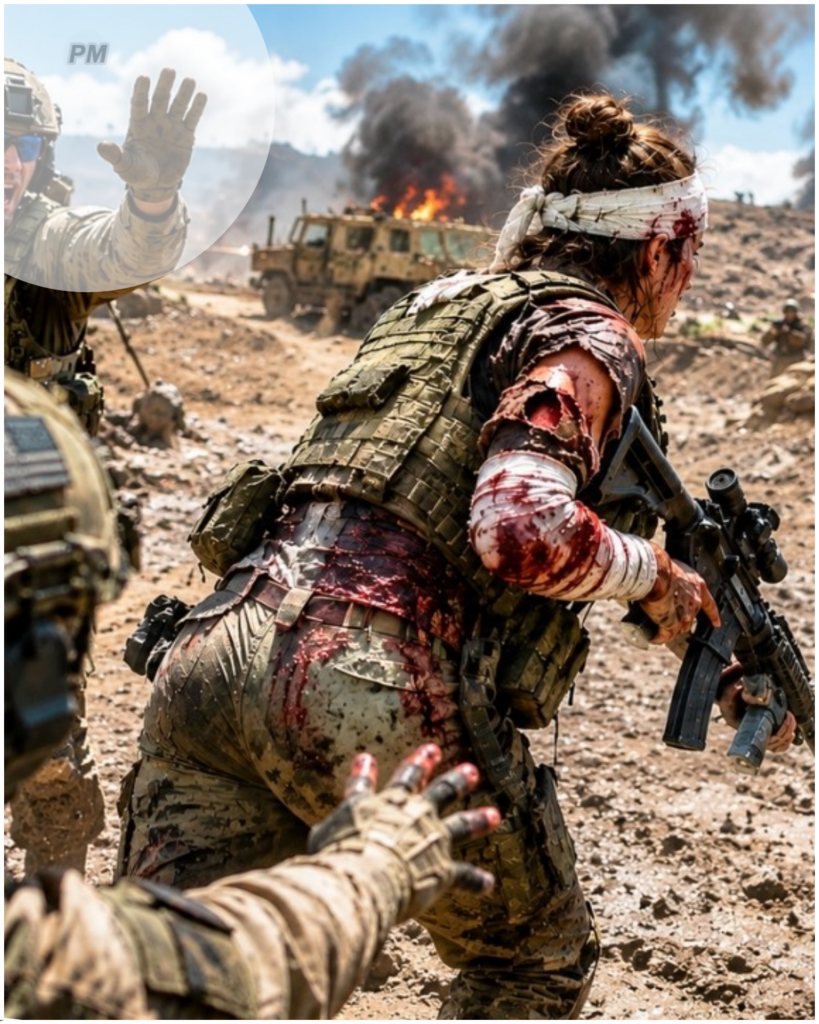
Seeing you become something extraordinary
Seeing you become something extraordinary. He looked at her directly. That matters to me more than you’ll ever know.
Aninssley felt her own eyes filling. I almost got people killed. I froze for a second before I picked up that rifle.
But you didn’t freeze long. You acted. And that action saved Sullivan’s life. Saved Marcus.
Saved Lieutenant Garrett and his entire team. Morse’s voice was fierce. One second of hesitation is human.
What matters is what you did after. They sat together as the sun climbed higher.
Morris shared more stories. His first kill, his worst kill, the men he’d lost, the weight he carried every day.
He spoke with brutal honesty about the cost of being a sniper, the faces that never left, the moral calculus of taking life to protect life.
And slowly, Aninsley began to understand that what she felt wasn’t wrong. It was the price of doing something that mattered.
The cost of being someone who stood when others needed you to stand. “What do I do now?”
She asked finally. “You keep moving forward, one day at a time. You process what happened.
You acknowledge the weight, and you decide what kind of person you want to be going forward.”
He stood up stiffly. I’ve got to file some paperwork, but I want you to think about something.
You discovered last night that you’re capable of things most people aren’t. The question is whether you develop that capability or walk away from it.
He walked away before she could respond. Left her sitting alone with her thoughts and her terrible coffee.
The next 3 days passed in a haze. Anley tried returning to her logistics duties, sat in the supply depot staring at spreadsheets, but the numbers felt meaningless now.
7,200 rounds of ammunition. Who cared? She’d fired maybe 20 rounds and changed the outcome of an entire battle.
Counting bullets seemed absurdly trivial compared to using them effectively. On the fourth day after the mission, Lieutenant Garrett requested a formal meeting.
Aninssley reported to his office at 1400 hours. Her stomach churned with nervousness. She didn’t know what to expect.
Garrett’s office was spare and organized. Maps on the walls. A single photograph of him with his SEAL team.
No personal effects beyond that. He gestured for her to sit. How are you healing up?
He got straight to business. No small talk. Stitches itch. Concussions better. Cleared for duty.
He nodded, shuffled some papers on his desk, then looked at her directly. I’m recommending you for the Bronze Star with Valor device.
Your actions during Operation Valkyrie saved multiple lives. Without someone manning that sniper position after Sullivan went down, we’d have been overrun.
Aninssley opened her mouth to protest, but he held up a hand. I’ve written hundreds of award citations.
I know what merits recognition. What you did was exceptional. Period. He leaned back. But that’s not why I called you here.
He picked up a folder. I’ve been reviewing your training records, your performance scores, your evaluations from Master Sergeant Morse.
He looked at her. You have natural talent as a marksman. Significant talent, the kind that shouldn’t be wasted counting supplies.
Here it comes, Aninsley thought. The offer, the choice. Have you ever considered transferring to a combat specialty, sniper school, precision marksman courses?
I’ve thought about it. Aninssley kept her voice neutral. But I like logistics. It’s important work.
I’m good at it. You’re adequate at logistics. You’re exceptional at shooting. Garrett’s voice was firm.
Combat doesn’t care about your job. Title. When the situation demands action, you either step up or people die.
You stepped up. That shows character, shows courage. He set down the folder. I’ll support whatever decision you make.
If you want to stay in logistics, that’s your right. But I want you to really think about this.
Not knee-jerk fear. Actual consideration of what you’re capable of. Aninssley felt the weight of the decision settling on her shoulders.
Stay safe. Count bullets. Live a predictable life. Or embrace something terrifying and purposeful that might break her.
How much time do I have to decide? One week. After that, I need an answer.
He stood, indicating the meeting was over. Talk to people you trust. Think it through, then make the choice you can live with.
She left his office more confused than when she’d entered. Walked across the base in a days.
Her feet carried her to the supply depot out of habit. She sat at her desk and stared at the inventory spreadsheets.
3 hours later, she’d accomplished nothing. The numbers blurred together. Her mind kept circling back to the same questions.
Could she go back to this after experiencing what she’d experienced? Could she sit safely in a warehouse knowing she had capabilities that could save lives in the field?
Would the boredom kill her? Would the guilt of not developing her talent eat her alive?
That evening, she found Marcus at the medical facility. He was treating a soldier with a sprained ankle when she arrived.
After finishing, he waved her into his small office. They sat surrounded by medical supplies and anatomy posters.
Marcus looked tired but healthier. His leg wound was healing, though he still moved with a slight limp.
What’s on your mind, Grant? She explained everything. Garrett’s offer. The choice between safety and purpose.
The fear of becoming someone who killed easily. The fear of wasting her talent. Marcus listened without interrupting.
When she finished, he was quiet for a long moment. “I joined as a regular medic,” he said finally.
“No combat aspirations, just wanted to help people. Then my first deployment, we got hit hard.
Mass casualty event. I found myself treating wounds under fire. Bullets everywhere. People screaming. Total chaos.”
He looked at his hands. And I was good at it. Staying calm when everything went to hell.
Making triage decisions in seconds. I saved 11 people that day. Lost three. What did you do after?
Anley asked quietly. Trained as a combat medic. Never looked back. He met her eyes.
Because I discovered something about myself. I’m not just good under pressure. I’m necessary. My skills save lives.
How could I walk away from that? He leaned forward. The question isn’t whether you can do the job.
You proved that already. The question is whether you want to. Only you can answer that.
Anginsley left the medical facility and walked the perimeter of the base. Watched the sun set over the desert.
Called home on the satellite phone. Her mother answered on the third ring. Honey, are you okay?
You sound tired. I’m fine, Mom. Just been busy. Anley couldn’t tell her about the mission, about the kills, about any of it.
How’s dad? Same as always. Back still bothers him. He’s watching TV right now. Want to talk to him?
No, that’s okay. Just wanted to hear your voice. They talked about nothing for 20 minutes.
Her brother’s community college classes. The weather back in Montana, neighbors gossip, normal life continuing in a world that felt impossibly far away.
After hanging up, Aninsley felt crushing isolation. Her family would never understand what she’d experienced.
They couldn’t. How could she explain firing a rifle at human targets? How could she describe the weight of watching people die by her hand?
Some experiences separated you from the people you loved, created chasms that couldn’t be crossed with words.