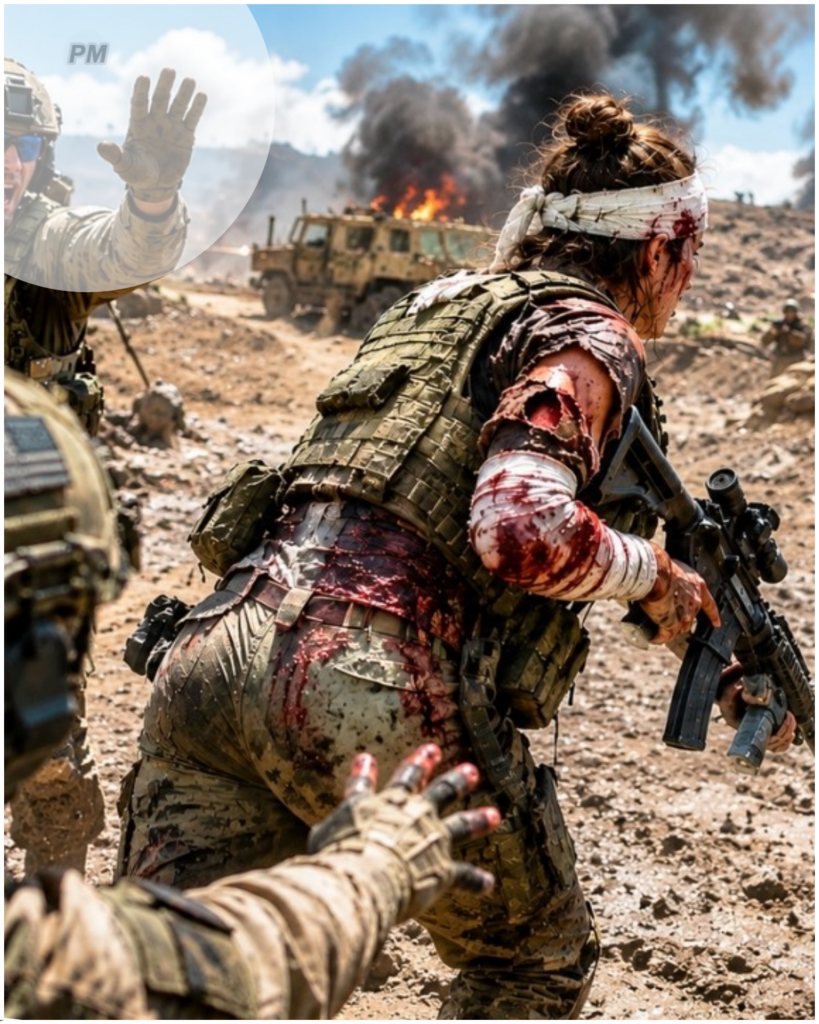
72 hours before Aninsley Grant became a sniper, he…
72 hours before Aninsley Grant became a sniper, her biggest concern was a discrepancy in the ammunition inventory logs.
The morning sun hammered down on forward operating base Griffin like a physical weight. September in Helman Province meant temperatures pushing 115° by noon.
The air tasted like dust and diesel fuel. Aninssley sat in the dim coolness of the supply depot, her eyes scanning spreadsheets on a battered laptop that took 30 seconds to load each page.
7,200 rounds of 5.56 mm NATO ammunition, cataloged, verified, and ready for distribution. The M240B machine gun belts were organized by lot number.
The 50 caliber BMG rounds sat in their specialized containers. Each one accounted for down to the last cartridge.
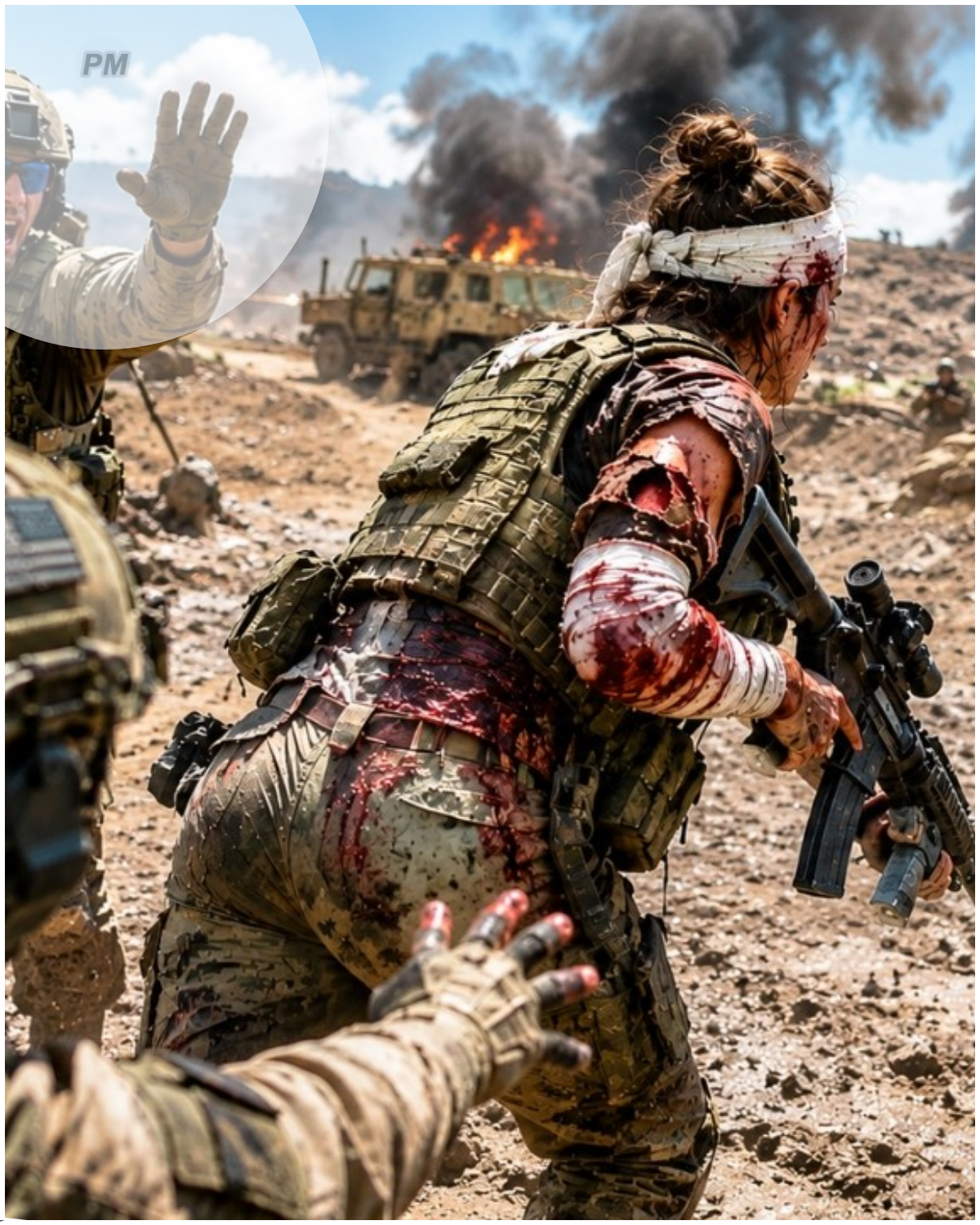
Everything in its place. Everything documented with obsessive precision. This was what Aninsley understood. Order, systems, predictability.
She was 24 years old, originally from but Montana, where her father had worked in the copper mines until a caven-in crushed three vertebrae in his lower back.
Her mother taught elementary school and stretched every dollar until it screamed. When Aninsley graduated high school, college wasn’t even discussed.
The family needed money, not more debt. The army recruited heavily in towns like But good pay, benefits, job training, and a chance to see something beyond the same gray mountains she’d stared at her entire life.
Aninssley signed the papers 2 weeks after her 18th birthday. Basic training nearly broke her.
The drill sergeant had screamed until veins bulged in his neck. She’d run until her legs felt like rubber bands.
She’d crawled through mud under barb wire while instructors fired blank rounds over her head.
Three recruits in her platoon quit in the first week. Anley had wanted to quit every single day, but quitting meant going home with nothing.
Quitting meant her father had sacrificed his back for nothing. Quitting meant she was exactly as small as that gray Montana town had always made her feel.
So she didn’t quit. She pushed through every obstacle with stubborn, grinding determination. Not because she was brave, because the alternative was unacceptable.
After basic training, she’d specialized in logistics and supply chain management. It wasn’t glamorous. Nobody would write stories about the person who counted bullets and verified serial numbers on equipment, but it suited her methodical mind.
She was good with numbers and details. She never forgot an order or miscounted inventory.
Her superiors noticed her reliability quickly. Eventually, they assigned her here, forward operating base Griffin, middle of nowhere, Afghanistan, where insurgents controlled the surrounding territory, and every supply convoy was a potential ambush.
Aninsley closed the laptop and wiped sweat from her forehead. Even in the shade, the heat was oppressive.
She checked her watch. Hour lunch in the messaul meant sitting with the same three people she ate with every day.
Briggs, the mechanic from Texas, who could rebuild a Humvey engine blindfolded and had opinions about everything from football to foreign policy.
Keller, the communications specialist who handled the encrypted radio systems and told terrible jokes with perfect comedic timing.
And Marcus Vaughn, the combat medic who had saved more lives than he could count and never talked about any of them.
They were good people, as close to friends as you could have in a place like this.
The messaul smelled like industrial cleaner and overcooked meat. Aninssley grabbed a tray of something that might have been chicken, and found Marcus sitting alone in the corner.
He looked exhausted, dark circles under his eyes, the kind of tire that sleep couldn’t fix.
She sat down across from him without asking permission. That’s how it worked here. You didn’t wait for invitations.
Marcus looked up and managed a tired smile. Inventory day. Every day is inventory day.
Aninssley poked at her chicken. It had the texture of rubber. You look like hell.
Medevac came in at 0300. IED casualty. Kid was 19. Marcus stared at his coffee.
Couldn’t save his legs. Anley didn’t know what to say to that. She never knew what to say when Marcus talked about his work.
Her job involved spreadsheets and climate controlled storage. His involve blood and screaming and making impossible decisions about who lived and who didn’t.
They ate in silence for a while. Then Marcus set down his fork and looked at her with sudden intensity.
You should learn more than just logistics. Aninssley blinked. What? There are training opportunities on base.
Combat, first aid, weapons handling, navigation. Most support personnel ignore them. He leaned forward. But everyone should know how to defend themselves, how to help others in an emergency.
I went through basic combat training. I know how to shoot. When was the last time you actually fired a weapon?
Aninssley thought about it. Basic training. 18 months ago. She qualified with the M4 carbine.
Hit enough targets to pass and hadn’t touched a rifle since. That’s what I thought.
Marcus pulled a crumpled piece of paper from his pocket and slid it across the table.
Master Sergeant Morris runs an optional program Tuesday and Thursday evenings. Show up if you want to be more than just a name on a casualty list.
He stood up, grabbed his tray, and walked away before Aninssley could respond. She looked at the paper.
Crude handwriting listed times and a location on the far side of the base. At the bottom, a single sentence.
Every soldier holds the line when the moment demands it. Ansley folded the paper and put it in her pocket.
She probably wouldn’t go. She had inventory to manage, reports to file. Her job was important enough without adding extra complications.
But that evening, after finishing her logistics duties, she found herself walking toward the coordinates Marcus had written down.
The shooting range sat at the edge of the base, surrounded by blast barriers and overlooked by a guard tower.
Even at 1,800 hours, the heat was brutal. Aninssley approached a small group of soldiers standing near a weapons rack.
Most were younger than her. Support personnel by the look of them. People who worked in communications or vehicle maintenance or administrative roles.
An older man stood facing them. He had to be in his late 60s, which made him ancient by military standards.
His face was weathered and creased like old leather. Scars ran down both forearms. He walked with a slight limp, favoring his left leg, but his eyes were sharp and alert.
When he looked at Aninsley, she felt evaluated and measured in about 3 seconds. You’re new.
His voice was grally, like he’d spent decades shouting over gunfire. Name: Aninsley Grant, logistics specialist.
Morse, Master Sergeant, retired. You know how to shoot? I qualified in basic training. That means nothing.
He walked to the weapons rack and pulled out an M4 carbine. This is an M4 5.56 mm.
Effective range 300 m. You’ll start here. He handed her the rifle. It felt heavier than she remembered.
The metal was hot from sitting in the sun. Morris spent the next 20 minutes going over fundamentals, how to load the magazine, how to achieve a proper sight picture, how to breathe before pulling the trigger.
His teaching style was direct and efficient. No wasted words, no encouragement or criticism, just information delivered with the expectation that she would absorb it.
Finally, he pointed down range at paper targets set at 100 yards. Show me what basic training taught you.
Aninssley positioned herself at the firing line. Her hands were sweating inside her gloves. She pressed the rifle stock against her shoulder, found the front sight post, and tried to remember everything from 18 months ago.
Breathe slowly. Squeeze. Don’t pull. Follow through. She fired five rounds in careful succession. The rifle kicked against her shoulder with each shot.
The smell of gunpowder filled her nostrils. When she lowered the weapon, Morse walked down range without comment.
He examined her target, then turned back toward her. His expression was unreadable. He returned and took the rifle from her hands.
Look at your grouping. Anley squinted at the target. Her five shots had punched through the paper in a cluster about the size of her fist.
All of them within a few inches of the center. Most beginners scatter rounds everywhere, Moore said quietly.
Their hands shake. They flinch. They pull the trigger instead of squeezing it. He looked at her with those sharp eyes.


