Trust your instincts, but not too much
Trust your instincts, but not too much. Report suspicious behavior, but maybe the person you report it to is the problem.
There is no rule that would have saved me because I followed all the rules and I still ended up in that silo.
The only thing that saved me is that he decided to let me go. That was his choice, not mine.
Amber does not live in Nebraska anymore. She does not work in restaurants. She does not walk alone after dark.
She does not tell new people her real last name. She changes her phone number every 6 months.
She changes her address every year. She told that reporter she will probably do this for the rest of her life.
She said it is exhausting. She said some days she forgets for a few hours.
Some days she almost feels normal. Then she sees a patrol car. Then she hears a police siren.
[music] Then someone in uniform holds a door open for her and she flinches. She said sometimes she wonders if this is what he wanted.
If the running is part of his design, if she is still trapped in that silo somehow even though she walked out of it years ago.
The worst part is she knows he thinks about her. He is allowed to send letters from prison.
He has never sent one. But she knows he could. He has proven once he knows how to find her.
What stops him from proving it again in 2036? Nothing. If you work night shifts and walk to your car alone.
If you accept rides from people you think you recognize. If you believe uniforms mean safety.
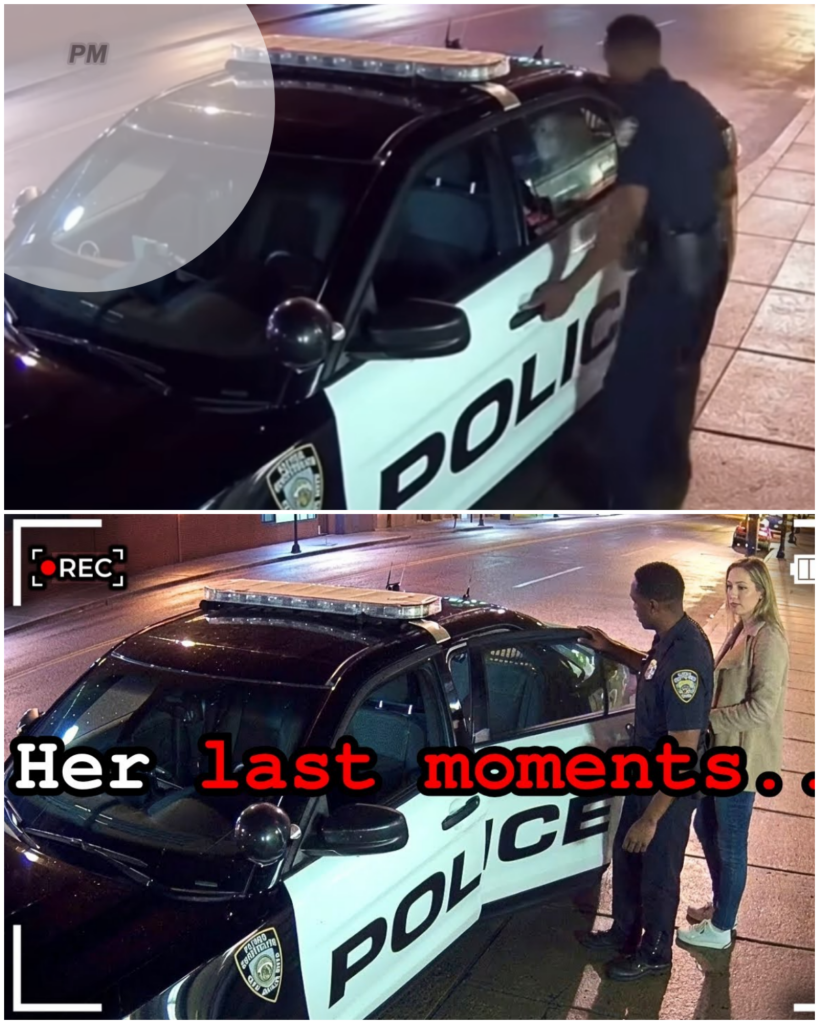
Amber did everything right. She reported the stalking. She cooperated. She trusted the responding officer.
She got into that patrol car because she had been taught her entire life that police cars are safe.
And she was wrong, not because she made a mistake. Because the system made a mistake because no one was watching.
If you have ever had that feeling where something seems wrong, but you cannot explain it, trust it.
Amber had that feeling for 1.7 seconds when her hand moved toward her phone and she ignored it because she was taught to trust.
They are not always the good guys. Sometimes the uniform is the disguise. Sometimes the badge is the weapon.
Terrence Wilder is in cell block D of the Nebraska State Penitentiary. Model prisoner. No incidents.
Works in the prison library. Reads psychology textbooks. He will be 47 when first eligible for parole.
He has time. He has always been patient. That is what his notebook proved. 73 pages over 10 months.
He knows how to wait. Amber knows that, too. 2036 is not far away.
Her sister’s daughter will be 14. High school. Walking to school alone. Maybe working part-time at a diner.
Maybe closing shifts. Maybe walking home at night through a small town where everyone says nothing bad ever happens.
All you can do is tell the story. All you can do is hope someone listens.
All you can do is say out loud what everyone is afraid to admit. The system is not designed to catch people like Terrence Wilder.
The system is designed to empower them. It gives them badges. It gives them access.
It gives them authority. It gives them the benefit of the doubt every single time.
And until that changes, until there is real accountability, until there are real safeguards, until someone is watching the watchers, there will be more folders, more basements, [music] more grain silos on dark county roads, more women who did everything right and ended up exactly where Amber did.
Waiting, hoping, praying that the man in the uniform decides to let them go. If you work in law enforcement and wonder why people are afraid of you even [music] when you have done nothing wrong, this is why.
Because somewhere right now there is another Terrence Wilder wearing a badge, driving a patrol car, building a folder, memorizing a schedule, and no one is stopping him.
No one is even looking.