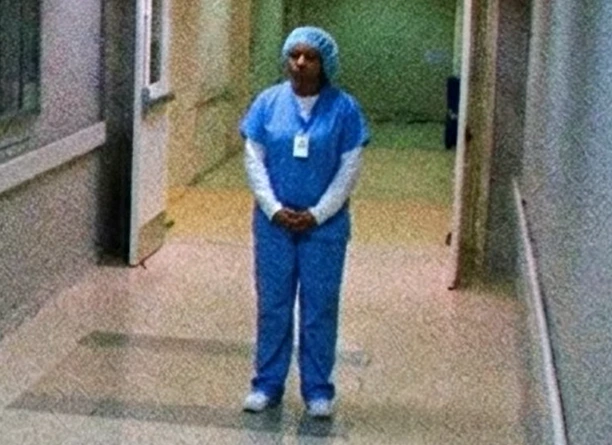
Penny Ashkam had over a period investigators would…
Penny Ashkam had over a period investigators would eventually determine spanned at least 5 months exploited that latitude to document a small number of patients as discharged, transferred, or transported by family, when in fact those patients had died under circumstances that would not become clear to anyone outside Penny herself until considerably later.
We need to go back now briefly to understand how this pattern actually functioned because the mechanism itself is the reason it went undetected for as long as it did.
When an overnight death occurred on Penny’s unit under her direct care, standard hospital protocol required a specific sequence of steps, physician notification, family contact, and eventual transfer of the body to the hospital morg pending funeral home arrangements.
Investigators would later establish that Penny, on a limited number of occasions involving patients with minimal family involvement or family members who lived out of state and rarely visited in person, deviated from that protocol entirely.
Rather than reporting the death through standard channels, she documented the patient as medically stable and discharged, generating falsified paperwork indicating family pickup or transfer to an outside facility.
and then during the overnight hours when unit staffing and hallway traffic were at their lowest, personally moved the body herself toward a restricted service corridor typically used for equipment transport and laundry logistics.
A route that avoided the hospital’s main patientfacing hallways entirely.
The hospital’s internal audit conducted after Penny’s arrest would later determine that this pattern required a specific combination of institutional gaps to function as smoothly as it did for 5 months.
The electronic health record system, while requiring physician sign off for discharge orders, did not require that same physician to personally confirm the patients physical departure from the building.
A task delegated in practice almost entirely to nursing staff who documented transport and family pickup through a separate less rigorously verified system.
Overnight physicians spread thin across multiple units and often managing several critical patients simultaneously routinely signed discharge paperwork based on nursing documentation of a patients stable condition without personally re-examining every discharged patient in the hours before their listed departure.
a practice hospital administrators would later acknowledge was standard across the industry, not unique to this facility, and precisely the kind of routine trust in nursing documentation that Penny’s pattern exploited.
What happened to those bodies after they left that corridor is a piece of the case investigators would spend considerable time reconstructing, ultimately determining that Penny had, in at least the confirmed cases, transported them to a decommissioned storage building on hospital-owned property roughly a half mile from the main facility, a structure slated for demolition that had sat unused and largely unmonitored for over 2 years.
Penny’s own vehicle, a small hatchback, was found through parking records to have made repeated late night trips between the main hospital building and that storage structure across the 5-month period under investigation.
A pattern investigators only fully reconstructed once they knew specifically what they were looking for.
Now, the night in question, hospital security officers Daniel Reyes and Marcus Tibido were assigned to routine overnight patrol duties, a rotation that included periodic checks of restricted corridors not typically accessed outside of scheduled maintenance or transport windows.
Neither officer had any specific reason to expect anything unusual that night.
The restricted corridor in question connecting the step down unit to a rear loading area was checked as a matter of standard rotation roughly once per hour.
Reyes, 29, had worked hospital security for just over 3 years, transitioning into the role after several years as a municipal police officer in a smaller nearby department.
Tibido, 24, was newer to the position, having joined the hospital security team less than a year earlier following a criminal justice degree he’d completed while working part-time security jobs during school.
Neither officer had any prior direct interaction with Penny Ashkam beyond the occasional passing hallway, greeting common among staff who work overlapping overnight shifts in the same building.
Reyes and Tibido entered the corridor at approximately 2:40 in the morning and encountered Penny Ashkam partway down its length, pushing a wheeled transport cart carrying two body bags, moving at a pace both officers would later describe as deliberate but controlled, not rushing in a way that would draw attention on its own, but moving with the specific, purposeful urgency of someone who did not want to be stopped for casual conversation.
Dibido, recognizing Penny as a hospital staff, initially approached with nothing more than routine curiosity, asking where she was headed with an overnight transport at that hour.
Penny’s response, according to both officers statements, was immediate and practiced.
An explanation involving a transfer arrangement with an outside funeral home requiring early pickup delivered smoothly enough that neither officer initially registered anything alarming about it.
Reyes has said in later interviews that the explanation itself was entirely plausible on its face, the kind of overnight logistics arrangement neither of them had specific reason to doubt, and that had the cart’s wheel not caught on that section of flooring seconds later.
Both officers likely would have simply logged the encounter as routine and continued their patrol.
What changed the encounter was a mechanical failure entirely outside Penny’s control.
The cart’s front wheel caught against a raised section of flooring near a corridor junction, jolting the load enough that the upper bag shifted against its fastenings, and a section of zipper, not fully secured, opened several inches along one side.
Visible through that gap was a hospitalissued patient wristband, still attached to the wrist inside, printed with a name and identification number that officer Reyes, who had worked at the hospital long enough to recognize the format immediately, understood at once, did not belong to any patient scheduled for transport that night, because he recognized the name from an entirely different context.
a missing elderly patient inquiry that had come through hospital administration only 2 days earlier filed by a concerned family member unable to reach her mother at the address listed as her discharge destination.
Reyes has since described that specific moment of recognition as one that arrived almost instantaneously, his mind connecting the printed name to an internal security bulletin he’d reviewed just two mornings earlier without any conscious effort.
the kind of pattern matching he has said his training had drilled into him without him ever fully realizing how automatic it had become until the exact second it mattered most.
Reyes has said in his official statement that the several seconds following that recognition felt like watching two separate and contradictory realities collide.
the ordinary, unremarkable overnight transport he’d been looking at moments earlier, and the sudden specific horror of understanding that the woman on that wristband was supposed to be alive at home.
Four days removed from what her chart described as a routine discharge, Penny, sensing the shift in both officers demeanor before either of them said anything further, released the cart and moved quickly toward a marked emergency exit at the corridor’s far end.
A door alarmed for exactly this kind of unauthorized use, connecting directly to an exterior loading dock rarely monitored during overnight hours.
Tibido pursued her on foot.
Reyes remained with the cart both to secure the scene and because standard security protocol prohibited leaving unidentified human remains unattended once their nature became apparent.
Penny made it through the alarmed door and across a section of parking lot before Tibido, considerably younger and faster, caught her near the treeine bordering the hospital’s rear property, where Penny, according to Tibido’s account, offered no physical resistance once cornered, saying only repeatedly, “I can explain this”.
a phrase she would go on to say several more times over the following hours without ever actually providing an explanation that held together under scrutiny.
Now, we need to go back and explain what those two bodies actually represented, because the full scope of what Penny Ashkcom had been doing for 5 months would not become clear until investigators cross-referenced hospital discharge records against actual confirmed contact with the patients in question.