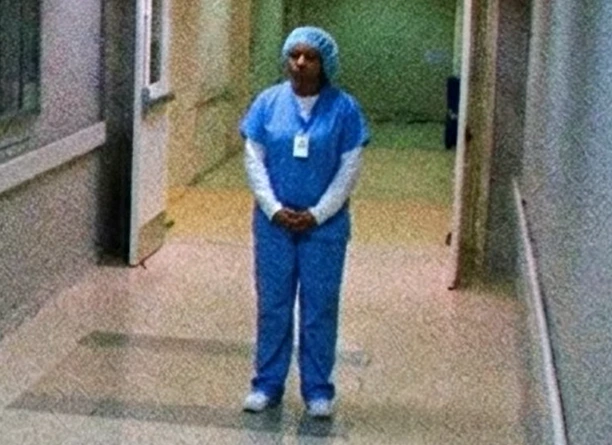
The two victims recovered that night were identifi…
The two victims recovered that night were identified as Elellanar Voss, 74, and Harold Bowmont, 68.
Both step down unit patients under Penny’s direct overnight care in the days immediately preceding their falsified discharges.
Both had limited family involvement.
Elellaner’s only living relative was a daughter living several states away who communicated primarily by phone and Harold had no immediate family at all, relying instead on a rotating group of church volunteers for occasional visits.
Investigators would come to understand that Penny had, whether consciously or through simple pattern recognition developed over years of overnight work, gravitated specifically toward patients whose limited in-person family contact made a falsified discharge considerably less likely to draw immediate scrutiny.
patients whose absence from any subsequent phone call could be attributed for a period of days to any number of ordinary explanations before anyone grew concerned enough to investigate directly.
Elellanar Voss had been admitted 6 weeks earlier following complications from a chronic heart condition she had managed for over a decade, stable enough by the time of her death to have been realistically close to an actual legitimate discharge within days.
Her daughter, interviewed extensively during the investigation, described a mother who called her every evening without fail for years.
A routine so consistent that its disruption should have been, in hindsight, an immediate red flag.
Except that Penny’s falsified discharge paperwork specifically indicated Eleanor had been picked up by a family member.
information her daughter, living states away and unable to immediately verify in person, had no reason to doubt when hospital staff confirmed it over the phone.
Harold Bowmont’s situation proved in some ways even more troubling to investigators once the full pattern emerged.
With no immediate family to notice his absence, his case relied entirely on the church volunteer group that visited him regularly.
a group whose visiting schedule Penny would have had reasonable familiarity with through her own overnight shifts and whose gap in scheduled visits nearly nine days between the falsified discharge and any volunteer attempting further in-person contact gave Penny considerably more operational room than Ellaner’s case ultimately did.
The medical examiner’s findings completed over the following weeks would establish that both Elellanar and Harold had died of causes consistent with their existing medical conditions.
Findings that complicated the case considerably once it reached prosecutors.
The deaths themselves did not appear to have been caused by any direct action on Penny’s part, but rather represented natural deaths that she then chose, for reasons investigators would spend months trying to fully understand, to conceal rather than report.
Penny’s own account, offered in fragments across several interviews before she eventually stopped cooperating entirely, suggested a pattern that began, according to her description, as a single moment of panic following an early unexpected death on her unit.
a fear, she said, of facing scrutiny over her own care decisions in the hours before that patient’s death, which led her to falsify the discharge rather than report it through standard channels.
Investigators believe that once the falsification succeeded without detection, the pattern simply continued.
Each subsequent case reinforcing Penny’s belief that the method was safe until what began as a single act of panic had over 5 months become a repeated deliberate practice.
At trial, prosecutors built their case around the falsified discharge documentation recovered from hospital records, physical evidence from the decommissioned storage building, where additional remains were eventually located, and testimony from both security officers establishing the specific sequence of events that led to Penny’s discovery.
The defense argued that the underlying deaths themselves were natural and not attributable to any criminal act by Penny, limiting the case’s scope primarily to charges of abuse of a corpse, falsification of medical records and obstruction.
The prosecution successfully argued for additional charges tied to the pattern’s deliberate repeated nature and the specific harm inflicted on families left to believe their loved ones were alive and simply unreachable.
In some cases for weeks longer than the truth would have required.
Penny Ashkam was convicted on all counts after just under 9 hours of jury deliberation.
The trial drew considerable attention from medical ethics and patient advocacy organizations who highlighted the case as a stark illustration of how institutional trust in routine documentation can be exploited by someone embedded within the system itself.
Expert witnesses called during the proceedings testified extensively about the specific vulnerabilities in hospital discharge verification processes nationally, noting that Penny’s method, while unusual in its outcome, exploited gaps common to many large medical institutions rather than any unique failure specific to this particular hospital.
This testimony became central to the prosecution’s broader argument that the case represented not an isolated act of individual deception, but a systemic vulnerability Penny had simply been positioned through years of overnight experience to identify and exploit more thoroughly than most.
Additional remains were located at the decommissioned storage building beyond the two victims recovered on the night of Penny’s arrest, ultimately bringing the total number of confirmed victims to five, spanning the full 5-month period investigators were able to document through cross-referencing discharge records against subsequent family contact.
Penny received consecutive sentences reflecting the full scope of the pattern, amounting to a term of imprisonment that, according to the sentencing judge’s own remarks, was intended to reflect not just the individual acts of concealment, but the cumulative institutional betrayal of a caregiving role built specifically on the trust of vulnerable patients and their families.
The hospital in the aftermath of the case conducted an extensive internal review of its discharge verification procedures, ultimately implementing new protocols requiring secondary physician confirmation for any overnight discharge involving patients without an in-person family member present at the time of release.
A policy change the hospital’s chief administrator has said directly addresses the specific gap in oversight that allowed Penny’s pattern to continue undetected for as long as it did.
Elellanar Voss’s daughter has said in the only public statement her family has given that the two days between filing her missing patient inquiry and learning the truth were in some ways worse than the grief that followed.
because she spent those two days imagining dozens of ordinary explanations for her mother’s silence, never once considering that the hospital’s own paperwork describing a healthy discharge could simply be false.
She has said she has spent considerable time since reflecting on the specific vulnerability of being a family member at a distance, unable to verify anything in person, entirely dependent on the word of an institution she had no reason at the time to distrust.
She has also spoken about her decision to pursue a civil claim against the hospital separately from the criminal proceedings against Penny, framing it not as an attempt to extract additional punishment, but as an effort to ensure the institutional gaps that allowed her mother’s case to go undetected, received the same scrutiny as Penny’s individual actions.
That civil case resolved through settlement roughly a year after Penny’s criminal conviction included provisions requiring the hospital to fund an independent ongoing audit of discharge verification practices for a period of several years along with a public accounting of the audits findings released annually to affected families in the broader community.
Harold Bowmont’s church community held a memorial service for him nearly 6 months after his actual death once his remains were finally recovered and formally identified.
a service several volunteers who had visited him regularly described as devastating in a specific compounded way, mourning not only his death itself, but the additional months during which they had each independently assumed his prolonged absence from their usual visiting rotation simply reflected a discharge to a rehabilitation facility they hadn’t yet located.
One volunteer who had visited Harold weekly for nearly 2 years said she had gone so far as to call several rehabilitation centers in the surrounding area during those months, working from a list she’d compiled herself, never once suspecting that the man she was searching for had never left the hospital’s own grounds at