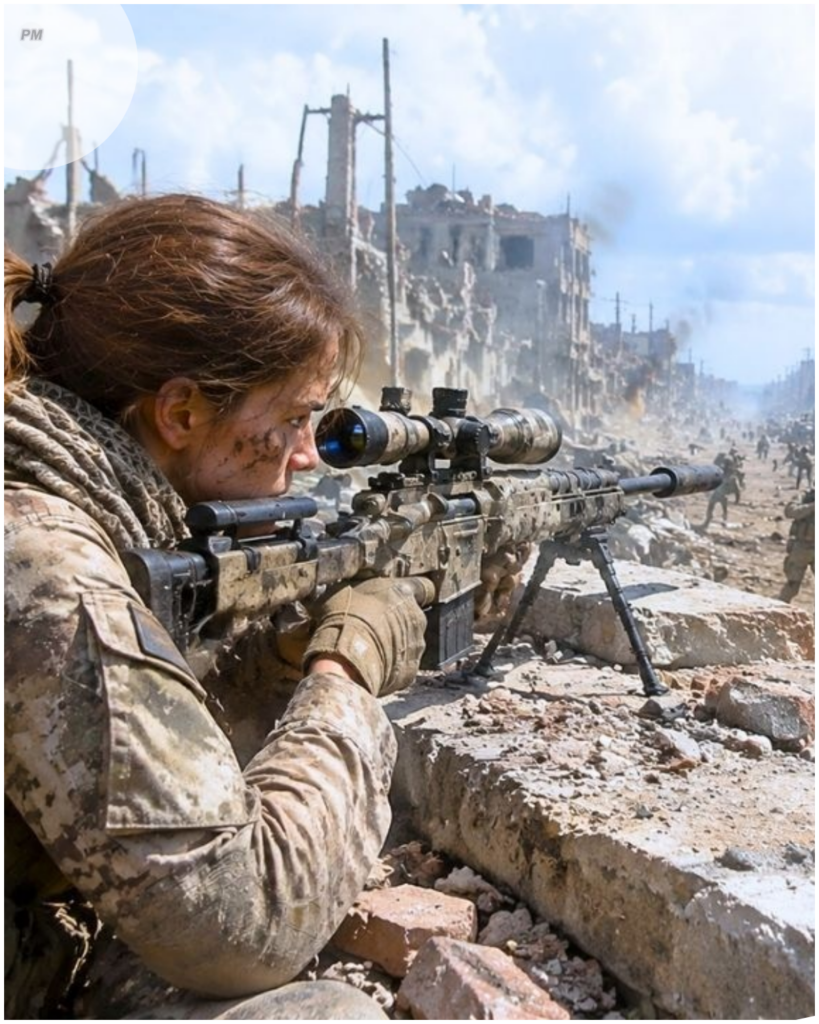
Shoot him in the legs first
Shoot him in the legs first. I want him screaming when his team surrenders. The commander pressed his boot onto the wounded SEAL’s chest and lean down slowly, not to help to watch him struggle to breathe.
He smiled the kind of smile that had nothing human left inside it and spoke loud enough for every trapped American soldier to hear clearly.
I have done this 17 times. Not one of them survived. He straightened up, looked at his men surrounding the valley, and gave a single quiet order.
No prisoners. Make it last. Then he turned his back on them like they were already dead.
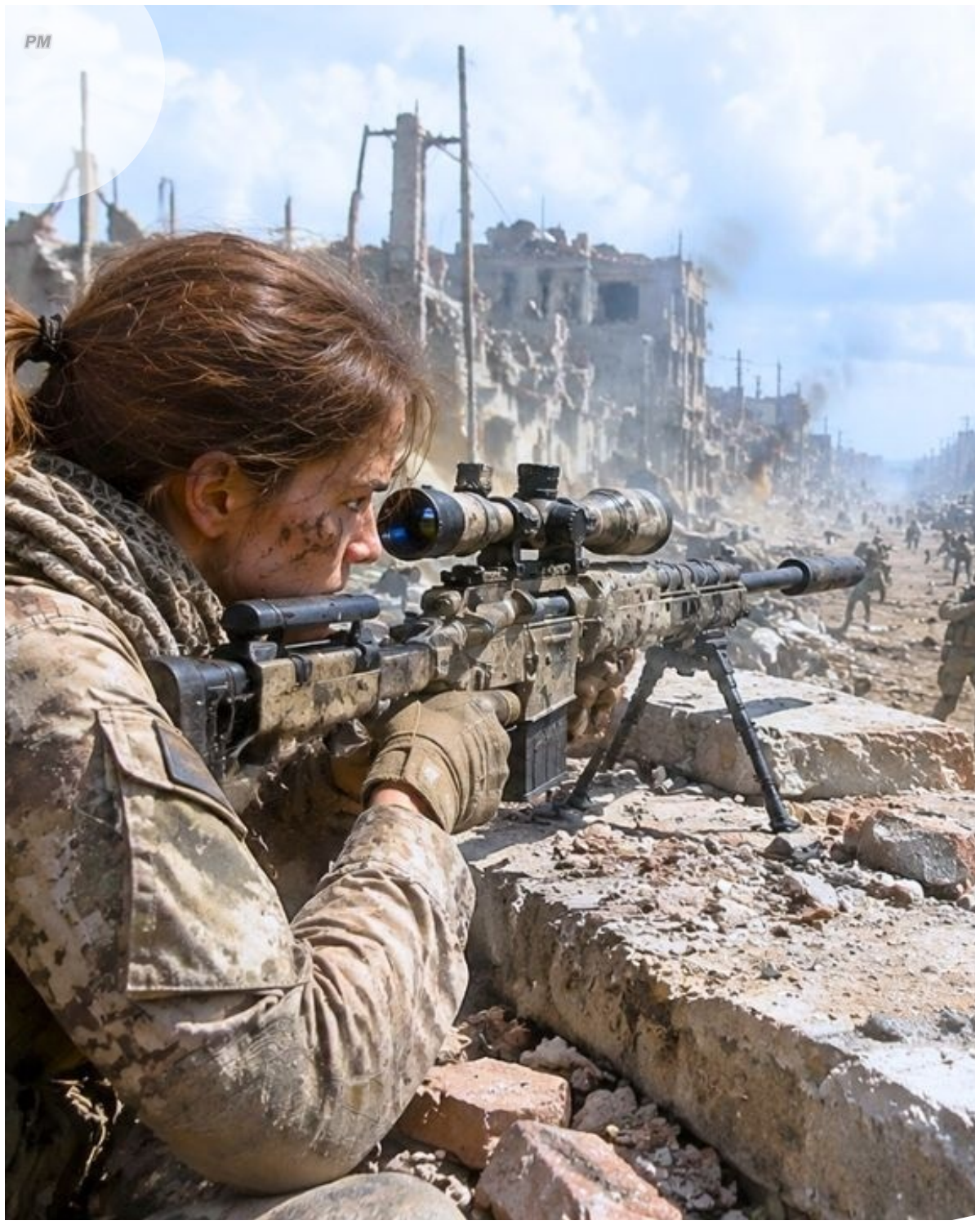
Like the outcome was already written. If [clears throat] you believe some people are worth fighting for, stay until the very end.
Subscribe now and drop your city in the comments. I want to see how far this story reaches.
Lieutenant Ethan Walker had survived two combat deployments in Afghanistan, one in Iraq, in a classified operation in West Africa that the government still refused to acknowledge on paper.
He had been shot at by people who knew what they were doing. He had been ambushed by fighters who studied American tactics for years.
He had been in situations so bad that the only thing keeping him alive was the man next to him [clears throat] and the instinct that never completely turned off even during sleep.
But standing at the edge of the Redwood National Forest in Northern California, looking out at 300,000 acres of dense wilderness and listening to the silence.
A silence that felt deliberately engineered rather than natural. Something moved in his gut that he had not felt in a long time.
It felt like dread. Walker Chief Petty Officer Marcus Reed appeared at his shoulder voice low, the way it always got when Reed was processing something and not yet ready to say it out loud.
Reed was 6’2 broad as a doorway and had the kind of face that looked like it had been cut from Cory Stone.
He had served alongside Walker for 6 years. They did not need to use many words between them.
A tone, a glance, a silence that lasted half a second too long. It was enough.
I know, Walker said. Brief said 15 to 20 security personnel. Max Reed said local contractors not organized, not trained.
I know what the brief said. This doesn’t feel like 15 people. Walker looked at the treeine again.
The pine stood perfectly still. No birds, no wind through the upper branches, just that engineered silence pressing down like a hand on the chest.
No, Walker agreed. It doesn’t. Behind them, Petty Officer Secondass Jake Collins was running a final equipment check, moving through each item with the mechanical efficiency of a man who had done this ritual so many times it had become something close to prayer.
Collins was 29 years old, the youngest on the team, and still carried a certain brightness in his eyes that combat had not yet finished erasing.
He was good, genuinely good, the kind of operator who made everyone around him better without trying to.
Petty Officer First Class Ryan Foster sat on a fallen log and tightened the laces on his left boot with focused attention.
Foster was the team’s communication specialist. He had a gift for staying calm when systems failed and for finding solutions in situations where the textbook offered nothing useful.
He was also, though he rarely spoke about it, the father of a 7-year-old girl named Lily, who drew pictures of him in his uniform and taped them to the refrigerator door back home in Virginia.
Foster Walker said, “Comms check.” Foster lifted the radio handset and ran through the frequencies, his voice quiet and professional as he made contact with the extraction team staged 6 miles east.
All clear. Signal strong. Backup team is in a position. 30inut extraction window confirmed. Good.
Walker turned back to the tree line. We go in clean. Standard reconnaissance pattern. Nobody fires unless fired upon.
We document the exchange, collect whatever intelligence we can, and we come back out. No heroics, no complications.
When does it ever go that way? Colin said, not looking up from his gear.
Today it does, Walker said. Because I said so. Colin smiled but kept his mouth shut.
It was the right answer. They entered the forest at 0612 hours on a Tuesday morning in late October.
The plan was simple. The operation had been built on 3 weeks of aerial surveillance, two weeks of signal intelligence, and a detailed briefing from a federal agency that Walker’s unit was not officially supposed to be working with.
A criminal network international in reach, violent in method, and careful enough in operation that law enforcement had spent four years building a case without ever quite closing the distance, had been using the abandoned logging infrastructure deep in the California wilderness to move weapons, not small weapons, not handguns and hunting rifles being traded for cash, militaryra equipment, shoulder fired missiles, encrypted communication hardware, the kind of inventory that made federal anal ists wake up at 3:00 in the morning with their hearts pounding.
Someone high enough in the government had decided that the agencies were moving too slowly.
Someone had decided to send people who move faster. Walker’s team was those people. The mission was reconnaissance only.
Get eyes on the exchange, document the personnel, gather intelligence that could anchor a legal case, or if necessary, justify something less legal.
Get out without being seen. 40 minutes into the forest, Walker raised his fist and the team stopped.
He did not say anything for eight full seconds. Then he said very quietly, “We have eyes on us.”
Nobody questioned it. Nobody asked how he knew. In 6 years of working together, Marcus Reed had learned that when Walker said something in that tone, the correct response was to believe it immediately and act.
They shifted formation without speaking. Collins moved left. Foster moved right. Reed tightened the gap between himself and Walker to three feet.
Every weapon came up to a ready position. Not raised, not aimed, ready. The difference between those two things was the difference between starting a fight and being prepared to finish one.
Contact, Collins said, the single word coming out flat and controlled. 300 m ahead movement in the trees.
Not animal movement, not the random shifting of wildlife. Deliberate, coordinated, the movement of people who had a plan.
How many? Reed asked. Collins watched through his scope for 4 seconds. Can’t get a count.
Too much cover. Estimate more than the brief said. Walker made a decision in under two seconds.
Fall back to the secondary rally point. We reassess. And the forest erupted. The sound was enormous and immediate.
A wall of noise that hit before the mind could fully process it. Gunfire from the left.
Gunfire from the right. An explosion somewhere behind them that lifted dirt and debris 30 ft into the air and knocked Foster off his feet.
The ambush was not the work of 15 local contractors. The ambush was the work of people who had studied military tactics, who had studied specifically how American special operations teams moved and thought and reacted and who had spent time real time preparing this exact trap for this exact team.
Contact left. Contact right. We’re flanked. Colin’s voice cut through the noise with perfect clarity.
Move, move, move. Walker was already moving, staying low, returning fire with controlled efficiency, not burning ammunition in panic, but placing rounds with the mechanical precision of a man whose training was running the moment his conscious mind stepped back.
Reed grabbed Foster, who had gone down hard from the explosion. Foster, you with me, Foster.
Fosters’s face was pale. His leg was wrong, the angle was wrong, and the blood was wrong.
And Reed knew immediately that the communication specialist was not going to be running anywhere.
I’m here,” Foster said through his teeth. “I’m here. Don’t stop. You’re hit. I know I’m hit.
Keep moving.” Reed pulled Fosters’s arm across his shoulders and lifted him, taking most of the man’s weight, and they ran.
The canyon appeared in front of them like a trap within a trap. The terrain, which the briefing maps had described as an open valley with multiple extraction routes, was nothing like the briefing maps.
Someone had altered the intelligence. Someone had fed them false terrain data. The valley was actually a narrow corridor of rock and old growth timber with walls on three sides and the enemy closing the fourth.
They were not being driven back. They were being herded. They knew, Reed said, breathing hard, scanning over Foster’s shoulder for threats.
Walker. They knew the route. They knew the whole route. Walker processed this without breaking stride.
We deal with what’s in front of us. What’s in front of us is about 60 armed men and no exit.
Then we find an exit. They reached a cluster of fallen timber ancient redwoods brought down by a winter storm years ago and went to ground behind it.
The cover was not perfect, but it was real. Walker took stock of the situation with the rapid, emotionless assessment he had trained himself to perform regardless of circumstances.
Four operators, one severely wounded, two exits confirmed, blocked. Third exit unknown, but likely blocked given the sophistication of the ambush.
Ammunition at starting levels minus what had been expended in the first contact. Radio communication Walker looked at Foster, who was already pulling at the handset with a face tight with pain and focus.
Foster comms. Foster pressed the transmit button. Static. He tried the backup frequency. Static. He ran through every frequency available, working through the list with methodical patience while his leg bled onto the pine needles beneath him.
Nothing. Nothing. They’re jamming us, Foster said. Broadband jamming. Someone in this network has militarygrade electronic warfare equipment.
The information landed in the group like a stone in still water. Which means they had help getting it.
Colin said, “This isn’t a criminal network running weapons. This is later.” Walker said, “We figure that out later.
Right now, I need options. We could push north.” Reed offered the ridge is steep, but it’s not impossible.
If we can get above the tree line, we might get a signal through. They’ll anticipate the ridge.
They anticipated everything else. Then what? Walker was quiet for 3 seconds. In the world he operated in 3 seconds of silence from a team leader felt like an hour.
Collins watched him. Reed watched him. Even Foster flat on his back with his leg wrapped in a field dressing that was already soaking through turned his head and watched him.
We hold, Walker said. Hold. Collins repeated. We hold this position. We make every shot count and we wait.
Wait for what? Nobody knows we’re here. Coms are jammed. The extraction team. The extraction team will know something’s wrong when we miss the check-in window.
They’ll escalate. It takes time, but they will escalate. How much time? Reed asked. Walker did not answer immediately because the [clears throat] honest answer was too much time.
More time than four men in their current position could realistically survive without a significant change in circumstances.
But he did not say that enough. He said instead, we hold. The enemy did not rush them.
That was the most frightening part. Another force less disciplined, less intelligent in their tactics would have charged the position and ended it quickly, trading casualties for speed.
These men did no such thing. They set up firing positions with calm efficiency. They established fields of fire that covered every approach in every escape route.
They communicated through hand signals in short radio bursts in a language that Collins identified as a European dialect mixed with something he could not place.
“These aren’t contractors,” Collins said, watching through his scope. “Look at how they move. These are trained soldiers, former military, professional.”
“How many?” Walker asked. “I’ve got 30 confirmed. Could be more in the trees.” Reed fired twice, forcing back a pair of enemy soldiers who had been advancing on the right flank.
We’re burning ammunition. I know, Walker. At this rate of exchange, we’ve got maybe 20 minutes of effective resistance.
After that, we’re down to sidearms. Walker nodded. His jaw was tight. His eyes were moving, constantly, scanning, calculating, never settling.
20 minutes. That was what they had. Then the radio crackled. Not the team radio, not the military encrypted handset that the jamming had silenced.


