A local historian, Alice Warren, became involved w…
A local historian, Alice Warren, became involved when Janet asked about the Bellamy name. Alice began with property material and older accounts of settlement in the area.
She found references to a Bellamy household associated with that part of the valley in the early 19th century.
Further material identified Caleb and Miriam along with a daughter. The names matched Michael’s account, but Alice cautioned against treating the discovery as independent proof.
Some information about the family had appeared in a local history published well before his trip.
Michael denied reading the book or knowing the family’s history. Alice could not verify that denial.
He might have encountered the information years earlier and forgotten its source. The cabin site itself could also have influenced his description.
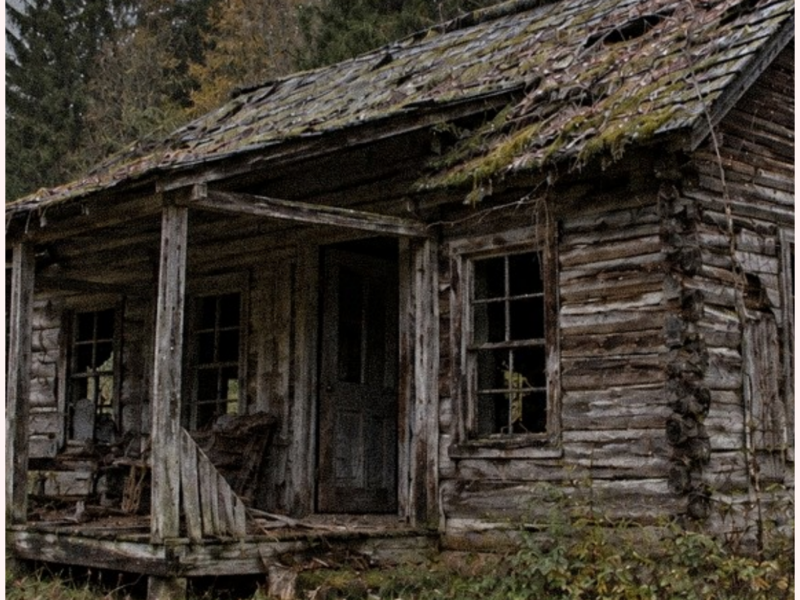
Although little remained, the hearth and parts of the wall gave clues about the former layout.
Michael had drawn the room while recovering, indicating where he slept and where the family stored water.
Some of those details agreed with the remains, but agreement alone could not establish that he had seen the building intact.
Alice continued looking because the family records extended beyond the published account. She contacted descendants of Miriam’s relatives and learned that they held correspondence passed down with other household papers.
Much of it concerned ordinary matters and had never been transcribed for publication. During an examination of the collection, Alice found a letter written by Miriam in 1801.
One section described an injured stranger who arrived during heavy rain the previous autumn and remained with the family while his leg improved.
The letter did not give Michael’s full identity or a precise date of arrival. It described the man as unfamiliar with the area and confused about places and years.
Miriam wrote that he possessed a light the family did not understand. She also mentioned that he helped Caleb repair a damaged tool handle while he was unable to walk far.
The stranger had gone outside after hearing something and failed to return. His own footwear remained at the house because the family had provided another pair that he could wear more comfortably.
Alice read the passage before discussing it with Michael. The similarities were more specific than the names and the location found in the published history.
A wounded traveler was not unusual in itself. The combination of the handle repair, the unfamiliar light, and the abandoned footwear required closer examination.
Alice made a transcription and arranged for the document to be photographed with the owner’s permission.
She also checked the surrounding correspondence to understand where the letter belonged in the family collection.
The paper and handwriting were consistent with the period and the document had been preserved among related material.
That supported its age without identifying the stranger. The passage about the light could not be treated as a technical description of a headlamp.
Older wording allowed more than one interpretation and the letter did not describe a modern manufacturer or component.
Alice made those limits clear. The document was important because of what it actually contained, not because every ambiguous phrase could be fitted to Michael’s account.
Janet showed Michael the transcription during his recovery. He recognized the sequence but could add nothing that would establish how the letter came to describe it.
He asked whether the writer said what happened after he left. The remaining passage indicated that Caleb looked nearby when the stranger failed to return.
The family eventually assumed he had continued on or found someone who could help him.
Miriam also mentioned that Ruth asked about him afterward. There was no later entry explaining his identity or recording that he returned for the boots.
The letter prompted a more detailed examination of the shoes. A specialist familiar with historical leatherwork found hand stitching, a simple construction, and methods compatible with older footwear.
No obvious modern manufactured feature immediately excluded an early origin. However, traditional methods continued to be used long after 1800, including by people making reproductions.
The shoes had also been worn and repaired. Their construction could be described, but the examination could not establish a manufacturing date narrow enough to confirm Michael’s claim.
There was no reliable way to determine from the dressing alone when the cloth had been woven or who applied it.
The pieces had been exposed to the wound, moisture, and handling during treatment. They demonstrated that Michael had material outside his listed equipment, which was already clear from the rescue photographs and hospital account.