Michael accepted that advice because he could bare…
Michael accepted that advice because he could barely cross the room without help. He planned to rest for a day and reconsider.
He assumed he could explain the delay once he reached a place with transport or a telephone.
The headlamp produced a stronger reaction than his questions. Michael took it from his pack while Miriam was changing the bandage, intending to give her more light.
When he switched it on, she drew back and called Caleb. The girl moved behind her mother.
Michael turned the beam toward the floor and demonstrated the switch, trying to show that the device was harmless.
Caleb watched but would not take it. He seemed particularly concerned that it produced light without a flame.
Michael put it away when the demonstration made the family more uncomfortable. That incident stayed with him because it was harder to explain as a choice to live simply.
He understood someone refusing electricity, but Caleb appeared unfamiliar with the possibility of a small light powered by batteries.
Michael considered whether the family belonged to a community that avoided contact with outsiders. Nothing else about their behavior suggested they wanted to keep him there.
They allowed him to use his belongings, discussed the route out, and repeatedly checked whether he could put more weight on the leg.
On the third day at the house, Michael and Caleb returned to the subject of directions.
Michael referred to a road shown on his map and mentioned having visited the wider area several years earlier.
Caleb could not reconcile the dates Michael used. The exchange continued until Michael stated the current year.
According to his account, Caleb responded as though he were hearing the confused speech of someone with a fever.
The year the family understood to be current was 1800. Michael asked again later because he thought he might have misunderstood.
He received the same answer. He considered several explanations before accepting that he had no way to resolve it.
They might be joking, using an unfamiliar calendar, or deliberately withholding information about their lives.
His own condition might also be affecting what he heard. He did not spend the remaining days arguing about it.
He needed the shelter and could see no way of reaching the road without assistance.
In his later statements, he distinguished between what the family said and what he could explain.
He never claimed to have understood how the difference in dates was possible. His account of life inside the cabin was detailed.
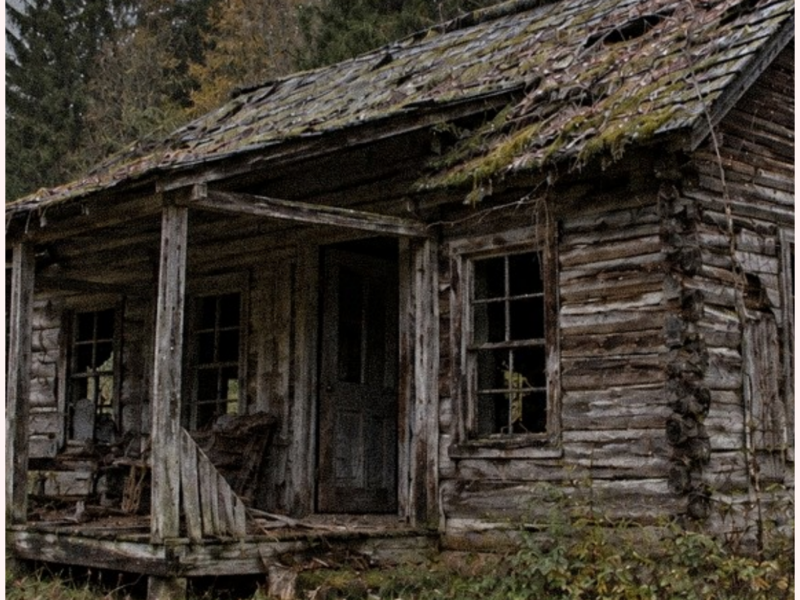
He slept near the hearth with his pack beside him. Water stood in a covered container in a recess along one wall.
Miriam kept folded cloth on a shelf above it and brought the container closer when she worked on his leg.
The adults slept farther from the fire with Ruth nearby. Caleb spent part of each day outside and returned with wood or other supplies.
Michael rarely left the doorway because the ground beyond it was uneven and his leg became painful after only a short distance.
As he improved, he tried to repay some of the help by doing small jobs while seated.
Caleb brought him a tool with a damaged wooden handle. Michael used the knife from his pack to shape a piece that would reinforce the split.
Caleb supplied material and checked the fit while Michael worked. The repair took more than one sitting because holding the tool in place pulled at his injured leg.
He remembered discussing the strength of the wood and whether the handle would need to be replaced once heavier work resumed.
Ruth became comfortable enough to sit nearby. She brought him a small wooden animal with a damaged leg and he secured it with a short piece of cord.
She asked questions about his water bottle and the smooth fabric of his pack. Michael avoided showing her the headlamp again.
He spoke about his sister and the place where he lived, though descriptions involving cars or other equipment led to questions he found difficult to answer.