Please, please stop
Please, please stop. LEAVE ME ALONE. DON’T STAY BACK. SPOKANE, WASHINGTON, April 2023. A couple renovating an old house tears down drywall in the attic.
Behind the wall, sealed inside a cardboard box, two VHS tapes. The date written in black marker, September 23rd, 1995.
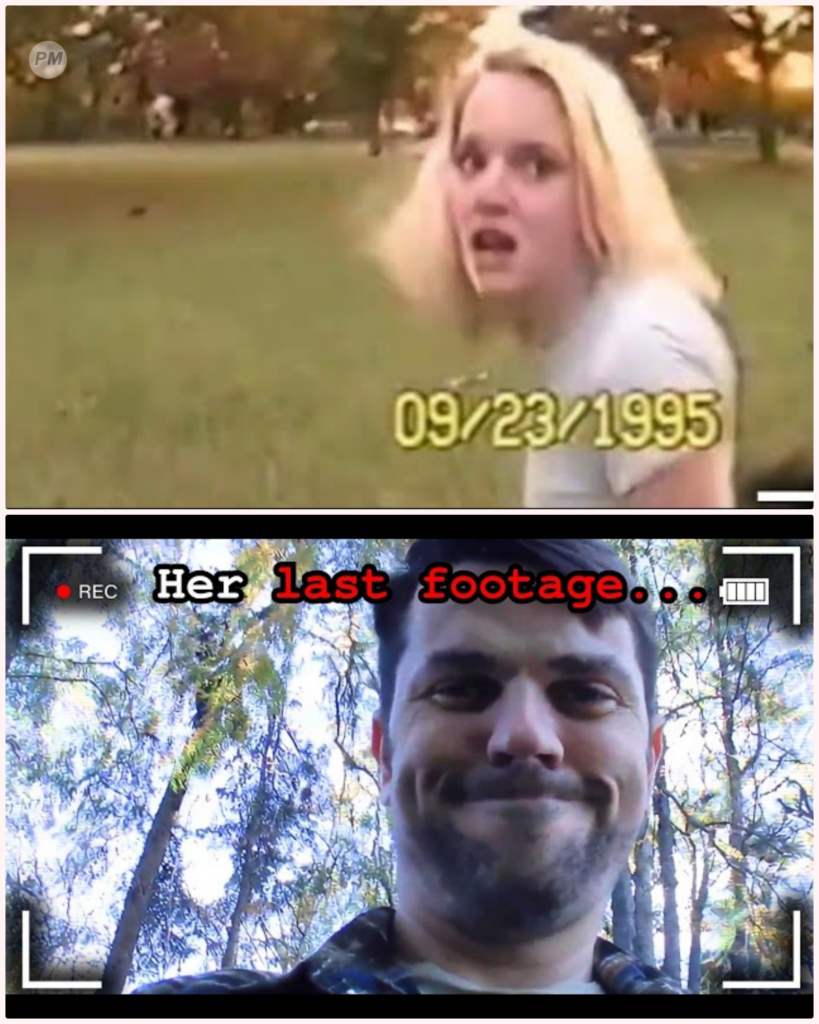
The first tape shows a young woman running through a park, blonde hair flying behind her, terror carved into her face.
She glances back at whoever is filming. Then she turns forward and runs harder. The second tape shows a wooden door built grass growing over weathered planks.
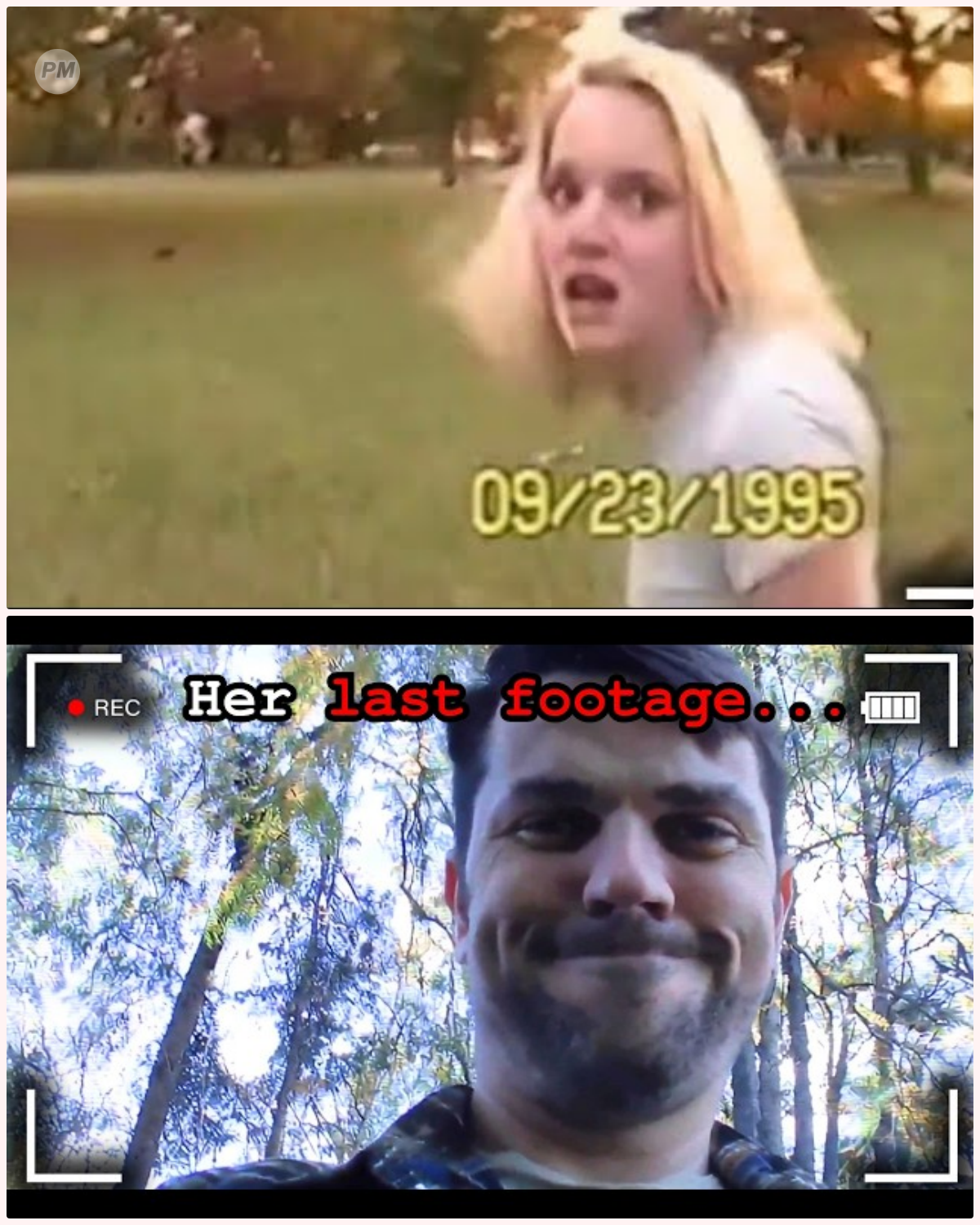
Then the camera moves. It turns, and the person holding it looks directly into the lens.
He smiles, cold, satisfied, the smile of someone who knows he will never be caught.
These tapes had been hidden for 28 years. They would solve a case the police had abandoned in 1996.
They would answer a question a mother had carried every single day since her daughter walked out the door and never came back.
This is the story of Emily Garrison, 18 years old, missing since September 1995. And the man she trusted who made absolutely certain no one would ever find her.
Emily Garrison was born in Spokane on March 14th, 1977. She was the only child of Patricia and Thomas Garrison.
Patricia worked as a registered nurse at Sacred Heart Medical Center. Thomas worked at the Kaiser Aluminum plant on the east side of the city.
They were not wealthy, but they were stable. They owned a modest two-story house on Spokane’s north side, a neighborhood of tree-lined streets and families who had lived there for decades.
Emily was quiet, introverted. She preferred books to people. She spent hours in her room reading Stephen King novels and listening to Pearl Jam on her Discman.
She had a small circle of friends at North Central High School. She did not go to parties.
She did not date. She came home after school. She did her homework. She had dinner with her parents.
She watched television with them. Then she went back to her room. Patricia described her daughter as responsible, predictable.
Emily never missed curfew. She never got in trouble. She earned good grades. She was planning to attend Eastern Washington University in the fall of 1996.
She wanted to study literature. She wanted to teach high school English. The Garrisons were close to Patricia’s sister, Margaret.
Margaret lived two houses down the street. She had married Robert Kimball in 1987. Robert was a construction foreman, tall, broad-shouldered.
He had a deep voice and a firm handshake, the kind of man people described as dependable.
Margaret was a substitute teacher at the local elementary school. She and Robert had no children.
They had tried for years. It never happened. Margaret and Patricia saw each other almost every day.
Coffee in the mornings, dinners on weekends, holidays together. Emily was around her aunt and uncle constantly, but Emily did not like Robert.
She never said why, not directly, but Patricia noticed. Emily would leave the room when Robert arrived.
She would sit as far away from him as possible at family dinners. She would avoid eye contact.
One afternoon in the summer of 1995, Patricia asked her daughter what was wrong. Emily said she did not like the way Robert looked at her.
Patricia asked what she meant. Emily said she could not explain it, just a feeling, something wrong in the way he watched her.
Patricia told her she was being paranoid. Robert was family. He had known Emily since she was a child.
He would never hurt her. Emily never brought it up again. Before we continue, it’s important to understand something about cases like this.
When a young woman disappears from her own home in the middle of the day, investigators focus on strangers, unknown vehicles, suspicious activity from people outside the victim’s circle.
But statistics tell a different story. In cases involving young women who vanish without witnesses, the perpetrator is almost always someone the family knows, someone who has access to the home, someone the victim would let inside without hesitation, someone who understands the family’s routine well enough to strike when no one else is watching.
The FBI’s Behavioral Analysis Unit has studied thousands of these cases. The pattern is consistent.
The danger is not the stranger on the street. The danger is the person sitting across from you at Thanksgiving dinner.
September 23rd, 1995, a Saturday, warm, clear skies. Emily stayed home that day. She had an essay due Monday for her AP English class.
Her parents were both working. Patricia had a 12-hour shift at Sacred Heart. Thomas was pulling overtime at Kaiser.
He would not be home until after 8:00 p.m. Emily woke up around 9:00 a.m.
She made herself toast. She sat at the kitchen table and worked on her essay.
The house was quiet, no television, no music, just Emily and her notebook. Patricia called home at 11:00 a.m.
Emily answered on the third ring. She said she was fine. She was making progress on the essay.
Patricia asked if she needed anything. Emily said no, she would make herself lunch. There was leftover casserole in the fridge.
Patricia called again at 4:00 p.m. Emily answered. She said the essay was almost done.
Patricia told her she would be home by 6:30. She told Emily to lock the doors.
Emily said she would. That was the last time Patricia spoke to her daughter. Patricia left Sacred Heart at 6:00 p.m.
She stopped at the grocery store on the way home. She bought milk and bread.