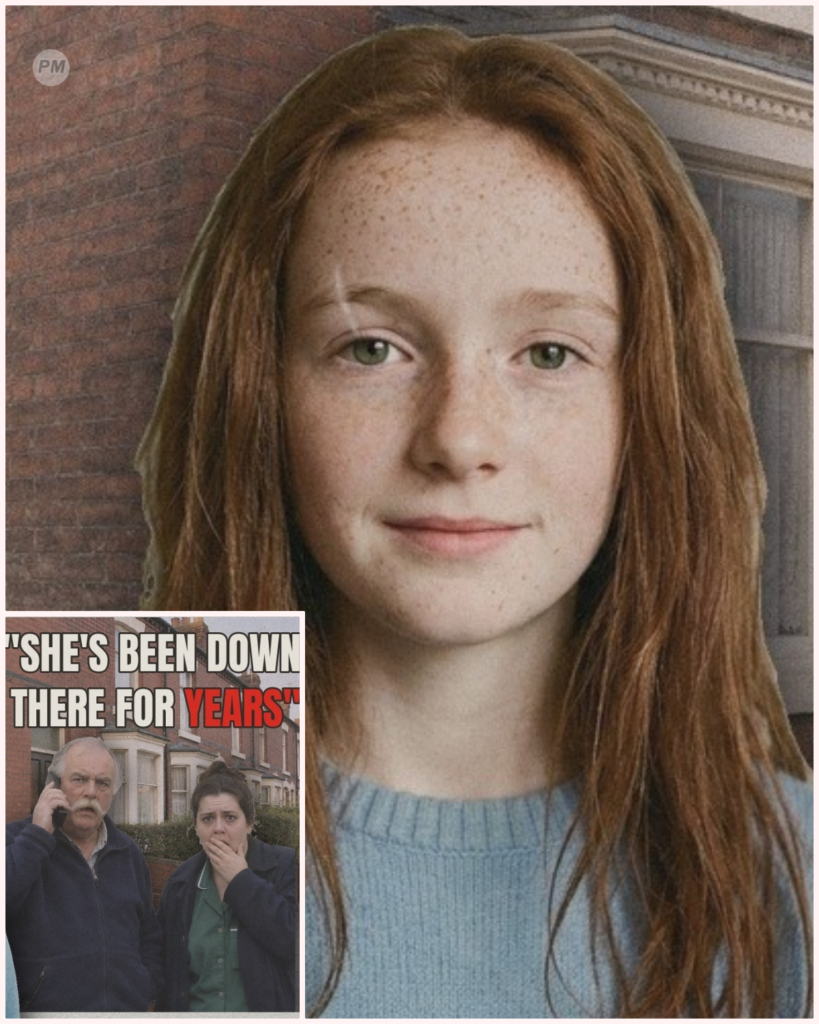
At 3:47 on the afternoon of Wednesday, the 30th of September 2026, a nine-year-old boy counted $2 80 in coins onto the counter of an ice cream van in Liverpool.
Two lollies, the same as every day for three weeks. The driver, a white mustachioed man of 63 called Eamon Redmond, smiled and said, Hungry boy, who’s the second one for?
The boy looked at the pavement and said it very quietly, the way children say the worst things.
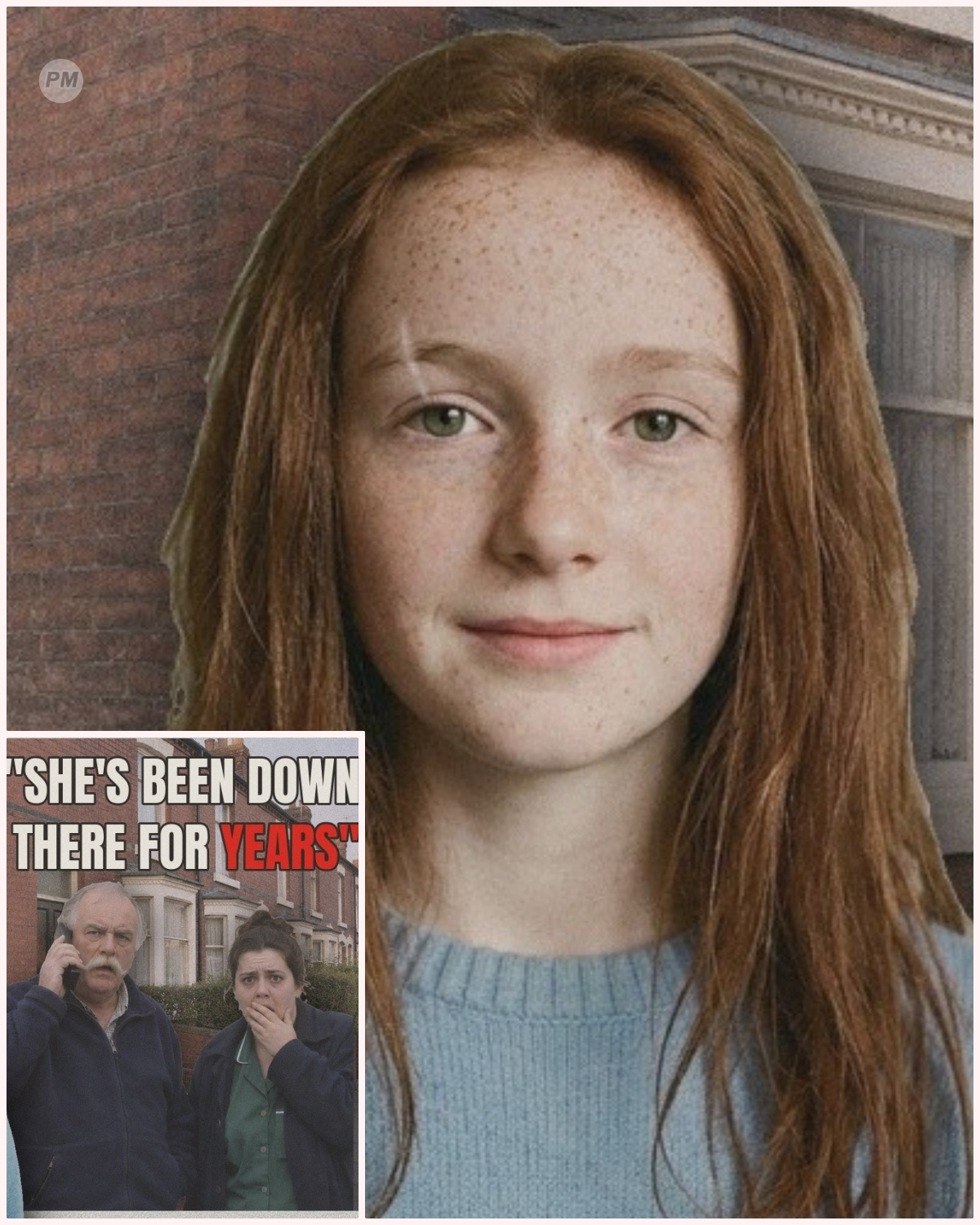
Once for me and once for the girl in the cellar. Eamon’s hand stopped on the freezer lid.
What girl, son? But the boy had snatched both lollies and was gone. And 5 minutes later, Eamon took out his phone and pressed 999.
He did not know it yet, but the girl in the cellar had a mother who had never stopped looking.
And a story that began 8 years earlier, less than half a mile from where he stood.
Before we go on, if you’re new here, please subscribe and ring the bell so you don’t miss the next case.
And tell us in the comments where you’re watching from and what time it is there.
This is a dramatized story. The names and some details are fictional. Now, let me tell you how it began.
Eamon Redmond had driven the same ice cream round in the same corner of Liverpool for three decades.
The van had been his father’s before it was his. A boxy cream and blue thing with a faded painted cone on the side and the words Redmond’s Ices on the roof.
And it played the same tune it had always played Green Sleeves from a speaker the size of a biscuit tin.
He knew the tune annoyed half of Waveretree and he did not care. His wife Pat had died in 2019 and since then the round had been most of what he had.
Every school day from April to October, if sun was out, he parked at the corner of Winterton Street at 3:45 in the afternoon, switched on the chime and waited for the school gates to empty.
Winterton Street was a long, narrow terrace of red brick Victorian houses, each with a bay window and a patch of front yard no bigger than a bed sheet, low walls with hedges behind them, and iron grates set in the flagstones where cold and light had once gone down into the cellars.
Nobody looked at those grates anymore. They were part of the street like the drains.
The boy was called Cian Doyle. He was in year five, thin as a rake with a cowlick that no comb had ever beaten and a Scouse accent so thick that Eamonn had to listen twice.
His mum, Shauna, worked nights in a care home and the two of them had moved into number 40 early the year before.
Eamonn knew all this the way you know things on a round in scraps over a counter.
On Monday, 7th September, in the first warm week of the new school year, Cian had walked up to the van at 3:47 and asked for two, a strawberry lolly and an orange one.
He had paid in coins counted slowly into a small damp heap, £4. 40 for each, two 80 in all.
Eamonn had said, big appetite? And Cian had said nothing, taken both lollies and walked off down the street, holding one a little way out in front of him as if it were a candle that might go out.
On Tuesday, he came again and asked for the same two, and on Wednesday and Thursday and Friday and the Monday after that.
Strawberry and orange, £2. 80 in coins. Every school day the van came. Cian never ate either lolly at the van, although it was 23° on some afternoons, and a lolly in that heat has about six minutes.
He never stayed to talk. He walked the length of the terrace fast with the orange one clamped in his teeth and the strawberry one held out at arms length.
And then he vanished among the hedges and the walls and the street swallowed him.
Eamonn asked about the money in the second week. $2. 80 a day is a lot of coins for a boy of nine, nearly four teas a week, and he said so, gently, in the tone he used for jokes.
Keiran shrugged without meeting his eye. I do jobs, he said, for a lady. She gives me coins.
Eamonn nodded, because on a street like that half the neighbors slipped a pound to a child who fetched a paper or carried a bag, and he told himself that was all it was.
By the end of the third week, Eamonn had counted 18 school days, 36 lollies.
On Wednesday the 30th, the 18th day, Keiran looked worse than he ever had, pale, red-eyed, his hands shaking as he counted out the coins.
That was when Eamonn, trying to lighten things, had asked who the second lolly was for.
Eamonn stood in the van for a long moment. Behind him a queue of little ones was forming, the chime still playing.
He heard himself say, Hang on, loves, one minute, and he stepped onto the curb and looked up the street and down it and saw nothing but 60 doors and 60 bay windows and a ginger cat on a wall.
He did not know which gate Keiran had gone through. He did not know which cellar.
He only knew that a boy of nine does not make up a sentence like that out of nothing.
At 3:52 he pressed 999. Emergency, which service? Said a woman’s voice. Police, Eamonn said.
The call handler, a woman called Beverly, took his name, then his location, then asked him to tell her in his own words what had happened.
He told her about the boy and the two lollies, three weeks of them, and about the words, one for me and one for the girl in the cellar.
Repeated exactly as they were said. Do you know the child’s address, Mr. Redmond? Number 40 Winterton Street in Waver Tree.
His mom’s called Shauna Doyle. And the girl? Do you have a name or an address for her?
No, he wouldn’t say. He said it was a secret. He said she was poorly.
There was a pause and the quick tap of a keyboard. Do you believe anyone is in immediate danger?
Amon looked at the iron grates in the flagstones. I believe a little boy is carrying a lolly to someone who can’t come out to get it, he said.
That’s all I know. Beverly said she was logging it, that an officer would visit the boy’s mother that evening and that he should not question the child himself.
Amon said thank you and stood on the pavement with Green Sleeves playing to nobody.
Then he served the queue. He gave back the wrong change twice. At dusk, he drove home with the chime switched off and somewhere around the park he had the feeling you get when you remember a word you were certain you had lost.
There was one day of the year when he never took the van out, 14th of July, and for eight years he had never explained why to anyone on his round.
A child had asked him for two lollies once before and that child had never been seen again.
Her name was Aoife Kelleher. And on Saturday, 14th July 2018, she was five years and four months old.
She was small for her age with russet hair that never stayed in a bobble and a scatter of freckles across her nose.
And she had three things about her that anyone who knew her could have recited in their sleep.
A thin white scar that cut through her left eyebrow from a fall against the kitchen step when she was three.
A way of asking for things always in twos and a bear. The bear was called Biscuit.
He was fawn, about the size of a loaf, worn bald at the nose from kissing, and his left ear had been torn off by the washing machine and sewn back on by Aoife’s nan, Bernadette, in blue thread because it was the only color in the sewing tin.
Nan Bernie had given Aoife the bear on her fourth birthday, and she had sung to the pair of them every night in the small back bedroom of the house in Old Swan, the same song every time, a slow Irish lullaby called Too Ra Loo Ra Loo Ral.
Aoife knew every word. She sang it to the bear in the bath, in the car, on the stairs.
Nan Bernie died on a Saturday in January 2018 in her own armchair with the telly on.
After that, Aoife started asking for two of everything, two biscuits, two stories, two spoons.
One’s for Biscuit, she would say in the grave voice of a five-year-old explaining something obvious to a grown-up.
Her mum Gemma, who was 30 and worked in the laundry of a city hospital, had stopped correcting her by February.
Her brother Dara, who was six, said it was stupid and then quietly handed Biscuit his own spoon when he thought nobody was looking.
Aoife wanted to be a lollipop lady when she grew up because the lollipop ladies got to hold a sign shaped like the moon and stop all the cars.
The Saturday of 14th of July 2018 was the hottest day of a heat wave, 29° by 2 o’clock.
St. Brendan’s Primary was holding its summer fair on the school field with a bouncy castle, a tombola, a bottle stall, and a long row of trestle tables of cakes that were beginning to slump in the sun.
Gemma was on the cake stall until 3:00. Dara was on the bouncy castle. Aoife had Biscuit under her arm and a pound coin in her fist, and she had been told twice to stay where her mum could see her.
At 2:52 in the afternoon, a white-mustached man in a cream and blue ice cream van parked at the edge of the field leaned out of the hatch and saw a small girl with a scarred eyebrow looking up at him as if he were in charge of the weather.
It was Amon Redmond and he was 55 that summer and he had been hired for the fair for $60 and all the cold drinks he could pour.
Two, please, said the girl. One’s for Biscuit. He asked who Biscuit was and she held up the bear and he said it was an honor.
She chose a strawberry lolly for herself and an orange one for the bear because, she explained, Biscuit liked orange.
She paid with her pound and a handful of coppers her mum had given her.
Amon told her to hold on tight and she turned and trudged away across the grass with a lolly in each hand, singing under her breath.
At 3:05 she was seen by a mother near the Bouncy Castle, walking towards the side gate of the field with her bear under her arm.
At 3:09 she appeared for four seconds on the camera of a news agent across the road.
The film was grainy and silent and what it showed was this. A small girl in a yellow top with a teddy under one arm and a lolly in her fist and beside her, one step behind, the back of a grown woman in a pale green summer anorak, her hand resting lightly on the child’s shoulder, steering her round the corner like a grandmother taking a grandchild for tea.
At 3:12 Gemma looked up from the cakes and counted two children and a Bouncy Castle and could only find one of them.
By 3:20 the school secretary was on the phone. By 3:34 the first police car was at the gate and by 6:00 that evening the face of a five-year-old with a white scar through her eyebrow was at the top of the regional news.
The police asked the public for help with a woman in a green anorak. They held back from the press two details that only the family and the detectives knew, the name of the bear and the blue stitching on his ear, so that if anyone ever claimed to have the child, those two things would tell them whether the claim was true.
400 volunteers walked the fields and the parks and divers went into the canal. On Sunday, 15th July, officers knocked on 214 doors in the streets around the school and asked who had been home, who had seen a car, who had seen a woman in green.
Every door was answered. Every neighbor was sorry. Nobody had seen anything that mattered. For seven weeks, the police believed it was Aoife’s father.
Liam Kelleher had been fighting Gemma for more access to the children and there had been angry words in the weeks before.
He was questioned and followed until his phone put him in a car park in Blackpool at the time his daughter vanished, and he was cleared in September.
By then, the detectives had stopped talking about a woman in an anorak and started talking about a man in a van.
The woman had become somebody’s nan, a passerby who would surely come forward if she were innocent.
She never did. The years that followed were the kind that are hard to describe because so little happens in them.
Gemma gave up the laundry. She and Liam separated for good in February 2019 because grief at that size does not leave room for two people.
She learned the names of every officer on the case. In eight years, she was told of 212 sightings of her daughter in Cork, in a chip shop in Alicante, in a pushchair in Rhyl, and she went to everyone that could be reached.
Aoife’s room stayed as it was with the duck quilt, the books in their rows, and a gap on the pillow where a bear should have been.
And every 14th July at 2:52 in the afternoon, Eamonn Redmond parked his van on the road outside St.
Brendan’s, switched off the chime, and set a strawberry lolly and an orange one on top of the school wall.
He did it every year and never signed anything. The first morning, someone took them away.
So did the second year. Gemma, who found them each time, thought that some stranger was being kind, and she was right, but she never knew whom.
Eamonn Redmond sat up late that night on Wednesday, 30th September 2026 with all of this in his chest, and he did not dare say it aloud.
He had been so sure for so long that what had happened to the little girl with the bear had an answer far away, in some other town, in some other country, that it simply had not occurred to him that it might be sitting a few streets from his own round.
At 7:10 that evening, a marked police car pulled up outside number 40 Winterton Street, and a young constable, who had never heard of Aoife O’Callaghan, got out to speak to a boy about an imaginary friend.
The constable was called Aaron Moran. He was 29, and he had been on the shift for 9 hours and expected a quiet last 40 minutes.
With him was a Community Support Officer, Nadia Mulligan, who knew half of Wavertree by their first names.
They found number 40 Winterton Street with its bay window lit and a pair of school shoes on the step.
Shauna Doyle opened the door in the green tunic of the care home where she worked nights, with her car keys already in her hand, and the look on her face was the look of a woman who thinks someone has come to tell her something terrible about her child.
Moran told her gently that there was no cause for alarm. A man who sold ice cream had passed on a remark that Keiran had made, and the police simply wanted to ask Keiran about it.
Shauna listened to the whole thing, then put her keys down on the radiator shelf, looked from one officer to the other, and began to laugh.
It was not a cruel laugh. It was tired and relieved and astonished. Let me get this right, she said.
Someone rang 999 because my son said he was buying a lolly for a girl in a cellar.
Keon was on the sofa with the telly on and a bowl of cereal going soft in his lap.
He did not look up when the officers came in. Moran crouched to his level and asked him in a friendly voice whether he had said something to the ice cream man that afternoon.
Keon stared at the bowl. It’s pretend, he said. I made it up. Moran asked which seller and whose and who the girl was.
There isn’t one, Keon said to the cereal. It’s a game. I do voices. Shauna put her hand on his hair and said quite kindly that he had been talking to the wall since July.
A pretend friend. His teacher said lonely children did it and that he’d grow out of it.
The constable asked about the money. Shauna stopped smiling. She said Keon got a pound on Fridays for his jobs.
That was all she gave him and she hadn’t a clue where two dollars 80 dollars a day was coming from.
But when Moran asked whether any neighbor might be paying him, she shrugged. Half the street slipped him a pound for fetching a paper, she said.
And there was a woman further up who handed out biscuits to every child within a mile as if she were giving out medals.
She shook her head. Look, I know you’ve got to ask, but he’s nine. He’s got an imagination like a sieve.
That ice cream man’s a nice enough fellow, but he’s frightened my lad half to death and honestly, I could swing for him.
Moran wrote four lines on his tablet. Imaginary friend, no named victim, no address, no disclosure.
Home environment appears safe, no further police action. He told Shauna to ring 101 if anything else worried her and he did not go door to door because there was no door to knock.
At 8:05 that evening, Shauna in the break room of the care home took out her phone and typed a message into the Winterton Street neighbors group.
It said that the police had been round to hers because the ice cream man had rung 999 about Kian, that her lad apparently had a girl in a cellar and that she would be having words.
11 people reacted. By morning, 42 had read it. That was the first of the three people who would turn Eamon away.
She had laughed and the laugh had been an honest one. And what happens now?
Who was the girl in the cellar? Was she just a lonely boy’s invention or was she a child the whole of Merseyside had been told to look for?
And how could a cellar in the middle of a Liverpool terrace stay quiet for so long?
If you want to know, subscribe if you haven’t, give this video a like and stay with us because what comes next is something nobody on Winterton Street expected.
On Thursday, the 1st October, the sun was out again. At 3:45, Eamon parked on the corner, switched on the chime, and waited for a boy with a cowlick and a handful of coins.
Children came in a trickle. A queue formed. Kian did not. By 4:15, there was still no sign of him.
Eamon sold 12 lollies to other children, none of them a strawberry and an orange, and two mothers at the gate looked at him a long time and did not smile.
Someone had read the message. When the street emptied, he got out of the van and walked slowly up one pavement and down the other, pretending to stretch his bad knee.
On a lamp post halfway up, he saw a laminated notice curling at the corners, advertising the church tea in the parish hall every Wednesday afternoon from quarter to 3:00 until quarter past 4:00.
All welcome, bring a friend. He looked at the iron grates in the front yards, one in nearly every garden, and every grate was dark.
He stopped counting at 19. On Friday morning, he went to the police. He did not ring first.
He asked at the front desk for whoever was dealing with the call he had made on Wednesday, and after 20 minutes, he was shown into a room with a table, three chairs, and a box of tissues.
The detective sergeant who came in was a woman in her 40s called Lorna Brannigan, tall, tired, with reading glasses pushed into her hair.
She had PC Moran’s note in front of her and a mug of tea she did not seem to want.
Amon told it all again, slowly. The two lollies, the 18 days, the two is 80, the sentence.
Brannigan heard him out without interrupting, which she found worse than if she had. Then she said, Mr.
Redmond, I want to be straight with you. We spoke to the boy. We spoke to his mother.
He says it’s a game. There’s no name, there’s no address, there’s no child. I can’t act on a sentence.
Amon said he thought the girl might be Aofie Kelleher. There was a silence in which the clock on the wall could be heard.
Brannigan took off her glasses. I have been on the Kelleher review for four years, she said, not unkindly.
In eight years, we have had 212 reported sightings. Her mother has been to everyone that she could reach.
She went to a chip shop in Alicante. She cannot take another one, Mr. Redmond.
She will not survive another one. She leaned forward. I’ve read your statement from 2018.
It was one of the best we got. You sold that little girl, the last lolly she ever ate, and you have carried it for eight years.
I think you wanted to be her. Amon said he wanted it to be somebody.
It came out harder than he meant, and she let it stand. She told him that if he approached that boy at school or on his doorstep or anywhere he was not strictly selling an ice cream, a parent could complain, and a complaint like that against a man who sells sweets to children for a living did not go well.
Sell him his lolly, she said, and say nothing. And do not under any circumstances go to Gemma Kelleher.
Amon went back to the van. At 3:45 on Friday afternoon, he parked on the corner, switched on the chime, and waited.
And the boy did not come. At 3:51, a curtain moved in a bay window halfway up the street and fell back into place.
The brown envelope with the council’s crest on it came on Monday morning. The letter was two paragraphs long and had the city council’s crest at the top.
It was signed by a licensing officer called Mr. Phelan, and it said that the council had received a complaint from a concerned resident of Winterton Street alleging that the holder of street trading consent number 4471 had been approaching and questioning a child of primary school age.
Pending a review on Wednesday, 14th October, it went on, the holder was required to cease trading within sight of that street.
Amon read it standing in his hallway. Three decades of selling ice cream to the children of Wavertree, and it had taken one sentence from a nine-year-old to put him in a file.
At 20 past 10, the phone rang. It was Detective Inspector Stephen Quail. In the voice of a man with a meeting in five minutes, there would be a harassment warning on Mr.
Redmond’s record, he said, the sort police use before anything formal. If there was another complaint about him approaching the Doyle family or any family on that street, the next conversation would be at a police station with a solicitor.
I know you mean well, Quail said. That’s usually how it starts. He rang off before Amon could answer.
That was the third. The first had laughed at him. The second had told him he was grieving, and the third had put it in writing with a stamp on it.
Amon spent Monday selling lollies to children who did not know his name. Somewhere in a cellar he could not see, a girl had been given a strawberry lolly every day for three weeks.
And for five days now, nobody had brought her one. Tuesday 6th October, parked in a side street 100 yards beyond the boundary of the council’s letter, switched on the chime and told himself he was only doing his round.
At 10 to 4 a woman in a dark coat over a green care home tunic came round the corner at a half run, her hair coming loose, one hand clutching something to her chest.
It was Shauna Doyle. She stopped at the hatch, looked over her shoulder and said in a voice that shook, I’m sorry.
I’m so sorry. I shouldn’t be here. I’ve got no right. I was looking for a sock under his bed.
She had not slept properly since Wednesday, she said. Keiran was not eating. At noon, hunting for a lost sock under his bed, she had found a lolly stick, a plain, pale wooden one pushed into the gap between the mattress and the wall.
It had pencil writing on it, very small. She had asked him about it three times.
The third time he had cried and said that the girl had given it to him on the Thursday after the police came to take to the ice cream man and that he had not dared take it because the lady had said he mustn’t go near the van anymore.
Shauna held it out on the flat of her palm. The writing on the stick was tiny in careful, uneven pencil, each letter no bigger than a grain of rice.
It said, tell the ice cream man. And below that, in letters pressed so hard they had nearly gone through the wood, one word, biscuit.
Eamonn did not make a sound. The chime kept playing and none of it was real.
He took the stick and held it by the very edges. He asked her whether Keiran had ever been told about the bear.
She frowned. What bear? He asked her whether anyone anywhere had ever said that name to her son.
He doesn’ know any biscuit, she said. Whose biscuit? So Eamonn told her. Standing at the hatch of an ice cream van in a side street with a woman whose face he knew only from the pavement, he told her about a girl with a white scar through her eyebrow, who asked for two of everything, and a bear with an ear sewn on in blue thread and two lollies on the Saturday of a heat wave.
He told her that the police had held back the bear’s name in 2018, that the only people who knew it were the family, the detectives, and the man who had heard a five-year-old say it at a van hatch.
He heard himself say, And me? And he watched Shauna Doyle understand in the space of one breath precisely what that did to the weight of the stick and what Sergeant Brannigan would say about it.
He rang her from the pavement anyway. The sergeant picked up on the second ring.
Biscuit, Eamonn said, it’s written on a lollipop stick by the girl. I’m not making it up and I’ve not told that boy a thing.
There was a long breath on the line. Then Brannigan said quite quietly, don’t move, don’t touch it again.
12 minutes. She was there in nine. She read the stick through a clear evidence bag with her glasses pushed up.
And when she looked up at Eamonn, her face had lost some of its color.
That name was never released, she said, not by us, not by the family. It’s in a sealed file.
She looked at Shauna and then for a long moment at him, and he saw her weigh it.
Then she said, where’s your lad? Or Shauna said, at home. In the front room of number 40 at 10:05 Kian sat on the arm of the sofa with his knees together and would not look at anyone.
Brannigan crouched in front of him and spoke to him for 20 minutes in a voice Eamonn would not have believed she had.
She said he was not in trouble and and was the girl. She said all he had to do was tell her which house.
Kean looked at his mother. He looked at the carpet. His throat moved. And then he said in a very small voice, number 35, Mr.
Costigan. It’s in his cellar. Number 35 belonged to Gerard Costigan, who was 71, who kept racing pigeons in a loft in his backyard and said good morning to nobody.
The street had decided years ago that he was odd. Officers were at his door within the quarter hour, and he stood in the passage in his slippers with a bewildered face and let them in because he did not understand that he could say no.
They went through the cellar in 20 minutes. It smelled of corn and linseed oil and damp.
It held three old bicycles, a rusted mangle, a dehumidifier, 40 sacks of feed, and nothing else.
No bolt, no bed, no lamp, no girl. A little crowd had gathered on the pavement with their phones.
A woman from higher up the street, kind and round in a pale cardigan, came down carrying a tray of mugs and set it on Mr.
Costigan’s front wall without a word and put a hand on his shaking arm and said, come and sit down, Gerard Love.
Have your tea. Somebody in the crowd shouted that the street had had enough of the ice cream man.
Brannigan came out of the passage, took off her gloves, and walked straight past Shauna and the boy to Eamon.
You coached a nine year old, is she said, loudly enough for the whole pavement to point at a frightened old man’s door.
I’ll be making a report. Quail arrived at 6:00. The stick, he told Brannigan, proved nothing but that a child could write a word somebody had told him.
Eamon walked home in the dusk. At 11:00 that night, his phone buzzed. It was Shauna whispering from her bedroom with with breathing close to the phone.
He says he lied, she said. He says the lady told him what to say.
He says it isn’t Mr. Costigan’s, and he won’t tell me which house it is because he’s frightened, but he says he’ll show you tomorrow.
At the time the van comes, only you. On Wednesday, 7th of October, Eamonn left his van in a side street off Smithdown Road because he was not allowed within sight of Winterton Street and walked the last 100 yards.
At 3:30 he rang Sergeant Brannigan and got her voicemail. He said, I’m going to the street at quarter to four with Keiran and his mum.
His mother has asked me to. If you can come, come. Then he took two lollies from his own freezer, a strawberry and an orange, and put them in a cool bag because it seemed to him that a boy who was going to be brave should at least be carrying something.
Shauna was waiting on her step in her coat with Keiran beside her in his school jumper.
He did not say hello. He took the cool bag from Eamonn’s hand and walked out of the gate.
They went up the street in silence, past number 35 where the curtains were drawn against the neighbors and the lamp post with the notice about the Wednesday church tea.
Three doors beyond the lamp post, Keiran stopped at a gate with a neat privet hedge, a front yard with red geraniums in pots, and a small plaster virgin in the bay window.
On the black door, a brass numeral caught the sun. 31. Shauna made a noise in her throat.
That’s Mo’s, she said. That’s Auntie Mo’s. Keiran, no. The boy did not answer. He pushed the gate and Eamonn followed.
The woman with the biscuits, he thought, the one with the tray, who had stood so kindly at Mr.
Costigan’s wall. Maureen Tierney was 65, a widow, a woman who had run the streets Christmas lights for 20 years.
And at this hour on a Wednesday, he realized she was always out. Every nan on the terrace was at the parish hall until quarter past four.
Behind the privet under the bay window and half hidden by a flower pot was a rectangle of old iron grating set into the flagstones.
One of the bars was missing and the gap was about the width of a hand.
Keon knelt, moved the pot aside, and pushed the strawberry lolly down through the gap as he had done 18 times before and said softly, It’s me.
I’m sorry. I couldn’t come. I’ve brought the ice cream man. For a long time there was nothing.
Eamon got down on the flagstones, knee cracking, and the smell that came up to him was of cold stone and damp and soap.
Then from somewhere far below a voice said, Is he really there? It was a girl’s voice, but not a little girl’s.
It was thin and careful, like a voice that had learned to be quiet, and it had a Liverpool softness underneath that nobody had ever corrected.
I’m here, love, Eamon said. My name’s Eamon. Does your van still play the song?
Green Sleeves, he said, every day at quarter to four. I know, said the voice.
I hear it. It’s how I know what time it is. When it stops, it’s quarter past and nearly time for tea.
Ways. He had to put his hand on the flagstone to steady himself. For eight years, he thought, a child had told the time by his van.
He asked as gently as he knew how whether she would tell him her name.
The voice was silent for so long that he thought she had gone. Then it said, I’m not a loud one.
I’m called something else. And from the dark, very faintly, came a humming, a slow Irish tune that he did not know.
To ra lu ra lu ral. A long time ago, Eamon said, and his voice cracked, a little girl came to my van on the hottest day of the summer.
She had a bear under her arm and she wanted lollies. The humming had stopped.
She said, Two, please. There was a very small breath below the grate. One’s for biscuit, said the girl in the cellar, and then almost inaudibly, you remember.
I never forgot, said Eamon Redmond. Strawberry for you, orange for biscuit. Keelan was crying with no sound coming out.
Shauna had both hands over her face. At 4:02 Eamon took out his phone, pressed record, and held it to the gap in the iron.
What’s your name, love? Aoife, said the voice. Aoife Kelleher. I’m 13. I think I’m 13.
A pause. Please, is my mom dead? She said she died. No, Eamon said. She is not dead.
She has looked for you every single day, every single day, Aoife. There was a sound from below that he would not describe to anyone afterwards, and then a small voice said, She’ll be back at quarter past four.
She’ll be cross. There’s a bolt. I can’t open it. Eamon said, I’m not going anywhere.
I’m ringing the police and I’m staying right here. At 4:09 he pressed 999. He gave the address, 31 Winterton Street, Waverley Tree.
He said, I’m in the front garden. I’m speaking through a cellar grate to a child who says her name is Aoife Kelleher.
And I believe she’s the girl who went missing from St. Brendan’s School Fair eight years ago.
The handler told him to stay on the line. At 4:11 the gate clicked behind them.
A round woman in a pale cardigan stood in the gateway with a shopping bag.
She looked at Eamon on his knees, at the boy, at Shauna. And then, for the length of a heartbeat, at the missing bar in the iron, her Her did not change.
It simply stopped. Can I help you? Said Maureen Tierney. You’re in my garden. Shauna whispered.
Mo? And the older woman said quite pleasantly, Key and love, come away from there.
That’s only the old coal hole. And from beneath the flagstones, high and clear, the girl called out, Auntie, I’m sorry.
I didn’t say anything. Maureen Tierney set down the shopping bag very carefully on the step.
The first car came at 4:15 and the second at 4:16. Brannigan got out of the second still in her coat with Moran behind her.
Amon did not get up. She’s in the cellar of this house, he said. She says her name is Aoife.
I’ve recorded it. Brannigan stood absolutely still on the path. Then she held out her hand.
And the woman in the pale cardigan gave her a key without being asked. Mrs.
Tierney, the sergeant said in a voice with no expression left in it. I am entering this property because I believe a child’s life may be at risk.
You’ll stay here with this officer. The hall smelled of lavender polish. On a hook by the door hung a pale green summer anorak.
Under the stairs was a narrow door with a brass bolt on the hallway side.
And when Moran drew it back, the cellar stairs went down into the light of a small lamp.
At the bottom, in a whitewashed cellar with a green carpet laid over the stone, a bed with a patterned quilt, a table, a shelf of children’s books, and a small television, a girl stood with her back against the wall.
She was very thin and very pale in a gray cardigan with long russet hair and freckles that had faded for want of sun.
In one hand, she held a strawberry lolly that had almost melted. Under her other arm, bald at the nose, was a fawn bear with his left ear sewn on in blue thread.
Brannigan stopped on the last stair. She had read three lines in a sealed file every week for four years.
A thin white scar through the left eyebrow. A child who asked for two of everything, a bear with a blue ear.
The lamp was on the girl’s face and the scar was there, small and white, exactly where it had been on the poster.
Aoife, she said, my name’s Lorna. I’m a police officer. The girl looked up the stairs past her to where the light fell.
Is the ice cream man still here? He’s at the top of the stairs, said Brannigan.
He’s the reason we’re here. The girl nodded once and held out the lolly in case somebody wanted it.
At the Children’s Hospital that evening, Gemma Kelleher saw her daughter through a pane of glass at 5:48 and made no sound at all.
Then she put her mouth near the gap in the door and began very quietly to sing the first line of a lullaby.
And from inside the room in a thin and careful voice, her daughter sang the second.
At 3:31 on Thursday morning, a laboratory sent the result of an urgent comparison between a swab from the mother and a profile taken from a hairbrush in Aoife’s bedroom eight years before.
Greater than 99 99 percent. The sergeant read it in a silent corridor with a cold cup of tea.
But there was one question no laboratory could answer, and Brannigan went to find the woman who could.
Maureen Tierney had been arrested at 4:31 on the Wednesday afternoon on suspicion of kidnap and false imprisonment.
And for the first night, she said nothing at all. On Thursday morning, in an interview room at the police station with a duty solicitor at her side, she asked to speak.
She spoke for two hours in an ordinary, slightly hoarse voice, the voice of a woman describing a bus journey.
And the two detectives opposite her, Brannigan and a younger colleague called Siobhan Rooney did not interrupt her once.
She began with a child. Her daughter Claire had been five years old when she died on 10th of February 2011 after an illness so short that the family had barely understood it was serious.
She would have been 21 this November. Her husband Frank had lasted three more years and then he too had gone and Maureen had been left in a tall Victorian house with a cellar full of his tools, a bedroom she did not enter and a silence she said had a weight.
She had become the woman who did things for everybody. The baking, the Christmas lights, the biscuit tin on the windowsill.
A wee nan Bernadette had been her friend from the parish tea for 20 years and had brought her little granddaughter along on Wednesdays, a tiny thing with a bear.
The child had called her Auntie Mo and eaten her shortbread. When Bernadette died in January 2018 Maureen had gone to the funeral and stood at the back.
On the afternoon of Saturday 14th July she went to the school fair because she had heard the family would be there.
I only wanted to see her, she said. She was Claire’s height. She tilted her head the way Claire did.
I swear I only wanted to look. And the child walking back across the grass with a lolly in each hand had seen her first.
She had run over and lifted her arms to be carried exactly the way Claire used to.
I didn’t plan it, Maureen said. I want you to know that. I’m not a monster.
I said, Hello love, your mum said you can come to mine for your tea.
She said, Can biscuit come? And I said, Biscuit can come. The anorak she had worn because she always wore it in any weather and nobody looks twice at an old woman in a coat.
The car she had parked on the next street. By the time they reached home the child was talking about ducks.
By six o’clock, her face was on the television in Maureen’s own front room. The pale green anorak on the hall hook was bagged that night, and it matched, seam for seam, the grainy back of a woman on a news agent’s film that detectives had watched for eight years.
Brannigan asked the question the whole country would ask. Why had she not taken the child back that night or the next morning?
Maureen looked at her hands. By Sunday tea time, it was too late to be kind, she said.
I’d have been the woman who took a child from the fair. I told myself I’d take her back on Monday, and on Monday, I told myself Tuesday.
At 4:20 on the Sunday afternoon, a young constable doing house-to-house had knocked on her door, one of 214 in the streets around the school.
She had asked him in, given him tea and a slice of cake, and told him she had been at the church hall all afternoon.
He had written, no concerns. The child had been in the cellar, a few feet below his chair, playing hide-and-seek because Maureen had told her the winner was whoever stayed quietest.
Brannigan had reread that record on the Wednesday night. Mrs. M. Tierney, 57, widow, spoken to Sunday, 15th July, no concerns.
What she told the girl was the part Brannigan found hardest to hear because it was so ordinary.
In the first weeks that her mum had asked Auntie Mo to look after her for a while, by the first Christmas that her mum was not coming, that her mum was tired and had said Maureen could keep her.
In 2022, when Aoife was nine and asked again that her mother had died, she renamed the child Claire because she could not bear to say the other name aloud.
She fitted out Frank’s old workshop with a carpet, a bed, a television, and Claire’s books, and taught the girl to read at the kitchen table on the evenings when the curtains were drawn.
In the first winter, the child had cried out at night, and the old stone and a radio turned up loud had kept the street from hearing by the second she had stopped, and she had learned that if the police ever found her, they would put her somewhere far worse.
She had never raised a hand to her, she said, three times. I fed her three meals a day.
I sang to her. I never once hurt that child. Rooney, who was 27 and had said nothing, put down her pen.
You took her from her mother, she said. Do you know what you took? The detectives went through her choices one at a time.
Why not take the child to her sister Nula in Wexford and disappear? The ports had been watched for months, Maureen said, and Nula would have asked whose child it was.
Why leave a bar missing from the grate in the garden? Because the cellar sweated, and in the winter of 2019, the girl had coughed for four months, and a doctor was the one thing she could not have.
She had cut the bar herself to let in air, and a new iron plate would have brought the council round.
She had paid Kean in coins from the biscuit tin for small errands, and never once asked what he did with them.
Why had she told Kean to point at Gerard Costigan’s door? She had read Shauna’s message in the street group that Wednesday night, and by midnight, she knew what the boy must say.
Because a boy who says no crying makes people ask why, she said. A boy who gives them an address sends them away.
And the anonymous complaint to the council about the ice cream man, she did not look up.
He wouldn’t let it go. He was the only one who kept coming back. The council’s records would show that the call had been made from a landline at number 31.
And why now, after eight years? It was the boy, she said. In July, his ball had gone over the wall and landed beside the grate, and the girl had heard a child’s voice for the first time since she was five and answered it.
Maureen found out in August, and instead of boarding up the grate, which she told herself would be cruel, she made it a secret game.
In March, she had been taken to hospital with her heart and spent four nights on a ward while a neighbor thought she was visiting a sister.
And the girl had been left alone with food and a lamp. When she came home, Arif had stopped asking whether she was loved and begun asking whether she would ever be let out.
I knew it had to end, Maureen said very quietly. I didn’t know how to end it.
At the end of the second day, Brannigan put one more question to her. If she had died in her sleep down those stairs, she asked, who would have found the girl?
Maureen Tierney opened her mouth and then closed it. That was the only answer she gave.
On Friday evening, 9th of October, she was charged. And that same night, in a quiet bedroom in the children’s hospital, with her mother asleep in the chair beside her and a fawn bear with a blue ear under her chin, a 13-year-old girl who had been given a name she did not want and a lie she had believed for four years made a single request of the people who looked after her.
She asked to see the ice cream man. The doctors at the children’s hospital found a girl who had been fed, clothed, and kept clean and who had grown for eight years without enough daylight.
They said she was small for 13. They said she would need time. And teachers and people who did not mind answering the same question twice.
She slept with the lamp on. Every morning for the first fortnight, she asked a nurse what color the sky was and then asked her to open the curtain to check.
Her brother Dara came on the Thursday. He was 14 now, tall, with a voice that had broken in the years she was gone, and he stood in the doorway holding something in his fist.
It was a teaspoon. You’re meant to have two, he said. And Oaf, who had not smiled since July, laughed so hard that a nurse came running.
Gemma sat in the chair by the bed for nine nights. On the third night in the dark, Oaf asked the question that had been waiting for her for eight years.
Did you want me? Gemma took her hand. I counted the days, she said. Everyone, I’ve got the number written down.
She had. It was in a notebook in the drawer by her bed, next to a duck quilt that had never been moved.
On Monday 12th October, at Liverpool Magistrates’ Court, Maureen Tierney was remanded in custody and the case was sent to the Crown Court.
On Monday 26th October, at Liverpool Crown Court, she pleaded guilty to kidnapping IORAF Kelleher and to falsely imprisoning her.
Both offenses are old ones, older than any act of Parliament, and the maximum for each is life.
The judge adjourned sentence until the new year so that reports could be prepared, and told Maureen Tierney, in the careful words judges use, that every sentencing option remained open.
She would not be going home. The other consequences were smaller and came sooner. On Wednesday 14th October, the licensing review in Amon’s case was dropped, and Mr.
Phelan wrote him a letter of apology that was four lines long. Detective Inspector Quail rang him on the same afternoon and said what he should have said on the first one.
I owe you a conversation, he said, and an apology. The warning’s gone. Sergeant Brannigan did not ring.
She came to the van one afternoon, bought a lolly she did not eat, and said, eight years you carried that.
I told you that you wanted it to be her. Eamonn said that he had.
Well, said Brannigan. So did I. Shauna took a plate of sandwiches round to Mr.
Costigan with Kean carrying the milk. And the old man who had said good morning to nobody for 30 years asked them in.
Within the week half of Winterton Street had been to his door to say sorry.
Kean was told by a senior officer that he was a brave boy. What he wanted to know was whether the girl was allowed lollies yet.
She was. There are three things worth remembering from this story and they are all small.
A child who tells you a secret that does not sound right is asking you to be brave.
You do not have to understand it before you ring. And you will not be wasting anybody’s time.
Because the only thing worse than a call that comes to nothing is a call that never gets made.
On Saturday 24th October at 3:45 in the afternoon on a bright cold afternoon a cream and blue ice cream van turned into a street in Old Swan and began rather quietly to play Greensleeves.
A girl came down the front step of a terraced house in a borrowed coat with her mother close behind.
She stood on the pavement and looked at the sky for a long time before she looked at the van.
And the thin afternoon light fell on a white scar through her left eyebrow. Then she walked up to the hatch where a white mustachioed man of 63 was holding the freezer lid open and said in a small steady voice, two please.
One’s for biscuit. A strawberry for you, said Eamonn Redmond, and an orange for biscuit.
He did not take any money. He told her that next summer on 14th of July he would be parked outside St.
Brendan’s School at 2:52 and that this time she could choose herself. She nodded gravely.
She took the strawberry in her left hand and held the orange up to the fawn bear with the blue ear tucked under her other arm.
And Gemma Kelleher, standing behind her on the pavement, put both her hands over her mouth.
And that’s how a boy with two lollipops, an ice cream man who would not let it go, and a stick of penciled wood brought home a little girl who had been lost for the eight years.
If you enjoyed this story, please subscribe, ring the bell, and give the video a like because it helps us bring you the next one.
And tell us in the comments if a child told you what Kean told Amon, would you have rung 999?
Or do you know a street like Winterton Street where everybody knows everybody and nobody looks at the grates?
Thank you for watching. We’ll see you in the next case.


