Between those two facts lies the information the m…
Between those two facts lies the information the man didn’t have, its final position, its condition after impact, and the resources that remained accessible.
Once we know the ending, we tend to distribute that knowledge backward. A line from the man’s position to the wreck looks easy to draw.
The difficulty of locating that line in darkness without knowing whether the airplane was intact disappears from the drawing.
There is a similar temptation with the direction of the walk. A modern map can show settlements, distances, and alternative routes, but doesn’t establish what maps the crew use effectively from an unknown position or how they would have recognized a better route.
This is not an argument that every decision was correct. The flight went badly run.
The point is that an explanation of the outcome should separate an arrow we can establish from a choice we can only imagine correcting.
The diary is helpful because it brings the perspective back down to the ground. It records a direction, a missing man, limited resources, and attempts to find help.
It doesn’t contain the complete map that the later search would assemble. The tragedy become more understandable when those limits remain visible.
A machine capable of crossing the Mediterranean had carried its crew into a place where even a relatively short distance could be difficult to identify.
When the machine was gone, speed and range were replaced by walking, uncertainty, and need for water.
Let it be good didn’t simply disappear and then reappear. Different parts of its story returned at different times.
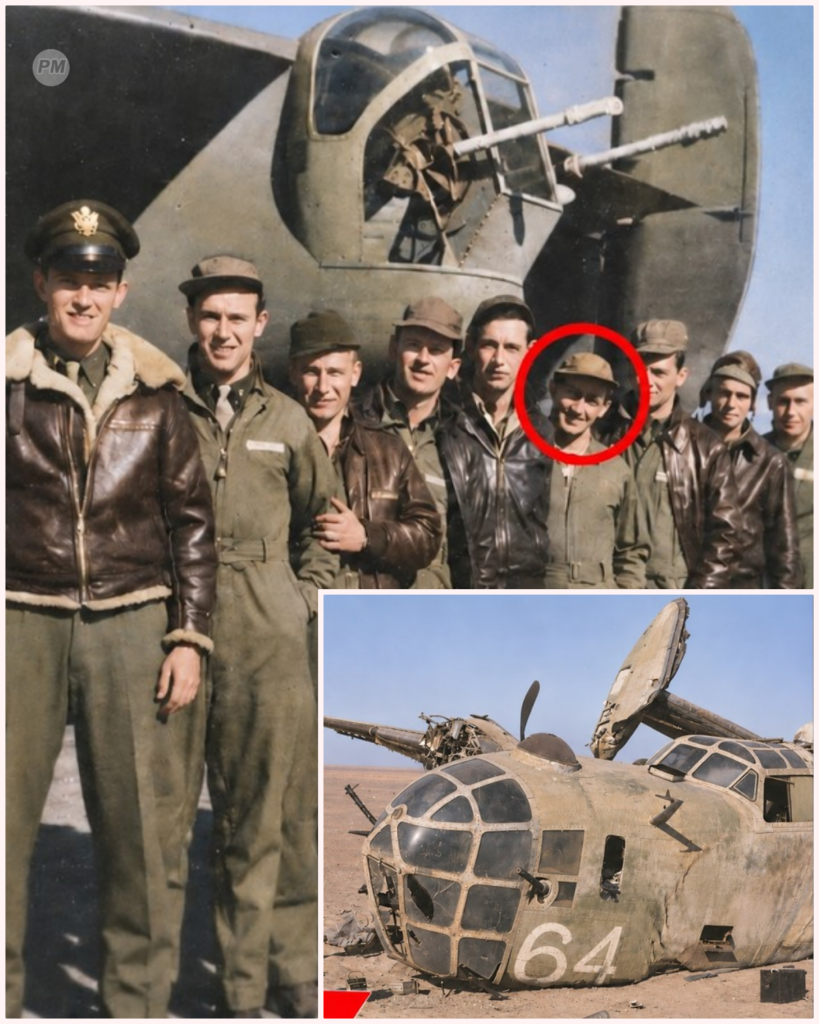
The airplane returned first as a recognizable wreck. Equipment then began to mark a human route.
The discovery of five men brought a diary that explained the division of the group.
Later recoveries connected more of those words with places in the desert that order matters.
Each discovery changed what the next search could ask. Finding the airplane established where the flight ended.
It didn’t establish where the man went. Finding the diary supplied a sequence that the metal alone could never provide.
The desert preserved these kinds of evidence unevenly. It could leave a large aircraft visible while making a small object difficult to detect.
It could preserve handwriting while concealing a recovery site. The same landscape that protected some traces from rapid decay also made them hard to find.
The archival photographs are therefore more than pictures of an unusual wreck. They document the work of connecting a lost aircraft with its crew.
The personal items are more than curiosities that happened to survive. A name on equipment can make an identification possible.
A direction written in a diary can make sense of a trail. The beginning of a story seemed to belong over the Mediterranean.
Its ending was recovered in England for patient attention to evidence that had waited years to be noticed.
There are still limits. Moore’s location remains unresolved in the records used here. The evidence also leaves gaps in the crew’s final movements and decisions aboard the bomber.
What survives is already substantial. [music] Nine named men on a mission, a return flight that lost its way, and a sustained attempt by the survivors of a jump to reach help.
The bomber on the desert floor once looked like the answer to a 16-year mystery.
In fact, it was the first reliable place from which [music] to ask the right question.
The most important thing, the desert return wasn’t the airplane. It was the evidence that allowed the people who flew it to become more than a missing entry in a wartime record.
