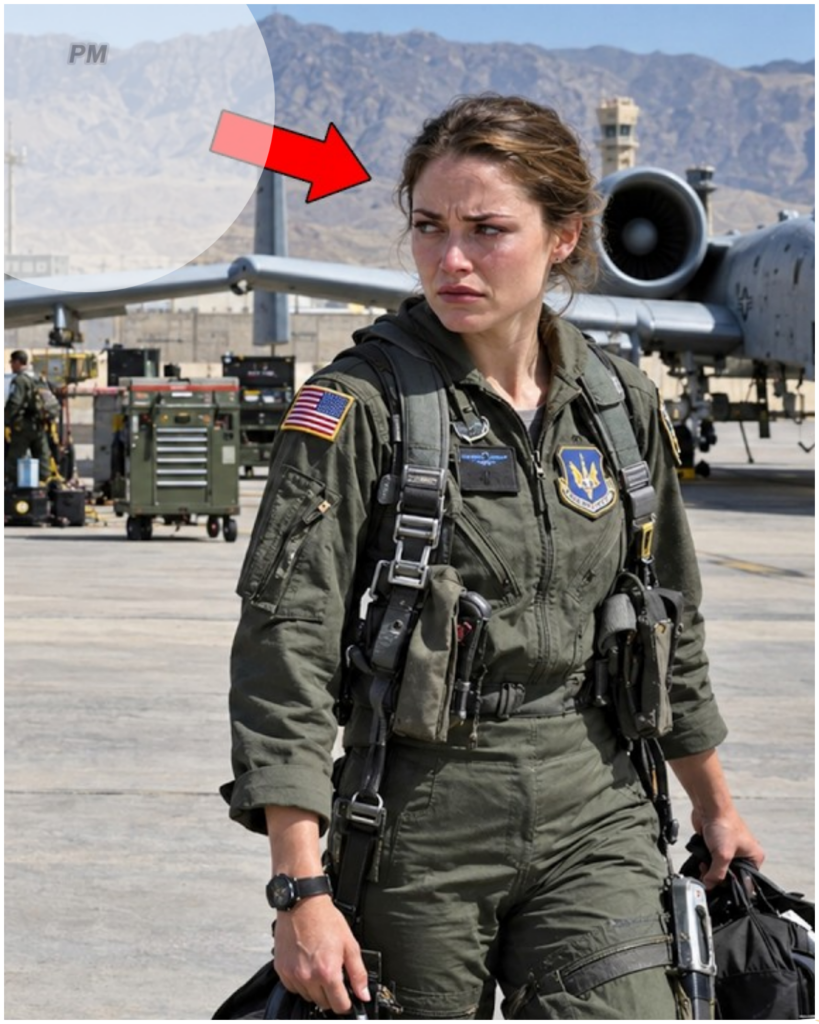
Jet engines screamed across the tarmac as the grou…
Jet engines screamed across the tarmac as the grounding order hit like a physical blow.
She had flown that treacherous valley 50 times. Yet her commander was handing her cockpit to a green rookie.
30 minutes later, the radio would erupt with his panicked screams for the exact pilot he betrayed.
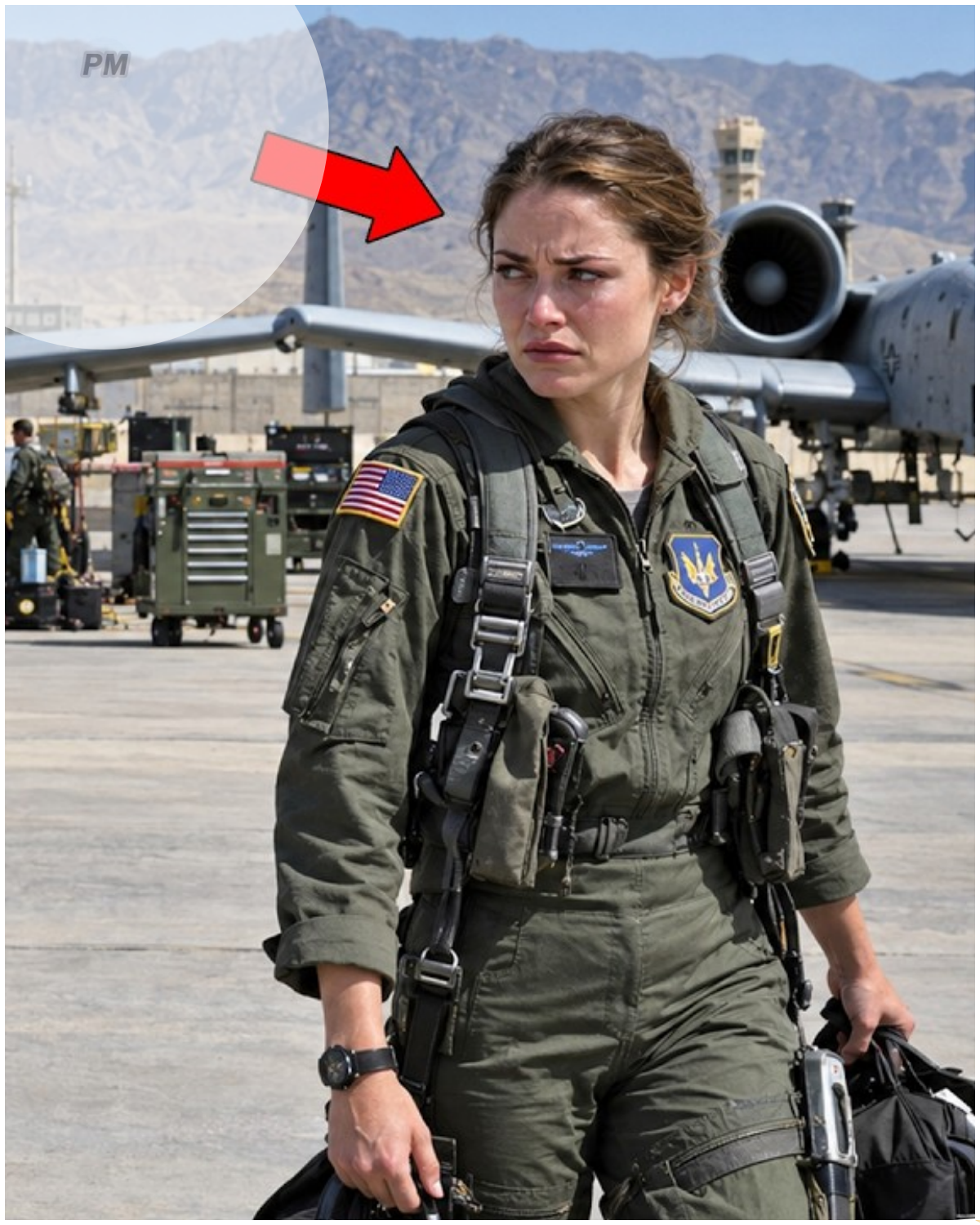
The briefing room at Bagram Airfield smelled like stale coffee, sweat, and the sharp metallic tang of ozone from the overworked air conditioning units.
Outside, the unforgiving Afghan sun beat down on the flight line, baking the concrete until the heat rippled the air like water.
Captain Sarah Jenkins leaned over the topographical map spread across the central table, her calloused fingers tracing the jagged elevation lines of the Korengal Valley.
She knew every ridge, every blind corner, and every treacherous crosswind in that geographical nightmare.
For the last four months, she had lived and breathed close air support in those mountains, earning her call sign, Wraith, by dropping ordnance so precisely that friendly forces swore she was reading their minds.
Today’s mission was critical. A special forces team, call sign Spartan 4, was pushing deep into a known insurgent stronghold to extract a high value intelligence asset.
They needed absolute perfection from the air. They needed a pilot who could thread a 30 mm needle through a hurricane.
“You’re staring a hole through the paper, Captain,” a voice drawled from the doorway. Sarah straightened, suppressing a sigh.
Lieutenant Colonel Theren Hayes stood leaning against the doorframe, his flight suit impeccably clean, his boots polished to a high gloss shine that had no business being in a combat zone.
Hayes was a textbook officer, a man who had climbed the ranks through administrative brilliance and political maneuvering rather than stick and rudder skill.
He had taken command of the squadron 3 weeks ago, and from the moment he arrived, he and Sarah had been locked in a quiet, vicious cold war.
He demanded rigid adherence to the manual. She flew by instinct and experience. He wanted clean, safe sorties to pad his evaluation reports.
Hayes had not earned his command in a cockpit. He had earned it in briefing rooms in Tampa and the Pentagon, writing papers on risk management and force preservation that generals quoted back to each other.
He had flown enough hours to keep his wings current and not one hour more than the regulation required, and he had never once fired a weapon in anger.
What he understood, better than any pilot in the squadron, was the machinery of a career: the evaluation report, the promotion board, the right assignment at the right time.
Bagram was supposed to be his combat ticket, a short tour that would turn a staff officer into a commander with a deployment on his record.
He arrived with his flight suit pressed, his boots polished, and a copy of the operations manual in his bag, and he intended to run the squadron the way the manual said a squadron should be run.
Sarah Jenkins was the problem he had not planned for. She was a captain with four months in the valley, fifty combat sorties in the Korengal, and a call sign the ground forces spoke about like a prayer.
The special forces teams asked for her by name. The forward air controllers trusted her judgment over the book.
To Hayes, that was not experience. That was indiscipline wearing a good reputation. He had watched her bend profiles and improvise approaches, and every time she came home it made his manual look smaller.
He could not order her to be less good. But he could enforce the rules she treated as suggestions, and crew rest was the cleanest weapon in his drawer.
Eighteen minutes was not a safety decision. It was a message, written in regulation ink, that the squadron belonged to the man who signed the schedule.
He had rehearsed the sentence in his head before he walked into the briefing room, and he enjoyed saying it.
She took the risks necessary to bring the ground guys home. “Just reviewing the ingress routes, Colonel,” Sarah said, keeping her voice perfectly level.
“The cloud ceiling is dropping over the eastern ridge. If Spartan 4 takes contact near the village, we’ll need to come in low and tight from the north.
Standard attack profiles won’t work. The terrain masks the approach, but it also boxes us in.
Hayes walked slowly into the room, his eyes scanning the map with a look of feigned interest.
“Standard profiles are standard for a reason, Jenkins. You have a habit of improvising. It’s reckless.”
“It’s effective, sir. I’ve flown this exact route twice this week. The crosswinds shear hard off the peak.
If you come in at the manual’s recommended angle, you’ll overshoot the target and put your nose right into the mountain.
Hayes’s jaw tightened. He despised her confidence. He despised that the ground commanders specifically requested her by name.
Most of all, he despised that she was right. But Hayes was not a man who allowed his authority to be undermined, especially not by a junior captain who didn’t respect his pedigree.
“Your analysis is noted, Captain,” Hayes said, his voice dropping to a dangerous soft cadence.
“Which is why I’m sure Lieutenant Mitchell will appreciate the notes.” Sarah froze. The hum of the air conditioner suddenly sounded deafening.
“Sir, you’re off the flight schedule, Jenkins,” Hayes said, savoring the words. “He unclipped a clipboard from the wall and tossed it onto the map.
I’m bumping you. First Lieutenant Mitchell is flying as my wingman today.” Sarah stared at him, her pulse beginning to hammer against her ribs.
She looked at the flight manifest. Her name had a harsh black line drawn through it.
Bradley Mitchell’s name was hastily scribbled above it. Lieutenant Mitchell has barely 50 hours in the A-10.
He’s never flown a combat sortie in the Korengal. The weather is deteriorating and the valley is a death trap.