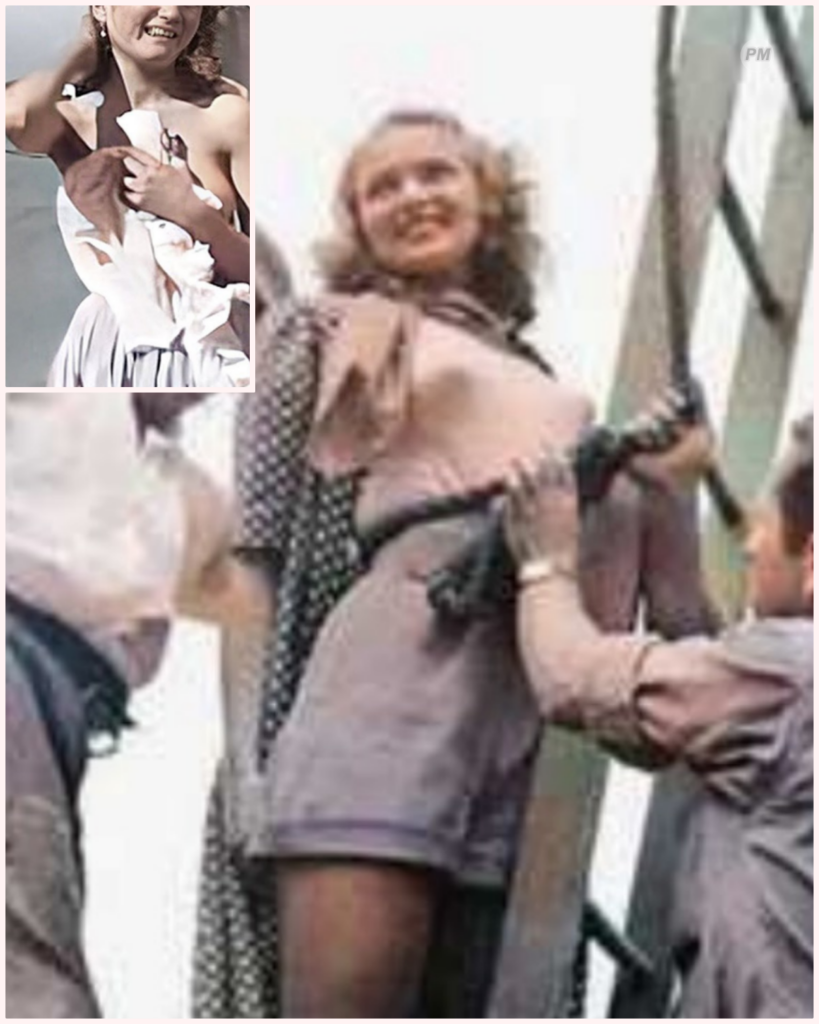
After her husband’s release in 1966, she supported…
After her husband’s release in 1966, she supported his re-entry into society. Albert later wrote several books, but Margarete stayed out of the spotlight.
She avoided public events and never spoke to the media. After Albert died in 1981, she continued living in Heidelberg.
She passed away in 1987, remembered only by close family and a few friends. After the main Nuremberg Trials ended in 1946, the wives of top Nazi leaders faced a harsh new reality.
Germany was divided, cities were in ruins, and everyday life was difficult even for ordinary citizens.
For the women tied to the Nazi elite, it was even worse. They were often rejected by neighbors, denied work, and treated with suspicion.
Their reputations followed them everywhere. The old privileges were gone, and now they had to survive in a country that wanted nothing to do with its Nazi past.
Lina Heydrich bought a farmhouse after she moved to the island of Fehmarn in northern Germany and opened a small guesthouse to earn money.
Locals knew who she was, and many avoided her. Her children were often teased or excluded at school.
Lina kept defending her husband’s actions, saying he had only followed orders and had been loyal to Germany.
In the 1950s, she gave interviews trying to reshape his image. She insisted he wasn’t responsible for the Holocaust, even though he had helped organize the Wannsee Conference.
She again gave several interviews in the 1960s and 70s, where she expressed no regret for her husband’s role in the Holocaust.
She died in 1985, still denying any wrongdoing. Emmy Göring returned to Munich with no money, no home, and very few friends.
The Allies had confiscated her family’s belongings, including art, jewelry, and estates. Emmy tried to publish her memoirs in the early 1950s but faced rejection from most publishers.
She was known mostly as “the Nazi actress” and carried a stigma wherever she went.
Without financial support, she lived modestly in a small apartment. She rarely appeared in public and never gave full interviews.
She died in Munich on June 8, 1973, with no public funeral. Ilse Hess had a very different reaction.
She stayed loyal to her husband’s memory and became active in far-right circles. In the early 1950s, she began writing for nationalist magazines, defending Hitler and claiming that Rudolf had tried to make peace with Britain.
She believed he was wrongly imprisoned and demanded his release from Spandau Prison. Despite being banned from attending political events, she continued her efforts until her death in 1995.
Other wives faced similar struggles, poverty, rejection, and constant suspicion. Some changed their names. Some even moved to rural areas to avoid attention.
None of them were ever part of public life again. For those tied to the Nazi leadership, post-war Germany offered no path back.
Their husbands had led the country into disaster, and now they were left to carry the weight of that legacy alone.
Most of their children chose not to follow the same path. Many changed their last names and moved abroad.
Some moved to the United States, Canada, or South America to escape the past. A few wrote memoirs or gave interviews, but most stayed silent.
The Nazi legacy had marked their families forever, and many chose to disconnect completely. By the end of the 20th century, nearly all the wives of the Nazi leadership were gone.
Their deaths went mostly unnoticed. No monuments were built, no honors given, and no sympathy shown.
Their lives had started with power and privilege, but ended in silence, shame, or denial.
For Germany, they were part of a chapter that people wanted to close and never reopen.


