A duplicate key cut 11 days before the incident, p…
A duplicate key cut 11 days before the incident, paid for in cash. He was arrested at his apartment, 6 miles from the store, where investigators recovered items connecting him directly to the scene, including a hardware store receipt he had not thrown away.
A small, almost careless detail from a man who had otherwise been meticulous for 18 straight days.
It’s a pattern that shows up more often than people expect in cases like this.
The planning phase, the watching, the patience. That part gets executed with real discipline. What comes after tends to unravel faster because the plan was never really built to survive its own aftermath.
It was only ever built to get through the locked door. He was charged, tried, and convicted.
The specifics of the legal proceedings that followed are a matter of public record, and this isn’t the place to relitigate a courtroom.
What matters for this story is simpler and harder to sit with. The system worked, eventually.
It identified him. It convicted him. None of that brought back what a copied key and 18 days of patient, forgettable watching had already taken.
Sarah Martinez’s family established a memorial fund in her name, directed toward workplace safety training for retail and pharmacy employees who work closing shifts alone.
Training that specifically addresses a gap most staff never think to consider. Not just how to lock a door, but how to know whether anyone might already have a way around it.
Investigators who worked the case have spoken in interviews since about what they call the false completion moment.
The point in a routine where a person feels a task is finished because every visible step has been followed.
Even when an invisible step, completed weeks earlier by someone else, has already made the visible ones meaningless.
It’s not a comfortable idea. It suggests that safety isn’t always something you can verify by checking it twice.
Sometimes the compromise happened before you even knew there was something to check. There’s a detail from the case file that didn’t make it into most of the coverage at the time, but it’s the one that tends to stay with people once they hear it.
In the 11 visits investigators pulled from surveillance, Marcus Webb never once purchased more than $4 worth of merchandise.
11 visits, under $4 each time. He wasn’t there to buy anything. He was there to watch a woman lock a door correctly, over and over, until he understood exactly what correctly looked like.
So that when the night came, he could make sure it wouldn’t matter. Municipalities and retail chains across the country have since used cases like this one, patterns of patient, low-visibility reconnaissance, followed by a single, decisive act, to argue for updated security protocols.
Blind spot camera coverage. Key control policies that treat a 30-second gap on a counter top as a real vulnerability, not a non-event.
Mandatory two-person closing procedures at locations that handle controlled substances, specifically because a second set of eyes changes the entire math for someone counting on being alone with just one person in a building they’ve already learned to move through undetected.
None of this changes what happened to Sarah Martinez. It only changes what happens to the next Sarah if anyone was paying attention.
Security consultants who reviewed this case afterward, in the trade publications that quietly circulate through the retail and pharmaceutical industry after incidents like this one, kept returning to a specific phrase.
The visible perimeter versus the actual perimeter. The visible perimeter is what Sarah checked that night.
Doors, locks, alarm, the things a checklist tells you to verify. The actual perimeter is everything a determined person could have compromised in the weeks leading up to that checklist ever being run.
Most security training, even now, is built almost entirely around the visible perimeter because it’s the part you can see, measure, and document.
The actual perimeter is harder to defend because it requires imagining a version of vulnerability that doesn’t announce itself.
It requires assuming that somewhere in the ordinary rhythm of a normal week, something ordinary-looking might not be ordinary at all.
And that, ultimately, is the reason a story like this gets told at all. Not for the shock of the ending.
You already knew going in that this wasn’t going to end well. It’s for the 18 days before the ending.
The visits, the $4 purchases, the 19 seconds, the moment a key sat on a counter in plain sight, catching the fluorescent light of a store that felt in every visible way completely safe.
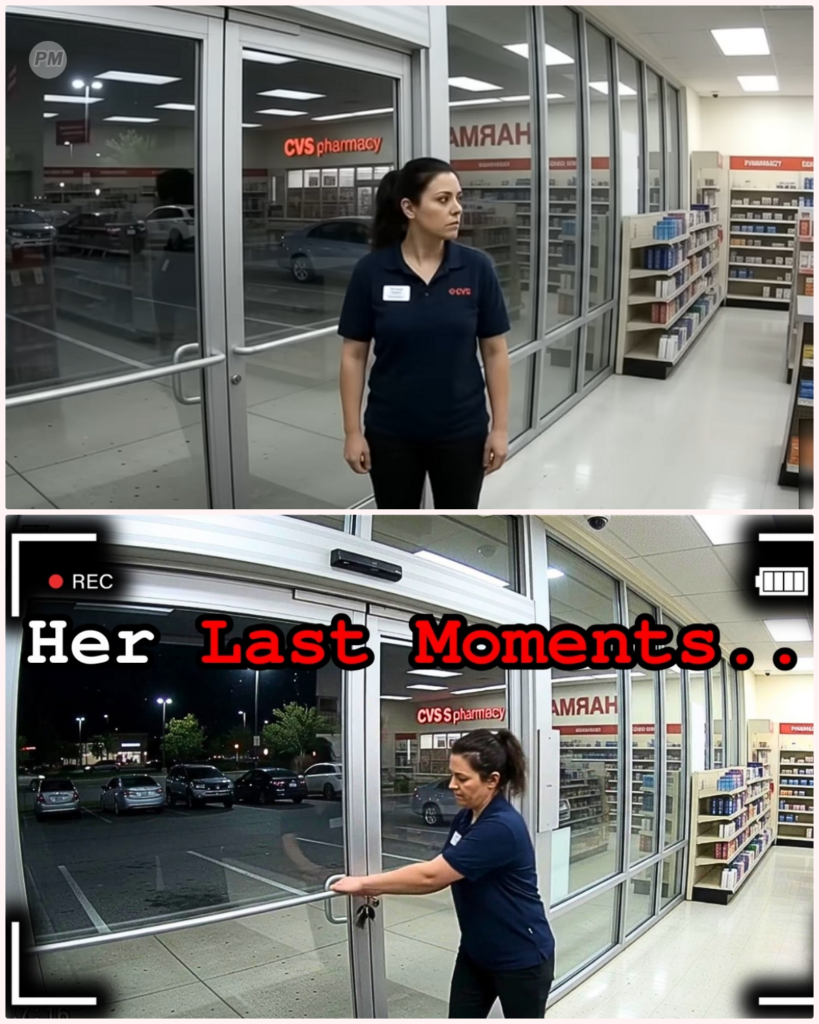
If there’s a single frame from this entire case that investigators still reference, it’s not the one from the night of October 14th.
It’s the one from 3 weeks earlier. Sarah’s hand setting down a set of keys mid-conversation, already turning away, already moving on to the next task in a shift that would end like every other shift in a locked door she had every reason to trust.
Watch that door lock one more time. Now you know what she didn’t.