How long it took Sarah to do her final walk-throug…
How long it took Sarah to do her final walk-through, what she carried when she left, keys in her right hand, phone in her left, bag over her shoulder.
He was patient in a way that should frighten you more than any single violent act could.
Patience in a predator is premeditation wearing a calm face. And then came the 30 seconds.
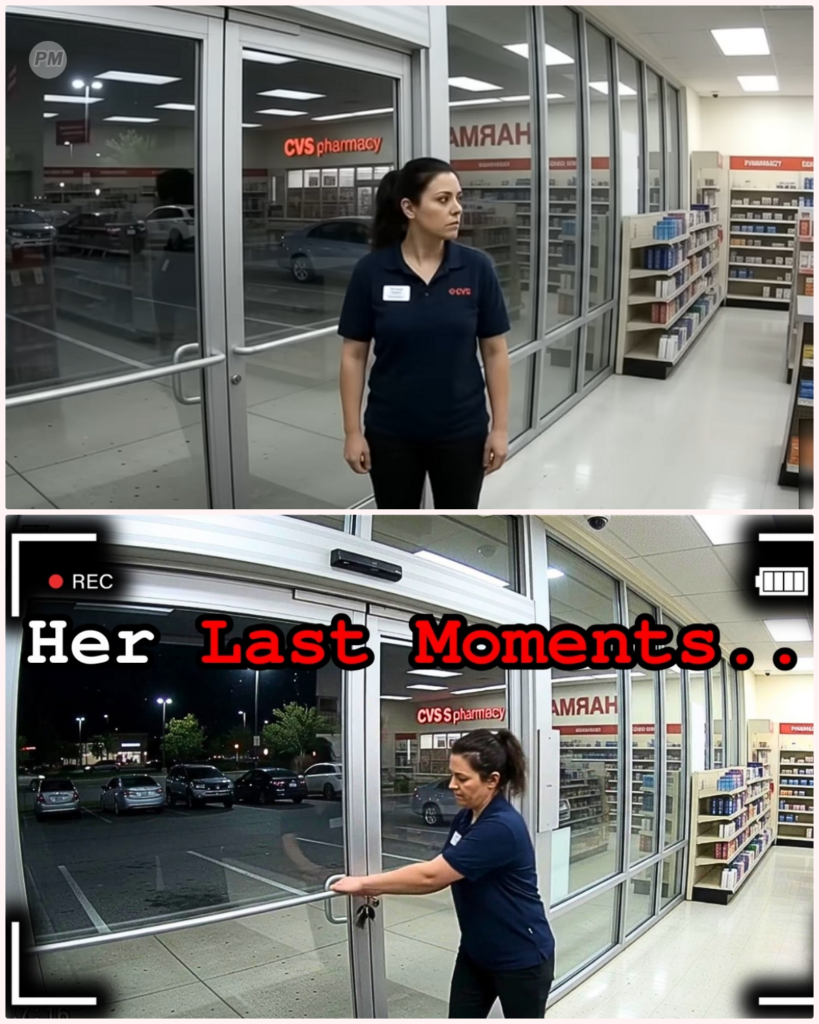
Store surveillance, the same footage investigators would later comb through minute by minute trying to reconstruct exactly how this happened.
Shows Sarah at the counter on a Tuesday evening, 2 weeks and change before the incident.
A co-worker calls her toward the pharmacy window to help locate a prescription. Sarah sets her keys down on the front counter.
Ordinary. The kind of thing anyone does 40 times a day without thinking. She’s gone for less than a minute.
Marcus is standing 3 ft from that counter waiting to pay for a bottled water he doesn’t want.
The footage, grainy, overhead, timestamped in the corner the way all of it is, shows him glance toward the pharmacy window, confirms Sarah’s back is turned, and lean forward.
He doesn’t take the keys. That would have been noticed instantly. Instead, using a phone held low against his body, he photographs them.
The full ring, front door key clearly visible, distinguishable by its brand and cut from any generic key on a common ring.
Investigators would later determine this single image was enough. A duplicate key cut from a photograph at a hardware store two towns over using a self-service kiosk that required no ID and asked no questions.
We need to be precise about this detail because it’s the kind of thing that sounds implausible until you understand how ordinary it actually is.
Self-service key cutting kiosks, the kind found in hardware stores and big box retailers across the country, use image recognition software to identify a key’s brand, cut pattern, and blank type from a photograph alone.
They were designed for convenience. Lose your house key, snap a picture before you leave for vacation, cut a spare when you get home.
Nobody who engineered that convenience was thinking about a stranger photographing someone else’s keychain from 3 ft away in a pharmacy at 9:47 on a Tuesday night.
But, the technology doesn’t ask whose keys they are. It only asks whether the photograph is clear enough to read the cuts.
Marcus Webb’s photograph was clear enough. Sarah picks her keys back up 19 seconds after setting them down.
She has no idea what just happened. Why would she? Nothing was taken. Nothing was disturbed.
In the entire history of things a person might worry about at the end of a long shift, “Did someone photograph my keys?”
Does not make the list. This is the part of the story that should unsettle you the most.
And we’re going to sit here for a moment before moving forward because it’s the actual lesson underneath all of this.
Security isn’t only about what’s locked. It’s about who already has a way in before the locking even starts.
By the time we reach the night everything happened, Marcus Webb didn’t need to break anything.
He didn’t need to force a window or pick a lock or wait for an opportunity.
He had a key that opened the same door Sarah would lock behind her believing, the way any reasonable person would believe, that locking it meant something.
There’s one more piece of the setup worth sitting with before we move forward because it’s the piece that later made investigators the most uneasy.
In the 11 days between the photograph and the night of the incident, Marcus continued coming into the store.
Same pattern. Same small purchases. He wasn’t waiting for a specific opportunity to present itself.
The opportunity already existed, sitting in his pocket, cut and ready. He was waiting for something else entirely.
For the routine to fully stabilize again. For Sarah to stop being, even subconsciously, alert to anything unusual.
For the store to fully return to feeling ordinary. That’s 11 days of a man walking past a woman he had already decided to hurt.
Buying gum, saying nothing, giving away nothing. If you’re looking for the moment this story should have been stopped, there isn’t a clean one.
There’s only a slow accumulation of small, unremarkable choices that, from the inside, looked exactly like nothing.