Chapman [music] asked people to reach back as far…
Chapman [music] asked people to reach back as far as their memories would go. He would not [music] say whether police believed the man lost it in a struggle.
Calls came in. Investigators followed them. Within about a year, more than 20 people had been checked and cleared.
[music] None of them was the man. In 2016, police tried something newer still. Windsor police sent the DNA to Parabon Nanolabs, a Virginia company that does DNA phenotyping, predicting a person’s appearance from their genetic code.
For roughly $4 [music] to $5,000, Parabon produced a prediction. The man’s ancestry was almost entirely European, mainly northwest European.
He was likely fair skinn skinned with brown or hazel eyes, brown or black hair, and few or no freckles.
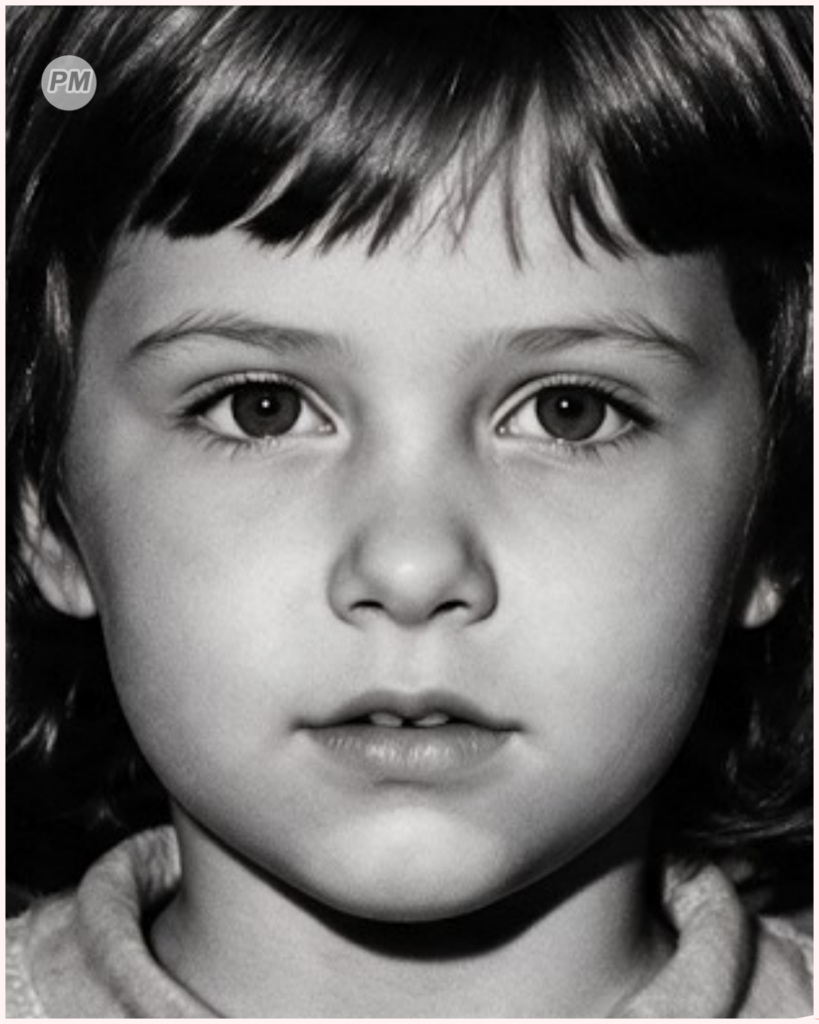
Parabon put its confidence in the eye color prediction at 97%. [music] It generated two faces, one at about 25 years old and one at about [music] 70.
Chapman noted that the new composite closely resembled the 1971 sketch based on Michael’s description.
A similar face shape with different colored hair. He also warned that a DNA composite is [music] an estimate, not likely to be an exact replica.
So by 2016, investigators had a face, a genetic profile, and a tooth. 45 years on, what they still did not have was a name.
Now pay attention to this next part because it explains everything that came after. The man who took Lubika topic was never hiding.
He was never on the run. In May of 1971, he lived on Drar Road.
His name was Frank Arthur Hall. He was 22 years old and he lived in the 1800 block of Dreward Road, less than 2 km from the Topic family’s home.
According to Chapman, he was a stranger to the family. [music] A word on how we can say that.
Frank Hall was never arrested, never charged, and never tried for Lupa’s [music] murder. He is named here because the Windsor Police Service officially identified him as the man responsible [music] based on DNA.
Evidence will come to shortly. He was not unknown to police either. Hall was known to officers in Windsor and in other [music] places, mostly for property crimes like theft.
Chapman said he had some arrests, but nothing that pointed toward a crime like this one.
None of it ever put him on the list. More than 500 persons of interest.
Frank Hall was never one of them. And here is a detail that seems small until you sit with it.
Decades later, police records were unclear about whether Hall’s home had even been canvased during the original investigation.
The file simply doesn’t say two households, one road. The topics had crossed an ocean to build a life on Dreward Road, and their daughter’s entire world was a few blocks of it.
Frank Hall lived on those same blocks. But where the Topic family stayed in Windsor and lived with what happened, Hall left.
Through the 1970s, he spent time both in Windsor and in the western provinces, and eventually he settled in the West for good in Edmonton.
He lived there until his death. In February of 2019, Frank Arthur Hall died in Edmonton of natural causes.
He was 70 years old. The Parabon composite had imagined him at 70. Police later released two photographs of him.
In the younger one, he has dark hair and a tattoo on his arm. In the older one, his hair is white and he is posing in a kitchen.
The DNA had predicted brown or black hair. An 8-year-old boy at dusk had remembered blonde.
Think about that for a second. He lived for nearly 48 more years after that night.
[music] He missed being identified by roughly 10 months. When his name finally became public, Jere Smith, the teenager from next door who searched that night with her father, told CBC News, “I’m so surprised to find out that this guy just lived in the 1800 block.”
She said she had never noticed him, neither, as far as the record shows, had anyone else.
That is how completely he blended in. While Frank Hall was growing old in Alberta, Paula Topic was growing old in Windsor.
In 2015, she spoke publicly about the case for the first time in 44 years.
She was 79. She spent most of her days alone in a [music] modest, neatly kept house on Howard Avenue.
Lubita’s picture sat in the dining room, and Paula told the Windsor Star that every time she passed it, she told her daughter she missed her.
She said that when she went to sleep, she heard Lubik’s voice calling her. And when she opened her eyes, her daughter wasn’t there.
She told the reporter that anyone who could do this to a child would carry it in his heart for good, and she hoped the man who did it had been as tormented as she was.
She had watched the case reopen six times. She believed somebody out there knew. And she said the only thing that mattered now was learning who had done it before she died.
If they found him, she said, she could die the next day and be happy.
44 years, six reopenings, one photograph in the dining room. The case had a second keeper.
Scott Chapman took over the topic file in the fall of 2014 as a constable in the Windsor police major crimes branch.
He was the one who released the tooth. He was the one who sent the DNA to Virginia.
And when he unveiled the Parabon faces in 2016, he told the Windsor Star he did not see it as a desperation step.
Every cold case in the city deserved attention, he said, whenever new technology came along.
In 2015, he had said he wanted to take every possible step to resolve it for the family, for the city, and for everyone who had ever worked on it.
He would work the file for roughly 5 years, rising through the ranks as he did.


