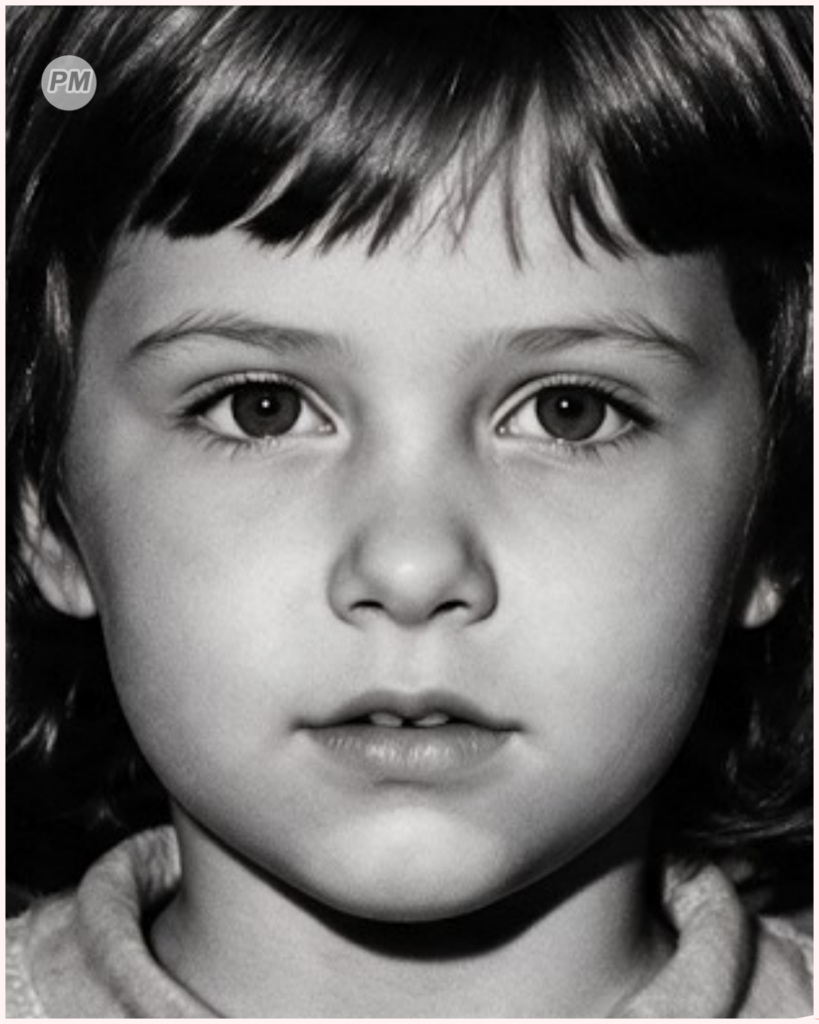
At about 1:00 in the morning on May 15th, 1971, a…
At about 1:00 in the morning on May 15th, 1971, a police officer was checking backyards with a flashlight in Windsor, Ontario [music] behind a house at 1690 Hickory Avenue near a garage and not far from the gate to a back alley.
The light found a 6-year-old girl. Investigators collected what lay in the dirt around her.
One item did not belong to a six-year-old. It was an adult’s front tooth, a man’s incizer, apparently snapped off at the gum line.
Police kept that tooth a secret. Not for a week, not for a year. For almost 44 years, the public did not know it existed.
It was a detail meant to help catch her killer. For decades, it caught no one.
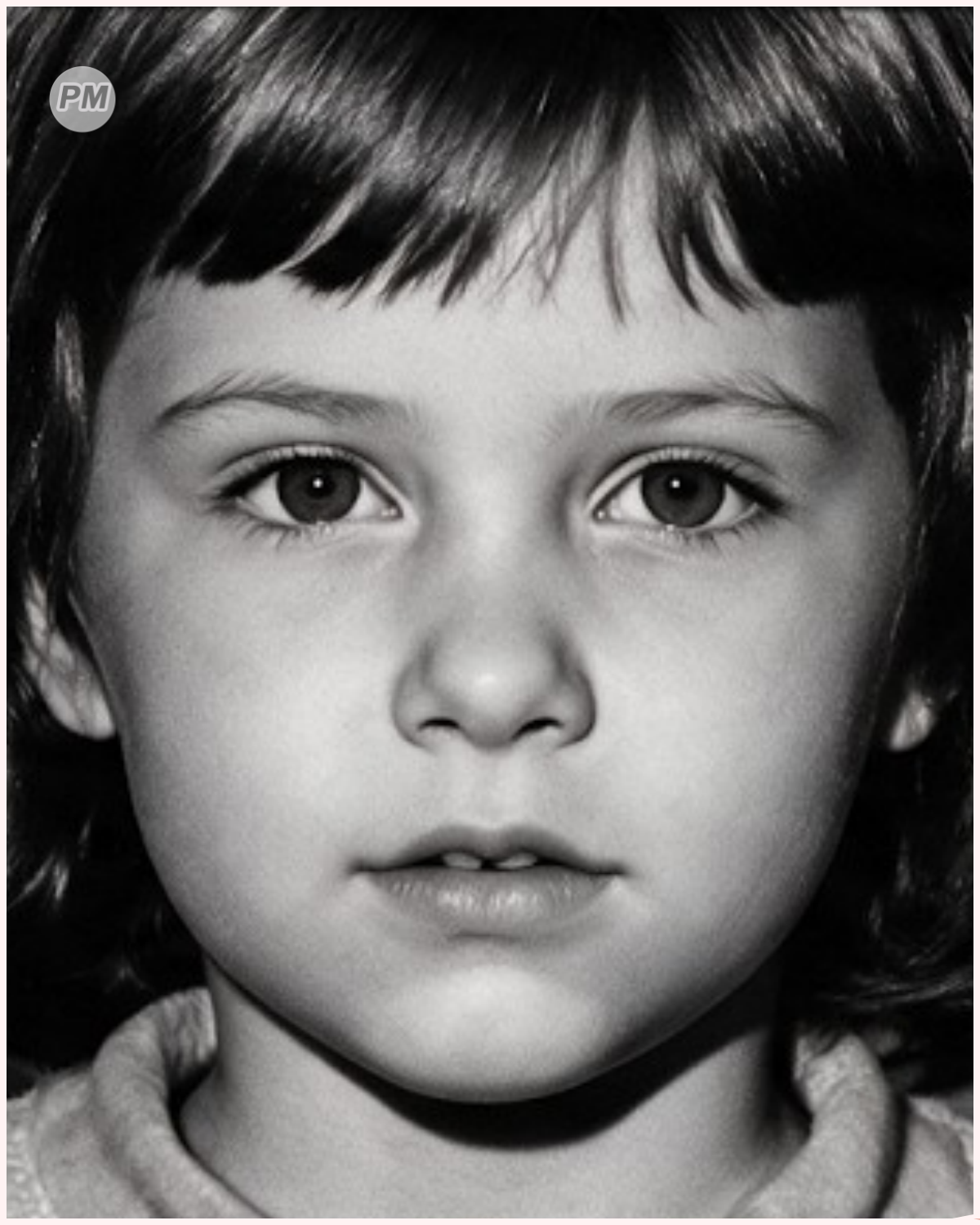
The girl’s name was Luba Topek. A little before 9:00 the evening before, she had walked away from outside her own home on Drewiard Road, holding the hand of a man she did not know, while her 8-year-old brother watched her go.
Over the years, more than 500 people would be looked at as persons of interest.
The case would be reopened six times and passed through the hands of eight police chiefs.
The man who took her was never on the list. In the spring of 1971, he lived in the 1800 block of the very same road, less than 2 km away.
It would take 48 years, 6 months, and 25 days to learn who he was.
It would take 51 years, 8 months, and 25 days before the police would say his name out loud.
This is the story of Lubika Topek, the neighbor nobody looked at and a name a city had to fight to hear.
And it begins with a family that crossed an ocean to live on that road.
Welcome to Cold Case Redemption, where we tell these stories carefully and all the way through.
If a case like this deserves more than a headline to you, subscribe because the details in this one matter.
Now to understand where Lubika lived, you have to understand what Dular Road was built for.
Windsor sits directly across the river from Detroit. And in 1904, a local businessman named Gordon McGregor, president of the Walkerville Wagon Works, went into partnership with Henry Ford.
He began assembling automobiles inside a converted wagon factory. That was the [music] beginning of the Ford Motor Company of Canada and the farmland around it became a [music] town.
They called it Ford City. It was a company town in the literal sense. Ford’s big plant sat at the corner of Riverside Drive [music] and Dreward Road.
And at one point, it employed 14,000 people. Dreward Road was the [music] town’s main street, named for Francois Drewar, an early settler whose private path across his farm had become the road itself.
In 1929, the town became part of a new city of East Windsor. And in 1935, it was absorbed [music] into Windsor itself.
In 1945, Ford’s Windsor workers struck for 99 days. Ford City was also where newcomers landed.
The Ford jobs had drawn families from across Europe for decades, and the neighborhoods churches showed it.
Russian, Romanian, and Serbian congregations raised buildings with the onion-shaped domes of Eastern Europe. The Serbian church of St.
Dmitri went up in 1945. By the end of the 1920s, some 16,000 people lived in Ford City, and it had six schools of its own.
Then the company left. In [music] 1953, Ford left Windsor for Oakville near Toronto, and by 1960, the big Riverside Drive plant had closed, leaving thousands of people out of work.
Only the engine and casting [music] plants remained. The engine plant opened in 1923 [music] kept building engines and one of them, the Ford Windsor V8 is named after the city.
But a town built around one employer had watched most of that employer walk away.
This was the Ford city the Topic family arrived in about 5 years before 1971.
They had come from Yugoslavia. By the spring of 1971, they lived [music] at 1290 DUR Road on the main street itself, across from a restaurant.
[music] Next door, a 17-year-old named Jer Smith lived with her father. [music] She knew the topics.
Her mother was Paula. According to an interview Paula gave the Windsor Star decades later, her husband Luca was working afternoons at the time.
Their son Michael was 8. [music] Their daughter Lubika was six and in kindergarten. A class photograph from [music] that school year, 1970 into 1971, still survives.
That is most of what the public record holds about her. She was a child and children leave few documents.
But the record does preserve her last evening in close [music] detail because her mother remembered it in her own words like it was yesterday.
Friday, May 14th, 1971. [music] Paula remembered about 10 children playing together in a parking lot near the house around dusk.
Luba and Michael among them. Her husband was at work. She was inside. There was nothing unusual about any of it.
[music] In 1971, children in neighborhoods like Ford City played outside at dusk while their parents were a wall away.
And almost nobody thought twice about it. There were no child abduction alerts, no cell phones, no security cameras on the storefronts.
If a child went missing, the system was a parent walking the length of the road and whoever they could flag down.
At around 8:00, Lubisa came running into the house out of breath from [music] playing and asked her mother if she could have a candy.
Paula said yes. Then she told her daughter one more thing. I said, “Don’t stay out too long.”
Luba took the candy and ran back outside [music] to the parking lot and the other kids.
Years later, Paula would say that was the last time she ever saw her. If Paula’s last words to her daughter hit you the way they hit us, tap the like button.
