>> At 5:38 in the evening, four rental kayak…
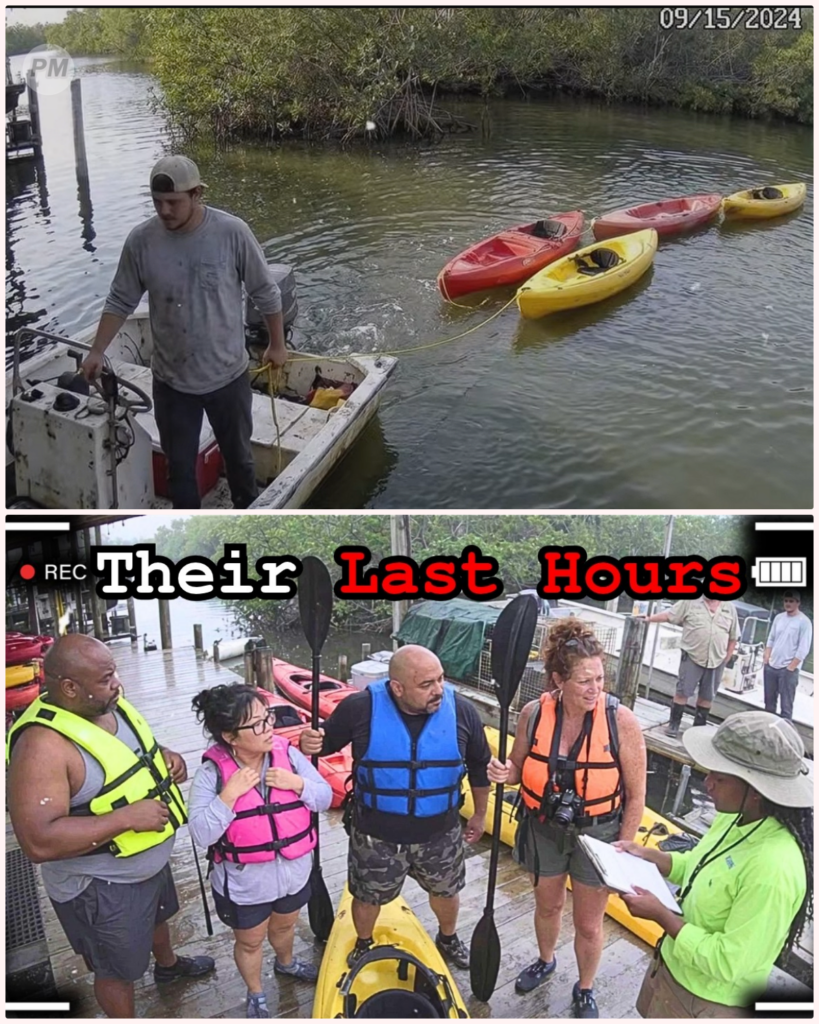
>> At 5:38 in the evening, four rental kayaks drifted back to Gulf Reed Outfitters in the Everglades.
They were tied bow to stern with a single yellow rope. No paddlers were inside.
Owner Wade Kessler told deputies the four friends who rented them must have climbed onto a tour boat after afternoon storms moved through.
He said customers sometimes abandoned equipment when they became frightened. The rental GPS units supported part of his story.
All four kayaks launched at 9:06, traveled together through Buttonwood Channel, and stopped near an abandoned research station at 11:42.
At 3:10, the units began moving back toward the dock. What the GPS units did not show was who moved them.
A camera at the launch answered that question. Wade’s 32-year-old son Travis stood alone in a skiff towing all four empty kayaks behind him.
The footage lasted 9 seconds before someone disabled the recorder. By then, the four friends were trapped behind a tidal control gate 6 miles away.
Only one would survive the night. Jonah Reese organized the trip for his 45th birthday.
He was a large black middle school science teacher with a shaved head, a soft stomach, and a habit of turning vacations into lessons.
His friend Emily Park was a short Korean-American accountant who wore thick glasses and hated deep water.
Luis Mendoza, a stocky bald mechanic with a scar across one eyebrow, paddled badly but confidently.
Savannah Pike, tall, pale, and freckled, took cameras and corrected everyone who called mangroves trees without specifying the species.
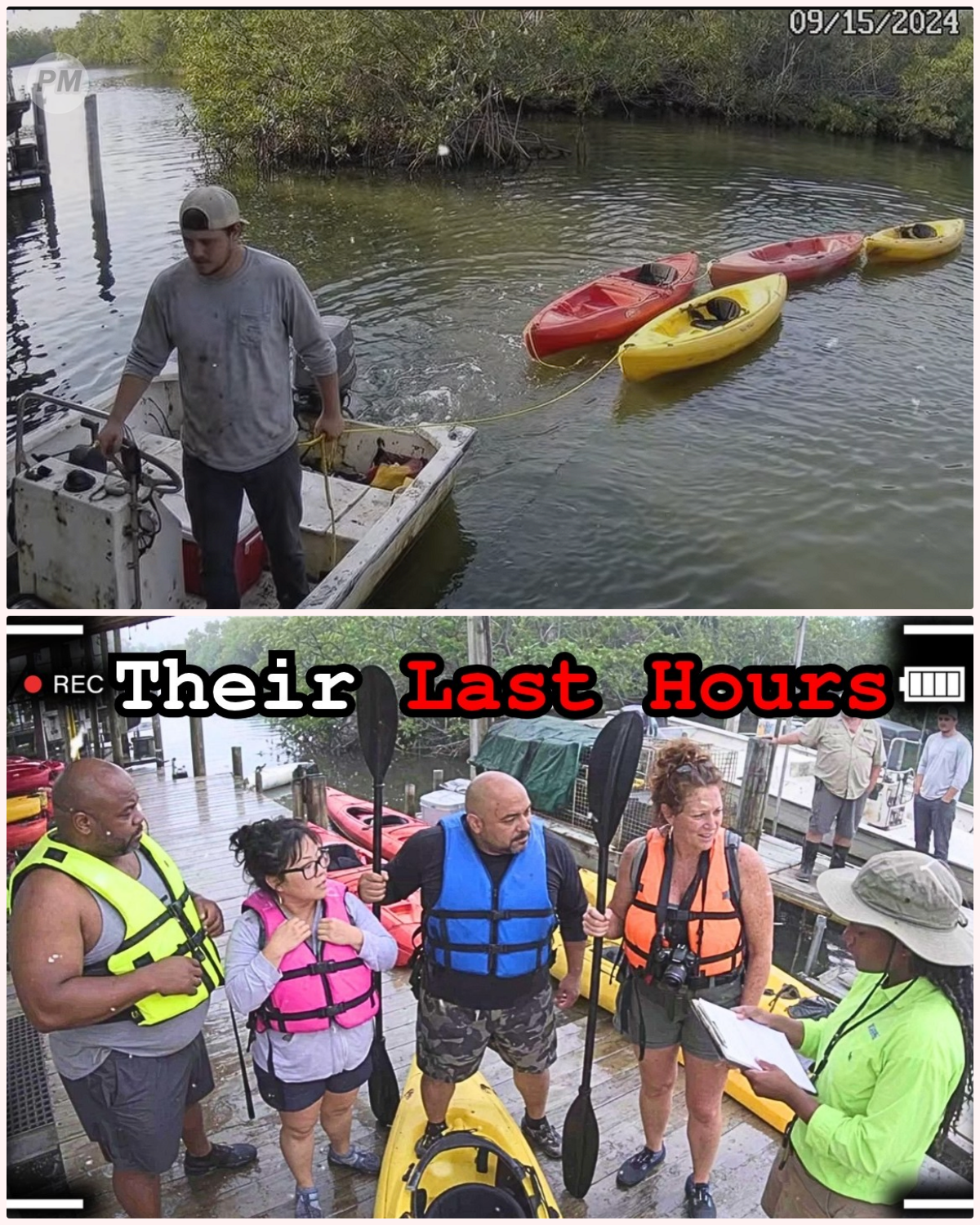
They looked nothing like a polished tourism advertisement. Their life jackets were impossible to miss.
Jonah in neon yellow, Emily in hot pink, Luis in electric blue, Savannah in fluorescent orange.
Aleah Grant, a 23-year-old black park intern, photographed them at the dock while checking rental permits.
She appears at the edge of the frame wearing a lime green safety shirt and an oversized sun hat.
Behind her, Wade watches from the bait shop. Travis stands beside a fuel tank with his arms folded.
That photograph became the last verified image of all four together. Gulf Coast Outfitters operated on private land beside a public waterway.
Wade had guided fishing trips for 30 years. Travis lived in a trailer behind the shop and handled kayak routes, fuel, and repairs.
Former employees described father and son as inseparable and hostile to anyone who questioned their knowledge of the marsh.
Wade called Travis his river boy, even though the Everglades channels were not rivers and Travis was an adult.
Travis had struggled in school, accumulated arrests for theft and assault, and never held work outside the family business.
Wade explained every failure as persecution by outsiders. When Travis damaged boats, Wade blamed tourists.
When wildlife officers found illegal traps, Wade claimed competitors planted them. The business survived because Wade knew the water, responded to rescues, and cultivated friendships with local officials.
It also served a second operation. For 6 years, Wade and Travis captured protected reptiles, birds, and rare orchids, then transferred them through fishing charters to collectors.
The abandoned Corbin Research Station provided temporary storage. Its collapsed dock and warning signs kept visitors away.
A tidal control gate separated the station channel from the marked kayak route. The gate opened automatically twice a day to manage water levels.
Wade possessed a maintenance override because outfitters assisted during storms. He used it to create a private corridor.


