But the math was never the point
But the math was never the point. The point was the word guilty spoken in a courtroom with a judge on the bench and a record being made and NY’s family in the room to hear it.
The point was a formal legal acknowledgement that Nancy Vogle had been murdered by this specific man and that the state of New Jersey recognized it.
After 43 years of silence of a file sitting in a cabinet in this very building of a family carrying an open wound that nothing could close, there was finally an answer on the record.
Cotttingham apologized to the family. Whether that apology carried genuine remorse or was simply the expected gesture from a man who understood what was required in that moment is something only he knows.
The record reflects the words. The family received them. What they did with them was their own.
Bergen County prosecutor John Molinelli confirmed the plea to reporters after the news leaked despite the precautions.
He described the outcome as the culmination of years of patient investigation of detectives traveling to the prison and building a case from a confession rather than from physical evidence.
He stated that the office was satisfied that Cottingham was the person responsible for Nancy Vogel’s murder.
Then came the moment that revealed exactly who Richard Codingham still was underneath whatever performance he had given in the courtroom.
As Anelotti escorted him out through the hallway, shackled and shuffling, Cottingham leaned toward the detective and told him in blunt terms that he would never do this again.
Never cooperate, never confess to another killing, never give up another name. Anelotti noted the threat.
He did not believe it. The plea brought Codingham’s confirmed murder count to six. It would not stay there for long.
Despite what Cottingham said walking out of that courtroom, Anelotti kept showing up, kept visiting the prison, kept playing cards, kept ordering pizza, kept sitting across from a man responsible for some of the most horrific murders in New Jersey and New York history, talking about football scores and weather and whatever else it took to keep the door open.
And Cottingham kept talking and eventually kept confessing. Between 2010 and December 2026, Richard Codingham confessed to 15 additional murders committed between 1967 and 1975.
The slow, methodical extraction that Anelotti had designed his entire approach around was working exactly as intended.
In January 2020, Bergen County authorities publicly attributed three more cold cases to Cottingham. The victims were Jackie Harp, Irene Blazy, and Denise Velasa.
All young women strangled in Bergen County in the late 1960s in the same period as Nancy Vogel’s murder.
These cases were exceptionally closed, a legal term, meaning that Cotttingham confessed and authorities were satisfied of his guilt, but no formal prosecution was pursued.
The families were notified privately. The files were marked resolved. No press conference. In April 2021, Cottingham stood in a courtroom once more and pleaded guilty to the 1974 murders of Maryanne Prior, age 17, and Lorraine Kelly, age 16.
Two teenage girls from North Bergen who had been hitchhiking to a shopping mall in Pamis on a summer day and were never seen alive again.
This was the same case Cotttingham had confessed to in 1996. The confession that had been killed by the governor’s veto.
25 years after that vetoed deal, the families of those two girls finally heard the guilty plea that should have come in the ’90s.
In December 2022, Cotttingham crossed state lines in the legal sense, pleading guilty in Nassau County, New York to the 1968 murder of Diane Cusk and four other Long Island women.
The Cusk case was a landmark and not just for the Cottingham investigation. It had been cracked by a DNA match.
Reportedly the oldest DNAdriven prosecution in the United States at the time. For the first time, forensic science, not just a confession, had independently and definitively linked Cottingham to a victim.
And in December 2025, Cotttingham confessed to the 1965 murder of Alice Eberhart, an 18-year-old nursing student from Fairlon, New Jersey.
Fairlon police publicly announced the closure of the case in January 2026. That confession carried a significant implication.
It meant Cottingham’s killing had started even before Nancy Vogle’s murder. The young man from Rivervale may have begun taking lives when he was barely out of high school.
Nancy was not his first victim. She was his first confirmed victim, which is a different and more disturbing distinction.
Anelotti was not the only person who helped extract these confessions. Forensic historian Peter Vonsky, the author who founded the torso serial killer project, developed his own independent relationship with Cottingham through years of correspondence and prison visits.
Jennifer Weiss, the daughter of travel-in victim Dday Gdarzi, also built a rapport with the man who had murdered her mother.
The dynamics between these various figures were complicated and at times contentious. Cotttingham appeared to enjoy the attention and to enjoy playing his confidants against one another, revealing different details to different people, keeping everyone slightly off balance.
But whatever interpersonal drama surrounded the process, the outcome was consistent. Names came out, files were closed, families were told.
Cotttingham has claimed a lifetime total of between 85 and 100 victims. Investigators have confirmed or formally attributed roughly 20.
The gap between those numbers exists in a space that may never be fully resolved.
Some of those claimed victims may be fabrications, exaggerations from a man who has spent decades cultivating a mythology around his own violence.
Others may be real women whose cases will never have enough corroborating evidence to close, even with a confession.
And some may be cases that are still right now sitting in file cabinets and prosecutor’s offices across New Jersey and New York waiting for the same patient work that opened the Vogle case.
For Nancy Vogel’s family, the number that mattered was never the total. It was one.
One name on a guilty plea, one case resolved. One night in October 1967, finally explained.
And that is where this story finds its center. Not in the body count, not in the headlines, not in the horror of what Richard Cottingham did across two states in two decades.
In the simple, specific, irreducible fact that a woman named Nancy Vogle was murdered. And 43 years later, her children sat in a courtroom and heard the man who did it say the word guilty.
For 43 years, the story of Nancy Vogle’s life was collapsed into a single event, a case number, a cold file, a question nobody could answer.
And when the answer finally came in 2010, it arrived as a subplot in a much larger and louder story about a serial killer and his decades of unchecked violence.
There is a gravity in this kind of case that pulls everything toward the perpetrator.
The horror of what he did, the scale of it, the gruesome details. These things consume attention, the way fire consumes oxygen.
And the victim, the person at the center of it all, the person without whom none of this would exist, risks disappearing into the background.
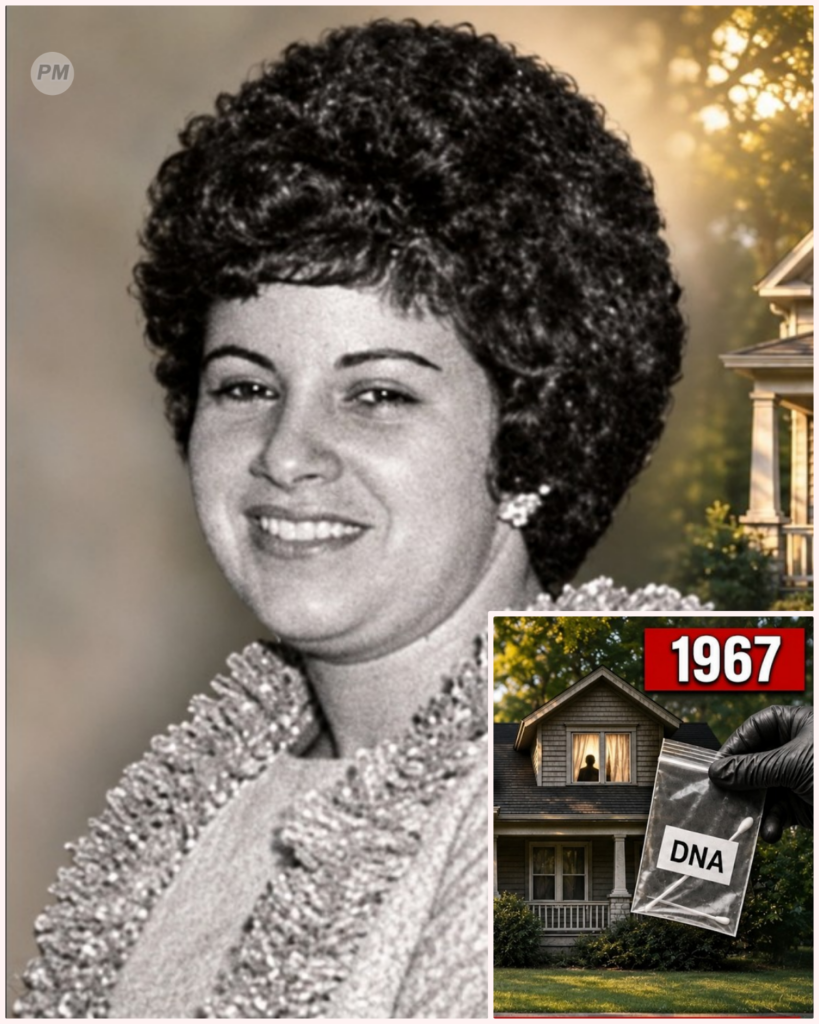
So, let this ending belong to Nancy. She was 29 years old, a mother to William and Karen, a wife to Henry, a daughter to Carmela, a sister to Frank.
Her family called her Bubby, and they meant it with love. She graduated from Cliffside Park High School in 1955 and worked at McGra Hill in New York City before starting her family.
She lived at 63 Bertoala Avenue in Little Ferry, New Jersey, in a small house in a small town in the kind of tight-knit community where everybody recognized everybody.
And Saturday nights meant bingo at St. Margaret of Cortona Church. For four decades after her death, her murder was a question mark, a file in a cabinet, a weight her children carried every single day of their lives, an ache her mother took to the grave.
The answer, when it finally came, did not bring her back. It did not undo the decades William and Karen spent growing up without their mother.
It did not give Carmela the peace she waited 30 years to receive and never did.
It did not erase the years of silence or make whole what had been broken on a Saturday night in 1967.
But it gave Nancy her name back. Not as an unsolved case, not as a line item in the torso killer’s body count, not as a footnote in someone else’s story.
As Nancy Vogle, a woman who lived, who was loved, who mattered to the people around her, and who deserved to be remembered for who she was, not only for how her story ended.
Her case is one of more than 15 cold murders now attributed to Richard Cotttingham.
He remains in New Jersey State Prison serving multiple consecutive life sentences. He will die there.
The detectives, the researchers, and the family members who spent years, sometimes decades, extracting the truth from a man who wanted to keep it buried accomplished something that goes beyond any single conviction.
They proved that no case is truly cold as long as someone refuses to let it go.
That a name written in a file 43 years ago still has the power to matter if the right person decides to pick that file up and start reading.
Nancy Vogle waited 43 years for justice. Her family waited 43 years for the truth.
And on a quiet afternoon in a courtroom in Hackinack, they finally heard it. If you believe these stories deserve to be told, and if you believe the forgotten victims of cold cases deserve to have their names spoken out loud, subscribe to Cold Case Redemption.
There are more cases like NY’s out there. Cases that went cold for years, sometimes decades, until someone refused to stop looking.
Will be here telling every single one of
