DNA evidence and advanced technology being credited for answers to two Virginia cold cases. They were unsolved for more than three decades.
One man believed to be responsible for both. >> Two women were killed three years apart in neighboring Virginia counties by the same man.
For 35 years, neither case revealed that connection. Forensic evidence capable of linking them remained preserved in two separate investigations for decades until advances in DNA testing finally allowed detectives to see what the original investigators couldn’t.
Here’s what stayed unexplained for over three decades. First, two women were taken under strikingly similar circumstances in neighboring Virginia counties only three years apart.
Both left their vehicles behind. Both were found in wooded areas not far from where they were last seen.
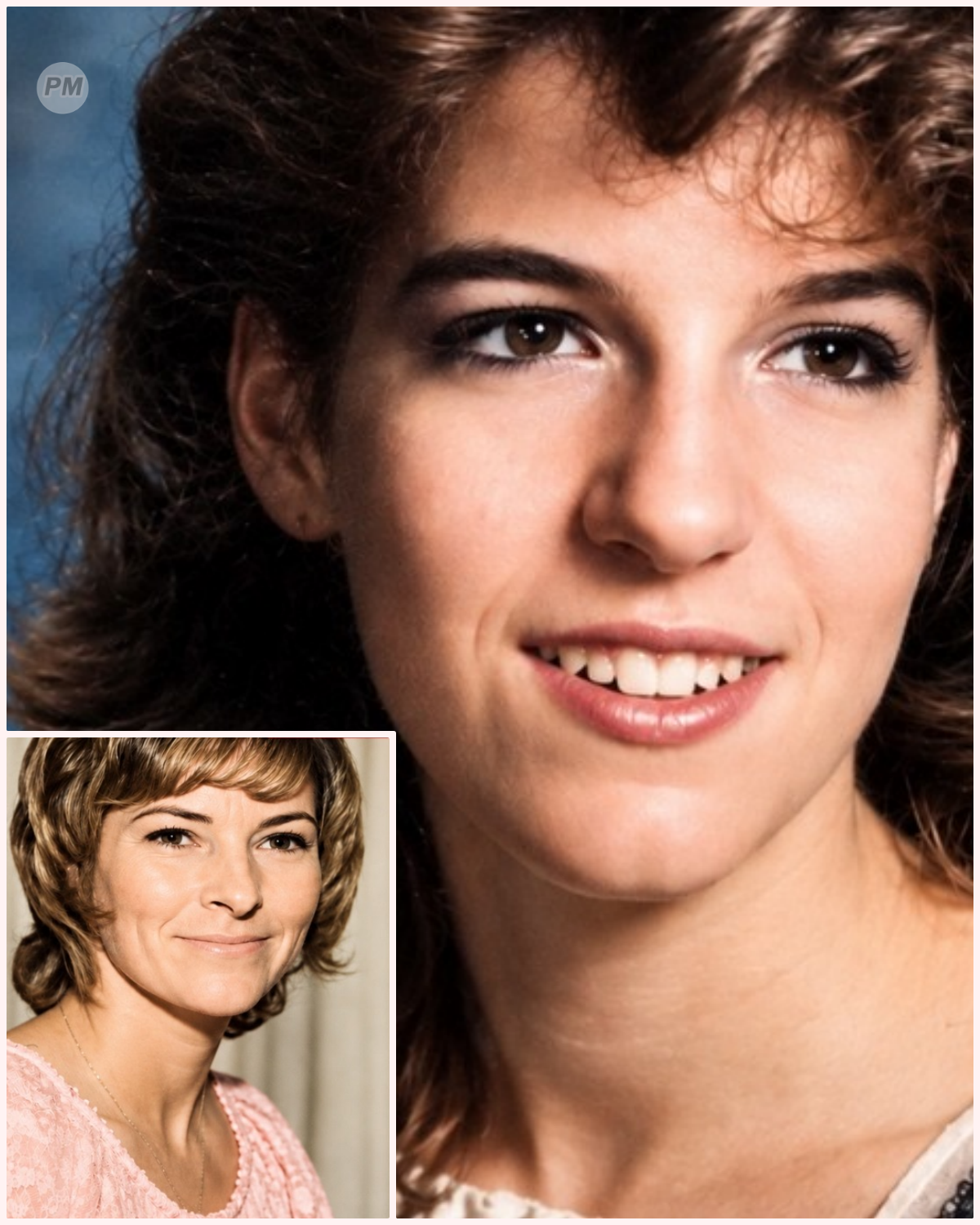
And yet no forensic link between the cases was established at the time. Why did it take so long for anyone to see they were connected?
Second, the man responsible had already been arrested and convicted years before either murder. He wasn’t a stranger to law enforcement and he wasn’t hiding under a different identity.
So, how did someone already known to the justice system remain invisible to DNA searches for decades across every advance in database technology that came after?
And third, the question that drives everything that follows, what finally changed? What piece of technology unavailable in 1986, unavailable in 1989, and still unavailable through most of the 2010s finally identified a man that four different sheriffs had refused to stop searching for and that two entirely separate police departments had spent a combined total of decades trying to find?
This documentary follows exactly how those three questions were answered. Let’s go back to where this one started.
November 1986. Jacqueline Lard was 40 years old in the fall of 1986 working as a real estate agent out of Mount Vernon and on Garrisonville Road in Stafford County, Virginia.
Colleagues described someone dependable, the kind of person who kept the office running on the nights it needed to stay open late.
That Friday, November 14th, was one of those nights. Her husband worked as a special agent for the Drug Enforcement Administration, and his job regularly took him out of the country on assignment, including that week.
It meant Jackie often managed the household and her career at the same time, closing up the office alone on nights like this one without a second thought.
Their two children were staying with family friends for the evening. Her daughter, 13, and her son, who would turn 11 the very next morning.
Jackie’s shift ran until 9:00. 9:00 came and went, and so did the rest of the evening.
She did not come home. Her son woke up the next day without his mother on his 11th birthday.
A phone call had come through from her office asking if she was all right.
She wasn’t. Employees arriving at nearby businesses that morning found the realty office in a state that told them something had gone wrong with clear signs that a struggle had taken place inside.
Jackie was gone, and so was her car. Word reached the Stafford County Sheriff’s Office within hours.
Detectives were dispatched immediately, and the scale of that morning’s response reflected how seriously investigators treated what they were looking at.
The following day, the disappearance became something far worse. Jackie was found in a wooded area in Woodbridge, hidden beneath a pile of discarded carpet.
Her car surfaced weeks later, abandoned in Fairfax County. What had begun as a missing person report was now a homicide investigation, and it would remain one of Stafford County’s most difficult unsolved cases for the next 37 years.
For the family left behind, the hours after that discovery stretched into years without answers.
Jackie’s husband had been overseas when she vanished. Her children, 13 and 11, were left waiting for something no child should have to hear, and living with it long after.
Three years passed before a different county saw a strikingly similar night unfold. Amy Baker was 18 years old in the spring of 1989, living in Stafford County.
She had recently earned her GED, a milestone marking the start of plans still being written.
The kind of quiet, ordinary transition into adulthood most families barely think to remember later.
People who knew her described someone warm and playful, an animal lover who had spent part of that year working as the Easter Bunny at a local mall, a job that suited exactly the kind of person she was, approachable, a little silly, easy to be around.
On the evening of March 29th, Amy was visiting family in Falls Church, in neighboring Fairfax County.
Around 8:30, she said her goodbyes and got in her car to drive home. She never made it.
Before 10:00 that night, a Virginia State Trooper spotted her car sitting empty on an exit ramp off Interstate 95 in Springfield.
He noted it and moved on. The next morning, the car was still exactly where he’d seen it, and assuming it had been abandoned, he had it towed.
Amy’s family reported her missing when she failed to return. It was only after learning her car had been towed that her mother traced it to the impound lot and found Amy’s belongings still inside, untouched.
That single detail changed everything. This wasn’t a car left behind on purpose. Amy’s family didn’t wait for a search to be organized for them.
They went back to the stretch of road where her car had been found and began looking themselves.
Two days after she said goodbye in Falls Church, her mother and sister-in-law found her in a wooded area just off that same exit ramp.
Fairfax County Police opened a homicide investigation immediately, working the scene the same way detectives in Stafford County had 3 years earlier.
Whatever similarities existed between the two cases, no forensic link between them was established in the 1980s.
Each investigation continued through its own jurisdiction, unaware of how closely it mirrored the other, until DNA finally connected them decades later.
Stafford County detectives brought in the Virginia State Police Crime Scene Unit and the FBI, which assembled a task force alongside investigators from Prince William County.
Given her husband’s federal law enforcement background, the case drew a level of attention and manpower that many homicide investigations of that era never received.
Over the years that followed, that task force conducted thousands of interviews and chased down hundreds of leads, from acquaintances of the family to strangers with no connection at all.
Every one of them ran out. 30 miles away, Fairfax County detectives were doing the same work on Amy Baker’s case, checking alibis and exhausting every avenue available to them.
There was no shared system in the 1980s built to automatically flag two homicides in neighboring counties as potentially connected.
Comparing notes across jurisdictions required someone to already suspect a link existed, and nothing in either case file pointed investigators toward the other.
There’s a second reason these cases stayed unsolved this long, and it has nothing to do with jurisdiction.
Years before Jacqueline Lard disappeared, a man had already been arrested and convicted for an armed robbery of a bank in Stafford County.
He served time for it, meaning he had a criminal record before either murder happened.
Here’s the detail that explains what came after. In the early 1980s, DNA collection was not yet standard practice for criminal arrests.
Forensic DNA analysis itself was still years from being usable in an American courtroom at all.
When this man was processed for that robbery, no biological sample was taken because the technology to use one didn’t exist yet in any searchable form.
So, when investigators later built a DNA profile from evidence at both crime scenes and ran it against every database available to them across decades, as those databases grew larger and more sophisticated, there was still nothing to match it to.
Not because the system failed, and not because anyone made a mistake. The sample that could have identified him decades earlier was simply never collected in the first place because at the time of his only prior arrest, that kind of evidence collection hadn’t been invented yet.
The case file on Jacqueline Lard’s murder never closed. It just kept getting handed down.
Leadership at the Stafford County Sheriff’s Office changed four separate times over the following decades, and each time the file passed to a new sheriff with the same instruction, “Don’t let this one go.”
It would have been easy to let it go. Every lead from the years immediately after the murder had run dry, and every person of interest developed over the following decades was eventually cleared one by one until the file contained more dead ends than open threads.
Cold cases like this one rarely stay active by accident. They stay active because someone specific refuses to let them close.
Over the years, Detective D.K. Wood became one of the investigators most determined to keep Jacqueline’s case alive, returning to the file periodically even as other priorities filled his caseload.
As forensic technology advanced through the 2000s and into the 2010s, Wood began looking for ways the evidence Stafford County had preserved for decades might finally be used differently than it had been before, watching for the moment the science outside his department might catch up to what his case still needed.
That opportunity arrived from an unexpected direction. In 2021, Fairfax County’s Cold Case Unit sent the physical evidence still held from Amy Baker’s case to a private laboratory, DNA Labs International, hoping newer testing methods could produce a usable profile from evidence that had sat preserved for over three decades.
It worked. The lab developed a complete genetic profile of an unidentified suspect and through that profile investigators established a forensic connection between Amy Baker’s case and Jacqueline Lards.
For the first time, Stafford and Fairfax detectives had confirmation that the same person was responsible for both deaths.
A confirmed match told investigators one crucial thing. They were looking for one man, not two.
It still didn’t tell them who he was. Stafford and Fairfax combined their efforts and Detective Wood turned to Parabon Nano Labs, a company specializing in forensic investigative genetic genealogy with the Virginia State Police’s own unsolved violent crimes and cold cases analytical support team assisting the analysis.
Standard DNA database searches only work if a person’s profile is already on file. This suspect’s wasn’t.
Genetic genealogy solves that problem differently. Instead of searching for an exact match, it searches for partial matches among distant relatives whose DNA appears in genealogy databases that permit law enforcement matching under specified conditions.
Usually people who had tested simply to learn about their own family history. Genealogists identified those relatives, some as distant as third cousins, and began constructing a family tree around the unidentified suspect.
The work started with shared segments of DNA, small overlapping fragments that indicated two people were related even if neither had ever heard of the other.
From there, genealogists worked backward to find the ancestors those matches had in common, then forward again through generations of births, marriages, and branching family lines, gradually narrowing an entire tree toward one person.
It was slow, methodical work, closer to genealogical research than crime lab science, and it required ruling out dozens of relatives who had nothing to do with either case before the tree pointed anywhere useful.
The process took nearly 2 years, branch by branch, built from strangers who had never heard of either victim and had no idea their own family history would eventually matter to a murder investigation.
On December 14th, 2023, that work produced something investigators hadn’t had in 37 years, a family name.
Detectives now had to trace that name into a real address. The trail led back to Stafford County, to a 65-year-old man named Elroy Harrison.
Harrison was not a stranger to Virginia’s justice system. In 1983, he was arrested for armed robbery of a bank in Stafford County, convicted, and served time.
He was released on June 30th, 1986. 4 and 1/2 months later, Jacquelyn Lard disappeared.
By the time detectives identified him in late 2023, Harrison was living in a trailer on his family’s farm in Stafford County.
His parents and brother had lived nearby for much of his life, working the same land for decades.
All three were deceased by the time investigators caught up with him, and he was largely on his own, with no immediate family left to ask questions about the man he’d become.
Detective Wood described him as a jack-of-all-trades, someone who picked up work where he could find it, often hitchhiking or walking between Stafford County and Northern Virginia.
He hadn’t vanished into another state or hidden behind a new identity. He had remained in the same broader Northern Virginia region investigators had been searching all along, working through the same towns and roads both cases had circled for decades.
If you’ve been with this investigation from the beginning, this is the moment 37 years of casework had been building toward, and it’s exactly the kind of case this channel exists to cover in full.
If you want to see how the arrest and trial played out, consider subscribing before we continue.
Investigators now had a name, an address, and a theory. What they still needed was proof strong enough to hold up in court.
Detectives obtained a search warrant for Harrison’s DNA. A sample was collected and sent to the Virginia Department of Forensic Science for analysis.
In February 2024, the results came back. Harrison’s DNA matched the evidence from both cases.
On March 5th, 2024, deputies arrived at Harrison’s home and placed him under arrest. What followed was more than an hour and a half of questioning inside a Stafford County interview room.
Investigators walked him through the timeline of both cases first without revealing exactly what they had, watching how he responded to each detail.
Only later did they lay out what the science had actually found. Harrison cooperated throughout, answering questions about where he’d lived and worked over the decades, never refusing to speak, never asking for a lawyer to stop the conversation.
But when it came to the DNA itself, his answers stopped holding together. He told detectives he had never known either woman and couldn’t account for how his DNA had ended up connected to both victims.
And in Jacqueline Lard’s case, inside her own car. 90 minutes of questioning produced no confession and no real explanation, only a man whose account of his own life didn’t match what the evidence was telling investigators.
A Stafford County Grand Jury indicted Harrison on charges tied to Jacqueline Lard’s case, including first-degree murder and abduction.
For the first time in 37 years, a name, a face, and a case file all belong to the same person.
But an indictment isn’t a conviction and what Harrison told investigators, along with everything the evidence actually showed, would now have to be laid out in front of a jury.
Elroy Harrison’s trial began June 16th, 2025 in a Stafford County courtroom. He had been indicted on first-degree murder.
What the jury ultimately decided would look different. Over 10 days, prosecutors presented their case piece by piece.
The original 1986 crime scene evidence, the chain of custody that had preserved it for nearly four decades.
The 2021 forensic breakthrough in Amy Baker’s case and the genetic genealogy work that had ultimately produced Harrison’s name.
Forensic experts walked the jury through exactly how DNA evidence collected decades before any of them had access to that technology could still reliably identify a single person out of millions.
Witnesses who had known Jacquelyn in 1986 were called to testify about the last ordinary day anyone remembered her living.
On June 26th, 2025, the jury found Harrison guilty, not of first-degree murder, but of second-degree murder along with abduction and additional related charges tied to Jacquelyn Lard’s case.
Throughout the trial and everything that followed, Harrison reportedly showed little visible reaction, sitting quietly through the process that would determine the rest of his life.
Sentencing took place October 10th, 2025. Jacquelyn Lard’s now adult daughter, 13 years old the night her mother disappeared, spoke directly to the judge about how deeply that loss had shaped the rest of her life, growing up without the person who was supposed to raise her.
Jacquelyn’s husband addressed the court as well, noting that her own parents and sister had died during the decades of waiting, never living to see the day their daughter’s killer finally had a name and a courtroom.
Stafford County Assistant Commonwealth’s Attorney Sarah Watkins called the sentence appropriate given both the severity of the crime and how long it had taken to reach it, telling the court that no length of time diminishes what happened to Jacquelyn Lard.
The judge sentenced Elroy Harrison to three life terms plus an additional 40 years, a sentence that guarantees he will spend the remainder of his life in prison.
For Jacquelyn Lard’s family, this closed a 39-year wait for an answer. But Harrison was never tried for Amy Baker’s murder, only Jacquelyn Lard’s.
As of the latest public reporting, Fairfax County has not filed charges against Harrison in Amy Baker’s case.
Her parents, Sue and Mark Baker, have said they were not directly contacted by Fairfax prosecutors following Harrison’s sentencing in Stafford County, and that they remain genuinely uncertain whether pursuing another trial would be worth what it would ask of their family, given that Harrison is already serving multiple life sentences and will not be released regardless of any additional charges.
At the same time, they’ve said they would welcome the chance to hear directly from the Commonwealth’s Attorney’s Office about what comes next, rather than being left to guess at the reasoning behind a decision that hasn’t been made.
The decision of whether to file charges ultimately belongs to prosecutors, not to the family, which means Amy Baker’s case remains, for now, in a kind of legal limbo, identified, evidenced, but not formally charged.
In March of 2026, Sue and Mark Baker took the remaining funds from a reward once offered for information in Amy’s case, $5,525, and donated the full amount to the Stafford County Animal Shelter in honor of Amy’s lifelong love of animals.
The reward money had sat untouched for decades, set aside for a tip that never came, meant for a purpose that eventually stopped being relevant once DNA, not a witness, finally solved the case.
Redirecting it towards something Amy actually cared about was, in its own way, its own kind of resolution.
It’s a small act, but a telling one. 37 years after losing her, the people who knew Amy best are still finding ways to carry her forward on their own terms, regardless of what happens with the case that still bears her name.
Elroy Harrison is currently serving three life sentences plus 40 years in the Virginia prison system.
He will not be released. When detectives asked him directly why he had done what he’d done, his answer was five words, “I’ll take the death penalty.”
He may not have known that Virginia abolished capital punishment in 2021, three years before his arrest.
It’s a strange final detail in a case defined by how much distance can exist between what someone believes and what’s actually true.
37 years of investigative work ultimately came down to something detectives in 1986 couldn’t have imagined even existing.
DNA from one case connecting to another, distant relatives in a genealogy database narrowing an unknown profile down to a single family, and a direct sample finally putting a name to both.
None of it happened quickly, and none of it happened because of a single breakthrough moment.
It happened because detectives in two counties kept files open long after most departments would have let them close, and because science eventually gave them something to work with.
Jacqueline Lard’s case reached a courtroom. Amy Baker’s has not. But for the first time in more than three decades, both families know exactly where the evidence points, and neither has to wonder any longer who was responsible.
If you appreciated how this investigation actually came together, subscribing means you won’t miss the next one.
And we’d like to know what you think. With Amy Baker’s case still technically open, should Fairfax County pursue charges even now?
Let us know below.