For Anelotti, it was a mission
For Anelotti, it was a mission. And the centerpiece of that mission was the collection of unsolved murders that he believed led back to one man.
He knew the history. He knew Codingham had confessed to Grio in 1996. He knew the deal had been killed by the governor’s veto.
And he knew that Cottingham, furious at the collapse of the arrangement, had told investigators afterward that he was done, that he would never cooperate with Bergen County again, that the door was closed permanently.
Anelotti went anyway. His approach was nothing like a standard interrogation. He didn’t walk in with crime scene photos spread across the table.
He didn’t lay out evidence and demand explanations. He didn’t press for details or issue threats or use any of the standard pressure techniques that work on suspects who still have something to lose.
Cotttingham had nothing to lose. He was already serving multiple life sentences that would keep him inside those walls until he died.
The usual leverage points, the fear of conviction, the possibility of a deal, the threat of additional time were all meaningless.
You can’t scare a man with more prison when he’s already staring at infinity. So Anelotti tried something different.
He sat down and talked. Not about Nancy Vogle, not about murder, not about anything in particular at first.
He showed up, introduced himself, and had a conversation about life, about sports, about nothing important.
And then he left. And then he came back and did it again and again.
Over the next six years, Anelotti visited Cottingham at the state prison on a regular basis.
He played cards with him. He ordered pizza and had it delivered to the interview room, turning what could have been a cold institutional encounter into something that at least resembled a normal human interaction.
On certain occasions, he arranged to have Cottingham transported from Trenton to Bergen County for overnight interview sessions in a setting that was more comfortable and more private than the standard prison visiting area.
This was not kindness for its own sake. It was not Stockholm syndrome in reverse.
It was not a detective who forgot what the man sitting across from him had done.
It was calculated strategy executed with extraordinary patience over a time frame that most investigations would never tolerate.
Anelotti understood something critical about Cottingham’s psychology. This was a man who had spent decades living a double life with absolute success.
For 14 years from 1966 to 1980, he had maintained the perfect facade. Suburban husband, commuter, father, neighbor.
Behind that facade, he had been killing women and nobody suspected a thing. The secrecy was part of who he was.
It was central to his identity. But now the secrecy served no purpose. He was caught, convicted, known.
The world already knew he was the torso killer. The question was not whether he had killed, but how many.
And Anelotti believed correctly that part of Cottingham wanted to talk. Part of him wanted someone to understand the full scope of what he had done.
After decades of hiding, there was an impulse, maybe vanity, maybe something else, to be known completely, but only on his terms, only if the process felt like his choice, not something being extracted under duress.
So Anelotti made a commitment not in any formal written agreement but in practice in the way he handled every session, every conversation, every scrap of information that Cotttingham provided.
There would be no press conferences, no press releases. When Cottingham confessed to a killing, the victim’s family would be told.
The case would be formally resolved, but the announcement would be handled quietly without the media spectacle that a serial killer’s confession would normally generate.
Anelotti later described his reasoning plainly. They would always tell the victim’s families, but they would never stage a public event around it.
They had a larger goal, which was to get every homicide out of it. Every name, every case, every detail, and turning each confession into a headline would shut Cottingham down permanently.
It was a gamble that required the detective to subordinate his own potential career recognition to the long-term objective.
Solving a 40-year-old serial murder case is the kind of achievement that makes careers. Doing it quietly without public credit because the publicity would cost you the next confession and the one after that requires a different kind of discipline.
Roughly 100 interviews took place across those six years. Hours upon hours of conversation in prison visiting rooms and Bergen County interview suites, cards and pizza and sports talk and gradually, inevitably, the edges of something darker beginning to surface in what Cottingham was willing to discuss.
The progress was not linear. There were sessions where Cottingham hinted at things and then pulled back.
Sessions where he tested Anelotti, dropping partial details to see if they wound up in a newspaper the next week.
When they didn’t, the trust deepened a little more. There were also sessions that went nowhere where Cottingham talked about anything except the cases Anelotti needed him to address.
Those sessions mattered, too. They reinforced the relationship. They reminded Cottingham that Anzelotti was not going away.
And there was another dimension to the strategy that rarely gets discussed. Anelotti wasn’t just building rapport.
He was also building a psychological dependency. Cotttingham was an aging man in a maximum security prison.
His wife had divorced him. His children wanted nothing to do with him. The fan mail and media requests that sometimes come to famous killers had largely dried up.
Anelotti’s regular visits were in a very real sense the most meaningful human contact in Cottingham’s life.
That gave Anzelotti leverage that no interrogation room technique could replicate. Walking away, even temporarily, had consequences that Cottingham could feel.
The first case Cotttingham was willing to formally resolve, the one he would agree to stand in a courtroom and answer for, was the one that started everything.
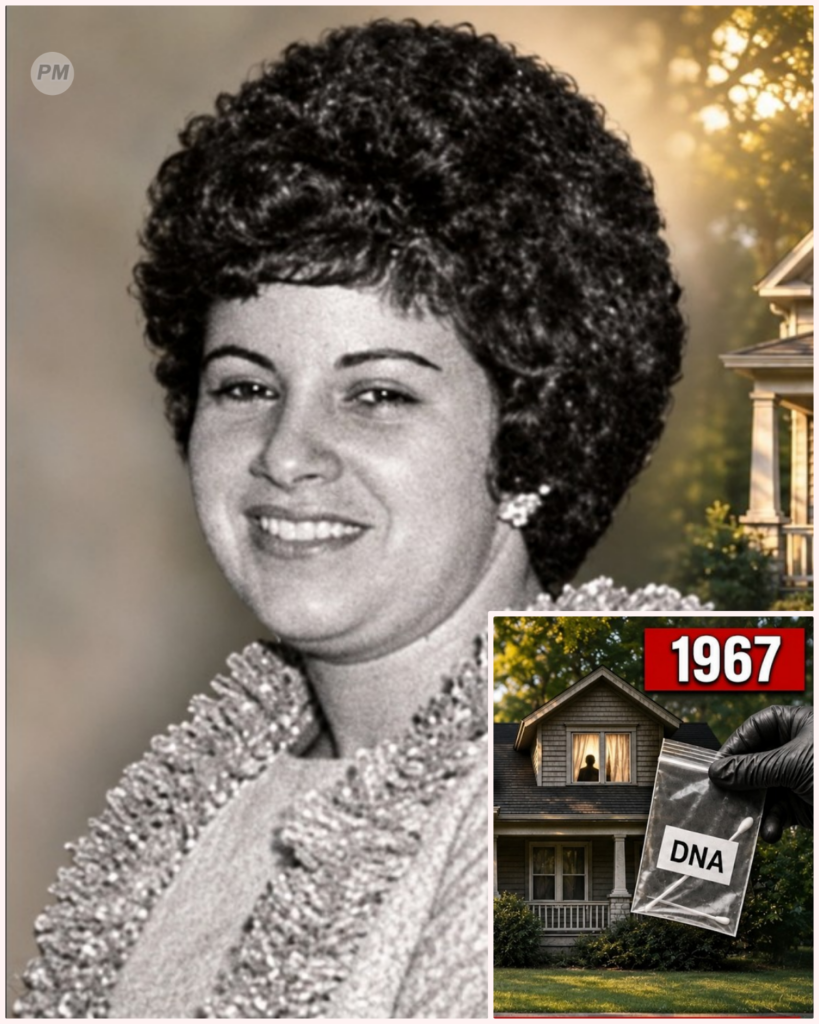
Nancy Vogle, his earliest confirmed victim. The 29-year-old mother from his own neighborhood who vanished on a Saturday night in October 1967.
There may have been a reason he chose that one first. The Vogle case was the farthest in the past, the oldest, the one with the least remaining physical evidence and the fewest living witnesses.
Pleading guilty to a 1967 murder carried less public weight than confessing to the more notorious cases that had made the torso killer a household name.
It was in a sense the safest confession to give, a way of testing the process without fully committing to it.
6 years after walking into that prison for the first time, Anelotti had what he came for.
Cottingham agreed to plead guilty. The question now was how to make it happen without breaking the promise that had made it possible.
Late August 2010, Bergen County Superior Court, Hackinack, New Jersey. Judge Donald R. Vanetsia presiding.
The hearing had been deliberately scheduled for the end of the day. A quiet slot on the docket.
No advanced notice to reporters, no press advisory issued by the prosecutor’s office, no cameras set up in the hallway.
This was the promise Anelotti had made, delivered in the most literal way possible. If you wanted to know about this hearing, you had to be in that courtroom, and hardly anyone was.
Richard Codingham was 63 years old when he was brought into the courtroom in shackles.
He had been in prison for 30 years. He had been convicted of multiple murders across two states.
His name had appeared on the front pages of New York tabloids alongside words like butcher and torso and monster.
And now he was standing in a half empty courtroom in Hackinack, New Jersey to answer for the very first life he had taken.
Sitting in the gallery were three people who had waited longer than anyone for this moment.
NY’s brother, Frank Skiava, a man who had spent four decades knowing his sister was murdered and not knowing who did it, who had watched his own mother, Carmela, grow old and die carrying that same unanswered question.
And NY’s two children, William and Karen. They were in their 40s now. They had been toddlers the night their mother walked out the door of 63 Berilada Avenue to go play bingo and never came back.
They had grown up without her. They had gone to school, graduated, found jobs, built relationships, started families of their own, and they had done all of it, carrying the weight of her absence and the compounding weight of not knowing why.
43 years of living with a wound that couldn’t close because the cause had never been named.
And now the cause was standing in front of them in shackles. About to say the word they had waited their entire adult lives to hear.
Cottingham pleaded guilty to the murder of Nancy Skava Vogel. He was sentenced to life in prison to run concurrently with the multiple life terms he was already serving.
In practical terms, the sentence changed nothing about his confinement. He was never getting out before this plea.
He was never getting out after. The number of years in front of him was irrelevant because all of them would be spent in the same cell.
