He commuted to his night job in Manhattan
He commuted to his night job in Manhattan. He walked his kids to the park.
His neighbors in Loi thought he was polite, quiet, a little reserved maybe, but perfectly normal, a typical suburban family man.
The night shift gave him cover. While his wife and children slept in Loi, Cottingham was in Manhattan.
And the Manhattan he inhabited after midnight was not the Manhattan of publishing houses and office towers.
It was the Manhattan of Flophouse motel on West 42nd Street, of the bars and clubs and dark corridors around Time Square, of the women who worked the streets or passed through the cheap hotels and who could vanish without setting off any alarms.
Through the 1970s, Cotttingham’s violence escalated. Women were abducted from bars, from motel rooms, from the streets around Midtown.
They were assaulted, restrained, tortured, and killed. And because his victims were often transient, because the crime spanned multiple jurisdictions in New York and New Jersey, and because the forensic tools to connect separate cases through DNA or other physical evidence did not yet exist, the investigation stayed fragmented.
Different precincts, different counties, different states, each working their own cases without realizing they were all hunting the same man.
Then came December 2nd, 1979. Firefighters responding to a fire alarm at the Travelin motor lodge near Time Square in Manhattan, forced open the door to a smoke-filled room on one of the upper floors and found two women’s bodies on the bed.
Both had been set on fire. Both had been decapitated. Both had their hands severed at the wrists.
One victim was eventually identified as 22-year-old D-Day Gdarsi. The other woman has never been identified.
More than 45 years later, she remains a Jane Doe. Nobody ever came forward to claim her.
Nobody reported her missing. She existed and then she didn’t. And the only people who know her name are either dead or won’t talk.
The New York City tabloids gave the killer a name. The torso killer. Detectives also called him the Times Square Killer.
The public was horrified. The police across two states were trying to connect a widening circle of missing and murdered women to a single predator they could not see.
The killings continued. Maryanne Carr, a 26-year-old X-ray technician, was abducted from the Ledgewood Terrace apartment complex in Little Ferry in December 1977.
And found murdered. Little Ferry, the same town where Nancy Vogel had been killed 10 years earlier.
Cotttingham had lived in that same apartment complex he was killing in his own backyard and still nobody made the connection.
The end came on May 22nd, 1980. Cottingham checked into a quality in motel in Hasbro Heights, New Jersey with an 18-year-old woman named Leslie Anne Odell.
A motel worker heard screaming coming from the room and called the police. When officers forced entry, they found Odell alive, handcuffed, and brutalized.
Cotttingham was caught trying to flee the building carrying a bag containing handcuffs, adhesive tape, a leather slapjack, and assorted pills.
A subsequent search of his home in Loi revealed a locked room that his wife and children had never been allowed to enter.
Inside were trophies, items that belonged to women who had never come home, belongings that victims had been carrying when they vanished.
The room was a catalog of violence that stretched back years. The convictions came rapidly.
In June 1981, a New Jersey jury found Cotttingham guilty on 15 of 20 counts, including the first-degree murder of 19-year-old Valerie Anne Street.
He was sentenced to 173 to 197 years in prison. In 1982, he was convicted of the secondderee murder of Maryanne Carr.
In 1984, New York State convicted him for the murders of D-Day Gdarzi, the unidentified Jane Doe from the Travel Inn, and another victim named Jean Rainer.
Cotttingham would eventually claim to have murdered between 85 and 100 women. That number has never been confirmed and the real total may never be known.
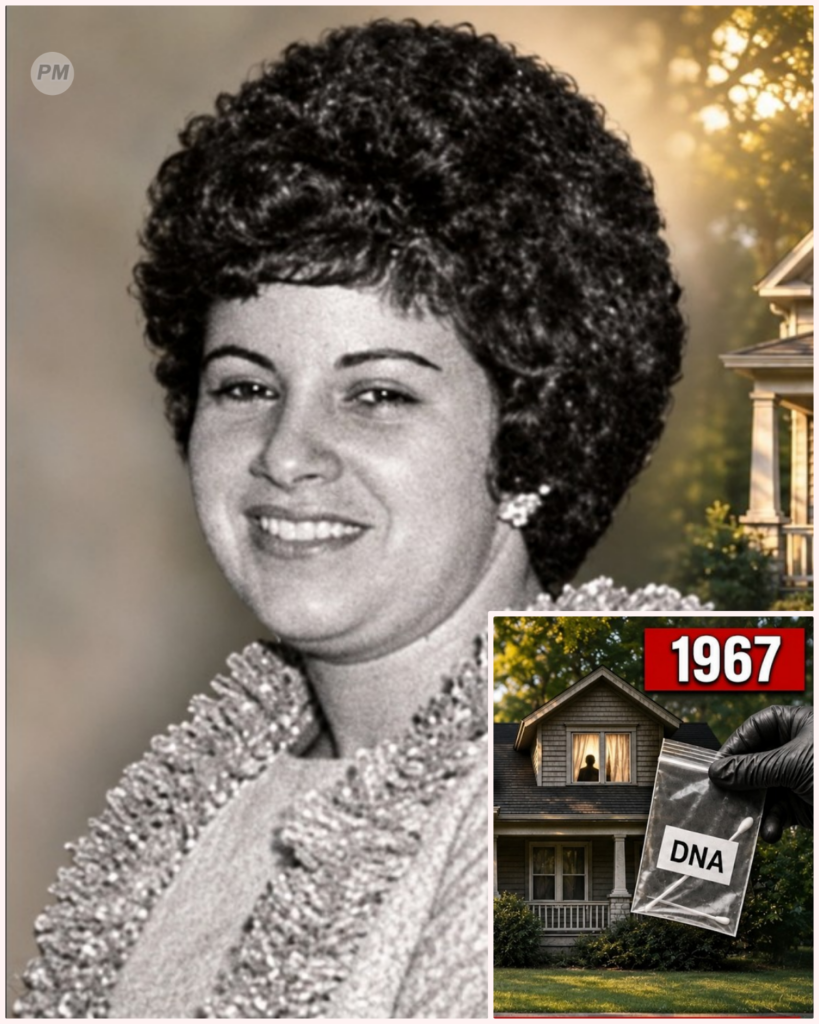
And through all of it, through every arrest, every trial, every screaming tabloid headline about the torso killer, nobody ever connected Richard Cottingham to a 29-year-old mother from Little Ferry who disappeared on her way to bingo in October 1967.
Not the prosecutors who convicted him, not the detectives who investigated him, not the journalists who covered the trials.
Nancy Vogle’s murder stayed exactly where it had been since the early 1970s, in a cabinet, in a building in Hackinack, in a file that no one had any reason to open.
We cover cases like this every single week here on Cold Case Redemption. Cold cases that went unsolved for years, sometimes decades, until someone finally refused to stop looking.
If that sounds like the kind of deep dive you want to see more of, go ahead and subscribe.
And if you’re already subscribed, hit the bell so you don’t miss the next one.
By the mid 1990s, Richard Codingham had been locked inside the New Jersey State Prison in Trenton for more than a decade.
He was serving multiple life sentences stacked on top of each other with no possibility of parole.
He was in his late 40s. He was never getting out. Everybody knew that, including him.
In 1996, Bergen County detectives decided to take another run at the cold cases they believed Cottingham could solve.
The old files from the 60s and 70s were still there, still unsolved, still weighing on the families of the victims.
And Cottingham sitting in a cell in Trenton with nothing ahead of him but decades of the same walls might be persuaded to talk.
The lead on this effort was then Chief of Detectives Alan Grio who arranged a series of interviews with Cotttingham inside the prison.
And to the surprise of nearly everyone involved, Cotttingham talked. He told Grio that he had killed Nancy Vogle in Little Ferry in 1967.
He said it plainly. He admitted it. After 29 years of silence, the words were out.
He also confessed to the 1974 murders of Maryanne Prior, age 17, and Lorraine Kelly, age 16.
Two teenage girls from North Bergen, who had been hitchhiking to a shopping mall in Pamis on a summer afternoon and were never seen alive again.
Their case was one of the most agonizing unsolved murders in Bergen County history. And Cotttingham was sitting in a room in Trenton telling detectives he was the one who killed them.
This was the break. After nearly three decades, the families of these victims were on the verge of getting answers.
A deal was negotiated. The structure was unusual, designed to accommodate the unique circumstances. It would be a secret, no plea confession.
Cotttingham would formally admit to the killings on the record, but there would be no public trial, no press conference, no media coverage.
The confession would be documented. The cases would be officially resolved and the families would be notified.
All behind closed doors. The Bergen County Prosecutor’s Office signed off. The New Jersey Attorney General reviewed the arrangement and approved it.
Everything was in place. 29 years of silence were about to end. Then Governor Christine Todd Whitman vetoed the entire arrangement.
The specific reasons for the veto have never been fully detailed in the public record.
What is known is that the governor’s office killed the deal at the last minute and with it the confession.
The file went back in the drawer. Cotttingham returned to his cell. The interviews stopped and the families of Nancy Vogel, Maryanne Prior, and Lorraine Kelly were left exactly where they had been before, in the dark, waiting, wondering.
Now, here’s the part of the story that is genuinely difficult to sit with. NY’s mother, Carmela Skiava, was still alive in 1996.
She was elderly, but she was living. She had spent nearly 30 years not knowing who had killed her daughter.
30 years of birthdays, holidays, quiet evenings. All of them shadowed by a question that nobody could answer.
If that deal had gone through, even in secret, Carmela would have died knowing. She would have had the name.
She would have had the closure. Or at least as close to closure as a mother can get when her child has been murdered.
Instead, the truth had been spoken aloud inside a prison interview room in Trenton, New Jersey, and then sealed back up as if it had never happened.
Carmemella Skiava passed away without ever learning that her daughter’s killer had been their neighbor, that he had lived on the same streets, that he had confessed, and the system had chosen not to tell her.
14 more years would pass before anyone heard that confession again. February 2004, 2 days after the Super Bowl, a Bergen County detective named Robert Anzelotti walked into the New Jersey state prison in Trenton to meet Richard Codingham for the first time.
Anelotti had been assigned to review Bergen County’s cold case files from the 1960s and 1970s.
It was the kind of assignment that could mean different things depending on who received it.
For some detectives, it might have been a bureaucratic exercise, a boxchecking review of old cases with no realistic prospect of resolution.