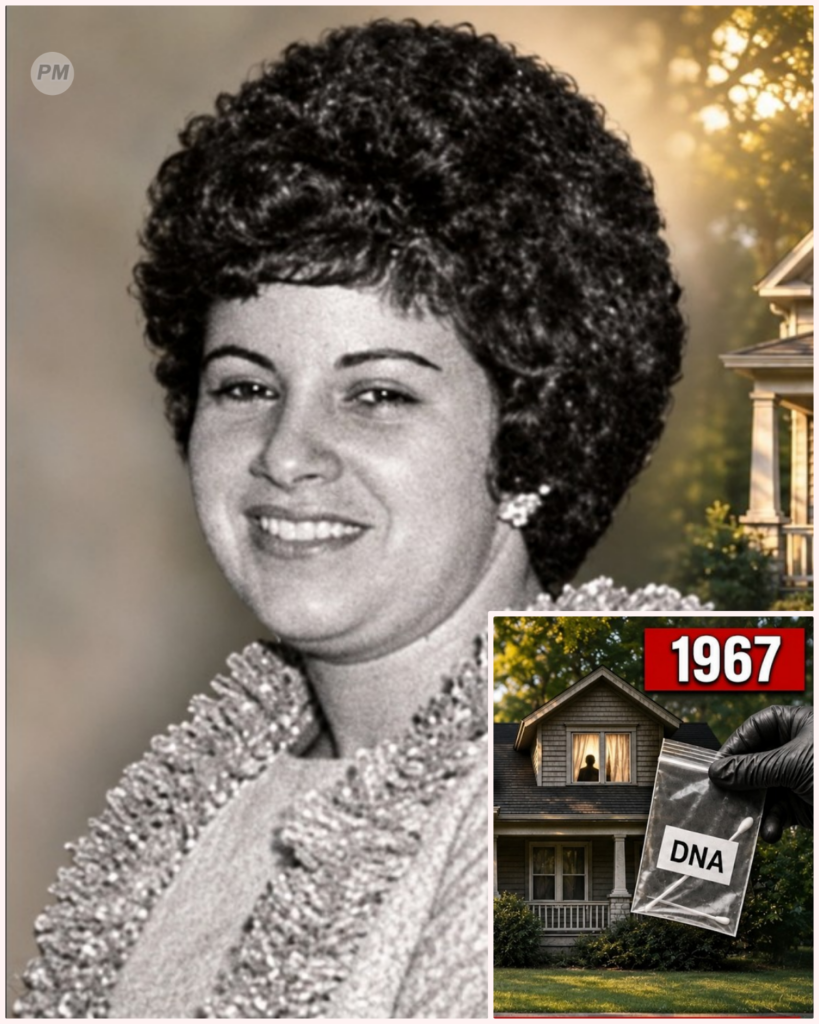
On a Saturday night in October 1967, Nancy Vogle k…
On a Saturday night in October 1967, Nancy Vogle kissed her two kids good night, told her husband she was heading to bingo at St.
Margaret’s Church in Little Ferry, New Jersey, and walked out the front door. 3 days later, two young girls spotted something through their upstairs window on a quiet street in Ridgefield Park.
What they thought was a store mannequin lying in the back of a parked car turned out to be NY’s body.
She’d been beaten, bound, and strangled. Bergen County investigators spent months chasing leads. They found her shopping bag still in the car.
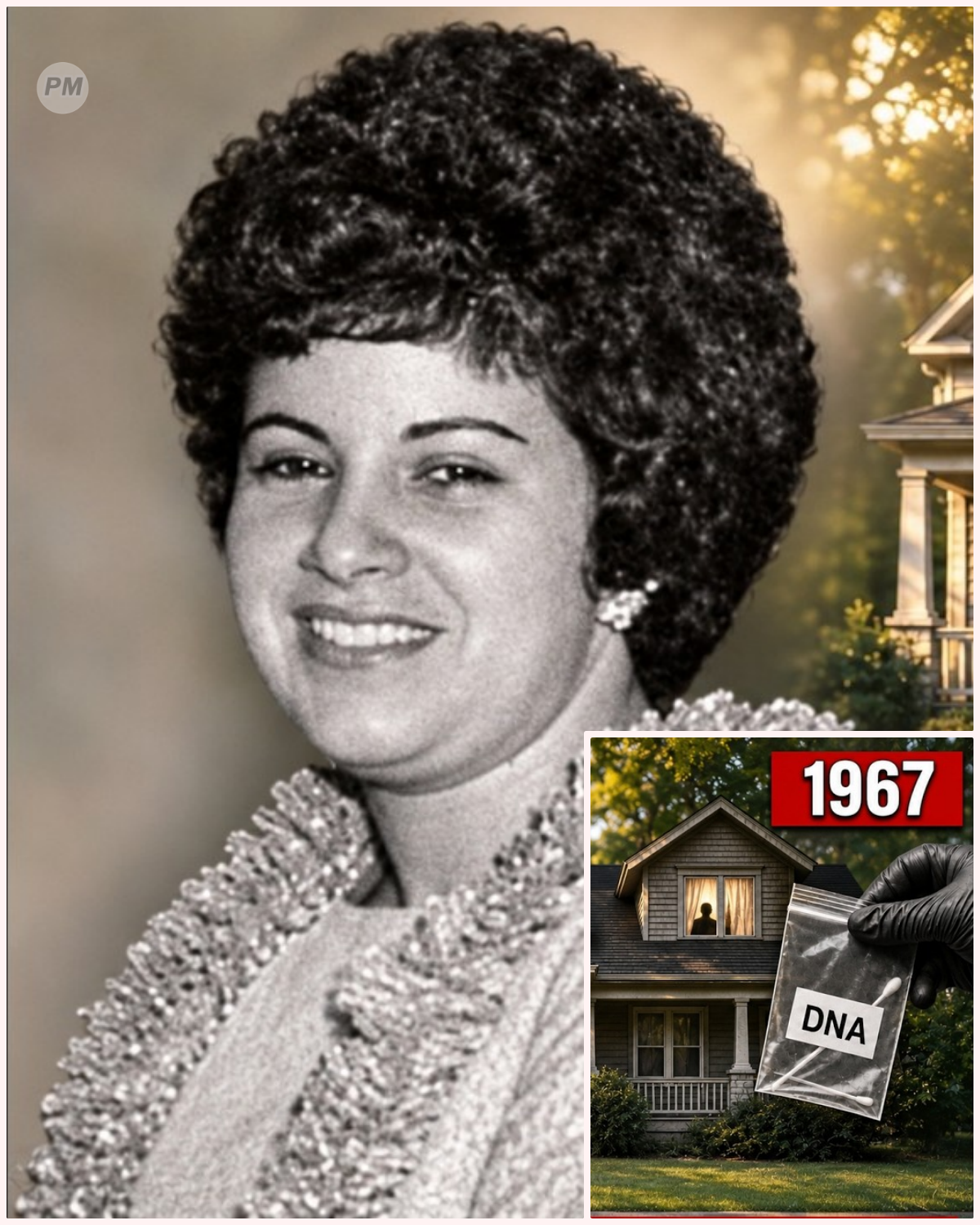
They found the rope used to kill her. They found evidence suggesting she knew her attacker, but they never found the attacker himself.
The case went cold. It stayed cold through the 70s, the 80s, the ‘9s, and into the 2000s.
NY’s mother, Carmela, died without ever learning who murdered her daughter. And the whole time, the killer had been right there, not hiding in another state.
Not some drifter passing through town. He’d been living on the same streets of Little Ferry, walking past the same houses, commuting to the same train station.
He was 21 years old when he killed Nancy Vogle, and nobody ever looked at him twice.
His name was Richard Cotttingham. And by the time the world found out what he was, they’d know him by a different name entirely, the torso killer.
This is the story of a murder that went unanswered for 43 years. A detective who refused to let it stay that way and a family that waited a lifetime for a single word: guilty.
This channel covers the cold cases that everyone thought would stay buried and the people who refused to let them go.
If that’s the kind of story you want to hear, stick around. This one is worth your time.
Before Nancy Vogle was a case file, before she was a name in a cold case database, before she became a footnote in the biography of a serial killer, she was a person.
And that matters more than anything else in this story. It matters because for 43 years, the system reduced her to a question mark.
And restoring who she actually was is the least this story owes her. Nancy Maurice Skiava was born in 1937 and grew up in Bergen County, New Jersey.
Her family was Italian-American, working class, rooted in the kind of post-war suburban landscape where families knew their neighbors by name.
Kids walked to school along treeline streets and Friday nights meant something. The neighborhoods of Bergen County in the 50s and 60s were tight.
People stayed. People looked after each other. And Nancy was woven into that world completely.
Her family called her Bubby. It was one of those childhood nicknames that sticks forever.
The kind that tells you something about how a person was loved before the world got complicated.
She graduated from Cliffside Park High School in 1955 and took a job at McGra Hill.
The publishing company commuting into New York City the way millions of Jersey residents did then and still do now.
Every morning the trains from Bergen County poured workers into Manhattan and every evening they brought them back.
Nancy was part of that rhythm, young working, building a life. Around 1958 she married Henry P.
Vogle. They started their family quickly the way young couples did in the late 50s.
And had two children together, a son named William, who everyone called Bill, and a daughter named Karen.
For the first years of their marriage, they lived at 74 Grant Street in Fairview, New Jersey, before moving to a house at 63 Bertoala Avenue in Little Ferry around 1964.
Little Ferry was a tiny burrow, barely a square mile, tucked between the Hackinack River and Route 46 and the sprawling suburban grid of Bergen County.
It had been farmland not that long ago, and some of the older residents still remembered when the Meadowland stretched unbroken to the horizon.
By the mid60s, though, it was filling in. Small houses on small lots, families with kids, cars parked along narrow streets.
It was the kind of town where you could walk from one end to the other in 15 minutes and run into three people you knew along the way.
People left their doors unlocked. Kids played in the street until the street lights came on.
Neighbors borrowed tools and returned them the next morning. That’s not nostalgia. That’s just what Little Fairy was in 1967.
NY’s mother, Carmemella Skiava, also lived in Little Ferry. Her brother, Frank, lived in nearby Ridgefield Park, just across the river.
This was a close family in a close community. Sunday dinners, holidays together, the kind of connective tissue that defined life in Italian-American Bergen County in the 60s.
On Saturday nights, Nancy played bingo at St. Margaret of Cortona Roman Catholic Church in Little Ferry.
It was her routine, her break. A few hours out of the house, away from the kids, doing something simple and social in a place where she felt comfortable.
It was normal. It was safe. It was the kind of thing you don’t think twice about.
That’s who Nancy Vogle was. A 29-year-old mother of two who worked, raised her kids, stayed close to her family, and played bingo on Saturday nights in a church a few blocks from her house.
Not a case number, not a victim profile, not a cold file gathering dust in a prosecutor’s office.
A woman with a life that mattered in a town where people were supposed to look out for each other.
Except, as it turned out, they couldn’t look out for what they couldn’t see. If you think cases like NY’s deserve to be remembered for the people at their center, not just the crimes that ended their lives, consider hitting that like button.
It helps more people find these stories and it makes a real difference. Saturday, October 28th, 1967.
That Saturday evening, Nancy told Henry she was heading to bingo at St. Margaret’s. It was the same thing she’d done plenty of times before.
Same church, same game, same Saturday night routine. There was no reason for anyone to worry.
She never arrived at the church. Somewhere between leaving the house on Berilada Avenue and where she was supposed to be, Nancy changed course.
She drove to the Valley Fair department store in Little Ferry. Maybe she needed to pick something up on the way.
Maybe she wanted to browse for a few minutes before the game started. The reason doesn’t survive in any record.
Nobody knows why she stopped there instead of going straight to St. Margaret’s. What does survive is the evidence found later.
Shopping bags and receipts from Valley Fair placed in her car, establishing her final known movements on the last night she was seen alive.
It was in that parking lot, according to what would eventually be confessed decades later, that a 21-year-old man from her own neighborhood encountered her.
His name was Richard Cotttingham. He also lived in Little Ferry. He walked the same streets, shopped at the same stores, passed the same houses.
And on this particular Saturday evening in October, he crossed paths with Nancy Vogle in a parking lot a short drive from both their homes.
What happened between that encounter and the discovery of NY’s body 2 days later would not be fully described for more than 40 years.
The details that eventually emerged came from Codingham’s own confession given to investigators in a prison interview room.
And they are the account of a killer, not a neutral witness. According to that confession, he drove Nancy in her own car to a remote area near Montail, a cornfield on the outskirts of Bergen County where he strangled her.
Then he drove her car across the Hackinack River to Ridgefield Park and parked it on a residential street.
Then he walked away. At home, Nancy didn’t return that night. On Sunday morning, Henry Vogle reported his wife missing to the Little Ferry police.
Officers began making calls and canvasing the area, but there was nothing to go on.
No witnesses had come forward. No disturbance had been reported anywhere. No one had seen anything unusual at Valley Fair or on any of the streets between Little Ferry and the surrounding towns.
Nancy had simply left the house and not come back. Then came Monday, October 30th.
On Brinkerhoff Street at Homestead Place in Ridgefield Park, just across the Hackinack River from Little Ferry, two young girls were looking out their upstairs window at the street below.
A car was parked along the curb that hadn’t been there before. It was a Rambler.
And through the car’s window, the girls could see something in the back seat that looked from a distance like a waxy mannequin.
