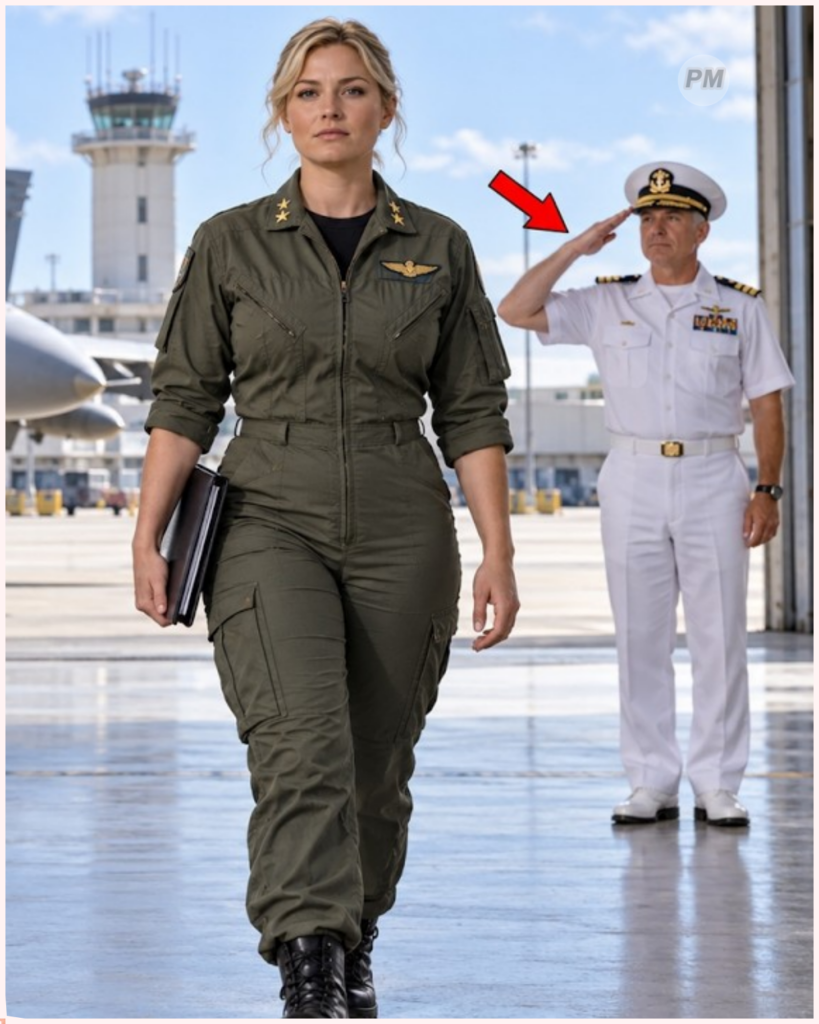
It was not an official report
It was not an official report. It did not go through his chain of command.
He had written it at his kitchen table after midnight, in pencil first, then again in pen, because a thing written in pen looked like a thing a man meant.
His wife had not asked what he was doing. After twenty-two years of marriage she knew the shape of a decision being made at that table, and she only set a glass of water beside the paper and went back to bed.
He wrote it the way he wrote maintenance entries, plainly and in order: the tail number, the fault, the dates, the sign-offs.
No accusations. No adjectives. Facts laid end to end like tools on a bench, because facts were the one language he trusted to survive the trip up a chain of command that had already ignored them in person.
At the end he had stopped for a long time over the last lines, because they were the ones that broke the rule he had lived by his whole career, the rule that said a chief handles his own problems inside his own hangar.
Then he thought about the pilot who would draw Jet 412 on the wrong morning, some kid with a family and a mortgage and total faith in a signature, and he wrote the lines anyway, and sealed the envelope before he could take them back.
It was a plain handwritten letter sent to a name he had found in a base directory.
The name was Rear Admiral Elena Ward. She read it twice. The letter was short.
It said that over the past 6 months, the same aircraft kept coming back from flights with the same small problem, a hydraulic pressure fault.
Nothing dramatic, a warning light that flickered and then went away. Each time the mechanics wrote it up each time, someone signed it off.
Then it happened again at the bottom. The chief had written. The pilots tell us to clear it so the jet can fly the next flight.
The senior officers say it is fine. I do not think it is fine. I am afraid someone is going to get hurt.
I did not know who else to tell. Elena sat at her desk for a long time after she finished reading.
She could have ordered a formal inspection. That evening she drove home the long way, along the coast road, with the letter folded inside her jacket pocket.
She did not turn on the radio. She kept seeing the same small scene in her mind: a warning light blinking on a panel at ten thousand feet, a young pilot glancing at it, trusting the signature in a book more than the light in front of her eyes.
At home she made tea she did not drink and stood at the window watching the last gray light go down over the water.
Twice she picked up the phone to call her deputy and order a formal safety stand-down, and twice she set it down again.
A stand-down would stop the flying for a week. It would not stop the habit that had caused the problem, because habits do not live in schedules.
They live in rooms, in who gets listened to and who gets laughed at, in the small daily arithmetic of whose word carries weight.
She had spent thirty years learning that an inspection measures what a unit wants you to see.
If she wanted the truth about the Condors, she would have to go and stand inside it, quietly, as nobody.
By midnight the plan was whole in her mind, and she slept better than she had in weeks.
That was a normal move. A team of officers would arrive in press uniforms holding clipboards and everyone in the squadron would know they were coming days in advance.
Every log book would be cleaned. Every pilot would be polite and careful and perfect.
And the real problem would hide for exactly as long as the inspector stayed on base.
Elena had seen it happen before. In 30 years of service, she had learned one hard lesson.
People show you who they really are when they believe nobody important is watching. So, she made a different plan.
She took off her stars. She put on a plain flight suit with the help of a few trusted officers.
She wrote herself a set of transfer orders. And she quietly handed the daily running of the base to her deputy for 2 weeks.
Only one person inside the squadron knew the truth. The executive officer, Commander Harris, a tired, careful man who had agreed to say nothing.
Elena would fly with the condors. She would eat with them. She would listen to them talk.
When they thought she was just a new girl, then she would decide what to do.
She knocked on Commander Brennan’s door. Come in. Brennan was a tall man with silver at his temples.
Leaning back in a leather chair with his boots on an open drawer. He looked at her orders for maybe 10 seconds.
He did not look at her face. Ward, fine. You will take the number four slot.
See the schedule officer. And stay away from the maintenance log books unless you need them.
Why is that, sir? He looked up mildly surprised. Because the maintenance people get touchy.
Fly your hops and stay out of the way. We run a tight ship here.
Understood, sir, said Elena. She walked back into the hangar and heard it once more.
She closed the office door gently behind her and stood for a moment in the corridor with her orders folded in her hand.
In eleven minutes Commander Brennan had told her nearly everything she needed to know about his squadron, and he had done it without once looking at her face.
He had not asked where she had flown, or with whom, or what she had done before the orders brought her here.
He had asked nothing at all, because in his arithmetic she had already been weighed: a new name, a number four slot, a body to fill a line on the schedule board.
Elena had commanded enough units to know that a commander who does not look at people eventually stops seeing them, and a squadron led by a man who cannot see his own people will fly exactly the way this one did, brilliantly, confidently, and blind in one eye.


