The shirt fit a man about 6 ft tall and about 200…
The shirt fit a man about 6 ft tall and about 200 lb. The footprint at the gate post was a size 8 and 1/2, [music] a small shoe for a man that size.
Investigators read those two facts against [music] each other and concluded that more than one person had been involved.
It was a reasonable inference from the evidence in front of them. It was also wrong.
And once the theory in a file says two men, every tip about one man fits a [music] little worse than it should.
In 2004, a tip came in about a garage behind an apartment building on Favard Street, one block from the pizzeria, where somebody claimed Sharon had been held.
Police searched it that July and recovered three DNA samples on the 28th. None of them were hers.
Ivonne Prior would later say flatly that the tip had been bogus. That was the last real movement in the case for years.
The file went quiet. Now, pay attention to this next part because it explains everything that happened afterward.
The man who left that shirt in the snow was not hiding in Montreal in 1975.
He was hiding in Montreal from West Virginia. Franklin Maywood Raine was born in 1946 in Huntington, West Virginia.
In March of 1975, he was 28 years old, which is exactly the age Cheryl Roy gave police.
He stood about 6’2, weighed about 200 lb, had brown hair and a mustache, and he was an American who spoke English.
His criminal record started when he was a child. The documentary made about this case puts the first entry at age 11.
By 1964, at 18, he had already tried once to escape the West Virginia penitentiary.
He escaped in 1967. By 1969, he was committing crimes in Canada. And for 6 years, he moved back and forth whenever the ground got hot.
When he worked at all, he drove a truck on a route between the two countries.
For Franklin Ramen, the border was never a barrier. It was a door. The prosecutor, who eventually handled this case in West Virginia, put it about as plainly as it can be put.
You could track his location, he said, by his arrest. In February 1974, Ramina broke a window in an apartment in Parkerburg, West Virginia, climbed in while a 23-year-old waitress was asleep, and violently attacked her.
In April 1974, he was released on bond, and left the state for Canada. In March 1975, Sharon Prior was dead.
The bond was $2,500. At the time, that seemed like a small thing. He did not vanish into a wilderness.
West Virginia State Police would later pull an old fingerprint card of his listing, a Montreal address, two blocks from where Chiron was taken.
He bought a car from a woman who lived two blocks from Sharon’s house. He was in every practical sense a neighbor and his name never appeared in her file.
Not among the 38, not among the six, not among the 120, not once in 47 years.
Which brings us to the only reason any of this was still possible. Ivonne Prior did not campaign for a season.
She campaigned for 48 years. She gave interviews on the anniversary year after year to whoever would run them.
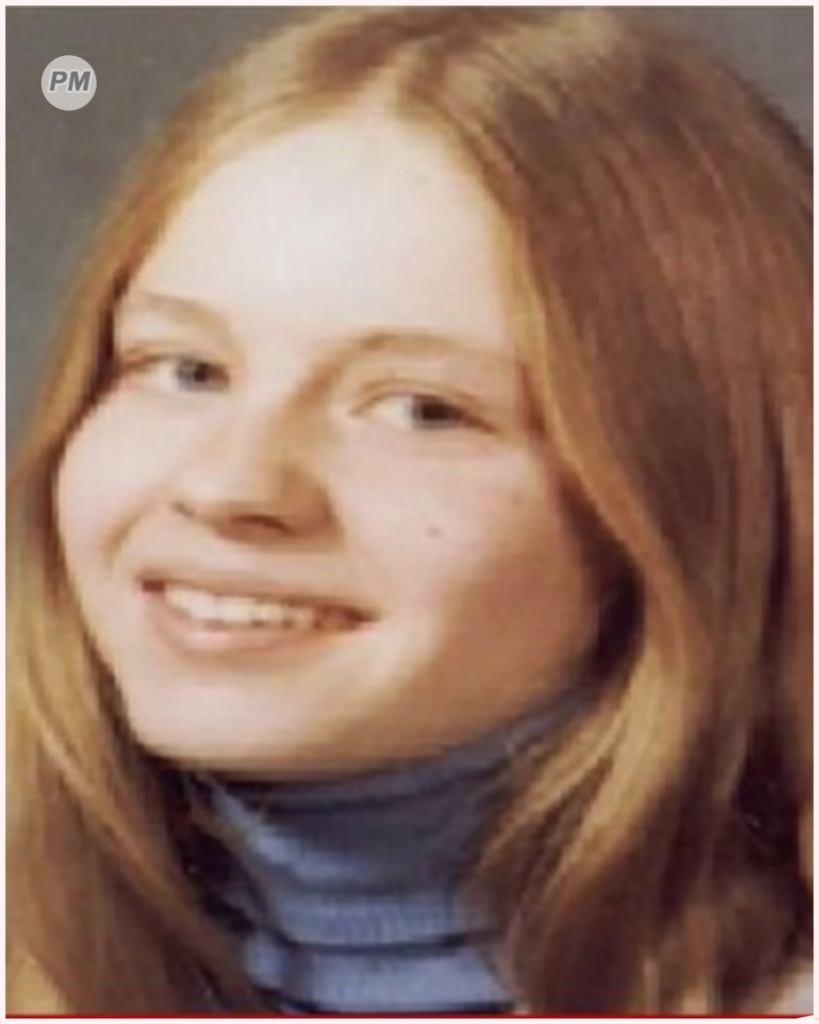
The family built a website for Sharon and kept it running for two decades. And on the front page, they wrote out her last afternoon hour by hour in the first person in her own voice so that anybody who landed there met a girl and not a case number.
They set up a post office box in Verdun and told the public they did not need anyone’s name, only their information.
They put a reward poster online for strangers to print and hang wherever they liked.
In 2012, on the 37th anniversary, an anonymous donor put up a $10,000 reward and police reopened a command [music] post in the old neighborhood.
The family also created the Chiron Prior Memorial Scholarship, $2,000, handed to a young woman from the point almost every September for years.
One year, it went to Sharon’s own niece. And in 2006, she and her daughters drove out to help another family search a field for evidence in another unsolved murder.
Because by then, she was keeping track of everyone else’s children, too. Here is the part that tells you who she was.
About 30 years after Sharon died, Ivonne and the twins decided to find the beekeeper.
He was not a beekeeper anymore and had long since left that field. They had only vague memories of him and a guess at an email address.
Messages bounced and were forwarded for a while. And then one day a reply landed in their inbox saying he was the man they were looking for.
He met them at a restaurant and brought his wife. He answered every question they had as well as he could.
And when the conversation began to run out, Ivonne asked him if he would take them there because in 30 years she had never once been able to go.
He said yes. The woods were gone by then, and a factory had gone up nearby, and the little piece of land where he had kept his hives, was empty.
He walked them straight to the spot. Ivonne, who had spent decades studying newspaper photographs and maps of that field, knew immediately that he had it exactly right.
She has described what she carries as an amputation of her soul. In December 2021, the file landed on the desk of the 14th investigator.
And for the first time in the history of this case, the technology had finally caught up to the evidence she had spent her life keeping alive.
If you have made it this far, hit the like button. What comes next is the part where the science finally does what she always believed it would.
