A cautious woman cracked her door [music] open
A cautious woman cracked her door [music] open. “Hi, I’m Detective Lisneski from the Michigan State Police and I’m looking into” The woman jerked.
She started shaking. Not a slight shake, shaking violently, her whole body, so intensely it looked like she was having a seizure.
“You’re going to get me killed.” She [music] said and pushed the door shut. Bronco felt adrenaline surge through him.
He later said he nearly collapsed. For the first time in his career, [music] he did something he had never done before.
He put his foot in the door, blocking [music] it just before it closed all the way.
He had found Barb Boudreau. And her reaction told him more than any statement could.
A woman with nothing to do with the case, living hundreds of miles from the city, hearing [music] the word police and shaking so hard she nearly fainted.
That meant she knew something. And what she knew was dangerous enough to make her afraid of dying after more than 15 years.
Boudreau did not say much that first meeting. She closed the door and Bronco left her alone.
But he came back. The next [music] day, the next week, the next month. He did not come with a subpoena or a threat.
He came like he helped her fix things around the house. He helped her with odd jobs.
>> [music] >> He installed a security camera at her house so she would feel safer.
He always drove without a badge, always came alone, always careful so no one would see a police car parked in front of Boudreau’s house because he knew that if the Duval brothers found out police were talking to her, her life could be in real danger.
Over many months, slowly, piece by piece, [music] Boudreau began to talk. But she told the story in a very specific way, a way Bronco immediately recognized as deliberate.
>> [music] >> She said her friend Ronnie Emery had been with her at the bar that night.
She said Ronnie had gone outside to check when he heard the noise. And she said Ronnie came back in and told her what he had seen.
The screams, the beating, the truck headlights, the baseball bat, the blood, two hunters begging for their lives, the Duval brothers laughing as they hit them, [music] the sound of metal hitting skull, motionless bodies still being kicked, specific, vivid, haunting [music] details.
But all of it through Ronnie’s account, not through her eyes. And Ronnie Emery had been dead for many years.
Bronco understood immediately what this meant. [music] Boudreau was telling the story through the eyes of a dead man to protect herself.
If she said Ronnie’s had seen it and not her, then her statement was only hearsay, unusable as evidence in court.
She could not be subpoenaed as a witness based on what someone else had told her.
That was the law. And Boudreau, though she had lived a hard life, a recovered alcoholic with no degree or status, was not a fool.
She knew exactly what she was doing. She was giving Bronco enough information for him to know the truth, but not enough for him to drag her into a courtroom where she would have to point straight at the Duval brothers and say, “I saw you kill those two men.”
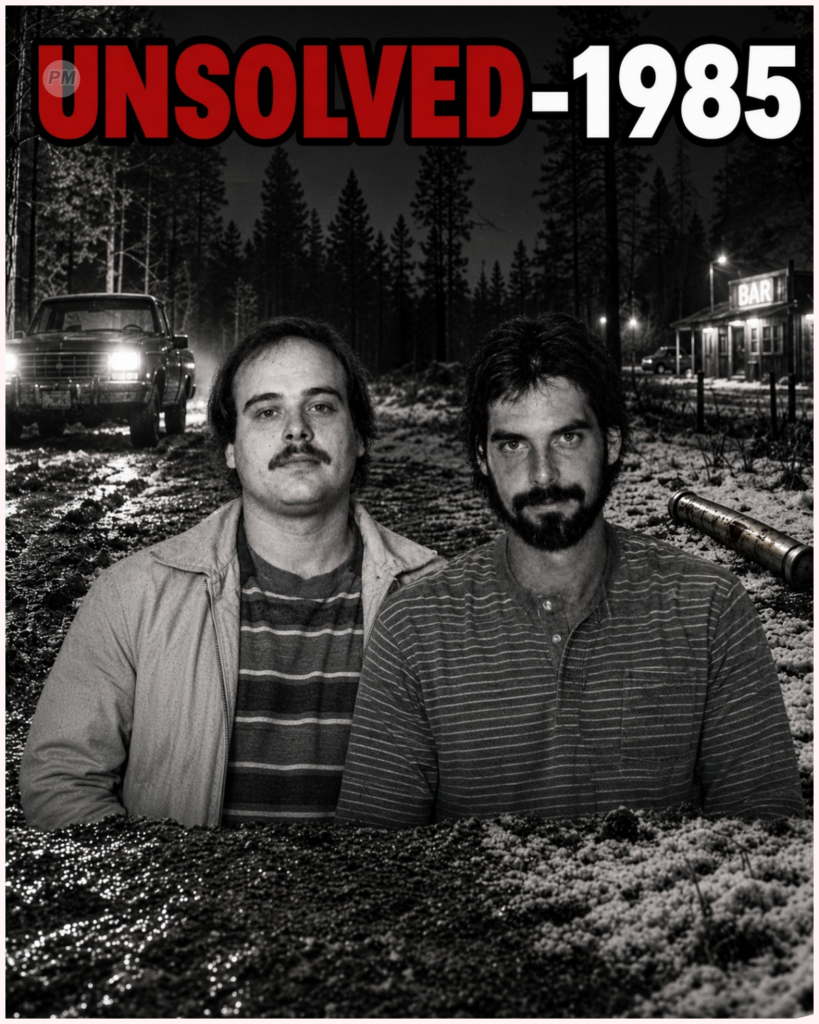
By 2002, Bronco knew almost for certain what had happened to David Till and Brian Ognjan.
He knew who had killed them. He knew where. He knew how. But he did not have enough evidence to arrest [music] anyone.
Boudreau was still telling the story through Ronnie Emery’s eyes. And as long as she kept telling it that way, Bronco’s hands were tied.
He needed a bold move. And that move came from the Michigan Attorney General’s Office.
Working with Attorney General Mike Cox, Bronco and the investigative team decided to issue subpoenas for Barbara Boudreau and several other witnesses, forcing them to come to Lansing, the Michigan state capital, and testify under oath before a formal hearing.
Cox called this tactic the poor man’s grand jury, a plain way of saying they were using legal power to force people who knew the truth to tell the truth.
Not before a formal grand jury, but before investigators and prosecutors in a hearing room in Lansing.
It was the last throw. If it moved nothing, the case would die for good.
Boudreau was the first to testify. She sat in front of the investigators, raised her hand and swore, and began to tell it.
The same story, [music] the same details, the same way of telling it, through Ronnie’s eyes.
Screens in the night, truck headlights, a baseball bat, blood on the snow, tile bagging, Angie Ann running and being dragged back, the Duval brothers laughing, motionless bodies still being kicked.
Every detail was right. Every detail was vivid. And every detail was useless under the law because it came from the account of a dead man.
The hearing room grew heavy. The investigators looked at each other. They all knew what she was hiding.
They all knew she was protecting herself. And they all knew that if she left this room still telling the story through Ronnie’s eyes, they would never get the Duval brothers into court.
>> [music] >> Bronco turned off the recorder. He leaned forward, his face only a few inches from Boudreau’s.
[music] He begged her, not ordering, not threatening, begging. Tell me what you know, Barb.
Tell me the truth. And something changed in her eyes. A small change, hard to notice, as if a wall inside her had finally collapsed after 17 years of holding.
“Bronco, [music] you know I saw it, don’t you?” She said. “Yes, I know.” Bronco said, “but I need to hear it from you.”