The third witness was the peak of absurdity
The third witness was the peak of absurdity. [music] A man claimed he had once lost his memory but had recently recovered it [music] and now remembered that his friends had killed Tile and Aag John with an axe in downtown Grayling, >> [music] >> then stripped their clothes, held their mouths open, and drowned them in the Au Sable River until their bodies sank.
>> [music] >> He also claimed a personal relationship with Leslie Williams, the notorious serial killer in southeastern Michigan.
Pendergast did not miss [music] the chance. On cross-examination, she asked him one question in a calm voice.
“Do you know who prosecuted Leslie Williams?” He said, “No.” “You’re looking [music] at her,” Pendergast said.
No one understood why the defense had put that man on the stand. The Duval brothers did not take [music] the stand.
Their lawyers had clearly decided that letting the two defendants open their mouths in front of the jury would do more harm than good, especially when both had spent 18 years bragging about the murders to anyone who would listen.
Defense attorney Seymour Schwartz argued that the prosecution had not met the burden of proof beyond a reasonable doubt, that the entire [music] case depended on the testimony of an alcoholic telling an absurd story 18 years [music] after the event.
Then Donna Pendergast stood before the jury and gave her final summation. She looked straight into the eyes of the 12 jurors and said the two defendants had escaped justice for 18 years through lies and threats.
“Do not reward the defendants for 18 years of lies and terror,” she said. Then she turned and looked straight at Raymond and Donald Duval, the two men sitting at the defense table, and said the words the whole courtroom would remember.
“Those faces are nothing more than the masks of monsters.” >> [music] >> She said their crime was an evil so dark that your worst nightmare pales in comparison.
The jury left the courtroom to deliberate. 12 peoples, six men and six [music] women carrying the weight of 18 years of secrecy, 18 years of family pain, [music] 18 years of a town living in fear.
No bodies, no physical evidence, no weapon, only words. [music] The words of Barbara Boudreaux, the bragging of the Duval brothers themselves, and the question each juror had to answer, is it enough?
They deliberated about 2 hours. When the jury returned to the courtroom, Judge Ronald Bergeron read the verdict, >> [music] >> guilty.
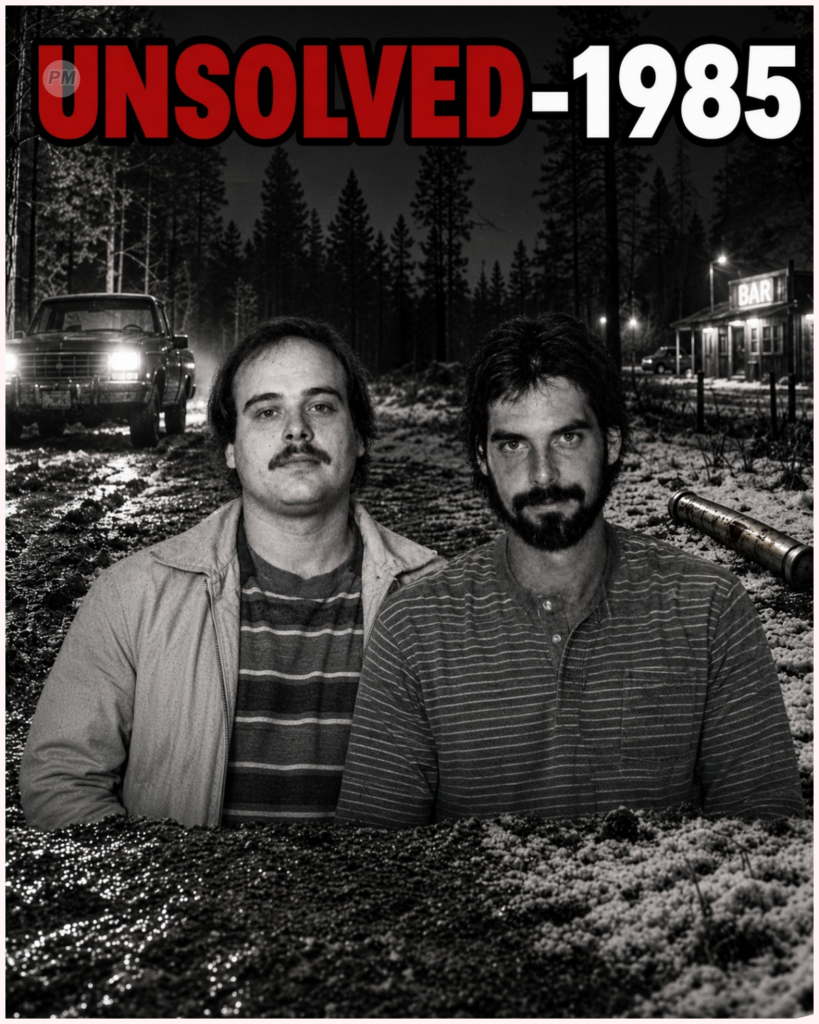
Both Raymond J.R. Duval, 52, and Donald Coco Duval, 51, were convicted [music] of first-degree murder for both killings of David Tile and Brian Ojibway.
Raymond Duval dropped his head onto the defense table. On the victim’s family side, Helen Ojibway, Brian’s mother, [music] then 77, had waited 18 years for this moment.
“God answered my prayer,” she said. David Tile’s father stood before reporters with bloodshot eyes and said one sentence he had held inside for nearly two decades.
[music] “They took my son.” The judge imposed the mandatory sentence under Michigan law for first-degree murder.
Life in prison without the possibility of parole. Both Duval brothers would die in prison.
Defense attorney Schwartz said he would appeal, saying he was disappointed in the verdict and that his clients had not done it.
The appeal was later denied. The verdict [music] stood. The conviction of the Duval brothers without any physical evidence, no bodies, no weapon, no blood, no DNA, is one of the most extraordinary convictions in Michigan judicial history.
It proved that credible witness testimony, combined with circumstantial evidence, and the killers’ own bragging, can be enough to put a murderer in prison, even when no physical trace of the victims remains.
>> [music] >> It set a precedent. Bronco Lesneski and Donna Pendergast both believed there were others involved in the murder that night, that at least three other people had witnessed or assisted, >> [music] >> but none of them were charged.
Both Pendergast and Bronco have retired. Barbara Boudreau, the woman who lived with the secret for 18 years and finally found the courage to tell the truth, died in 2007, 4 years after the trial.
The violence did not end with the Duval brothers. In 2005, Don Duval Jr., Duval’s daughter, was convicted of second-degree murder for stabbing a man named William Gilbreath to death and received a sentence of 31 to 46 years in prison.
>> [music] >> She had grown up physically and sexually abused by the very men in the family who were supposed to protect her.
>> [music] >> Violence breeds violence. That is the real legacy of the Duval family.
Author Tom Henderson recorded the entire case in the book Darker Than Night, full title Darker Than Night, >> [music] >> The True Story of a brutal double homicide and an 18-year-long quest for justice.
The case was also aired on Unsolved Mysteries, Cold Case Files in the episode The Missing Hunters, Sins and Secrets episode Mio, and Murderbook.
[music] The bodies of David Tyner and Brian Ognjan were never found. The black 1980 Bronco, plate 447 HRZ, was never found.
If the story about the wood chipper and the pigs is true, there is nothing to find and perhaps there never will be.
Every November, when deer season returns, hunters still [music] pour into Mio, still drive the road where Linker’s Lounge once stood, still stop at the bars where two 27-year-old men once drank beer and laughed on the last night of their lives.
The story was never forgotten. The whole town was relieved when the Duval brothers were taken away, but the memory is still there in every conversation by the [music] fire, in every look when someone mentions the name Duval.
Donna Pendergast, when asked [music] about the motive, said she had no answer. There is no way to understand the reason for Brian and [music] David’s deaths, she said, because it was pure evil and there is no way to understand pure evil.
You can only [music] recognize it for what it is. David Teel, 27, a mechanic newly married, got in a car to hunt deer on November 22nd, 1985.
Brian Ogden, 27, an auto mechanic saving money to propose to his girlfriend, sat in the passenger seat beside his best friend.
They never came home. But 18 years later, someone refused to let them be forgotten.
A detective knocking on every door in the dark. A trembling woman who finally told the truth.
A female prosecutor looking monsters in the eye and naming them. And 12 people in a courtroom in Standish, Michigan saying what should have been said in 1985.
>> [music] >> Guilty. This is Cold Case Reopened. We tell the stories of forgotten victims and the people who refused to let them be buried.
If this story stays with you, share it. The next case is waiting.


