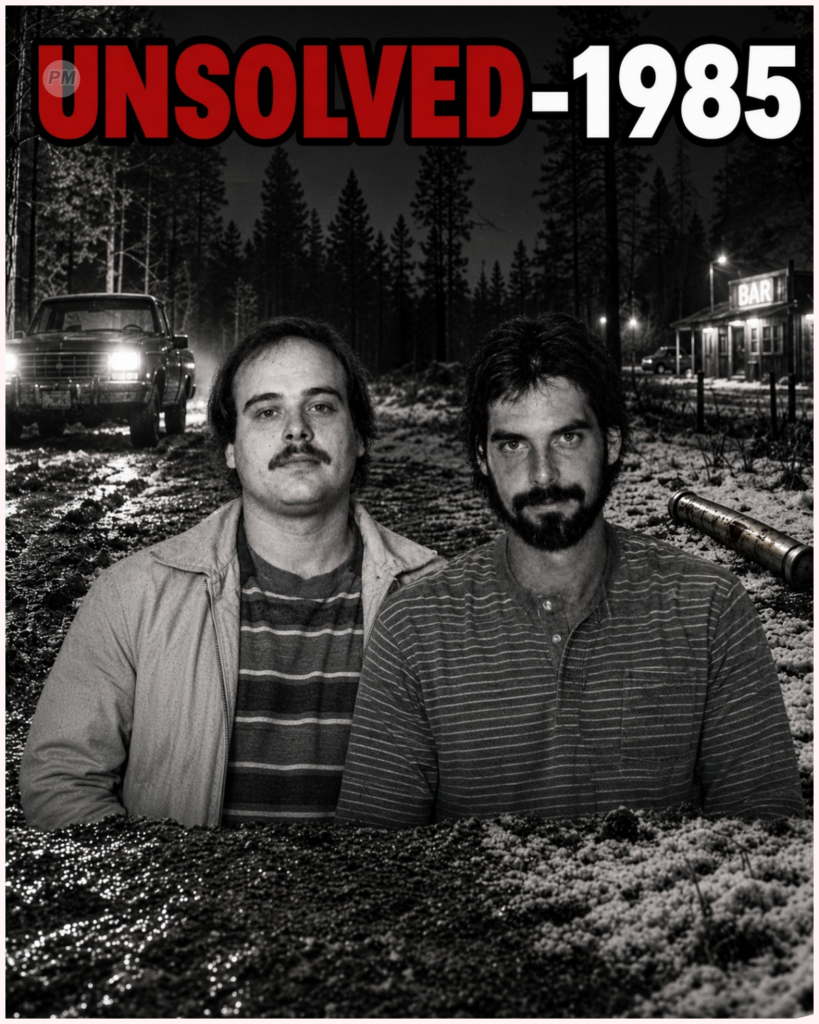
On November 22, 1985, David Tyll drove his black F…
On November 22, 1985, David Tyll drove his black Ford Bronco to pick up Brian Ognjan at his home in St.
Clair Shores, Michigan. The trunk was packed with hunting rifles for a weekend at the Tyll family cabin in White Cloud.
Tyll, 27, had just gotten married and worked as a mechanic for his father-in-law. Ognjan, also 27, an auto mechanic, was saving money to buy an engagement ring for his girlfriend.
They had been best friends since Boy Scouts, growing up together in Detroit. It was the Friday before Thanksgiving.
Deer season had just opened and 700,000 Michigan hunters were spreading into the woods. Everything was normal.
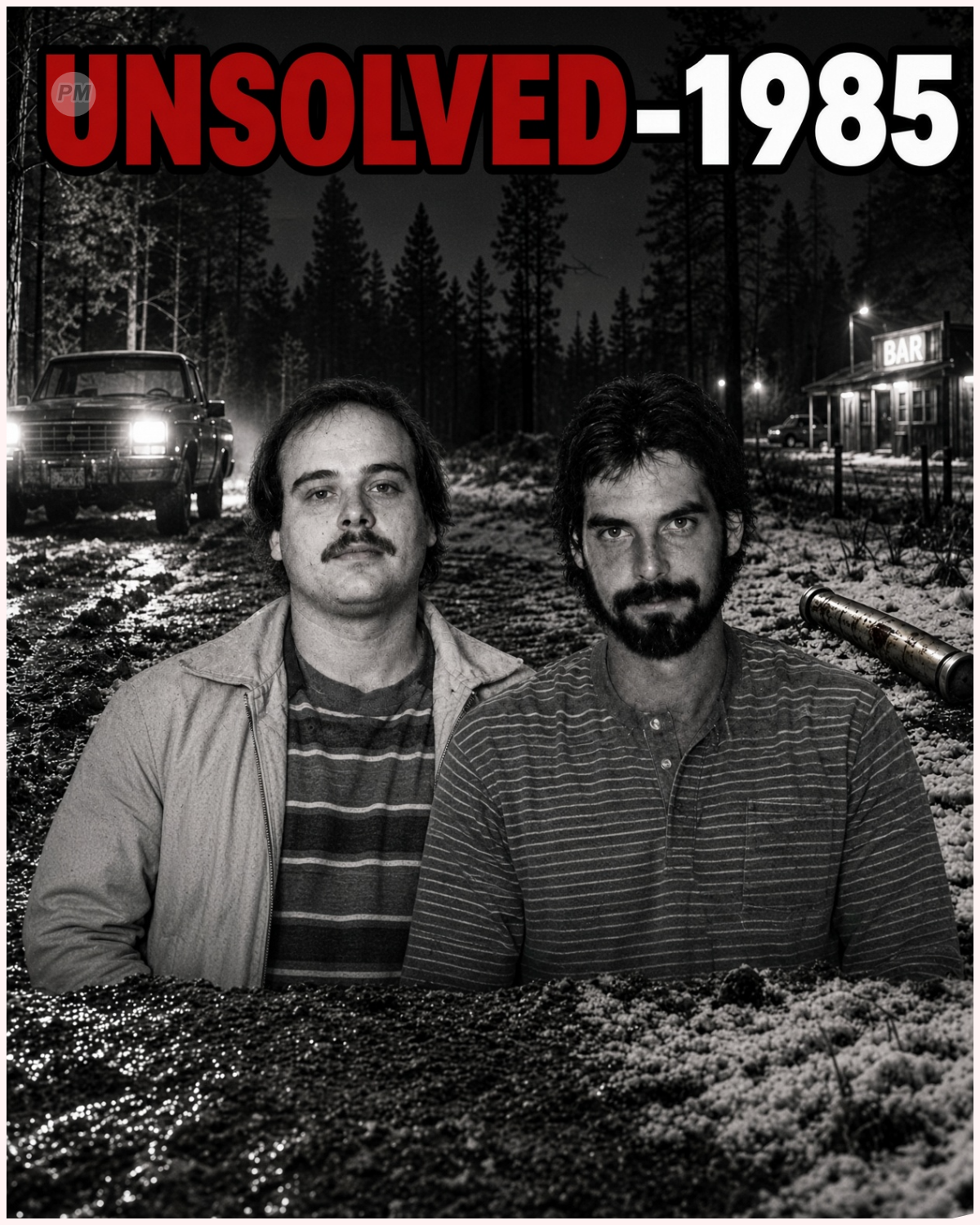
Tyll and Ognjan never reached the cabin. They never bought hunting licenses. They never contacted their families.
The Ford Bronco disappeared. The guns disappeared. The bodies disappeared. No blood, no clothes, nothing.
Police deployed divers, ground-penetrating radar, cadaver dogs, aerial surveys, and mobilized everyone from a 15-person county sheriff’s office to Interpol.
Unsolved Mysteries aired the case on national television. Posters of the two young men were put up all over the state.
Thousands of tips poured in. None of them led anywhere. But this is Mio, Michigan, a small town in the pinewoods where everyone knew what had happened that night and not one person dared to open their mouths because the killers lived right there, in the community, and the whole town was afraid of them.
For 18 years, the two Duval brothers walked free, bragging about the murders, and no one dared to touch them.
[music] It took 18 years, a detective obsessed enough to knock on every door in the dark, a trembling witness afraid of dying who finally admitted she had seen it all with her own eyes, and a female [music] prosecutor willing to take a case with no bodies and no physical evidence before a jury.
[music] This is the story of Michigan’s most horrifying cold case and how it was solved.
If you are the kind of person who wants to know not only what happened, [music] but why an entire town kept a secret for nearly two decades, subscribe to Cold Case Reopened.
[music] We go deep into the cases everyone else has forgotten. To understand why the disappearance of David Tile and Brian Ognjan became an obsession for the entire state of Michigan [music] for nearly two decades, you have to understand who they were.
David Kenneth Tile was born on August 21, 1958, [music] grew up in the Detroit area, stood 6 ft 2 in tall, had brown hair, green eyes, [music] and a beard at the time he disappeared.
He worked as a mechanic for his own father-in-law, went to work as regular as a clock, >> [music] >> and had never missed a day without calling ahead.
He had just gotten married, his life was stable, and he was building a future with his new wife.
Brian George Ognjan was born on January 16, [music] 1958, also from the Detroit area, about 5 ft 9 in tall, weighed 174 lb, and [music] had a mustache.
He worked as an auto mechanic, a hard-working and reliable man, and he was saving every dollar to buy an engagement ring [music] for his girlfriend.
Think about that for a second. A 27-year-old man saving money to get down on one knee and propose to the person he loved.
[music] He was not running away. He was planning the rest of his life. Tile and Ognjan had been best friends since they were kids, meeting through [music] Boy Scouts, growing up together in Detroit, going through their teenage years together, and keeping that friendship into adulthood.
The kind of friendship where you call each other every week, the kind where you stand there fixing each other’s ties at a wedding.
In a photo the families later provided to investigators, Ognjan is adjusting Tile’s tie on Tile’s wedding day, and both of them are smiling.
That is the last photo many people remember of them. The plan for the weekend of November 22, 1985 was simple.
Drive the black 1980 [music] Ford Bronco, Michigan plate 447 HRZ, to the Tile family cabin on Baseline Road in White Cloud, northern Michigan, about 200 mi northwest of Detroit.
Hunt deer, drink beer, do the dumb things men do in the woods. But instead of going straight to White Cloud, they decided to stop and see friends in Mio first, a small town about 185 mi north of Detroit, in the opposite direction from White Cloud.
That decision changed everything. [music] That morning Bryan Ognjan cashed a $50 check in St.
Clair Shores. Tile picked him up and they hit the road. That was the last time either family saw them.
The last time Tile and Ognjan were seen, never confirmed with certainty, was in the Houghton Lake and Mio area that day.
They had reached Mio. They had gone into bars, drunk, [music] played pool, and chatted with the servers, but they never reached White Cloud.
Tile’s father, his brother, [music] and others were waiting at the cabin. Tile and Ognjan never showed up.
>> [music] >> And here is the detail investigators would come back to again and again over the next 18 years.
They never bought hunting licenses. In Michigan, you have to buy a license before you go into the woods.
Tile and Ognjan did not buy one. >> [music] >> That meant they had never really started the hunting trip.
Something had happened before they could reach their destination. When Monday came and neither of them showed up for work, neither called, neither made contact in any way, both families knew immediately that something very serious had happened.
These were not the kind of men who skipped work for no reason. Tile had never missed a day of work without telling his father-in-law.
Ognjan was the same. Get drunk on Saturday night and sleep through Monday, maybe, but no contact for days?
Never. The families called the police and the search began. At first, police thought this might be an ordinary missing person’s case.
Two young men out for a trip, drinking too much, maybe a car accident on a forest road, maybe lost in the woods.


