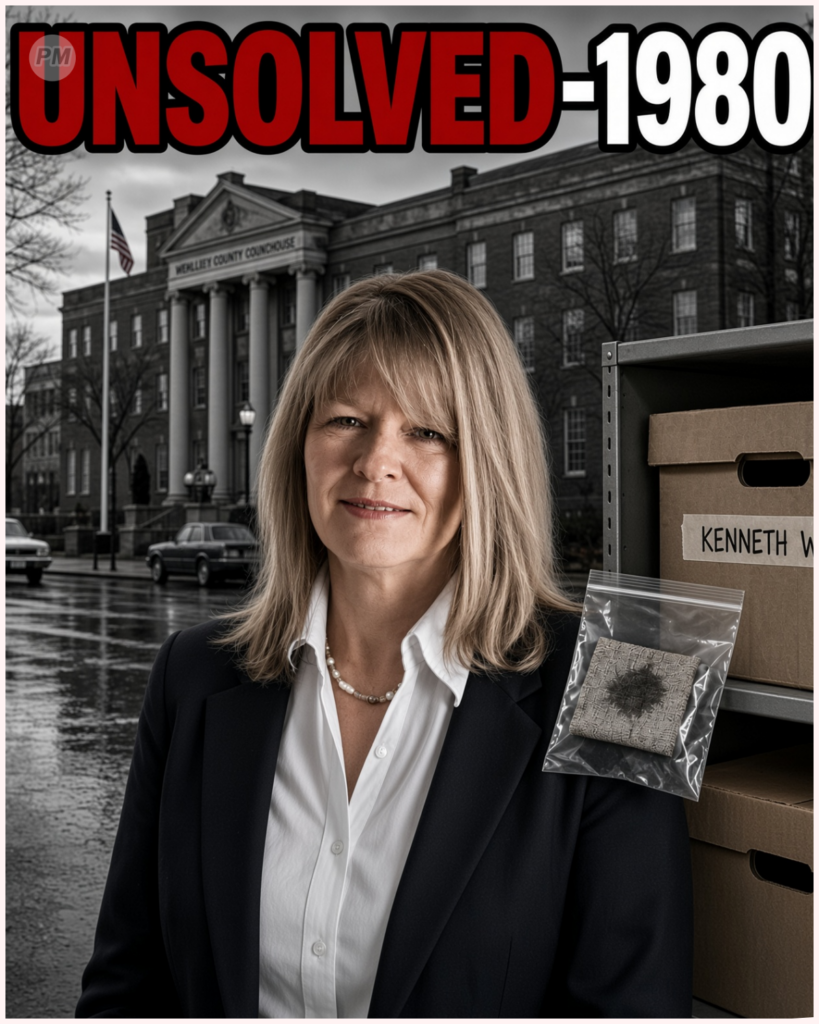
Betty Anne Waters made a promise to her brother in a Massachusetts prison visiting room.
Kenneth had just tried to kill himself. He was serving life without parole for a murder she knew he didn’t commit.
She told him if he promised to stay alive, she would become a lawyer and get him out.
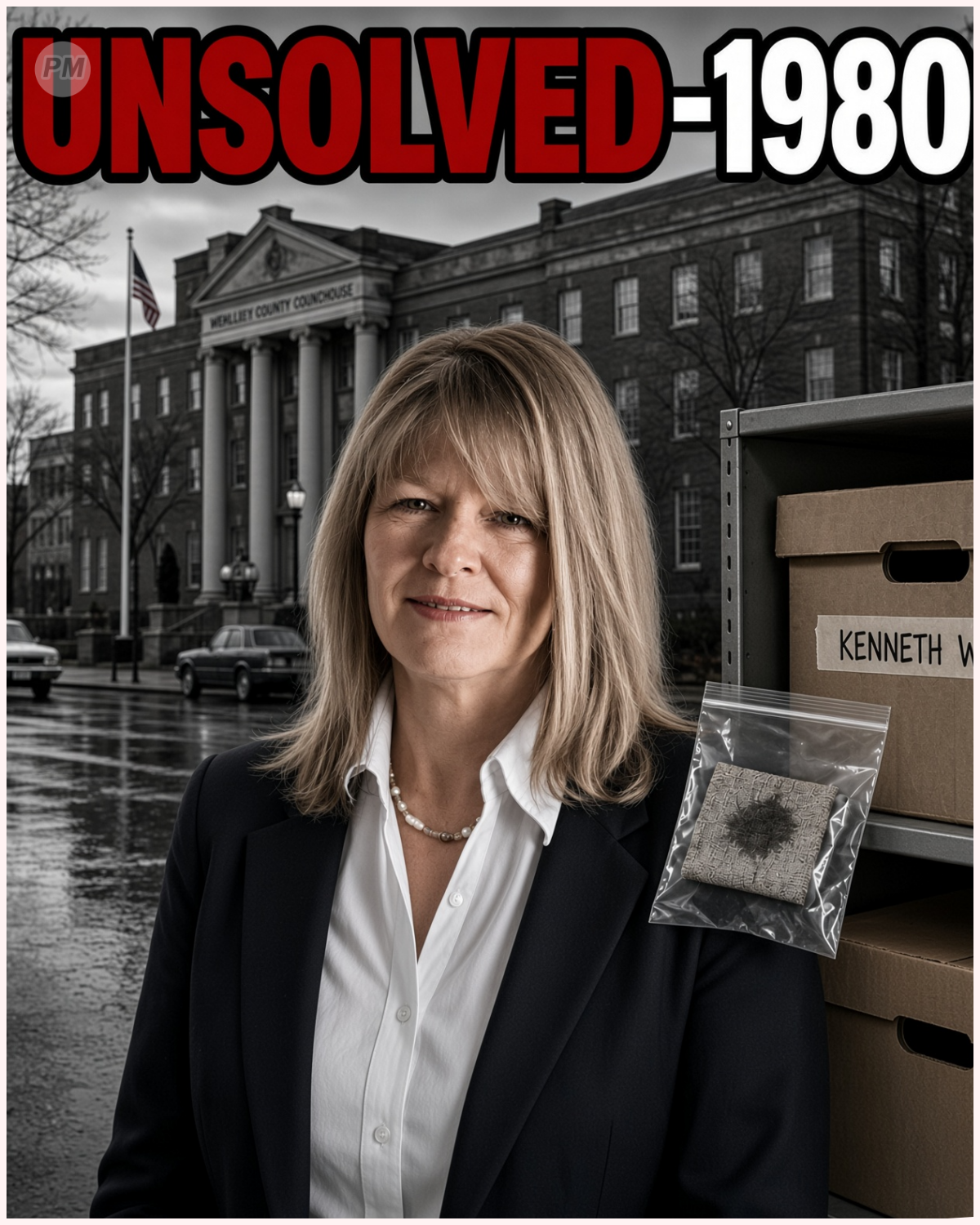
She was a high school dropout. She had two sons. She was waiting tables and tending bar at a pub in Bristol, Rhode Island.
She was nobody’s idea of a future attorney. She got her GED. She enrolled at the Community College of Rhode Island, then Rhode Island College, then Roger Williams University School of Law.
12 years of classes, exams, and student loans she wouldn’t finish paying off until 2008.
She passed the bar in 1998, then spent the next 2 years hunting for evidence everyone else had forgotten existed.
In 1999, she found it. A box in a courthouse basement with her brother’s name on it.
Inside were blood stained curtains and a knife from a crime scene that was 19 years old.
On March 15th, 2001, Kenneth Waters walked out of prison. On September 19th, 2001, he was dead.
And the man who actually killed Katherina Brow, his name wouldn’t be spoken for another 24 years.
This is the story of a 45-year cold case. A wrongful conviction built on threats and lies.
A sister who refused to stop. And a victim who was nearly forgotten by everyone, including the people who turned her murder into a Hollywood movie.
At Cold Case Redemption, we go deep into the cases that everyone thought would stay buried.
The forgotten victims, the relentless people who refuse to let them go. If you’re new here and that sounds like the kind of story you want to hear told, right, stick around.
Before we talk about the wrongful conviction, before we talk about the DNA, before we talk about Hollywood, we need to talk about the woman at the center of all of this.
Because for 45 years, her name has been the one most people skip past on their way to the rest of the story.
Katarina Wrights was born on September 8th, 1931 in Mines, Germany. Her family and friends called her Kay.
She grew up in a country that had been leveled by the Second World War, in a city that had been nearly destroyed by Allied bombing raids.
Like millions of other young Germans in the post-war years, she eventually looked west. She immigrated to the United States, married Charles Brow, and settled in Ayer, Massachusetts.
Ayer is a small town about 40 mi northwest of Boston, the kind of place where people know their neighbors and leave their doors unlocked.
In 1980, it had a population of just over 7,000. Fort Deans, the old army base, was still active and drove much of the local economy.
Kay worked at the Beis Bag Company in the neighboring town of Peril, a manufacturing job in a manufacturing town.
She and Charles lived in a trailer home, and they had two children, Melrose and Charlie.
In 2025, when Middle Sex County District Attorney Marian Ryan finally announced a break in the case, she said something that matters.
She called Kay a hardworking wife, mother, and sister who died violently in her own home.
That description is simple, and it is the thing most retellings of this story have failed to provide, a sense of who Kay actually was before she became a case number.
In 2010, when the film Conviction premiered, Kay’s children spoke out through attorney Gloria Alred.
They said the filmmakers never contacted them, never asked about their mother, never included her story in any meaningful way.
Alred told the press that there was nothing that felt good to Melrose and Charlie about the vicious murder of their mother being turned into someone else’s redemption story.
This video is not going to make that mistake. K Brow is not a plot device.
She is the reason any of this happened. She is the reason we are here.
If you think victims like Kay deserve to have their stories told properly from the beginning, hit the like button.
It helps more people find these cases. On the morning of May 21st, 1980, Charles Brow left for work at 7:10 a.m.
Kay was home alone in their trailer in Ayer, Massachusetts. Sometime between 7:10 and 10:45 that morning, someone entered the home.
There was no forced entry, which meant Kay likely opened the door or the door was already unlocked.
What followed was a sustained and vicious attack. She was stabbed 30 times. Five of those wounds penetrated her heart.
She was also beaten repeatedly with a blunt instrument. The medical examiner would later determine that she remained alive for 10 to 20 minutes after being stabbed and conscious for about half that time.
There were many signs of a struggle throughout the home. The attacker ransacked the place.
Kay’s purse was taken. Her jewelry was gone. An envelope of cash hidden between sheets in the linen closet had been found and stolen.
The kitchen faucet was left running. A bloody pairing knife stamped with the name Murphy Company was found in the kitchen waste basket.
When investigators showed the knife to Charles Brow, he identified it as his own. He worked for Murphy, a major employer in the air area.
Around 10:45 that morning, Kay’s daughter-in-law, Eugenie Brow, arrived at the trailer from Shrewbury. She found Kay’s body fully clothed, lying in a pool of blood in the bedroom.
Investigators collected physical evidence from the scene. There were fingerprints, including a bloody print on a toaster, prints on a faucet, and prints on a beer can.
They recovered hairs, including one clutched in Kay’s fist and another on the knife. They found blood of two types.
Type B matched K. Type O was presumed to belong to her attacker, likely from a wound sustained during the struggle.
The killer had cut himself while killing her, and he had left his blood behind.
Dr. Bertrand Hopkins examined the body at 11:43 a.m. He recorded no rigger mortise and an internal body temperature of 97.8° F.
Normal body temperature is 98.6. 6. That nearn normal reading pointed to a time of death much closer to 10:45 a.m.
Than to 7:00 a.m. That detail would matter enormously later, and the prosecution would work hard to bury it.
Police moved fast that first day. They questioned several people in the neighborhood, including a man named Kenneth Waters.
Kenneth was born around 1953 in Grten, Massachusetts. One of nine children. He grew up in and around Ayer before his family later moved to Rhode Island.
He had come back to Ayer and was working as a cook at the Park Street Diner, a local spot where Kay Brow was a regular customer.
Kenneth lived just behind her trailer with his girlfriend Brenda Marsh, Marsh’s children, and their daughter Mandy.
Kenneth Waters was not a model citizen, and nobody, including his own sister, ever pretended otherwise.
When he was 10 years old, he broke into Kbrow’s house and she reported him.
He was sent to reform school. By his late 20s, he had a conviction in New Hampshire for slashing a man’s throat during a fight.
On the very morning of Kay’s murder, he was due in a district court on a pending charge of assaulting a police officer.
News accounts from the time described him as a brawler and heavy drinker with a lengthy police record.
None of that made him a killer. A record makes someone a person of [music] interest.
It does not make them guilty. And in the rush to close a brutal murder case, that distinction would be the first thing to disappear.
On the afternoon of May 21st, police questioned Kenneth and he gave them a detailed account of his morning.
He had worked a double shift at the Park Street Diner until about 8:30 a.m.
A coworker drove him home. He changed clothes. He appeared in Air District Court at 9:00 a.m.
For his assault case and stayed until about 11:00 a.m. Then he went back to the diner and worked until 12:30 p.m.
Police searched his body. They stripped him down and examined every inch. They found no cuts, no scratches, no blood, nothing.
Keep in mind that Kay’s attacker had been stabbing and fighting for an extended period in a confined space.
The idea that he walked away without a mark defied logic. Then the fingerprints came back.
State police examiner John Balunis compared Kenneth’s prince to the bloody fingerprints recovered from the crime scene.
He excluded Kenneth Waters. He also excluded other suspects and members of the Brow family.
The bloody prints on the toaster belonged to someone else entirely. Kenneth also passed a voice stress test and his alibi at the diner was confirmed independently in May 1980.
So here is where things stood. By the end of that month, Kenneth Waters had been questioned, searched, fingerprinted, tested, and alibi confirmed.
Every piece of physical evidence either excluded him or pointed away from him. There was nothing connecting him to the murder of K.
Brow. The case went cold. Not closed, just shelved, filed away. The bloody fingerprints sat in a file.
The typo blood sample sat in a storage box. The hairs recovered from the knife and from Kay’s fist sat in evidence bags.
All of it waiting. All of it capable of identifying the real killer, if anyone had bothered to keep looking.
For 2 and 1/2 years, nobody touched it. K. Brow’s murder became just another unsolved case in a small town police department.
Her family waited. The real killer walked free. And the man who would eventually be blamed for it all went on with his life.
Working shifts at the diner, getting into fights, having no idea that a phone call from a man looking for cash would send him to prison for the next two decades.
In 3 years, everything would change. And it would start with a phone call from the wrong person to the wrong desk, answered by the wrong woman.
On September 30th, 1982, a man named Robert Osborne picked up the phone and called the Ayer Police Department.
Osborne was now living with Brenda Marsh, Kenneth’s ex-girlfriend. He told police that Marsh had said Kenneth confessed to the murder.
Osborne wanted money for this information. He was, to put it plainly, a man selling a secondhand story from an ex-girlfriend in exchange for cash.
The call landed on the desk of Nancy Taylor. Nancy Taylor was the police chief’s secretary and dispatcher.
She answered phones. She filed paperwork. She had never attended a police academy. She had no formal training in criminal investigation, in evidence handling, in witness interviews, or in constitutional law.
She had no business running a homicide case. And yet, from this point forward, she became the lead investigator on the Katherina Brow murder case.
Not because she was qualified, because she was willing. On October 4th, 1982, Taylor sat down with Brenda Marsh.
What happened in that room would become the foundation of the entire prosecution. According to Marsha’s own account, given under oath years later when she recanted, Taylor told her she would be charged as an accessory to murder if she didn’t cooperate.
Taylor threatened to have her children taken away. Taylor told her she could go to prison for 10 years.
Marsh was a single mother. She had children depending on her. The threat of prison and losing her kids was not abstract.
It was the worst thing that could happen to her. And the person making the threat was someone with a badge and a desk inside a police station.
Under that pressure, Marsh told Taylor what Taylor wanted to hear. She said Kenneth had mentioned before the murder that a German woman had a lot of money in her trailer and he would like to get it.
She said he came home the morning of the murder with a scratch on his face and told her to tell police he wasn’t there.
She said that during an argument weeks later, she asked him if he had killed that woman and he answered, “Yeah, what’s it to you?”
On October 12th, Taylor swore out a criminal complaint. On October 13th, Kenneth Waters was arrested in Providence, Rhode Island.
In November of 1982, he was indicted on firstdegree murder and armed robbery. Taylor then did something that would remain hidden for nearly two decades.
She went before the grand jury and testified that the state police fingerprints from the crime scene were smeared and that none could be matched to anyone.
That was a lie. Examiner John Belalunis had run those prints and explicitly excluded Kenneth Waters.
Taylor knew this. She buried it. Because of her testimony, neither the prosecutor, assistant district attorney Elizabeth Fehee, nor Kenneth’s defense attorneys ever learned that the fingerprints cleared him.
Taylor then went to another of Kenneth’s ex-girlfriends, Rosanna Perry, who lived in Providence. Perry would later tell investigators that Taylor had threatened her too with perjury charges and accessory charges until she agreed to say Kenneth had confessed to her as well while drinking.
Take a step back and look at what happened here. A non-trained investigator working from a paid tip provided by a man who wanted money used threats of imprisonment and child removal to manufacture confessions from two frightened women, then lied under oath to hide the fingerprint evidence that cleared the suspect.
That is not an investigation. That is a construction project. Nancy Taylor built a case from nothing and buried everything that contradicted it.
We’re deep into this case now, and the worst part of the story hasn’t even happened yet.
If you want to make sure you see how this unfolds, subscribe and turn on notifications.
We cover cases like this every week. The trial of Kenneth Waters opened in Middle Sex Superior Court in May of 1983.
On one side was ADA Elizabeth Fehee who did not know about the hidden fingerprint evidence.
On the other was Kenneth’s defense team who didn’t know either. Nancy Taylor had made sure of that.
The prosecution’s case rested on testimony and circumstantial evidence. And it is worth going through each piece to understand how thin it actually was.
Brenda Marsh took the stand. She told the jury that about a week before the murder, Kenneth mentioned a German woman who had a lot of money in her trailer and said he would like to get it.
She said the morning of May 21st, he came home with a scratch on his face and told her to say he wasn’t there if police asked.
She said that during a later argument in Providence, she asked if he killed that woman back there and he said, “Yeah, what’s it to you?”
Rosanna Perry also testified. She told the jury that in the summer of 1980, after drinking, Kenneth said he’d been picked up for questioning about a murder, but they couldn’t pin it on him.
She said that in late winter of 1982, again after drinking, he told her he had stabbed the old German [ __ ] and taken her money and jewelry.
There was Ai Ogden, a regular at the diner and a friend of K’s. She said Kenneth had once made a comment about killing, saying, “Dog or no dog, when he wants to kill, he will kill.”
She also said that five or 6 weeks after the murder, Kenneth sold her a ring for $5, and she believed it was a ring she had previously given to Kay as a gift.
Here is the part the jury never heard. Nancy Taylor had actually examined that ring during the investigation, concluded it was not K Brow’s ring and returned it.
Taylor’s own report cleared the ring, but that report was never shared with the defense or the jury.
The blood evidence sounded damning in the courtroom, but meant almost nothing. Kenneth Waters had typeo blood, which matched the typo stain found at the crime scene.
The prosecution presented this as significant. [music] The reality, approximately 48% of the general population has typo blood.
Kbrow’s own husband and son were also typo. The blood typing connected Kenneth to nearly half the country.
The knife presented another problem. Workers from Global Van Lines, Kenneth’s former employer, testified that a similar knife had gone missing from their workplace.
The implication was that Kenneth had brought it to the crime, but police already knew that Charles Brow had identified the knife as his own.
He worked for Murphy Company, whose name was stamped on the blade. The prosecution let the jury believe the knife was Kenneth’s.
The most damaging manipulation involved the time of death. When Dr. Hopkins examined Kay’s body at 11:43 a.m.
On May 21st. He found no rigger mortise and a near normal body temperature of 97.8°.
That pointed to a time of death close to 10:45 a.m. During that window, Kenneth was documented to be in Ayer District Court.
Prosecutor Fehee misstated the findings. She told the court that Dr. Hopkins had found rigger mortise.
He had not. That misstatement allowed the medical examiner, Dr. Katzus, to estimate the time of death earlier, around 7:00 a.m., a window where gaps in Kenneth’s time card left his whereabouts less certain.
The manipulation was subtle enough to slip past the defense and devastating enough to close the alibi.
Kenneth Waters did not take the stand. Given his prior record and his temper, his attorneys likely decided the risk was too great.
His co-workers testified to support his alibi, confirming he had been at the Park Street Diner that morning, but his time card was missing.
Without the physical card, and with the manipulated time of death placing the murder in a window where Kenneth’s whereabouts were less certain, the jury had enough doubt about his mourning to convict.
Think about what this jury was working with. They had two women saying he confessed.
They had blood type evidence that sounded like a match. They had a knife that seemed connected.
They had a time of death that seemed to fit. Every single one of those pieces was either manufactured, misleading, or wrong.
But the jury did not know that. They could not know that because the one person who had the truth, Nancy Taylor, had buried it.
On May 11th, 1983, a Middle Sex County jury found Kenneth Waters guilty of first-degree murder on two theories: extreme atrocity or cruelty and felony murder.
He was also convicted of armed robbery. The sentence was automatic, life in prison without the possibility of parole.
Kenneth filed an appeal. In 1985, his motion for a new trial was denied. In April of 1987, the Massachusetts Supreme Judicial Court affirmed his conviction.
In May of 1990, a federal court dismissed his habius corpus petition. Every legal door slammed shut one after another, and Kenneth Waters, a man cleared by fingerprints on day one, began counting his days behind bars.
There are two stories running in parallel for the next 18 years. One is unbearable.
The other is almost impossible to believe. Inside a Massachusetts state prison, Kenneth Waters was unraveling.
Federal Judge George Oul, who would later preside over the damages case, compiled a detailed record of what those years did to him.
Kenneth tried to kill himself multiple times. He cut himself. He suffered panic attacks. He contracted hepatitis C behind bars.
A therapist’s note from his prison file reads, “It is difficult to help this man as all he wants to do is prove his innocence to me.”
After his federal habius petition was denied in 1990, a prison record noted that he feels he should try to kill self.
His fellow inmates gave him a nickname. They called him Muddy Waters. He would spend 6,729 days in prison.
That is 18 years, 5 months, and two days from the October 1982 arrest to the March 2001 release.
To put that in perspective, a child born the year Kenneth was arrested would have graduated high school and started college before he walked out.
The Berlin Wall went up and came down. The internet was invented. The entire world changed around him while he sat in a cell for something he did not do.
And then there was Betty Anne. Betty Anne Waters was Kenneth’s younger sister about a year behind him.
She had left high school a year before graduating. She was married. She had two sons.
She was working as a waitress and bartender at Aiden’s Pub in Bristol, Rhode Island.
She was not a lawyer. She was not a detective. She was nobody with any power to change anything.
But she knew her brother and she did not believe he was a killer. After Kenneth’s suicide attempt in prison, she went to visit him.
She told him that if he promised to stay alive, she would find a way to get him out.
She would become his lawyer. She would do whatever it took. To understand what whatever it took actually meant, you have to trace what she did next.
Year by year, she got her GED. In 1986, she enrolled at the Community College of Rhode Island.
By 1989, she had her associate degree. She transferred to Rhode Island College and earned her bachelor’s degree.
Some sources also credit her with a master’s in education during this period. Then she applied to Roger Williams University School of Law in Bristol, the same town where she pulled pints at Aiden’s Pub.
She graduated with her jurist doctor in 1998, and passed the Rhode Island Bar that same year.
That is 12 years from the day she went back to school to the day she became a licensed attorney.
12 years of sitting in classrooms with students half her age. 12 years of studying case law after her bar shifts ended at midnight.
12 years of driving to the prison on weekends to tell Kenneth to hang on, that she was getting closer.
12 years of people telling her it was impossible, that she was wasting her time, that even if she graduated, she would never find the evidence she needed.
She did all of it anyway. She did it while raising two sons, paying rent, keeping the lights on, and visiting her brother in a place no innocent person should ever have to be.
While studying, she also worked as a parallegal for Kenneth’s attorneys, learning the mechanics of the legal system from the inside.
During law school, she learned about the Innocence Project, the legal nonprofit co-founded by Barry Sheek and Peter Newfeld in 1992 that uses DNA evidence to overturn wrongful convictions.
She began writing to them. By 1998, Betty Anne Waters had the one thing she needed, a license to practice law.
Kenneth Waters was her first client. He would be, for all practical purposes, her only one.
In 1999, she turned her attention to a question that no one else had asked in nearly 20 years.
Was there any physical evidence from the 1980 crime scene that could still be tested?
Betty Anne started making calls to the Middle Sex County courthouse where Kenneth had been tried.
She needed to know if any biological evidence from the case still existed. She was looking for the blood.
The type O stain that prosecutors had used against Kenneth at trial, the one that matched 48% of the population, might now be testable with a technology that did not exist in 1983.
DNA analysis could either confirm or eliminate Kenneth as the source. The problem was that nobody could find the evidence.
It had been nearly two decades since the trial. Records were scattered. Files were archived.
Nobody at the courthouse seemed to know where the physical evidence had ended up. BettyAnne did not stop asking.
She called, she visited, she pressed. She kept going back to the same clerks and asking the same questions.
She later told ABC Radio National what finally happened. The clerk got so sick of listening to us that she finally did look in the basement and found a box.
When she told me she found a box, I drove 75 miles in record time.
The box had Kenneth’s name on it. Inside were pieces of bloodstained cloth, curtains from the crime scene, and the knife.
19 years old, sitting in a courthouse basement, forgotten by everyone except a woman who had spent 12 years getting a law degree for the sole purpose of finding it.
Betty Anne immediately filed a motion to preserve the evidence and won a court order protecting it for DNA testing.
She was now working alongside Barry Sheek and the Innocence Project, which formally joined the case around 2000.
In November of 1999, Sheek asked the Middle Sex DA’s office to agree to DNA testing of the blood samples.
A private laboratory ran the tests. In 1983, when Kenneth was convicted, DNA testing for criminal cases did not exist.
The technology that would eventually free him was still years away from being used in an American courtroom.
By 2000, it had become the gold standard for identifying or excluding suspects. And the blood from Kbrow’s crime scene, preserved for two decades in a cardboard box that a courthouse clerk had nearly thrown away, was about to answer the question that should have been answered in 1980.
The results were unambiguous. The typo blood from the crime scene did not belong to Kenneth Waters.
It also did not belong to Charles Brow, Kay’s husband. The blood belonged to someone else entirely.
Someone who had never been investigated, someone who had been walking free for 20 years while an innocent man rotted in a cell.
On March 13th, 2001, the Massachusetts State Police Crime Lab verified the private lab’s findings.
2 days later on March 15th, 2001, a Middle Sex Superior Court judge in Cambridge granted BettyAnne’s motion for a new trial and ordered Kenneth’s release.
Prosecutors from the Middle Sex DA’s office agreed that vacating the conviction would be in the interests of justice.
They did not oppose his release. Kenneth Waters walked out of the courthouse and hugged family members, some of whom he had never met during his 18 and 1/2 years behind bars.
He told reporters, “It’s great to be free.” Betty Anne, standing beside him, said, “I don’t think I’ve had a better day.”
Their mother, Elizabeth O’Conor, walked out with them. He was the third person in Massachusetts to be exonerated through DNA evidence in just 12 months.
The reinvestigation that followed exposed the full scope of what had gone wrong. Ayer police files provided to the defense had been incomplete.
Work schedule records confirming Kenneth’s alibi at the diner were found to exist. Extensive fingerprint documentation, including the exclusion of Kenneth, was discovered in a storage locker belonging to retired examiner John Balunis.
The evidence had been there all along. Nancy Taylor had simply made sure no one saw it.
Brenda Marsh was subpoenaed before a new grand jury. This time, she told the truth.
I was threatened to have my children taken away from me, put in prison for 10 years for accessory to a murder, she said.
Asked who threatened her, she answered, Nancy Taylor. Rosanna Perry also recanted publicly, repeating that Taylor had threatened her with perjury and accessory charges until she cooperated.
In June of 2001, the charges against Kenneth Waters were formally dropped. The Commonwealth of Massachusetts would not retry him.
The case that Nancy Taylor had constructed from threats, lies, and hidden evidence collapsed completely when held up against a single DNA test.
Kenneth Waters had waited 6,729 days for his freedom. He would have 187 more. He spent those 6 months the way a person would who had just been given the world back.
He lived with his siblings in Rhode Island. He reconnected with his daughter Mandy, who had grown up while he was inside.
He went fishing. He took long walks. He sat in restaurants and ordered whatever he wanted.
He stood outside at night and looked at the sky without a fence around it.
He experienced the small, ordinary things that most people never notice because they have always had them.
The feel of grass, the sound of birds without an echo off concrete walls, the ability to open a door and walk through it.
Betty Anne would later say that the world was new to him. After so many years behind bars, everything looked different.
He was free, but he was also a man in his late 40s who had spent his entire adult life in a cage.
The world had changed while he was gone. He had missed everything and he was trying to learn how to live in a place that no longer resembled the one he had left in 1982.
On September 6th, 2001, Kenneth was walking through the Silver Lake neighborhood in Providence, Rhode Island.
He was taking a shortcut to his brother’s house, heading back from a nearby variety store.
He tried to climb over a cement wall topped by a wooden fence about 15 ft high.
The wooden section of the fence snapped under his weight. He fell backward, head first.
The fall fractured his skull. He was found unconscious and bleeding on the pavement below and was rushed to Rhode Island Hospital in Providence.
For a few days, there was hope. He seemed to stabilize. He was moved out of intensive care.
His family allowed themselves to believe he would pull through. Then, around September 13th, his condition turned sharply.
The swelling in his brain [music] worsened. There was nothing the doctors could do. On September 19th, 2001, Kenneth Waters died at Rhode Island Hospital.
He was 6 months and 4 days removed from the courtroom where he had walked out a free man.
He was buried with military honors at the Rhode Island Veterans Memorial Cemetery in Exit, Rhode Island.
Betty Anne Waters has spoken about those 6 months many times over the years. Kenny had the best 6 months of his life, she said.
And in 2025, when the real killer was finally identified, she told NBC 10 Boston, “My brother at least died free and innocent.”
That was a saving grace. Betty Anne did not stop after Kenneth’s death. She filed a civil lawsuit in 2004 as the administr of his estate.
The defendants were the town of heir, former police chief Philip Connors, and Nancy Taylor Harris, as she was now known.
The defendants did not contest liability. They did not argue that Kenneth was guilty. They did not defend what Nancy Taylor had done.
In July of 2009, five of the town’s six insurers settled for $3.4 million, though the settlement came without an admission of liability or fault.
In September of 2009, federal judge George Oul assessed $10.7 million in damages against the sixth insurer.
The breakdown tells you everything about what those 18 years cost. $1,000 for each of the 6,729 days Kenneth spent in prison.
$1 million for the physical illness he suffered, including the hepatitis C he contracted behind bars.
$3 million for mental anguish, covering the suicide attempts, the self-mutilation, the panic attacks, and the slow psychological destruction of an innocent man who spent two decades screaming the truth into a system that refused to listen.
Nancy Taylor was never criminally charged for any of it. The statute of limitations had run out.
She faced no prison time, no perjury charge, no obstruction charge. Betty Anne said later, “I cannot forgive her.”
She also said, “I didn’t do it for the money. I did it to prove what Nancy Taylor did.”
In 2010, the story became a film. Conviction was directed by Tony Goldwin and released by Fox Searchlight on October 15th, 2010.
Hillary Swank played Betty Anne. Sam Rockwell played Kenneth. Melissa Leo played Nancy Taylor. Peter Gallagher played Barry Sheek.
Juliet Lewis played Rosanna Perry. Swank was also an executive producer. Betty Anne’s verdict on the film was generous.
She told the rap, “Not every scene happened, but every emotion happened, but she also said Nancy Taylor is too nice in this movie.”
Because the evidence that Taylor had hidden the fingerprint exclusion surfaced after the script was already written.
The film took liberties. It showed Kenneth being freed in June of 2001. His actual release was March 15th.
More significantly, the movie omitted Kenneth’s death entirely. Audiences walked out of the theater believing the story ended with a joyful reunion.
It did not. And then there was the Brow family. On October 14th, 2010, the day before the film’s wide release, Kay’s children, Melrose and Charlie Brow, spoke publicly through their attorney, Gloria Allred.
They said Hillary Swank and the producers had never contacted them, never asked about their mother, never offered so much as a conversation.
Allred told the press that the film erased their mother from her own murder case.
The producers responded that Swank had joined the project after the script was written and the film was green lit.
Rolling Stones review noted that the film sweetens the true story it’s based on. A London Film Festival critic observed that Kenneth was written as a little too much the lovable happygolucky everyman conspicuously shaped to earn audience sympathy with none of the rough edges that made him a real person.
For 24 years after Kenneth’s exoneration, one question remained unanswered. Whose blood was on that curtain?
Whose DNA had cleared an innocent man? The profile sat in a database waiting for a match that never came.
In March of 2022, the Middle Sex County District Attorney’s cold case unit decided to try something that had not been possible even 5 years earlier.
They turned to forensic investigative [music] genetic genealogy. This is the same technology that had been catching cold case killers across the country ever since the arrest of the Golden State Killer in 2018.
The principle is straightforward, but the execution is painstaking. You take a DNA profile from a crime scene, upload it to a genealogical database, and search for partial matches among distant relatives.
From there, you build family trees backward and forward, generation by generation, until you narrow down to a single individual.
It does not require the suspect to have ever submitted their own DNA. It only requires that somewhere, sometime a relative did.
They sent the DNA profile to Parabon Nanolabs, a Virginia based forensic company that specializes in genetic genealogy.
Parabon’s analysts began working backward through family trees, tracing the DNA through generations of relatives until they narrowed the source to two brothers.
Both men were dead, but genetic genealogy does not require the suspect to be alive.
It requires living relatives willing to provide samples for comparison. Two relatives of the brothers agreed to give their DNA.
The samples were sent to Bode Laboratories for analysis. Bode concluded, in their words, to an overwhelming statistical likelihood that the blood at the Katherina Brow crime scene belonged to one of the two brothers, Joseph Leo Budro.
On June 12th, 2025, Middle Sex District Attorney Marian Ryan and air police chief Brian Gil stood before cameras and announced what 45 years of investigation had finally produced.
Joseph Leo Budro, formerly of Agunquit, Maine, had been identified through DNA evidence as responsible for the unsolved 1980 murder of Katherina Wright’s Brow.
Budro was born in 1943 in NICT, Massachusetts, about 30 mi from heir. He worked in the Framingham area.
In 1975, he was convicted of armed robbery in New Hampshire, which means he was already a violent criminal 5 years before he killed K.
Brow. At the time of her murder, he was 37 years old and living in Massachusetts.
Close enough to heir to have been there that morning. In 1987, 7 years after the murder and 4 years after an innocent man was convicted for it, he moved to a Gunquit, Maine.
He lived there quietly for 17 more years. He died in 2004 at the age of 61.
Investigators found no link between Joseph Budro and Kenneth Waters. None. The man who served 18 12 years for the crime and the man who actually committed it had no connection to each other.
Kenneth Waters went to prison for a murder committed by a complete stranger. A man with a violent criminal history of his own, living in the same state at the same time who left his blood at the scene and walked away.
While Nancy Taylor was threatening witnesses and hiding fingerprint evidence to build a case against the wrong man, Joseph Budro was living his life.
He moved to Maine. He grew old. He died in his bed. He was never questioned.
He was never a suspect. He was never held accountable for a single day of what he did to K.
Brow or what his crime cost Kenneth Waters. Because Budro died in 2004, he can never be arrested, charged, or tried.
The announcement was an identification, not a conviction. There will be no courtroom verdict. There will be no prison sentence.
District Attorney Ryan was careful about how she framed the news. Today, what’s important is that we want to keep the focus on Katherina Wright’s Brow, she said.
She had spoken with the Brow family before going public. Chief Gil said he hoped the identification would bring some closure to the Brow family and a measure of justice for Katherina.
Betty Anne Waters was 70 years old when she heard the name of the man who had murdered K.
Brow and destroyed her brother’s life. She told NBC 10 Boston, “For 42 years, I’ve always wondered, of course, who did this?
Who caused such destruction in our family?” After Kenneth died, Betty Anne stepped away from the law.
He had been her first client and her last. She went back to Aiden’s Irish Pub in Bristol, Rhode Island, this time as general manager and co-owner.
Her Rhode Island law license eventually lapsed. She had not become an attorney to build a career.
She had become one to keep a promise. But she never stopped fighting for the cause that her brother’s case represented.
She has worked with the New England Innocence Project on other wrongful conviction cases. She has lobbied for laws requiring the preservation of DNA evidence.
She has spoken out against the death penalty, making the argument that if her brother had been executed instead of imprisoned, no DNA test could have brought him back.
She has pushed for exoneres to receive support services, housing, medical care, counseling, and financial help because the system that takes decades from innocent people offers almost nothing when it gives them back.
She received honorary doctor of laws degrees from Roger Williams University, the same school where she earned her JD, and from Drexel University, where she gave the commencement address at the Earl Mack School of Law in May of 2011.
She has spoken at Lehi University to audiences of more than 400 people. She has appeared at legal forums and wrongful conviction conferences across the country.
In June of 2025, Rhode Island PBS aired a profile of her titled My Brother’s Keeper, telling the full story from her perspective for the first time since the film.
The promise she made in that prison visiting room was simple. Stay alive and I will get you out.
She kept her half. Kenneth kept his long enough to see it through. And K.
Brow. 45 years after she was murdered in her trailer home in Ayer, Massachusetts, the Middle Sex County District Attorney’s Office finally gave her family a name.
Not a conviction, not a trial. Not the kind of justice that a courtroom provides, but a name.
After 45 years, they know who walked into her home on May 21st, 1980 and took her life.
They know it was not Kenneth Waters. And they know it was Joseph Leo Budro.
This is what cold case redemption looks like. It is not neat. It is not clean.
A woman was murdered and her killer was never punished. An innocent man lost 18 years and then his life.
A sister spent 12 years in school to write a wrong that should never have happened in the first place.
And a police secretary who manufactured the entire case was never charged with anything. None of it is fair.
But after 45 years, Katherina Brow has a name for her killer. Her children have an answer they waited most of their lives to hear.
Kenneth Waters, who told anyone who would listen that he was innocent, has been proven right by the only evidence that matters.
And the record finally is straight. If stories like this matter to you, if you believe the forgotten victims and the buried cases deserve to be pulled back into the light, subscribe to Cold Case Redemption.
We do this every week. Long form, fully researched, no shortcuts. Click the video on screen for another case that took decades to crack.
And thank you for watching this one all the way through. Kbrow deserved someone paying attention.
So did Kenneth. So did Betty Anne.


