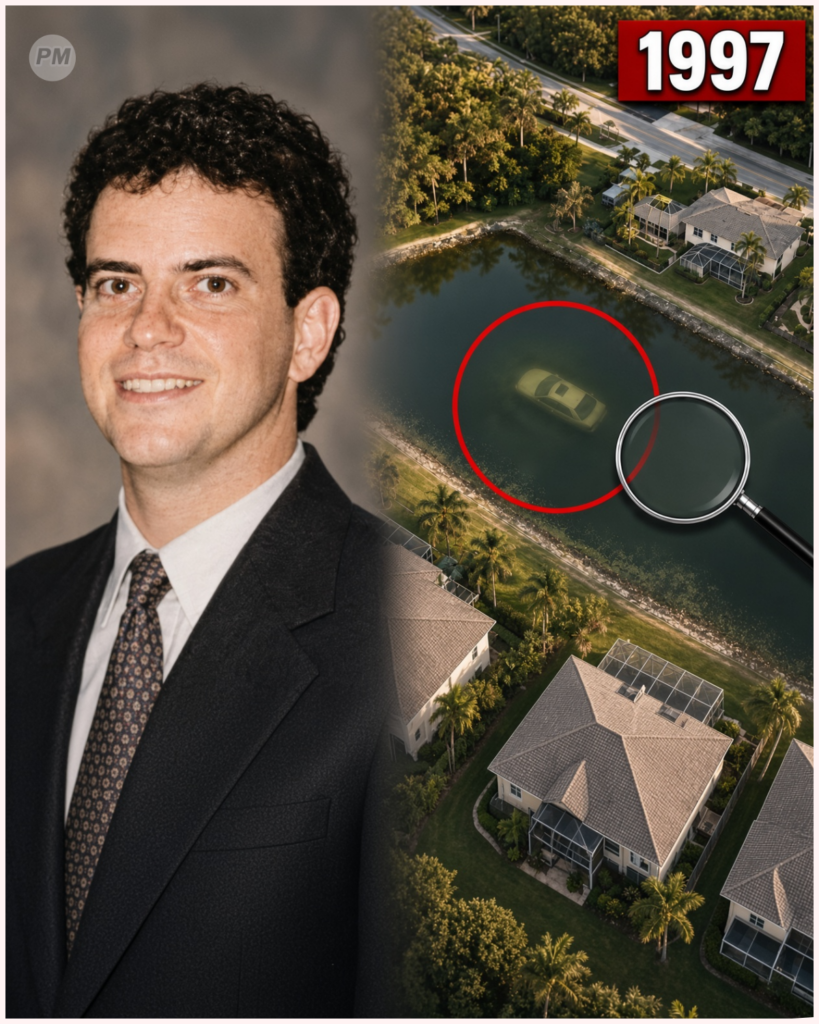
What is known is that he went and he went alone or…
What is known is that he went and he went alone or at least without company that anyone remembered later.
Lantana is a small city sandwiched between Lake Worth and Boon Beach along the coast of Palm Beach County.
In 1997, it was a workingclass community with a commercial strip along its main roads, a cluster of bars and clubs catering to the local population, and the kind [music] of understated nightife that exists in every midsized Florida town.
Nothing about the location itself was unusual or noteworthy. At approximately 9:30 in the evening, Mold called his girlfriend.
The conversation was unremarkable. He told her he was heading home. A sentence that millions of people say every night without thinking [music] about it.
I’m on my way. Be home soon. Don’t wait up. The verbal handshake at the end of an evening out.
The promise of a return that requires no second thought because it’s a promise that always gets kept until it doesn’t.
Witnesses at the nightclub later told investigators that Mold had been drinking during the evening.
He’d consumed several alcoholic beverages over the course of his time there, but the people who interacted with him that night were consistent in their observations.
He did not appear visibly intoxicated. He wasn’t stumbling. He wasn’t slurring his words. He wasn’t behaving erratically or in a way that would have made someone intervene or suggest he shouldn’t drive.
That detail would become important later, not because it absolved anyone or pointed to anything specific, but because it eliminated one obvious line of inquiry.
If he had been visibly drunk, investigators might have focused their search on the roads between the club and his home, looking for accident scenes.
But by all accounts, the man who left that nightclub appeared capable of driving home safely.
He didn’t look like someone who was about to have an accident. At around 11 p.m., approximately 90 minutes after that phone call, William Molt left the nightclub.
He walked to the parking area, got into his white 1994 Saturn SL sedan, and pulled [music] out onto the road.
That was the last verified sighting of William Molt alive. The drive from Lantana toward where Molt lived should not have been a remarkable one.
Even in 1997, Palm Beach County had a well-developed network of roads. [music] The route would have been familiar, but he never arrived.
His girlfriend waited. The clock moved past midnight, then past 1:00 in the morning, [music] then past 2.
The silence of a house where someone should have been home hours ago became something else entirely.
Not annoyance or mild worry, but the beginning of real fear. This was not a man who stayed out late.
This was not someone who changed plans without calling. Something was wrong. By morning, the fear had crystallized into certainty.
[music] She called the people she could think to call. She called hospitals. She called the nightclub.
And then she called the police. On November 8th, 1997, William Earl Molt was officially reported missing.
It is worth stopping for a moment to think about what being reported missing meant.
In 1997, there were no smartphones to track, no GPS data to pull, no cell tower records to subpoena, no dash cam footage from other drivers on the road, no traffic camera network monitoring every intersection.
In 1997, when someone got in their car and drove away, they existed in a gap between departure and arrival.
If they never arrived, the gap swallowed them. And finding them meant searching that gap inch by inch with nothing but witness statements and luck to guide the way.
William Mold’s girlfriend made a phone call at 9:30 p.m. She heard him say he’d be home soon.
And then the line went dead. The car pulled away. And the 1990s did what they always did.
They offered no data, no record, and no trail. Just the memory of a voice and the sound of a Friday night going quiet.
In the decades that followed, as smartphones and GPS tracking and dash cam footage and doorbell cameras became standard features of modern life, cases like this would become harder to imagine.
The data trail that now follows every person from the moment they leave their driveway would make a disappearance like molds far more difficult.
Cell tower pings would narrow the search area. GPS coordinates from the car’s navigation system would show the exact route he took.
A camera at an intersection or a gas station would capture the Saturn passing through.
But none of that infrastructure existed in November of 1997. There were no breadcrumbs. There was only a man in a car, a dark road, and a gap between departure and arrival that would remain open for 22 years.
The Palm Beach County Sheriff’s Office opened a missing person’s investigation promptly. William Mold’s case was logged, assigned a case number, and entered into the systems designed to track the missing across the state [music] and the country.
He was registered with the National Crime Information Center under [music] entry M0741-24414. His information was submitted to the National Missing and Unidentified Persons System known as NAMUS, the federal database that serves as the clearing house for missing persons and unidentified remains across all 50 states.
His physical description was documented. White male, 6 feet tall, approximately 225 lbs, brown eyes.
Last seen wearing whatever he’d worn to the nightclub that night. Last known vehicle, a white 1994 Saturn SL sedan.
