Then he started to talk
Then he started to talk. He said it began in the late 1960s on the coast of Chukotka, not far from the Bering Strait.
A Soviet geological survey party was working its way along the coast, mapping the ground, looking for minerals.
>> [music] >> It was routine work. Then, in one particular stretch of tundra, the instruments started behaving strangely.
The first thing they noticed was the compasses. On a particular patch of ground, about a kilometer across, >> [music] >> the needles began to swing.
Not wildly, but slowly, drifting back and forth as if something under the ground was moving.
Now, magnetic anomalies aren’t that unusual in the far north. There are iron deposits, and the closer you get to the magnetic pole, the stranger compasses get.
So, at first, nobody thought too much of it. But then, there were the watches.
The members of the survey party noticed that whenever they spent a day working on that patch of ground, their watches fell behind.
Not by much, a minute or two a day, but it happened to all of them, every time, and only there.
Mechanical watches from different factories. They’d set them by the radio time signal in the morning, spend the day on that ground, and by evening, every single watch was slow.
And at the very center of that patch of tundra, there was a hollow. The old man described it carefully.
It wasn’t a crater, and it wasn’t a sinkhole. It was a shallow, round depression in the ground, maybe 30 or 40 m across, sloping gently down towards the middle.
At the very center, the ground dropped away into an opening, a sort of dark slot in the earth, wide enough for a person to climb into.
The edges were smooth. The moss and lichen grew right up to to rim and then stopped.
The local Chukchi reindeer herders knew about the place. They always had. They wouldn’t take their herds anywhere near it, and they told the geologist that the reindeer wouldn’t go there anyway.
They called it by a word that, as the old man put it, translates simply as the door.
When the geologist asked them what that meant, a door to what, the herders just shrugged and said it was a bad place, and that people who went in didn’t come out.
The survey party reported what they’d found, and within a few months the area was closed off, and a different kind of team arrived.
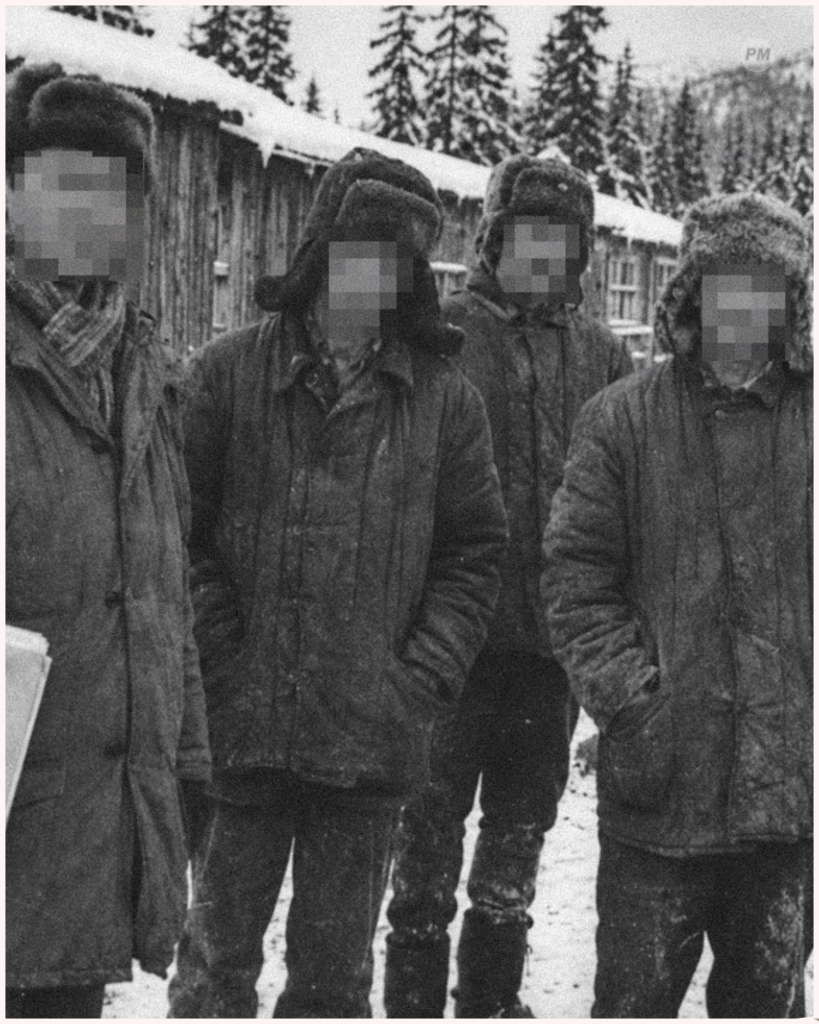
This is where the old man came in. He said he was one of a small closed group of scientists sent to study the site.
They were geophysicists, a couple of physicists, a chemist, and a doctor, and above all of them were people from what he would only call the organization.
He refused to say which one. He refused to say what the project was called.
He said that in all the documents he ever saw, the site was referred to only by a number.
He wouldn’t tell the reporter the number either. They built a small camp of prefabricated huts about half a kilometer from the hollow, ran a cable from a diesel generator, and set up instruments all around the rim.
Then, they started to watch. And what they saw, he said, made no sense. Every so often, sometimes several times a week, sometimes not for a month, air would come out of the opening.
Not a wind, exactly, more of a slow breathing. And the air that came out was different.
The instruments showed it had a different composition from the air around it, different proportions of gases, different humidity, and it was warmer, sometimes much warmer.
He described standing at the rim in the middle of winter at 30 below, and feeling warm damp air flowing up out of that hole.
Air that smelled, he said, like wet grass in summer. And sometimes there were sounds.
They came mostly at night, faint, distant, hard to make out. The scientists set up microphones at the rim and recorded them.
The old man said that the first time you heard it, you’d swear it was voices, far away, as if you were standing at the edge of a field and people were calling to each other on the other side.