He coached a youth fishing program in the summer
He coached a youth fishing program in the summer. He brought donuts to the marina office on Fridays.
If you’d shown his photograph to a hundred people in that county and asked them to guess which of them might be capable of what was in the back of that SUV, every single one would have guessed wrong.
That’s the part of this story that should scare you more than anything else. Not the water, not the bridge, the donuts on Friday.
Parallel editing. While Reyes drives his last routine loop toward the bridge, on the other side of the county, Walter Combs is loading his SUV in a dark boat yard, working with the unhurried efficiency of a man who has done a version of this task more than once before.
He checks the tide charts pinned to his office wall. Real ones, legitimate ones, the same charts he uses every week for legitimate work, and cross-references them against a private notebook that contains nothing legitimate at all.
Low tide, minimal boat traffic, a waning moon giving barely any light. Conditions he has been waiting on for 6 weeks.
He does not know a patrol car works that bridge on a rotating schedule. He does not know which nights or which officer.
He has simply calculated, the way he calculates everything, that at 1:45 a.m. On a Tuesday in March, the odds of encountering anyone at all on that stretch of road are close enough to zero that he’s willing to accept the risk.
The math is sound. The math has worked for him for 9 years. Tonight, the math is wrong by exactly one variable he could never have accounted for.
The specific, private, unspoken reason Officer Daniel Reyes chose to be parked exactly where he was parked that night, watching that exact bridge for the 400th time in 3 years.
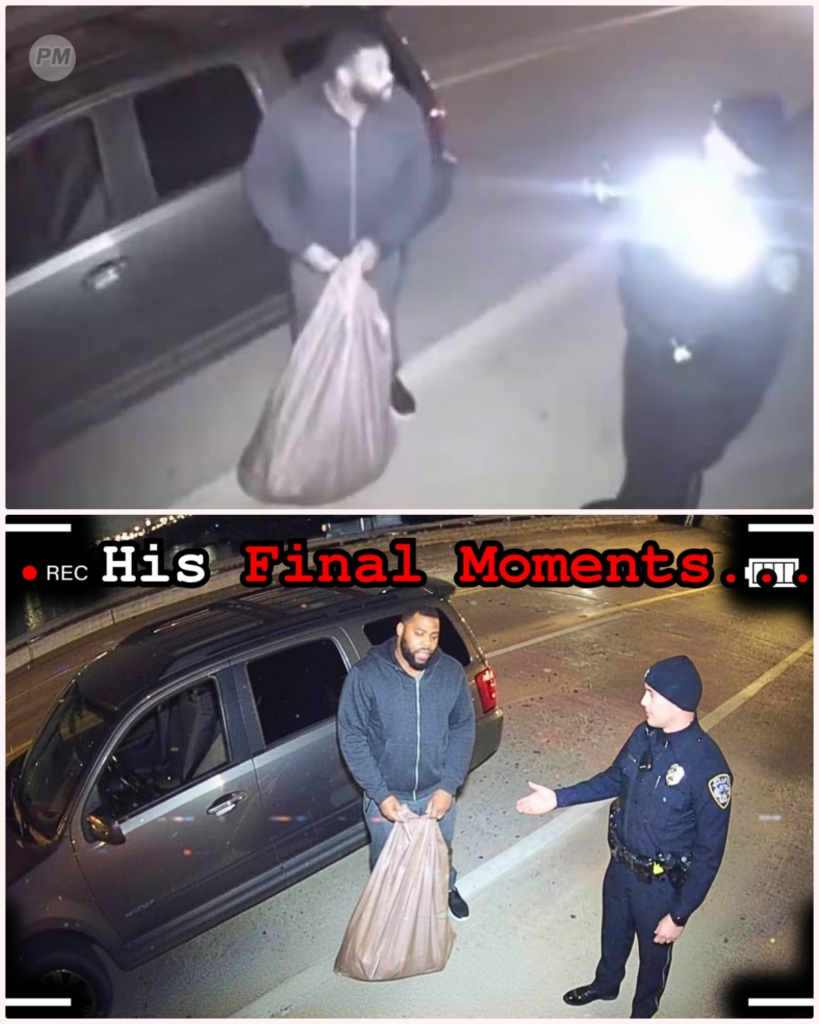
The dash cam and the bridge’s fixed municipal camera, mounted high on the support pylon, the angle wide enough to catch the whole roadway, recorded what happened next in flat, indifferent light.
Reyes activates his lights. The SUV slows, pulls onto the shoulder near the pylon. Standard stop distance.
He calls it in. Plate, location, time. The way he’s called in 4,000 stops before this one.
He steps out, flashlight up. Approach on the driver’s side, hand near his belt, but not on it, because this is nothing.
This is a tail light. Except Combs doesn’t roll the window down right away. He sits there a beat too long.
Long enough that on the footage, you can see Reyes’s posture shift, just slightly. Just enough that anyone who’s worked patrol would recognize it.
Something’s wrong here. The window comes down. Combs is calm, apologetic even. Didn’t realize the light was out, officer.
Thanks for letting me know. He’ll get it fixed first thing tomorrow.” It’s the kind of interaction that ends in 90 seconds every single time all across America a hundred thousand times a year.
Reyes runs the plate from his shoulder radio out of habit more than suspicion. Clean registration, clean insurance.
Combs’ driver’s license comes back exactly as unremarkable as everything else about him. No wants, no warrants, an address 11 miles away that matches a business Reyes has in fact driven past dozens of times without a second thought.
Everything about this stop, on paper, is closed. Warn him about the tail light, send him home, log the stop, drive on.
This is the part of true crime stories that almost never gets said out loud.


