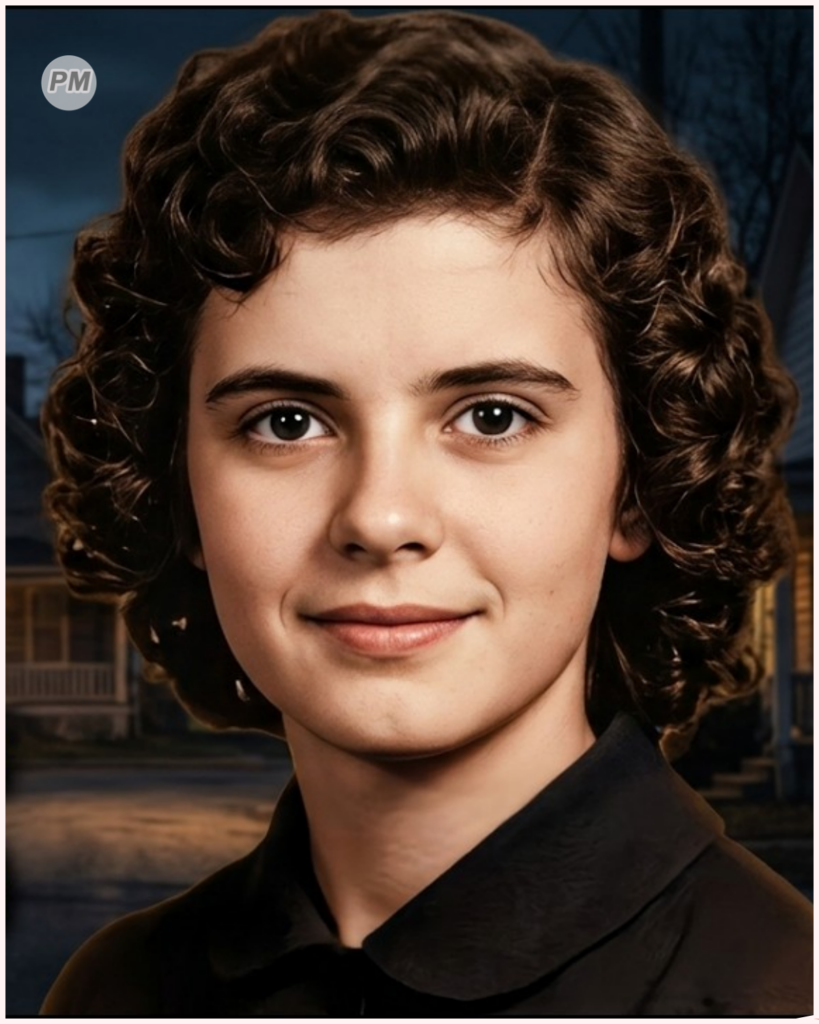
Now consider what the official record looked like
Now consider what the official record looked like. In 2022, a Toronto police detective named Michael Kelly took a hard look at Rosemary’s case.
An original Montreal police report on her disappearance might have helped him. No such report could be located.
Newspaper coverage from 1954 might have helped. None of that could be located either. According to the family’s account, the newspapers never reported that she was missing at all.
Think about that for a second. A 14-year-old girl who spoke neither of the city’s languages vanished on her way to a neighborhood bakery [music] and 68 years later, there was no surviving police report and no newspaper story to show it had ever happened.
Even the most basic fact of the case was lost. The family could not say with certainty what day she disappeared.
One account places it somewhere between the 10th of November and Christmas. The date a child vanished from a Montreal street was never fixed in any record that survives.
In 2022, when the Canadian Broadcasting Corporation asked about the case, a spokesperson for the Montreal police explained that a missing person file stays in pending status for as long as it remains open and that any new information would be investigated.
The file had been open in that sense [music] for 68 years. The city’s police force would not create a dedicated cold case squad until January 2019.
The family searched for 68 years. The record of the city’s search could not be found at all.
The Doterlines had crossed an ocean for a better life. Within 2 months, that life had organized itself around an absence.
[music] On paper, Rosemary’s case went dormant almost as soon as it began. Her parents grew older, still asking the same question every day.
Vera grew up, married, and had a family of her own, still asking it. And by 1957, the girl they were all looking for was not in Montreal at all.
Now, pay attention to this next detail because it explains everything that happened after. Rosemary Doterline was not lying in an unmarked grave.
In June 1957, less than 3 years after she walked out the door on Randall Avenue, she was in Ontario and she was getting married.
She was 16 years old. On her marriage certificate, she did not write the name Rosemary Doterline.
She used an assumed name. She listed a false date of birth. She gave a false family name for her father and a false maiden name for her mother.
Six months after the wedding, she gave birth. According to Detective Constable Kelly, she went on to have five sons.
She later divorced, married again, and eventually moved to British Columbia, where she ran a bed and breakfast.
Her niece, Krista, would later say that the bed and breakfast looked just like the home Rosemary grew up in.
By her family’s account, she made delicious German food. She embroidered, crocheted, and knitted, and later in life, she won an embroidery contest.
One of her grandsons remembered that she loved to collect red purses. What emerged from the investigation, as the Montreal Gazette described it, was only a bare-bones portrait of a woman who had hidden her identity and given false information about where she came from.
The woman her children knew had no past that matched the girl from Randall Avenue.
She never spoke about having lived in Montreal, not once. She gave false information about Germany, including the wrong names for cities and for people.
And according to two of her grandchildren, she never wanted to cross the Canadian border.
When people asked about her history, she gave them answers that were not true. As Detective Constable Kelly put it later, the person who knew best what had happened was Rosemary, and even what she told her own children was not the truth.
In 1963, Vera crossed that border. She moved to California, married, raised a family of her own, and spent the next six decades searching for her sister.
On her travels, she would stop at phone booths and write a message for Rosemary, asking her to call.
Rosemary, by her grandchildren’s account, never wanted to go there at all. How completely had she vanished into her new life?
In 2022, when a lead pointed the family toward the Etobicoke area of Toronto, some residents said they might have known her.
They remembered her as Mary or as Helga. Helga was not an alias. It was her real middle name.
[music] If those neighbors were right, part of her true name had been there the whole time.
During all those same years, on the other side of that border, her sister was still looking.
Vera was 11 when Rosemary disappeared. She has described coming home one day, putting her head in her mother’s lap and crying and crying.
Where’s my sister? I miss my buddy, my pal. That first Christmas at her new school, a boy gave her a snow globe with a tiny figure inside.
Vera has said she used to pretend the little figure was Rosemary, and she would talk to her.
Every time the doorbell rang, she hoped it was her sister. It never was. As a child, she searched the streets every night, peering through shop windows for a girl in a purple jacket and a white-collared shirt.
Decades later, in her 80s, living in Coronado, California, she still finds herself glancing through store windows on her walks.
People sometimes ask her how she can remember so much from when she was 11 years old.
As her daughter tells it, Vera’s answer is simple. How could she ever forget a single detail of how she felt?
In her book, Vera writes about watching her parents become shells of the people they had been as they grieved a child who was neither alive nor dead to them.
Her parents never stopped looking either. Vera has said that Oscar and Hilda died heartbroken.
[music] In her final days, Hilda asked the question that had followed the family for decades.
What did they think had ever happened to Rosemary? Their sister Hilda, at the end of her own life, asked the very [music] same thing.
