One by one, Oscar, Hilda, Hilda, and Gunther died…
One by one, Oscar, Hilda, Hilda, and Gunther died without an answer. And through all of it, Vera kept her sister’s things, the red purse, the prayer book, and her jewelry.
She kept them for nearly 70 years through a move to another country, a marriage, children, and grandchildren.
Her daughter Krista has explained why. Her mother was keeping them in case Rosemary ever knocked on the door so she could hand them back.
Krista grew up inside that waiting. She is a mother of four herself, and she has said she cannot imagine how any parent lives with a missing child day after day without being consumed by guilt and sorrow.
For her grandparents, that was not a thought experiment. It was the rest of their lives.
By 2022, Vera was 79 years old, and she was the only surviving member of the family that had sailed to Montreal in 1954.
She lived in California with Krista and Krista’s family. That spring, the two of them decided to try one more time.
Krista has said she believes you have to start any mission with the mindset that you are going to finish it.
And she says there is no point in waiting for a better moment. The time to start is always now.
In March 2022, mother and daughter began what they saw as a last all-out effort to find out what had happened to Rosemary.
For almost all of the years the daughter lines had searched, the tools that would finally find her did not exist.
By 2022, they did. If Vera’s 68 years of searching moved you, hit the like button.
It tells us stories like this matter, and it tells families like hers that people are still paying attention.
To understand how Rosemary was finally found, you need to understand what a consumer DNA test actually does.
When someone spits into a tube and mails it to a company like Ancestry, the company reads their DNA and compares it against everyone else in its database.
Every person they share DNA with shows up as a match, and the amount of DNA two people share is a clue to how they are related.
Parents and children share a great deal. Siblings share a great deal. Distant cousins share only small fragments.
The bigger the overlap, the closer the relationship is likely to be. On its own, a match is just a name and a number.
The real work comes [music] after. Investigators take a match, estimate how the two people might be related, and then rebuild the family that connects them using ordinary records, such as [music] birth and marriage records, obituaries, social media profiles, and old [music] paper family trees.
That process is called investigative genetic genealogy. What makes it powerful is scale. [music] By the start of 2019, more than 26 million people had sent their DNA to one of the four biggest consumer testing companies.
By 2022, Ancestry alone said its DNA network included more than 22 [music] million people.
Diane Hildebrand, who runs a forensic DNA lab at the British Columbia Institute of Technology, has said that if only around 10% of people put their DNA into these databases, it would be possible to identify every human being on Earth, which means a girl who vanished in 1954 never had to take a test herself.
Someone in her family only had to. But before the DNA, there was noise. In the spring of 2022, Vera and Christa started where the family always had, with paper.
They went through old newspaper clippings and obituaries. They researched what had been happening in Notre Dame de Grace in 1954.
They called families of people who shared Rosemary’s name, hoping for anything at all. They found nothing.
For 6 months, mother and daughter devoted themselves to the search. So they took Rosemary’s story to social media.
Thousands of people messaged them from around the world. Some sent prayers. Some cleaned up old photographs or translated documents.
Some pointed them to genealogy and DNA testing websites. Christa said the kindness of strangers brought her to tears every single day.
Along the way, Vera found a Facebook page called Unidentified Human Remains Canada. It was run by a volunteer named Jan Guppy, working alone from the basement of her home in Laval, just north of Montreal.
Guppy had grown up in the era of missing children on milk cartons, and she had spent years wondering where those kids went.
Her page would grow to more than 40,000 followers, and she says it helps identify about a dozen bodies a year.
Guppy said Rosemary’s case was oldest she had ever taken [music] on. She connected the family with a forensic artist, Samantha Steinberg, who used family photographs to create an image of what Rosemary might look like in her 80s.
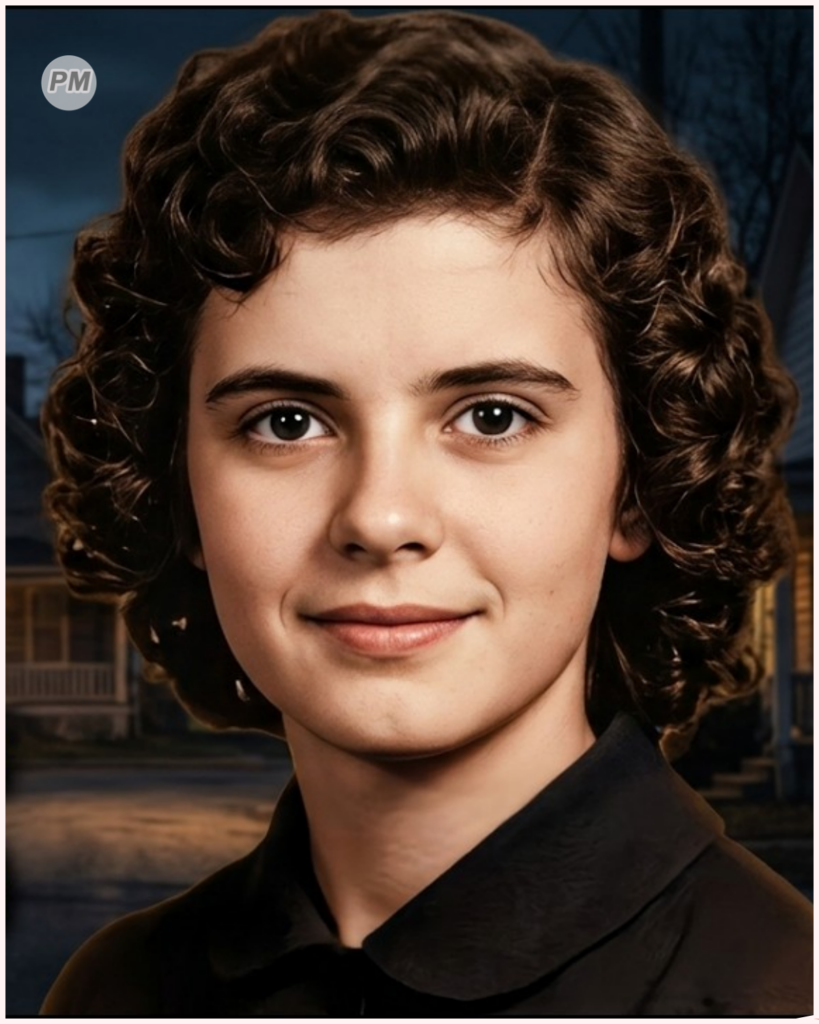
For a case that old, Guppy explained, a childhood photograph is almost useless. [music] Vera understood that better than anyone.
If she passed her sister on the street, she said, she would not know her.
The only face she remembered was the face of a 13-year-old girl. She brought in a volunteer group called the Aware Foundation, which made flyers and posters.
And she talked with Vera and Christa every week, guiding them through the process. Christa would later call her a beacon of hope for the missing.
When the Canadian Broadcasting Corporation profiled Guppy the following year, it credited her with helping solve Rosemary’s case within months.
In June 2022, the story ran on the Canadian Broadcasting Corporation’s news programs in Montreal.
That summer, a lead suggested Rosemary might have lived in the Etobicoke area of Toronto.
A local news site in South Etobicoke ran her photograph, noting that if she were still alive, Rosemary [music] would be 81.
One woman wrote that she had known a woman there with a European accent, spoke with her often, and then suddenly stopped seeing her.
But what solved this case was not a tip. It was DNA. Christa already had a DNA profile on Ancestry, and she added profiles on the other major sites.