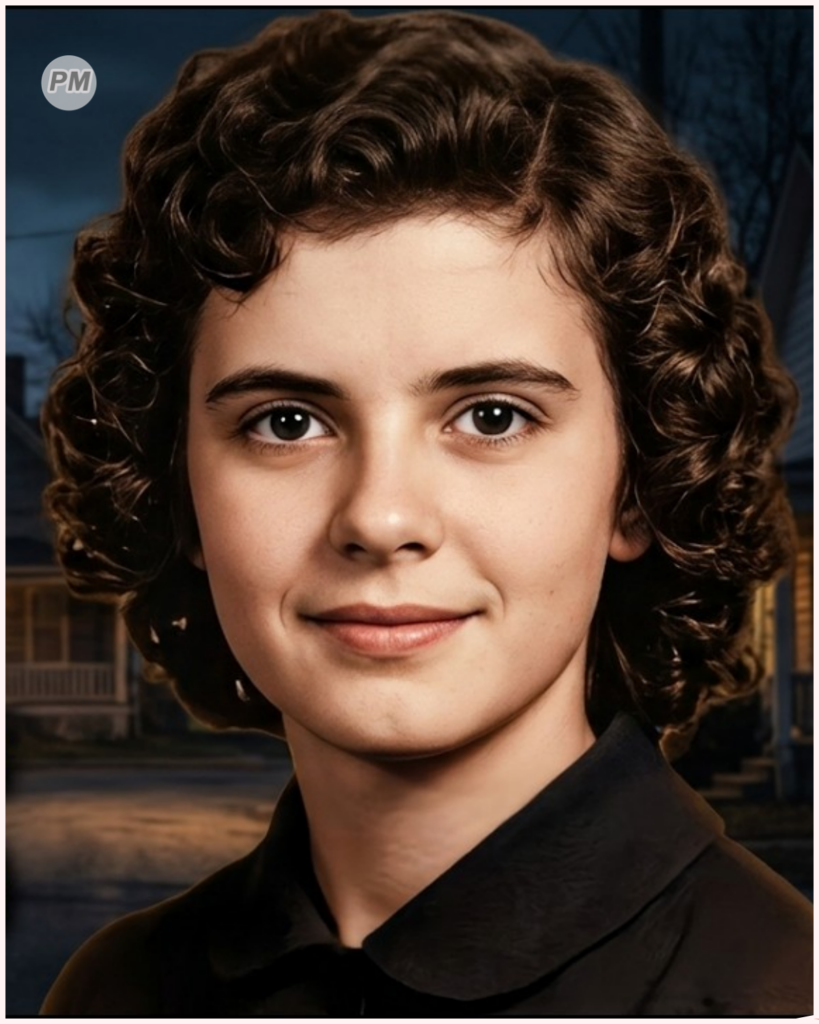
For 68 years, the family had feared the worst
For 68 years, the family had feared the worst. What they found instead was stranger.
They found a full life lived just out of reach. It is worth being precise about what this case is and what it is not.
It is not the story of a girl who was alive the whole time her family searched.
Rosemary was alive for about 55 of those 68 years. For the last 13, her family was searching for a woman who had already died.
It is also a story built on a thin record, one marriage certificate, the memories of her descendants, and the recollections of a sister who was 12 years old when it happened.
What the search did end, Detective Constable Kelly said, with something specific. Psychologists call it ambiguous loss.
The term was coined in the 1970s by the researcher Pauline Boss, [music] who studied the families of pilots missing in action.
It describes a grief that cannot [music] finish because no one knows whether the person is dead or alive.
Boss has called it a [music] frozen grief. She has also said that in the absence of facts, every theory a family holds is valid.
That is exactly how the Doterlines lived for 68 years with black market adoption, trafficking, kidnapping, and murder all possible at once, and none of them ever able to be set down.
Families cannot let go because letting go feels like giving up on someone who might still come home.
For the Doterline family, Kelly said, that had finally been put to rest, but the answer arrived late, and that has its own weight.
Christa says the thing that bothers her mother most is that almost no one is left for whom it truly matters.
The people who lived through it, Rosemary’s brother, her sister, her parents, are all gone.
Vera is the last one who remembers the afternoon her sister walked out the door.
The search left other marks, too. Through DNA testing, Vera discovered blood relatives she never knew she had, including cousins in Germany.
They now talk every week on Fridays. Christa says she and her mother went public to encourage more people to take consumer DNA tests and upload their results because the ability to find a missing relative across continents is now in ordinary people’s hands.
Police, she said, still lack training in using that information. Together, the two of them created a website called DNA Superhero to walk the families of missing people through the process.
In the years since, families of other missing people have reached out to them, hoping that they too might one day get answers.
Vera and Christa have become friends with Jan Guppy and now help her with other cases.
When they told their story publicly, Christa made a point of thanking the people who had made it possible.
Investigative genetic genealogists in Germany, Canada, and the United States, the administrators of Facebook genealogy groups, friends and strangers, and Detective Constable Kelly, who she said went above and beyond.
Readers Digest later made the story a cover feature in Canada and carried it in its editions in Britain and Germany.
Their search also exposed a tension that has not gone away. When the Canadian Broadcasting Corporation later asked the Montreal police about volunteer sleuths like Jan Guppy, the force said it appreciated any information that could help an investigation, but that it was important for the public not to substitute themselves for police officers.
In this case, it was a family and a network of volunteers who found Rosemary, with a Toronto detective confirming what they had uncovered.
In May 2024, Vera published a book about her family, which she presents as a novel based on a true story.
And Detective Constable Kelly offered a thought about Rosemary herself. For anyone whose loved one goes missing, he said, [music] it is far easier to believe that person went on to have a full life.
And Rosemary, he said, did. But a full life is not the same as a life her family got to share.
At the beginning of this story, there was a red purse left behind in an apartment [music] on Randall Avenue.
For 68 years, it seemed to mean one thing. A girl who loved it that much would never have left it willingly.
It meant she had been taken. It meant she might still come back for it.
She never came back for it. But in Ontario and later in British Columbia, a woman with another name spent her life collecting red purses.
Vera still has the original. She does not believe in closure. She says she is still waiting for that knock at the door so she can show her sister what she kept.
I never forgot about you, Rosemary. I have your purse right here. Rosemary was 14.
She was tall with bright blue eyes. She had just crossed an ocean. She spoke no English and no French.
She carried a prayer book in her red purse. On the day she disappeared, her sister says she had 50 cents.
The girl Vera searched for every night wore a purple jacket and a white collared shirt.
She grew up to cook German food for her family, to knit and crochet and embroider, [music] and to win a prize for it.
She had five sons. She had a little sister who never stopped looking for her.
Her name is Rosemarie Helga Doderlein, and she deserves to be remembered for who she was, not just how her story ended.
If Rosemarie’s story stays with you, share this video and subscribe to Cold Case Reckoning.
Every case we tell is a name someone refused to let go of. Thank you for remembering this one.