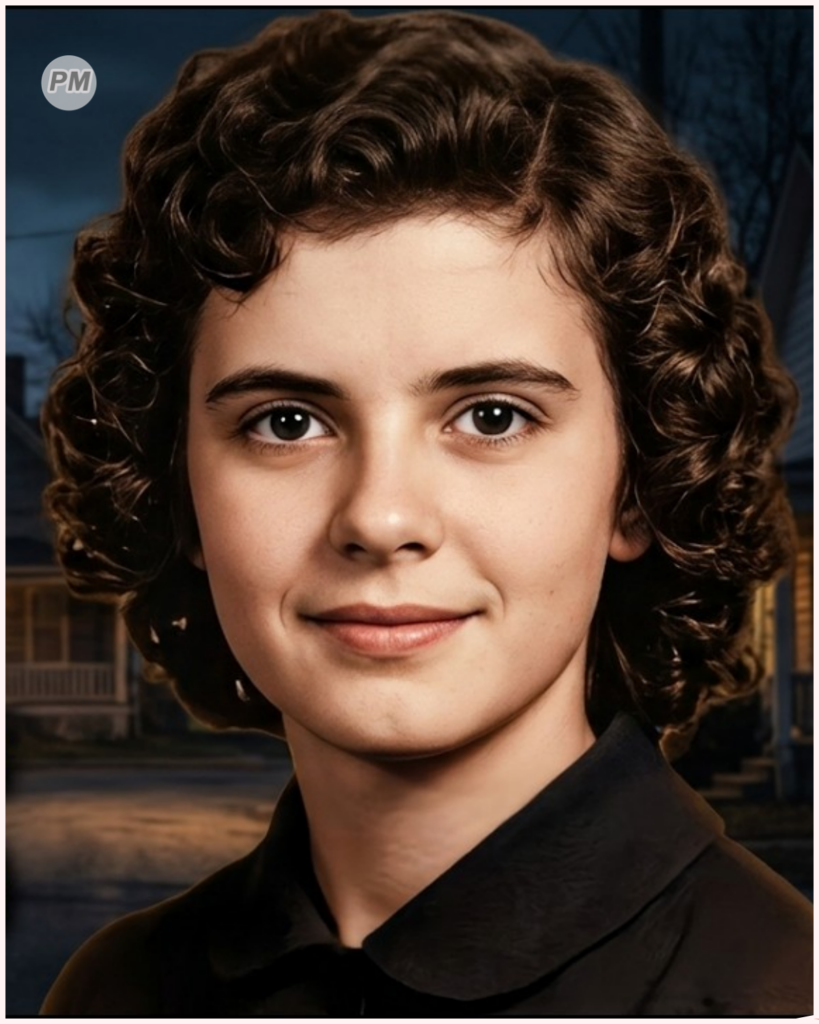
When 14-year-old Rosemary Doterline walked out of…
When 14-year-old Rosemary Doterline walked out of her family’s apartment in Montreal to buy a loaf of bread, she left two things behind.
She left a red purse and she left the prayer book her sister says she carried in it.
She never came back for either of them. Her family kept them anyway. Her little sister kept them for nearly 70 years through a move to another country, [music] a marriage, children, grandchildren, and more than six decades of waiting for a knock at the door.
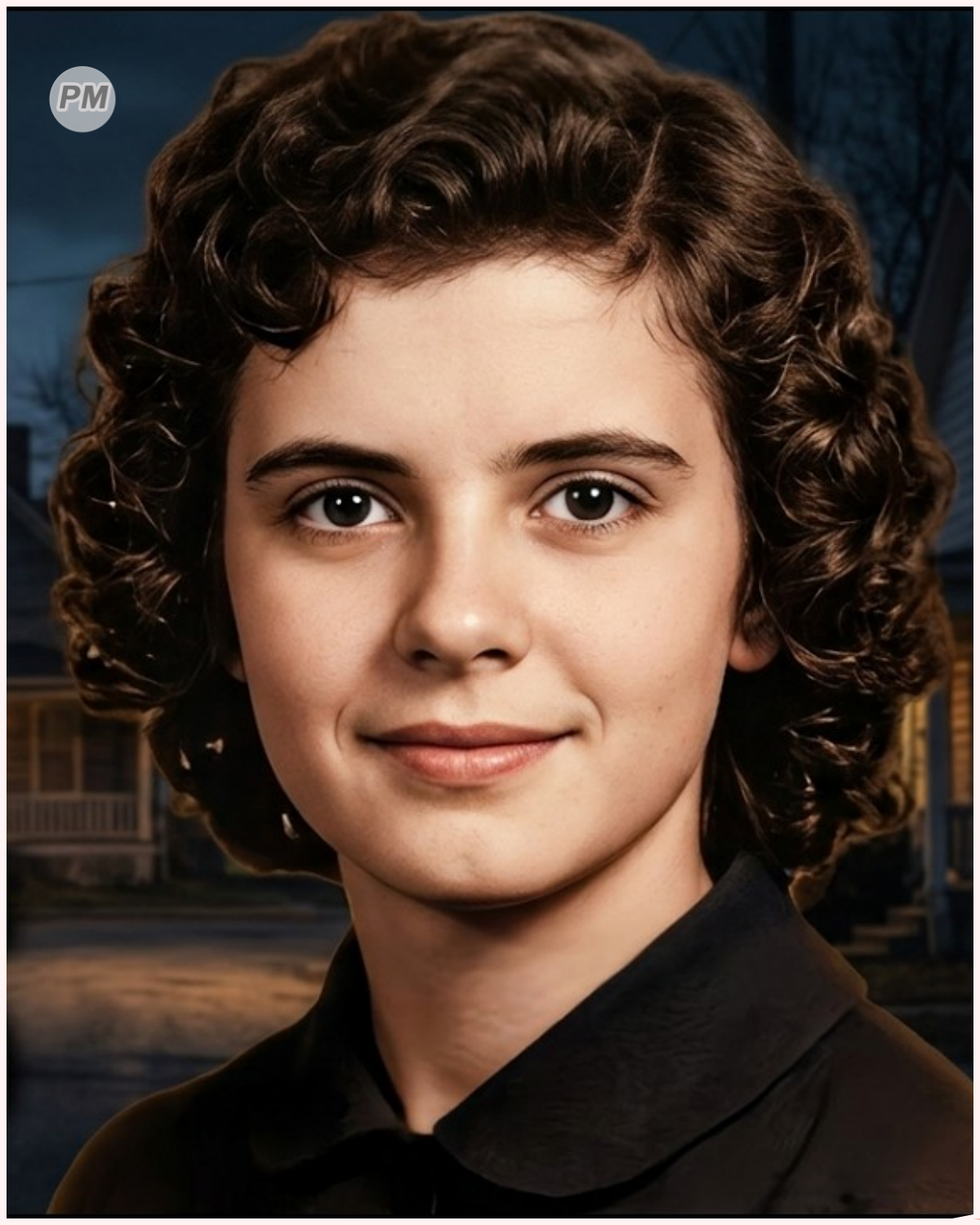
Then, in 2022, a detective with the Toronto police compared the handwriting inside that prayer book with the handwriting on a document from Ontario.
It was a marriage certificate signed in June 1957. The handwriting matched. The name on the certificate was not Rosemary Doterline.
For 68 years, the people who loved her asked the same questions. Was she kidnapped?
Was she sold? Was she lying in an unmarked grave somewhere in the mountains north of the city?
Every theory they had ended the same way with Rosemary gone. None of those theories prepared them for the answer the DNA would finally give.
She had been alive. She had married, raised five sons, run a bed and breakfast, and lived more than half a century under another name.
She never told her children where she really came from. She never contacted the family that spent their lives looking for her.
And by the time anyone found her, she had been dead for 13 years. This is the story of a girl who disappeared on an errand, a sister who refused to stop looking, and a red purse that waited 68 years for someone who never came home.
And it starts in a small village in Germany with a family that had just bet everything on a new country.
This is Cold Case Reckoning, where we tell the Canadian cases the system almost forgot.
If you want to know how a missing girl became a woman no one could find, subscribe now [music] because this story only gets from here.
Now, Rosemary Helga Doterline grew up in a small village in Germany, the daughter of Oscar and Hilda Doterline.
She had a sister named Hilda, a brother named Gunter, and a younger sister named Vera.
One old family photograph shows the four of them together. Hilda, Rosemary, Gunter, and Vera, still a baby.
Vera was about two years younger than Rosemary, and she is the reason this story has an ending at all.
Rosemary’s early childhood was lived under the Nazi regime and the Second World War. According to the family, her father, Oscar, was drafted into the German army as a linguist, and when the war ended, he spent years as a prisoner of war.
Like many German families in the years that followed, the Doterlines began looking abroad for a better life.
Canada had not always been open to people like them. During the war, Germans in Canada had been classified as enemy aliens, [music] and after it, German nationals were largely barred from immigrating.
That changed in 1950. That year, Ottawa loosened its immigration rules, created a new Department of Citizenship and Immigration, and took German immigrants off its enemy alien list.
What followed was one of the largest waves of immigration the country [music] had ever seen.
Between 1951 and 1957, an average of almost 23,000 Germans arrived in Canada every year.
In the peak years of that decade, [music] about 200,000 Germans came to Canada, and the only group of newcomers larger than the Germans was the [music] British.
By the mid 1950s, Germans made up more than 15% of all the immigrants coming into the country.
The Doterlines were part of that wave. In April 1954, while the family was still in Germany, someone photographed the two sisters together.
Vera was 11, Rosemary was 13. That September, Oscar, Hilda, Rosemary, and Vera sailed for Montreal.
Years later, on the back cover of her book, Vera would describe the two of them as they were that in just a few words.
She was 11, Rosemarie was 18. Both of them were unsophisticated. Both of them [music] were innocent.
Vera would later write about the shock of it. They had left behind cobblestone streets and meadows and arrived in a city of flashing neon signs, unfamiliar languages, and thousands of cars.
The family settled into an apartment on Randall Avenue in the Notre-Dame-de-Grâce neighborhood in the west of the city.
And this is what made Rosemarie’s situation so fragile. She did not speak English. She did not speak French.
She did not know a single person in Montreal outside her own family. By that fall, she had turned 14 and she was living in a city of strangers in two languages she could not understand.
Her father had worked as a linguist and could speak several languages. Her mother could not.
According to the family’s account, Hilda was comfortable in German and Yiddish, and that shaped even the smallest decisions of daily life, like where to buy bread.
Vera remembers her sister vividly. Rosemarie was tall with bright blue eyes, and Vera has described her as a gorgeous girl.
She was kind and innocent and very helpful. She was also religious. According to Vera’s account, Rosemarie carried a prayer book in her purse.
The purse was red. To a 14-year-old girl who had just crossed an ocean, who had left behind almost everything familiar, those were not small things.
They were among the few possessions that had come with her from home, and her sister would later describe them as the things Rosemarie cherished most.
The two girls were close. In a city where neither of them could talk to the people around them, they had each other.
Not far from the apartment on Randall Avenue, there was a small bakery. By the family’s account, it was nothing special.
